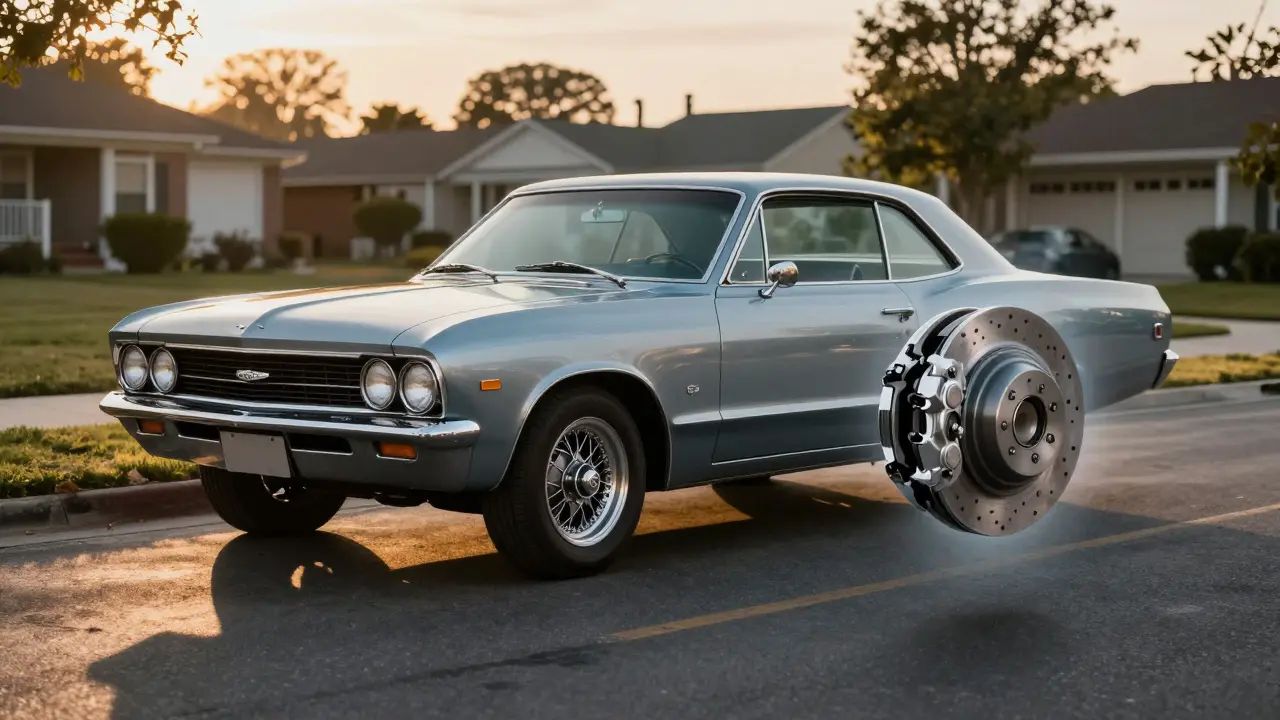
Classic cars look stunning. The curves, the chrome, the sound of a carbureted engine idling - it’s nostalgia on wheels. But if you’ve ever tried to stop one at highway speed, you know the truth: those original drum brakes were never meant for today’s traffic. Modern cars stop in 120 feet from 60 mph. A 1967 Chevrolet Impala? More like 200 feet - and that’s with perfect conditions. That’s not just inconvenient. It’s dangerous.
Why Stock Brakes Fail on Modern Roads
Factory brakes from the 1950s to early 1980s were designed for lower speeds, lighter weights, and slower traffic. A 1965 Ford Mustang weighed around 2,800 pounds. Today’s average car is over 4,000. Add in modern highway speeds, heavier tires, and the fact that you’re now sharing the road with SUVs and trucks, and it’s clear: your classic needs help.
Drum brakes, common on older models, fade badly under repeated use. They’re sensitive to heat, water, and wear. Even if you’ve rebuilt them with new shoes and cylinders, they still lack the stopping power of modern disc systems. And don’t assume bigger tires or better pads will fix it. The problem isn’t just friction - it’s leverage, hydraulic pressure, and design.
What Modern Brake Systems Can Do for Your Classic
Swapping in modern brakes isn’t about making your car look like a race car. It’s about making it safe, predictable, and confident to drive. A properly upgraded brake system can cut your stopping distance by 30-40%. That’s the difference between avoiding a child running into the street and hitting them.
Modern disc brakes use calipers that clamp down on rotors with hydraulic precision. They dissipate heat faster, resist fade, and respond instantly. Many kits even include power-assisted boosters and master cylinders designed to work with your car’s original pedal ratio. You don’t need to overhaul the whole suspension - just the brakes.
Popular Brake Upgrade Options for Classics
There are dozens of kits out there, but not all are created equal. Here are the three most reliable and widely used options for common classic models:
- Front Disc Conversion Kits - The most common starting point. Companies like Classic Performance Products (CPP) and Stainless Steel Brakes offer bolt-on kits for GM, Ford, and Mopar vehicles. These replace drums with dual-piston calipers and vented rotors. Installation usually takes a weekend for a DIYer with basic tools.
- Complete 4-Wheel Disc Systems - For serious drivers or cars that see track days. These kits include rear discs, upgraded proportioning valves, and matching master cylinders. They’re pricier, but eliminate rear drum fade entirely. Popular on 1960s Camaros, Mustangs, and Chargers.
- Aftermarket Master Cylinders and Boosters - Often overlooked. Your original master cylinder might be 50 years old and too small for modern calipers. Upgrading to a 1-inch bore master cylinder with a power booster (like those from Wilwood or Lockheed) gives you better pedal feel and reduces leg effort. This alone can make a huge difference.
Brands like Baer, Wilwood, and Master Power Brakes have been doing this for decades. Their kits come with detailed instructions, hardware, and sometimes even brake lines pre-bent to fit your chassis. You’re not buying parts - you’re buying a solution.
What You Need to Know Before You Start
Brake upgrades aren’t plug-and-play. You need to think ahead.
- Wheel Clearance - Bigger calipers won’t fit behind your original 14-inch wheels. You’ll likely need 15-inch or larger wheels. Check the kit specs before buying.
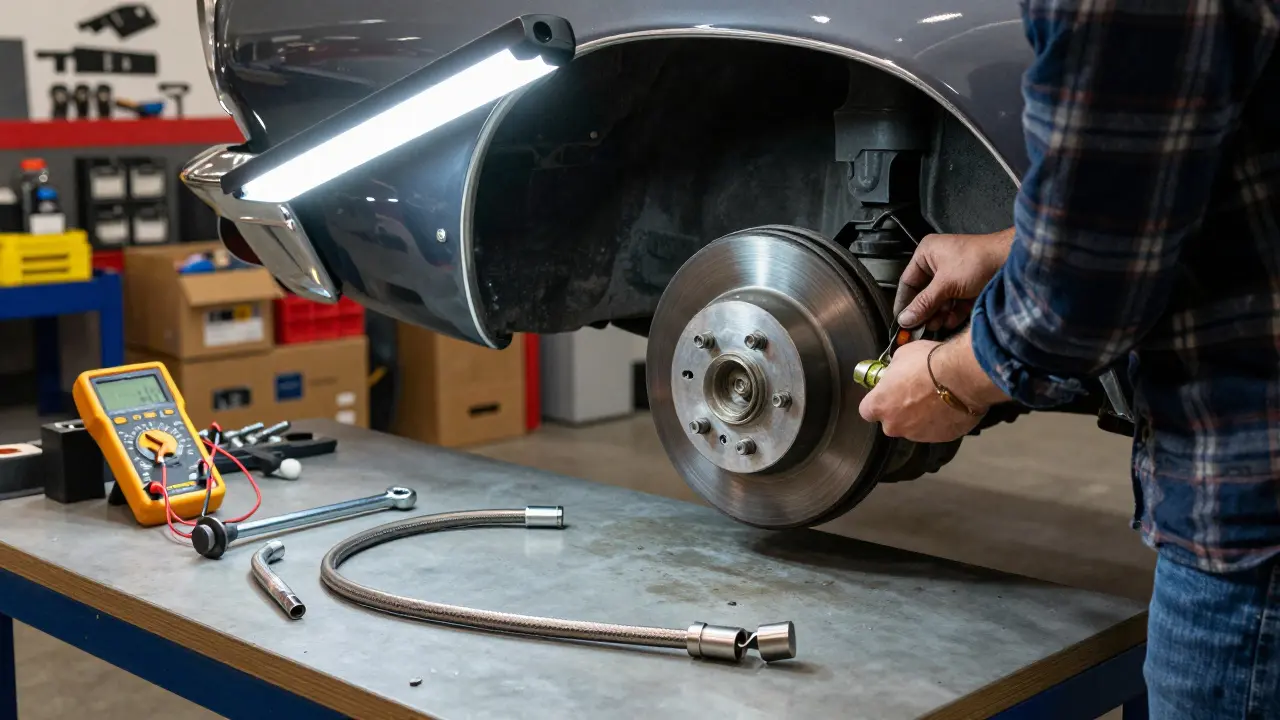
- Brake Lines - Rubber hoses from the 1970s can crack and swell. Replace them with stainless steel braided lines. They don’t expand under pressure, giving you a firmer pedal.
- Proportioning Valve - Front and rear brakes need balanced pressure. Without the right valve, your rear wheels might lock up before the fronts. Most kits include one, but verify.
- Fluid Flush - Old brake fluid absorbs moisture and boils at lower temperatures. Use fresh DOT 4 fluid. It has a higher boiling point and lasts longer.
- Alignment and Suspension - Upgrading brakes can change weight transfer. If your suspension is worn, the car might pull to one side under hard braking. Get a full inspection before you install.
Real-World Results: What You’ll Notice
After installing a front disc kit on my 1968 Plymouth Road Runner, I took it to an empty parking lot and tested it. At 50 mph, the old drums took 185 feet to stop. With the new discs? 112 feet. That’s 73 feet - more than two car lengths - saved. I could stop before the stop sign instead of just after it.
More importantly, the pedal felt firm. No sponginess. No fading after three stops in a row. I could drive it on the highway without second-guessing every exit. That peace of mind? Priceless.
One owner in Ohio upgraded his 1971 Chevelle with a full 4-wheel kit and now drives it to car shows across the Midwest. He says, “I used to dread rainy days. Now I drive like I’m in a new car.”

Cost and ROI: Is It Worth It?
A basic front disc kit runs $800-$1,200. A full 4-wheel system with upgraded components can hit $2,500-$3,500. Labor adds another $500-$1,000 if you don’t do it yourself.
That sounds steep - until you consider the alternatives. A major accident could cost you $20,000 in repairs, medical bills, or worse. Insurance premiums might rise. Your car’s value could drop if it’s deemed unsafe.
On the flip side, a well-upgraded classic often sells for 15-25% more. Buyers know modern brakes mean less worry. They’re willing to pay for safety.
What Not to Do
Don’t try to “improve” your drums by just adding bigger shoes or stronger springs. That’s a band-aid. You’re still using a 60-year-old design.
Don’t buy cheap, no-name brake kits off eBay. They often use inferior materials. I’ve seen calipers warp after 500 miles. Rotors that crack from overheating. You don’t want to find out the hard way.
Don’t skip bleeding the system. Air in the lines means spongy brakes. Even a tiny bubble can ruin your stopping power. Use a pressure bleeder or get help - don’t just pump the pedal.
Final Thoughts: Safety Isn’t Optional
Classic cars aren’t museum pieces. They’re meant to be driven. And driving means stopping. You wouldn’t drive a 1970s car without seat belts - so why accept brakes that are just as outdated?
Modern brake upgrades don’t take away from your car’s character. They preserve it. They let you enjoy the ride without fear. They turn your classic from a fragile relic into a reliable machine.
It’s not about making your car faster. It’s about making sure it can come to a stop when you need it most.
Can I install modern brakes on any classic car?
Yes, most classic cars from the 1940s to early 1980s can be upgraded. Kits are available for GM, Ford, Chrysler, and many European models. The key is matching the kit to your car’s year, make, model, and wheel size. Some rare or custom cars may need custom fabrication, but that’s rare.
Do I need to change my wheels for a brake upgrade?
Usually, yes. Most front disc kits require at least 15-inch wheels to clear the calipers. Some kits fit 14-inch wheels, but they’re limited to smaller calipers and less cooling. If you’re keeping original-looking wheels, look for kits labeled "14-inch compatible" or check with the manufacturer.
Will upgrading brakes affect my car’s value?
For show cars kept strictly original, yes - purists may prefer stock. But for driver-quality classics, modern brakes increase value. Buyers today expect safety. A car with upgraded brakes is more attractive, easier to sell, and often commands a higher price - especially if the work is documented and done with quality parts.
How long do modern brake components last on a classic car?
With regular use and proper maintenance, modern brake pads and rotors last 30,000 to 50,000 miles. Stainless steel braided lines and quality calipers can last the life of the car. The key is using DOT 4 fluid and flushing it every two years. Moisture is the #1 killer of brake systems.
Can I do this upgrade myself?
If you’re comfortable with basic hand tools, jack stands, and bleeding brakes, then yes. Most kits are designed for DIY. You’ll need a torque wrench, brake bleeder kit, and time. If you’ve never worked on brakes before, consider having a professional handle the hydraulic parts - safety is too important to risk.
Tia Muzdalifah
December 27, 2025 AT 17:31just got my 69 mustang with front discs last weekend and holy crap, it’s like driving a new car. no more white-knuckling the wheel on the highway. also, the pedal feels solid now-no more spongy nonsense. best upgrade i’ve ever done. 🙌
Aafreen Khan
December 28, 2025 AT 12:13lol u guys are overreacting. my 67 impala still stops fine with drums. u just need to drive slower like real men did in the 70s. also, u dont need discs to live. just dont run into kids. 😏
Robert Byrne
December 29, 2025 AT 05:01Let me just say this: if you’re still using stock drum brakes on a car that weighs more than 3,000 pounds and you drive it on public roads, you’re not a classic car enthusiast-you’re a liability. The math doesn’t lie. 200 feet at 60 mph? That’s not nostalgia, that’s negligence. And no, bigger tires won’t fix it. The hydraulic system is archaic. Get a kit. Do it right. People’s lives are not a trade-off for authenticity.
King Medoo
December 30, 2025 AT 17:47People don’t realize how dangerous this is. 🚨 I’ve seen it happen. A guy in Florida with a ‘65 Chevelle didn’t upgrade his brakes. He hit a family at a crosswalk. Two kids dead. One in a wheelchair. He said he ‘didn’t think it was necessary.’ You know what’s necessary? Not being the reason someone’s funeral happens because you were too cheap to spend $1,200. 🙏💔
Pamela Watson
December 31, 2025 AT 09:14i did the upgrade and now my car is too fast?? like i cant even enjoy the drive anymore? it stops too well?? what even is this??
LeVar Trotter
January 1, 2026 AT 16:42For anyone considering this: start with the front disc kit. Don’t skip the stainless braided lines. And yes, you need 15-inch wheels-14-inch kits are a compromise. I did mine myself over a weekend. Took 8 hours. Used a pressure bleeder. The pedal feel changed instantly. If you can change oil, you can do this. Just don’t rush the bleeding. Air in the lines = bad news. Also, DOT 4 fluid, not DOT 3. Trust me.
Akhil Bellam
January 3, 2026 AT 13:02Oh, so now we’re supposed to ‘modernize’ our classics? Next you’ll tell me to put a touchscreen in my ’57 Bel Air and call it ‘improved.’ You’re not preserving heritage-you’re erasing it. These cars were designed to be driven slowly, with grace, not like you’re trying to escape a drone. I’d rather die in a beautifully engineered drum brake than survive in a soulless, ‘safe’ robot-mobile. 🤡
michael T
January 3, 2026 AT 21:01Bro… I did the full 4-wheel upgrade on my ’68 Charger and now I cry every time I brake. Not because it’s scary-because it’s SO GOOD. Like… I used to be terrified of rain. Now I drive through puddles like I’m in a Tesla. I feel like a superhero. My dog even sits up front now. He used to hide under the seat. 🥹
Zoe Hill
January 5, 2026 AT 03:23so i got the cpp front kit and the pedal still feels a little soft? any tips? i think i might’ve missed bleeding one line? also, is it normal for the rotors to smell like burning for the first 50 miles??
Amber Swartz
January 5, 2026 AT 04:42My husband said I was being dramatic when I cried over the brake upgrade. I told him: ‘If I die because you didn’t fix the brakes, I’m haunting you with the sound of screeching tires.’ He did it. Now he’s obsessed. We took it to a track day. He cried again. I took a picture. It’s my lock screen. 🎬
Tyler Durden
January 5, 2026 AT 10:17Just want to say-this isn’t about ‘modding’ your car. It’s about respect. Respect for the road. Respect for the people on it. Respect for the fact that your car can kill if you ignore basic physics. I’ve restored 12 classics. Every single one got upgraded brakes. Not because I’m a tech bro-but because I love these machines enough to make sure they don’t become death traps. You don’t have to be a mechanic. Just be a human.
Rae Blackburn
January 6, 2026 AT 12:57They’re putting chips in the brake kits now. I heard it from a guy who knows a guy. The new kits track your driving. They send data to the government. They’re using classic car owners to test facial recognition at stop signs. You think they care about your safety? They want to know where you go. Don’t upgrade. Don’t trust the system.
Albert Navat
January 7, 2026 AT 13:21Let’s get technical: the OEM master cylinder bore is typically 0.75” on pre-’70s cars. Modern calipers require 1.0” minimum to generate adequate clamping force. Without upgrading the master, you’re creating a hydraulic mismatch-your pedal travel increases, fade worsens, and you’re not getting full caliper actuation. It’s not a ‘suggestion.’ It’s fluid dynamics 101. Do the math.