
When you buy a new car, you don’t just want it to look good or get good gas mileage-you want it to keep you and your family alive in a crash. That’s where the NHTSA safety ratings come in. For decades, the National Highway Traffic Safety Administration has been the go-to source for real-world crash test data in the U.S. But in 2025, the rules changed. The tests are tougher, the scoring is smarter, and the bar for what counts as "safe" has moved higher than ever before.
What’s Different About the 2025 NHTSA Testing?
The last major update to NHTSA’s star rating system was back in 2011. Since then, technology has exploded. Cars now have automatic emergency braking, blind-spot monitoring, lane-keeping assist, and even pedestrian detection. But the old tests didn’t fully account for these features. The 2025 updates fix that.
Now, every vehicle must pass a new set of six crash scenarios to earn a 5-star rating. The biggest change? The tests now include real-world crash patterns-not just the controlled, idealized impacts from the past. For example, instead of just hitting a rigid barrier at 35 mph, cars now face angled collisions with moving vehicles, pedestrian impacts at night, and side impacts with SUVs and trucks. These scenarios reflect what actually happens on U.S. roads, not just what’s easy to replicate in a lab.
Another major shift: the system now rewards active safety tech. If your car automatically brakes to avoid a child running into the street, that’s not just a nice feature-it’s now part of your safety score. Systems like Automatic Emergency Braking (AEB), Lane Departure Warning (LDW), and Blind Spot Detection are now mandatory for top ratings. If your car doesn’t have them, it can’t get 5 stars, no matter how strong its frame is.
How the Star Rating System Works Now
The old 1-to-5 star system is still there, but the math behind it has been completely rewritten. Here’s what you need to know:
- Frontal Crash Test: Now includes both driver and passenger side impacts, with dummies programmed to mimic different body types (including older adults and smaller adults).
- Side Impact Test: Uses a heavier, faster-moving barrier to simulate modern SUV and truck crashes.
- Roll-Over Risk: Calculated using the vehicle’s center of gravity and suspension design, not just static measurements.
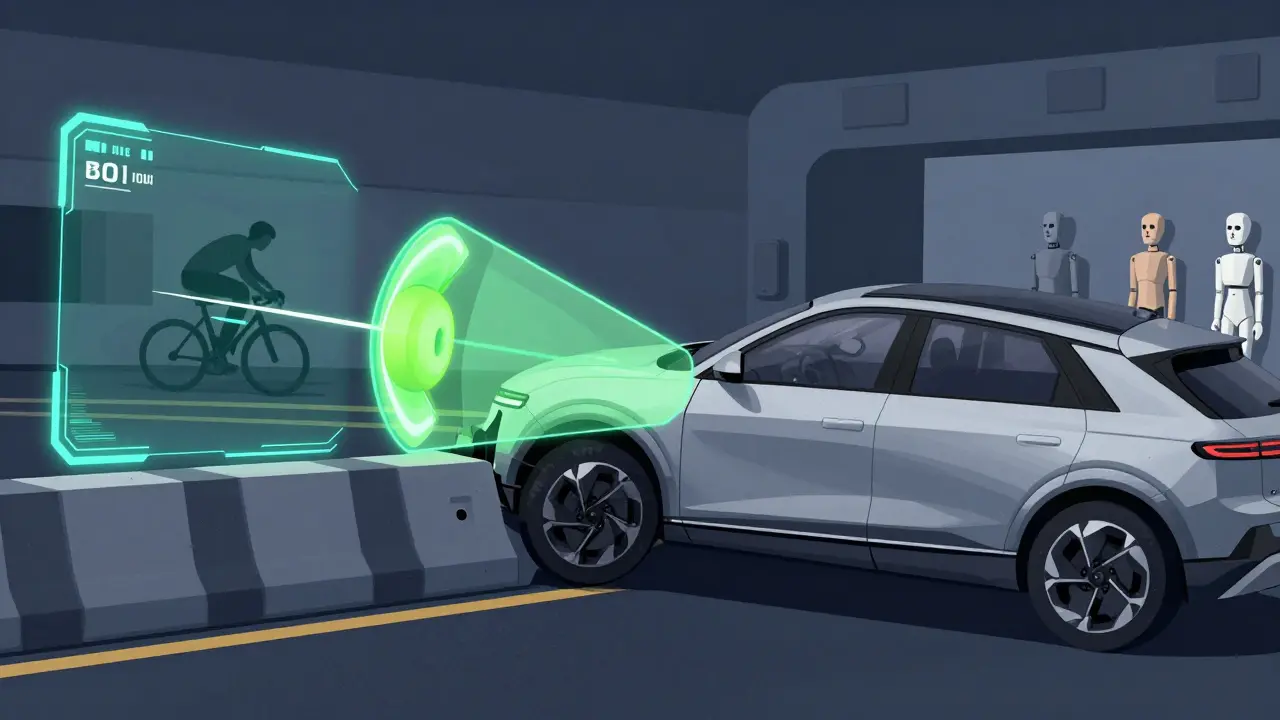
- Crash Avoidance & Mitigation: A new category worth up to 20% of the total score. Vehicles earn points for detecting pedestrians, cyclists, and other vehicles-even in low-light conditions.
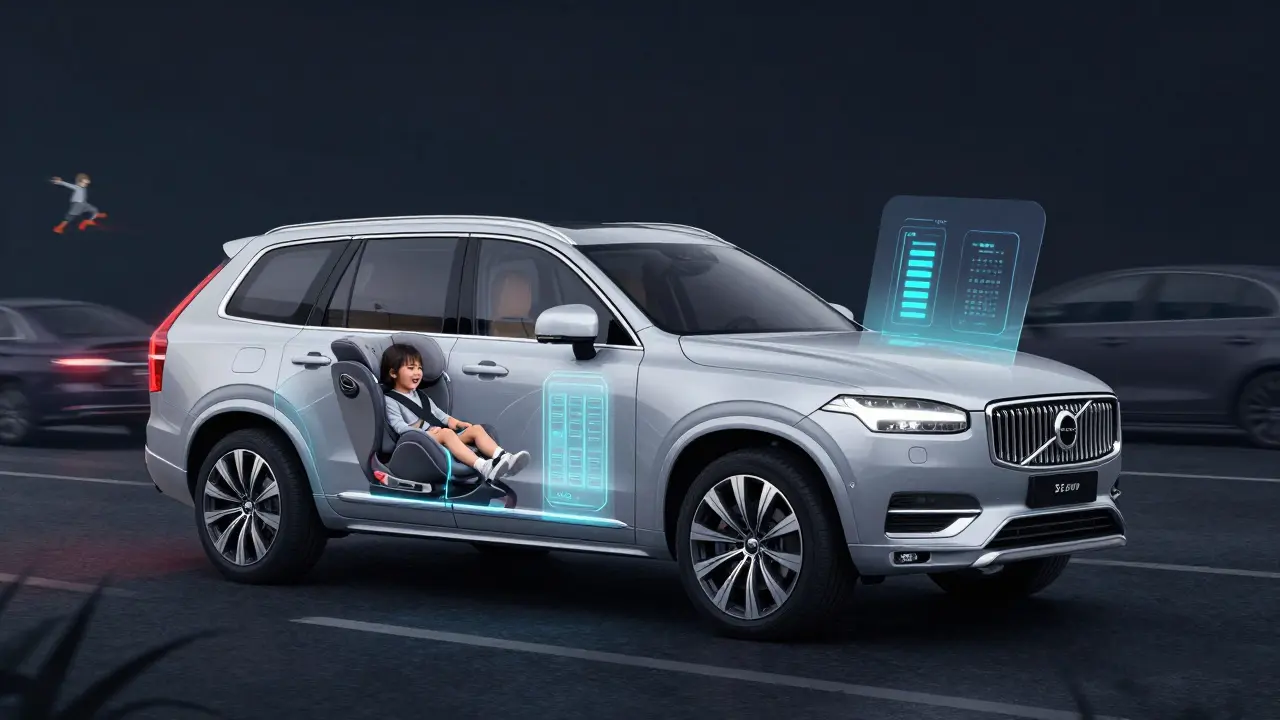
- Seat Belt Reminders & Child Seat Compatibility: Now scored with precision. If your car doesn’t alert you when a child seat is installed incorrectly, you lose points.
It’s not enough to just have the tech-you have to use it right. NHTSA now tests whether systems activate consistently, whether they cause false alarms, and whether they interfere with driver control. A system that starts braking randomly on a highway? That’s a downgrade.
Which Cars Got the Highest Ratings in 2025?
So far, only a handful of models have earned 5 stars under the new rules. The 2025 Toyota Camry, Hyundai Ioniq 6, and Volvo XC90 all scored perfectly. Why? They didn’t just meet the minimum-they exceeded it.
The Camry’s AEB system detected 98% of pedestrians in low-light tests. The Ioniq 6’s side sensors picked up cyclists moving at 20 mph from blind spots. The XC90’s seat belt system automatically tightened when it detected a child seat was improperly latched. These aren’t gimmicks-they’re results.
On the flip side, several popular SUVs dropped from 5 stars to 3 or 4. The 2025 Ford Explorer, for example, lost points because its automatic braking didn’t trigger reliably when a child darted out from behind a parked car. The Chevrolet Blazer’s side airbags deployed too late in the side-impact test. These aren’t failures-they’re wake-up calls.
Why This Matters for Buyers
If you’re shopping for a car in 2025, don’t just look at the star rating. Look at the details. NHTSA now publishes full test reports online, broken down by category. You can see exactly how a car performed in pedestrian detection, how fast its brakes responded, and whether its seat belts worked with aftermarket child seats.
Here’s what to ask when you’re at the dealership:
- "Does this model have the 2025 NHTSA-rated safety suite?"
- "Can you show me the crash avoidance test results for this trim?"
- "Is automatic emergency braking standard on all trims, or just the top one?"
Some manufacturers still treat safety tech as a premium add-on. Under the 2025 rules, that’s no longer acceptable for a top rating. If you want a 5-star car, you should expect full safety features to come standard-even on the base model.
What’s Not Being Tested (And Why That’s a Problem)
Let’s be clear: the 2025 updates are a huge step forward. But they’re not perfect.
NHTSA still doesn’t test for:
- Crashes involving large trucks at highway speeds
- Multi-vehicle pileups
- Long-term durability of safety systems after 5+ years of use
- Impact of software updates on safety performance
That means a car that scores 5 stars today might not hold up as well after a year of over-the-air updates or after being hit by a semi-truck. The agency is working on these gaps, but for now, buyers need to stay aware.
Also, NHTSA doesn’t test for cybersecurity risks. A car with perfect crash avoidance could still be hacked-something Tesla, Rivian, and Ford are already dealing with in real-world incidents. Safety isn’t just about physical impact-it’s about control.
How to Use NHTSA Ratings Wisely
Don’t treat the star rating like a grade on a report card. It’s a starting point. Use it to narrow your choices, then dig deeper.
Here’s a simple checklist:
- Check the official NHTSA website for the exact model year and trim.
- Look at the crash avoidance score-don’t just focus on the star total.
- Confirm that AEB, LDW, and blind-spot monitoring are standard, not optional.
- Read the full test report. If the car barely passed pedestrian detection, that’s a red flag.
- Compare it to the IIHS Top Safety Pick+ list. The two agencies test differently, and together they give you a fuller picture.
Remember: a 5-star rating doesn’t mean the car is invincible. It means it’s among the best at avoiding and surviving crashes under current conditions. That’s still powerful-but it’s not a guarantee.
What’s Next for Vehicle Safety?
NHTSA is already planning updates for 2027. They’re testing:
- Crash avoidance in heavy rain and snow
- System performance after software updates
- Interaction between multiple driver-assist features
- How safety tech behaves when drivers override it
One thing’s clear: safety isn’t static. The car you buy today will be on the road for 10-15 years. The standards today are better than ever-but they’ll keep evolving. The best thing you can do is choose a car with a track record of updates and strong safety design-and stay informed as the rules change.
Are NHTSA safety ratings mandatory for all new cars?
Yes, all new passenger vehicles sold in the U.S. must be tested by NHTSA and display a safety rating. But manufacturers aren’t required to meet any minimum star level-they just have to report the results. A 1-star car can still be sold legally, though very few make it to market.
How often does NHTSA update its testing protocols?
NHTSA updates its testing standards every 10-15 years on average, but they can make minor adjustments sooner if new safety technologies emerge. The 2025 changes were the first major overhaul since 2011, driven by rising pedestrian deaths and advances in automated safety systems.
Do NHTSA ratings apply to electric vehicles too?
Yes. EVs are tested the same way as gas-powered cars. In fact, many EVs score higher because their heavy battery packs lower the center of gravity, reducing roll-over risk. The 2025 updates specifically include tests for battery safety in side impacts and fire risk after crashes.
Can I trust a car with a 4-star rating?
Absolutely. A 4-star rating still means the vehicle performs well above average in crash protection. Many 4-star cars have excellent safety tech and only lost points in one area-like pedestrian detection or seat belt reminders. Always check the detailed report before deciding.
What’s the difference between NHTSA and IIHS ratings?
NHTSA is a federal agency that tests all new cars using standardized, government-mandated protocols. IIHS is an independent nonprofit that runs more aggressive, real-world-style tests-like small overlap front crashes and roof strength tests. Many experts say IIHS is tougher, but NHTSA covers more vehicle types and includes crash avoidance tech. Use both for the full picture.
Amit Umarani
December 30, 2025 AT 18:32Finally, someone updated the tests to match real life. I used to think 5 stars meant safe, but now I know it means the car actually sees pedestrians at night. My old Honda got 4 stars under the old system, but under 2025? It’d be lucky to get 2. Time to upgrade.
Noel Dhiraj
December 31, 2025 AT 02:52This is huge. I work with families who buy used cars and I’ve seen too many crashes where the driver had no warning. If every car now has to have AEB and blind spot detection as standard, we’re going to save lives. No more treating safety like a luxury upgrade.
vidhi patel
January 1, 2026 AT 22:56It is imperative to note that the NHTSA has not mandated a minimum safety threshold for vehicle sales; this is a critical oversight. A manufacturer may legally market a vehicle with a one-star rating, which is an abysmal failure of public policy. The absence of enforceable standards undermines the entire credibility of the system. One must question the integrity of regulatory oversight when profit motives supersede human life.
Priti Yadav
January 2, 2026 AT 02:44Wait… so they’re testing for software updates now? That’s a red flag. What if the car’s safety system gets bricked by an OTA update? Or hacked? I bet the government is in cahoots with the automakers to make us think we’re safe while they’re quietly turning our cars into surveillance drones. You think they’re really testing for battery fires or just hiding the real risks?
Ajit Kumar
January 2, 2026 AT 19:00It is worth emphasizing, with considerable precision, that the 2025 revisions represent not merely an incremental adjustment but a paradigmatic shift in the evaluation of vehicular safety, wherein the metric of protection is no longer confined to structural integrity but is now intrinsically linked to the functional efficacy of sensor-based systems. The inclusion of pedestrian detection under low-light conditions, for instance, introduces a probabilistic dimension to safety scoring that was previously absent, thereby demanding a reevaluation of consumer expectations and manufacturer accountability. Moreover, the fact that seat belt reminders are now scored with granularity implies a recognition of behavioral compliance as a component of passive safety - a philosophical evolution in regulatory thought that, frankly, has been long overdue.
Diwakar Pandey
January 3, 2026 AT 16:13Good stuff. I’ve been watching the IIHS and NHTSA ratings side by side for years. The new NHTSA tests are catching up, but I still check both. My sister bought a 2024 Ford Escape with 4 stars - turned out its AEB failed 30% of the time in dusk conditions. NHTSA’s new reports would’ve caught that. Don’t just trust the stars - read the fine print.
Geet Ramchandani
January 4, 2026 AT 07:40Let’s be real - this is all marketing. The Camry got 5 stars because Toyota spent millions on sensors that trigger in perfect lab conditions. Real-world? Kids don’t run out in slow motion. Rain, glare, fog, dirty cameras - none of that matters to NHTSA. And don’t get me started on how these systems fail after two years of dust and software glitches. This is just a fancy way for automakers to charge more for the same old junk. You think your car’s going to save you when the camera’s fogged up? Dream on.
Pooja Kalra
January 5, 2026 AT 00:12Perhaps safety, in its essence, is an illusion. We construct metrics, assign stars, and call it progress - yet the road remains indifferent. A car may score perfectly in controlled scenarios, but the human mind, the distracted glance, the sudden decision - these are the true variables. We measure steel, not soul. The 5-star rating is not a shield - it is a mirror, reflecting our collective denial that no system can outrun chaos.
Sumit SM
January 5, 2026 AT 05:37Finally! The NHTSA has, at long last, acknowledged - yes, acknowledged - that safety is not merely about crumple zones, but about proactive, intelligent systems that anticipate, react, and adapt! And let’s not forget: the inclusion of child seat compatibility scoring? That’s a win - a monumental, long-overdue win! But - and this is a big but - why is cybersecurity still not part of the test? Why? Why? Why? It’s 2025 - your car can be hacked, your brakes overridden, your doors unlocked remotely - and yet, NHTSA? Still silent!
Jen Deschambeault
January 6, 2026 AT 03:34My dad bought a 2025 Volvo XC90 after reading this. He’s 72, drives everywhere, and never used to care about safety tech. Now he won’t leave the house without checking the NHTSA report first. Small wins, but they matter.