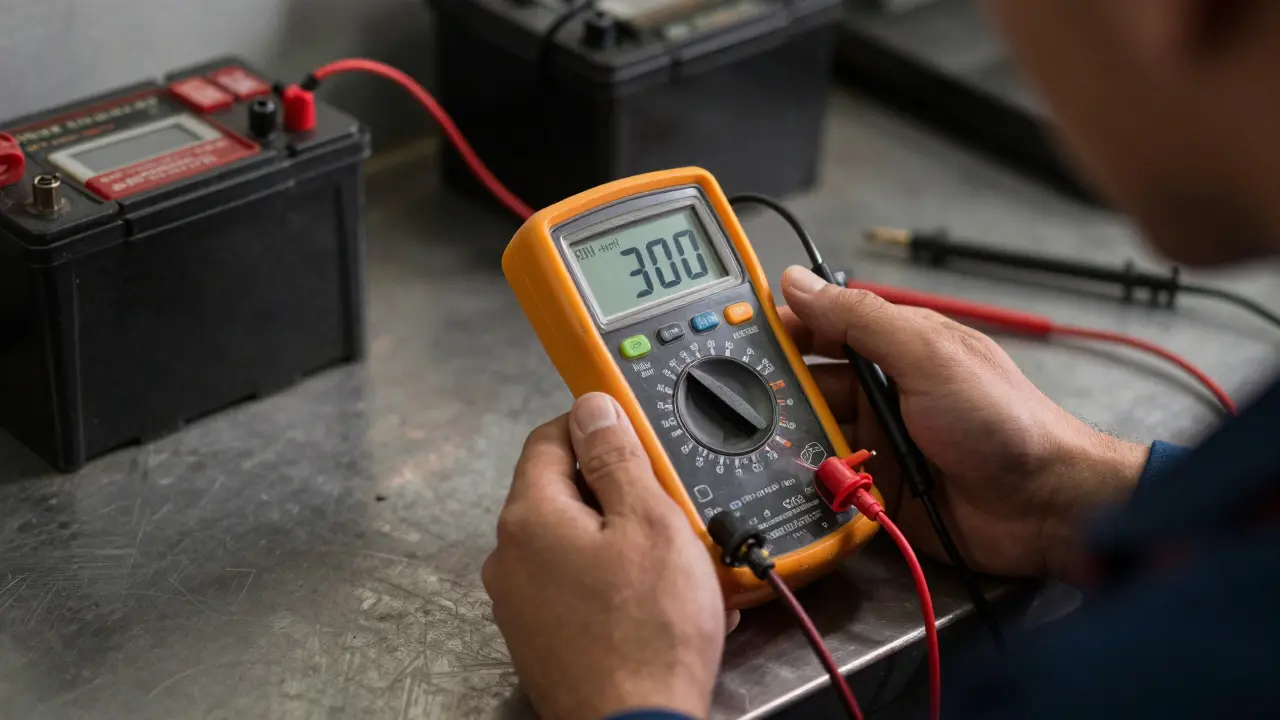
Your car won’t start after sitting for a couple of days. You jump it, it runs fine, but the same thing happens again next week. You’ve replaced the battery twice already. Nothing seems to fix it. That’s not a bad battery-it’s a parasitic battery drain.
What Exactly Is a Parasitic Battery Drain?
A parasitic battery drain is any electrical component in your car that keeps drawing power from the battery when the engine is off. Modern cars have dozens of electronics: infotainment systems, alarm systems, clock modules, memory settings for seats and mirrors, remote key fob receivers, and even onboard computers that stay partially awake. Most of these draw a tiny amount of power-less than 50 milliamps-and that’s normal. But if something’s stuck on, or a module’s malfunctioning, it can pull 200, 500, or even 1,000 milliamps. That’s enough to kill a healthy battery in 24 to 48 hours.
Think of it like a faucet left dripping in your kitchen. One drop at a time doesn’t seem like much. But leave it overnight, and your sink’s overflowing. Same with your car battery.
How to Test for a Parasitic Draw
You don’t need a fancy shop to find this. You can do it yourself with a multimeter and 20 minutes of patience.
- Turn off the car, remove the key, and close all doors. Wait 20 to 30 minutes. This lets all the modules go to sleep. Many cars stay active for 10 to 15 minutes after you turn off the engine-don’t test too early.
- Disconnect the negative terminal from the battery. Use a wrench or socket to loosen the clamp. Keep the cable away from the terminal.
- Set your multimeter to measure DC amps (usually the 10A or 20A setting). Connect the red probe to the negative battery cable and the black probe to the negative battery terminal. You’re now measuring current flowing from the battery through the meter.
- Read the number on the display. A normal draw is between 20 and 50 milliamps (0.02 to 0.05 amps). If you’re reading more than 100 milliamps (0.1 amps), you’ve got a problem.
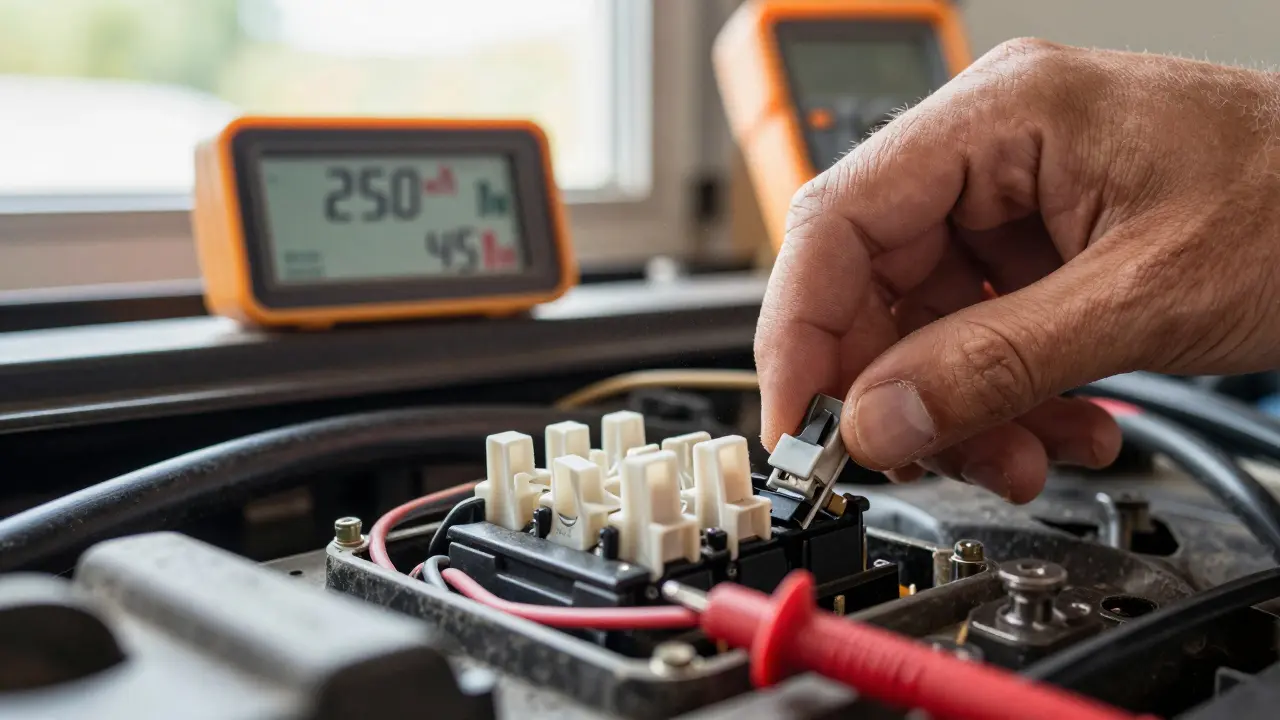
- Start pulling fuses one at a time. After removing each fuse, watch the multimeter. When the reading drops sharply-say from 300 milliamps down to 40-you’ve found the circuit causing the drain.
Don’t skip the waiting period. If you test right after turning off the car, you’ll see a spike from the radio, climate control, or security system. That’s not a drain-that’s just normal behavior.

Common Culprits Behind Hidden Battery Drains
Once you’ve isolated the circuit, it’s time to figure out what’s on it. Here are the top five causes we see in real-world repairs:
- Aftermarket accessories: Alarm systems, dash cams, GPS trackers, and phone chargers wired directly to the battery are the #1 offender. Many are installed poorly-wired to constant power instead of switched ignition power. A dash cam that’s always recording? That’s 150 milliamps right there.
- Faulty door or trunk switches: If a switch thinks a door is still open, the interior lights stay on. Same with the trunk light. A broken switch or misaligned latch can cause this. Check all doors, the trunk, and the hood.
- Stuck relays or modules: The body control module, radio, or infotainment system can get stuck in an active state. A glitchy radio might keep its amplifier powered even when off. A bad relay in the fuse box can stay closed, feeding power to something it shouldn’t.
- Defective alternator diodes: This one’s sneaky. A bad diode in the alternator can let current flow backward through the system when the engine is off. It’s rare, but it happens. If your draw disappears when you disconnect the alternator’s main power cable, that’s your sign.
- Old or damaged wiring: Rodents chewing through insulation, water leaks corroding connectors, or worn insulation rubbing against metal can create unintended ground paths. Look for melted wire insulation or frayed bundles near the firewall or under the dash.
How to Fix It
Fixing a parasitic drain isn’t always about replacing parts. Sometimes it’s about resetting, reconfiguring, or rerouting.
If the drain came from an aftermarket device:
- Unplug it and see if the draw goes away. If yes, rewire it to a switched power source (like the accessory terminal on the fuse box) instead of direct battery power.
- Use a fuse tap with an inline fuse for safety. Never splice directly into a factory wire without proper protection.
If a fuse controls interior lights:
- Check each door latch. Spray a little contact cleaner into the switch and open/close the door a few times. Sometimes dirt or corrosion keeps the switch from fully releasing.
- If the switch is broken, replace it. They’re usually under $20 and take 15 minutes to swap.
If a module is stuck:
- Try a hard reset. Disconnect the battery for 15 minutes. Reconnect it and let the car relearn its settings. This fixes many software glitches.
- If the problem returns, that module may need replacement or reprogramming. Dealerships can diagnose this with a scan tool, but many independent shops have the same tools now.
If the alternator is the issue:
- Disconnect the large power cable from the back of the alternator and retest the draw. If it drops to normal, the alternator’s diode pack is bad.
- Replace the alternator. Don’t just replace the diodes-it’s rarely cost-effective. A rebuilt unit costs $100 to $200 and comes with a warranty.
Preventing Future Drains
Once you fix it, don’t let it come back. Here’s how to stay ahead:
- Install a battery disconnect switch if you leave the car parked for more than a week. Flip it off before you walk away.
- Use a smart battery maintainer (like a CTEK or NOCO) if the car sits for long periods. It keeps the battery topped off without overcharging.
- Don’t add aftermarket gear unless you know how it’s wired. Ask the installer to show you where it’s connected.
- Check your battery’s health every 6 months. A battery older than 4 years is more vulnerable to even small drains.
When to Call a Pro
You can fix most parasitic drains yourself. But if you’ve checked all the fuses, reset the modules, and still can’t find it, it’s time for a professional. Some issues-like a faulty CAN bus communication glitch, a hidden short in the wiring harness, or a corrupted ECU-need diagnostic tools you don’t have at home.
Also, if your car is under warranty, let the dealer handle it. A parasitic drain caused by a factory defect should be covered.
Don’t keep guessing. If your battery keeps dying and you’re tired of jump-starting it, test the draw. It’s the single most common reason for "mystery" battery failures-and it’s almost always fixable.
How long should I wait after turning off the car before testing for a parasitic drain?
Wait at least 20 to 30 minutes. Modern cars have modules that stay active for up to 15 minutes after shutdown-things like the infotainment system, security module, and climate control. Testing too early will give you a false high reading. Let everything go to sleep first.
Is 100 milliamps a normal parasitic draw?
No. A normal draw is between 20 and 50 milliamps. 100 milliamps is twice the upper limit and will drain a typical 50-amp-hour battery in about 20 to 25 days. That’s enough to leave you stranded if you don’t drive the car weekly.
Can a bad alternator cause a parasitic drain?
Yes. If one or more diodes in the alternator fail, they can allow current to flow backward through the system when the engine is off. This creates a direct path from the battery back into the alternator. Disconnect the alternator’s main power cable and retest the draw-if it drops to normal, the alternator is the culprit.
Why does my battery die after just two days of not driving?
That’s a classic sign of a parasitic drain. A healthy battery can sit for 30 to 45 days without being driven. If it dies in two days, something is pulling too much power when the car is off. Common causes include aftermarket devices, stuck relays, or faulty door/trunk switches.
Do I need a special multimeter to test for parasitic drain?
No. Any basic digital multimeter that measures DC amps (up to 10A) will work. You don’t need a fancy clamp meter. Just make sure it has a fuse for high-current measurement and set it to the correct range. Most auto parts stores sell affordable meters for under $30.


Mongezi Mkhwanazi
January 1, 2026 AT 07:32Oh, for crying out loud-another person who thinks replacing the battery is the solution? You’ve got a parasitic drain, not a battery problem-and you’re wasting money like it’s Monopoly money. I’ve seen this exact scenario five times last year alone: dash cams wired to constant power, trunk switches stuck from dust, and one guy who installed a $200 Bluetooth speaker that pulled 300mA like it was breathing. You wait 20 minutes? Good. But you also need to check every fuse, not just the obvious ones-some modules are on circuits labeled ‘interior lighting’ but actually power the rear camera module, which you didn’t even know existed. And don’t even get me started on people who use those ‘universal’ fuse taps without a fuse-fire hazard waiting to happen. Seriously, if you don’t know what a diode is, don’t touch the alternator. Take it to a shop. Or better yet-don’t buy a car. Just walk.
Mark Nitka
January 2, 2026 AT 17:39This is actually one of the clearest guides I’ve read on this topic. I had a 120mA drain on my 2018 Civic and found it was a faulty door switch on the passenger side-thought the light was off, but the sensor was stuck. Sprayed some contact cleaner in there and it’s been fine for 8 months. The key is patience-waiting for the modules to sleep is non-negotiable. I used a $25 Harbor Freight multimeter and it worked perfectly. No need to overcomplicate it. Just follow the steps, don’t rush, and you’ll find it. Seriously, this saved me $400 at the dealer.
Kelley Nelson
January 3, 2026 AT 03:26While I appreciate the attempt at elucidating this mechanical phenomenon, one must acknowledge the inherent lack of scholarly rigor in the terminology employed. The phrase ‘parasitic battery drain’ is, frankly, a colloquialism bereft of technical precision; one might more accurately describe it as ‘unintended quiescent current draw attributable to non-essential subsystems failing to enter low-power mode.’ Furthermore, the recommendation to ‘pull fuses’ without referencing the vehicle’s specific wiring diagram is, in my view, both procedurally unsound and potentially hazardous. One ought to consult the manufacturer’s diagnostic flowchart-or, better yet, defer to a certified automotive electronics technician, lest one inadvertently disrupt the CAN bus topology or induce latent ECU corruption. I do, however, commend the inclusion of the 20–30 minute wait period; that, at least, demonstrates a modicum of empirical awareness.
Aryan Gupta
January 3, 2026 AT 15:00They don’t want you to know this-but 90% of these ‘parasitic drains’ are caused by government-mandated tracking systems embedded in your car’s infotainment. The FBI, Tesla, and the Chinese Communist Party all use these phantom draws to monitor your movements. That ‘stuck relay’? It’s not a relay-it’s a backdoor. That ‘bad diode’? It’s a signal transmitter. And don’t you dare disconnect the battery without first filing Form 7B with the DMV-otherwise, they’ll tag your car as ‘suspiciously unmonitored’ and send a drone to your driveway. I’ve seen it happen. My cousin’s Prius died after he unplugged the radio. The next day, three black SUVs showed up. Coincidence? I think not. Also, your multimeter? It’s probably bugged. Use a compass instead. The needle will twitch when the surveillance current flows.
Fredda Freyer
January 3, 2026 AT 18:23I’ve helped three friends fix this exact issue, and the most important thing isn’t the multimeter-it’s mindset. Most people panic and start replacing parts. But the real fix is patience and process. Wait the full 30 minutes. Don’t assume the fuse box diagram is correct-some aftermarket installs reroute circuits without updating the manual. And if you find the culprit but don’t know how to rewire it? Google the exact fuse number + your car model + ‘wiring diagram.’ There’s always someone who posted a photo of their splice. I found a guy in Ohio who posted a picture of his 2015 Accord’s dash cam wiring-he used a relay with a timer. Genius. Also-battery health matters. A 5-year-old battery can’t handle even 40mA for long. Replace it if it’s older than 4 years, even if it ‘tests fine.’ It’s not about voltage-it’s about capacity. And if you’re still stuck? Post your fuse reading and car model here. I’ll help.
Gareth Hobbs
January 5, 2026 AT 17:17Right then, so this ‘guide’ is all well and good, but you lot in the States don’t know squat about real car problems. Back in ’98, we had to fix these drains with a screwdriver and a prayer. Now you’ve got your fancy multimeters and ‘wait 30 minutes’ nonsense. Pfft. In the UK, we just yank the battery, give it a good slap, and reconnect it. Works every time. Also, you’re all being manipulated by the German car companies-they put in these drains on purpose so you keep coming back to the dealership. And don’t even get me started on those ‘smart’ battery maintainers-they’re just spy gadgets with USB ports. My mate’s VW lost its radio presets after using one. That’s not maintenance-that’s digital sabotage. And if you’re using a Harbor Freight meter? You’re probably measuring your neighbor’s Wi-Fi signal. Use a proper British-made meter, for God’s sake.
Zelda Breach
January 6, 2026 AT 02:14Wow. A whole article about how to fix something you clearly can’t fix yourself. You’re replacing batteries because you don’t know how to use a multimeter? You’re not a car owner-you’re a liability. And you’re going to ‘reset the module’ by disconnecting the battery? That’s like treating a broken leg with a Band-Aid and a prayer. The fact that you need to be told to wait 20 minutes means you shouldn’t be near a car, let alone a fuse box. Your dash cam? Probably illegal. Your wiring? Probably arson. And if you think a $30 multimeter is ‘good enough,’ you’re one bad spark away from burning down your garage. Just sell the car. Buy a bike. Or better yet-move to a city with public transit. You’re clearly not qualified to own a machine with an engine.
Alan Crierie
January 6, 2026 AT 07:18Thank you so much for this-really well explained and so helpful! 😊 I just fixed a 150mA drain on my 2016 Ford Focus after reading this. It was the trunk light switch-hadn’t even thought to check it! I sprayed contact cleaner in there and now it’s perfect. I’ve never used a multimeter before, but I followed your steps and it worked like a charm. I even took a photo of my setup and shared it with my dad-he’s 72 and thought it was impossible, but now he’s excited to try it on his old Toyota. You made this feel doable. Honestly? You’re a legend. 🙌
Nicholas Zeitler
January 6, 2026 AT 12:10DO NOT SKIP THE 20-MINUTE WAIT. DO NOT SKIP THE 20-MINUTE WAIT. DO NOT SKIP THE 20-MINUTE WAIT. Seriously. I did it once. Tested right after turning off the car. Read 400mA. Panicked. Replaced the alternator. $500 gone. Turned out it was a stuck glovebox light. Wait. 20. Minutes. Also-use a fuse puller. Don’t use your fingers. You’ll bend the fuse. Or worse-get shocked. And if you’re using a cheap multimeter? Make sure the fuse inside the meter isn’t blown. I’ve seen this so many times. The meter says zero because the internal fuse is dead. Test it on a AA battery first. Just do it. You’ll thank me later.
Teja kumar Baliga
January 7, 2026 AT 22:40Bro, this saved my life. My Honda kept dying after two days. Found the drain in 15 mins-was the aftermarket phone mount wired to constant power. Unplugged it, problem gone. No tools needed except a screwdriver. You don’t need to be a genius. Just follow the steps. Also, if you’re in India, check your car’s fuse box-some dealers install cheap chargers that pull way too much. Just ask the guy who installed it where it’s wired. Simple. And if your battery’s old? Replace it. No shame. We all forget these things. You’re not alone. 🙏
k arnold
January 9, 2026 AT 10:30Wow. A 1200-word essay on how to use a multimeter. Congrats. You just wrote the manual for people who can’t read manuals. Next up: ‘How to Turn On Your Car-A Step-by-Step Guide for the Chronically Confused.’
Fredda Freyer
January 9, 2026 AT 17:23@k arnold-fair point. But when you’ve spent 3 hours on a forum trying to explain this to someone who thinks the battery is the problem because ‘it’s old,’ you start writing essays. I’ve seen people buy $200 batteries three times before they finally tested the draw. This isn’t for the experts. It’s for the guy who’s tired of being stranded. And if you think it’s too long? Skip to the ‘common culprits’ section. That’s where the real answers are. Also, I’m not writing for you. I’m writing for the guy who’s Googling ‘why does my car battery die every week’ at 2 a.m. with a dead phone and a wrench in his hand. He needs this.