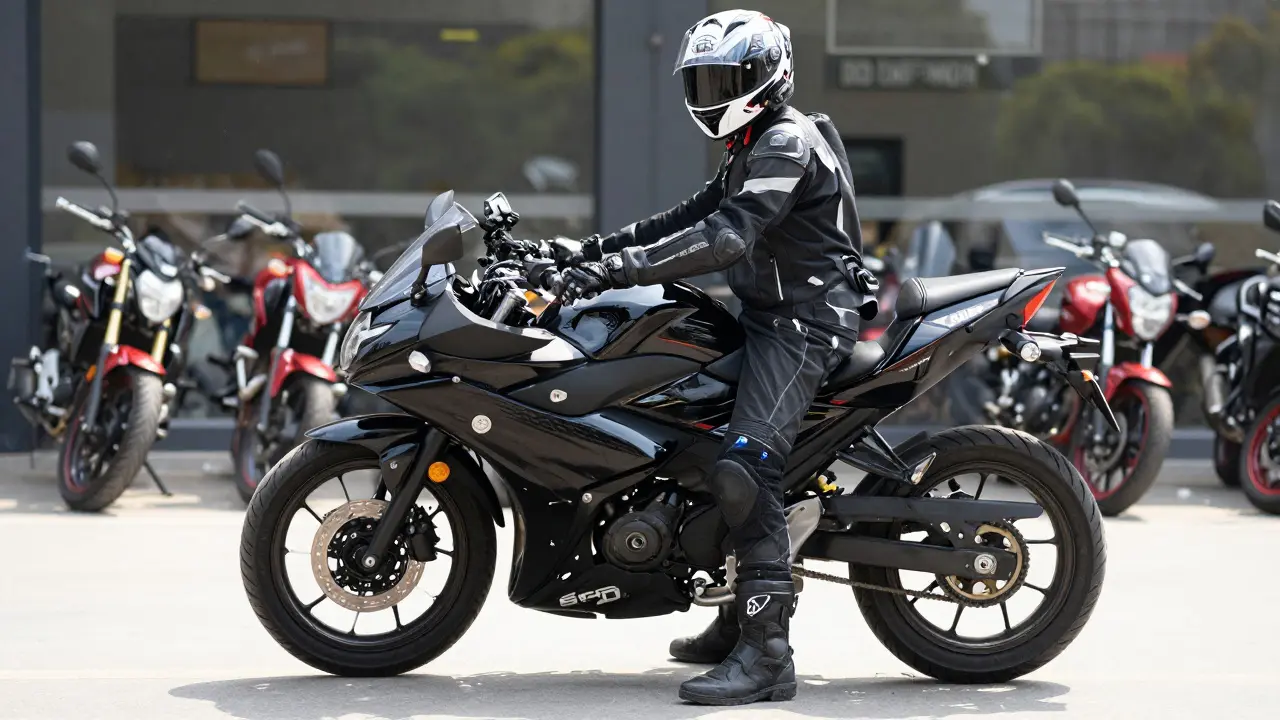
Starting on two wheels can feel overwhelming. You’re not just buying a bike-you’re investing in freedom, safety, and a learning curve that can make or break your confidence. The good news? You don’t need a 1000cc beast to enjoy riding. Many riders jump into motorcycling with bikes that are light, forgiving, and easy to handle. In 2026, the market is packed with options designed specifically for new riders. These aren’t just smaller engines-they’re smartly engineered to help you learn without fear.
Why Start with a Beginner-Friendly Bike?
Too many new riders get tempted by flashy sportbikes or heavy cruisers because they look cool. But a 600cc sportbike can be terrifying at 30 mph in traffic. A 700-pound cruiser? Hard to maneuver at a stoplight. The goal isn’t to look like a pro on day one-it’s to build skills safely. Beginner bikes are lighter, lower to the ground, and have less power than their bigger cousins. That means you can drop the bike without breaking your leg, stop quickly without locking the front wheel, and turn corners without overthinking throttle control.
Studies from the Motorcycle Safety Foundation show that riders who start on bikes under 500cc are 40% less likely to have a crash in their first year. That’s not luck-it’s design. Manufacturers know what works for new riders, and they’ve built bikes that match real-world needs.
What Makes a Motorcycle Beginner-Friendly?
Not every small bike is easy to ride. Here’s what actually matters:
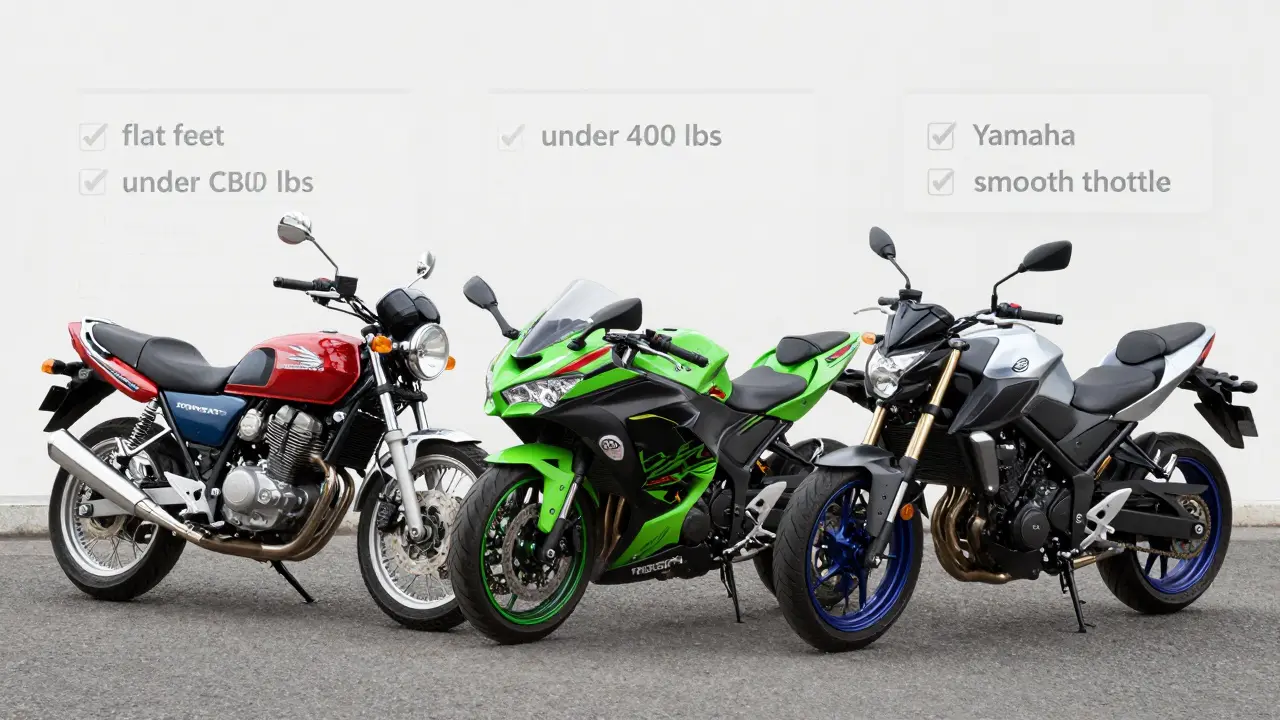
- Seat height under 30 inches - You should be able to flat-foot both feet at a stop. If you’re tiptoeing, you’re risking a fall.
- Weight under 400 pounds wet - That’s the max most beginners can comfortably handle when lifting or parking.
- Engine size between 250cc and 500cc - Enough power to merge on highways, but not so much that it’s hard to control in town.
- Low torque and smooth throttle response - No sudden jerks. The bike should respond gently to your input.
- Simple controls - No fancy electronics to confuse you. Basic ABS is fine. Ride-by-wire? Skip it for now.
These aren’t just suggestions-they’re safety rules. If a bike doesn’t check at least three of these boxes, you’re asking for trouble.
Top 5 Beginner-Friendly Motorcycle Brands
Some brands specialize in making bikes that feel like they were built for first-timers. Here are the ones you can trust:
- Honda - The gold standard for reliability and ease of use. Their bikes are simple, predictable, and last for decades.
- Kawasaki - Offers some of the most affordable, well-built entry-level bikes. Their Ninja series is a favorite for new riders.
- Yamaha - Known for smooth engines and excellent handling. Their bikes feel balanced and intuitive.
- Suzuki - Less flashy than others, but their GSX250R and SV650 are quiet heroes for beginners.
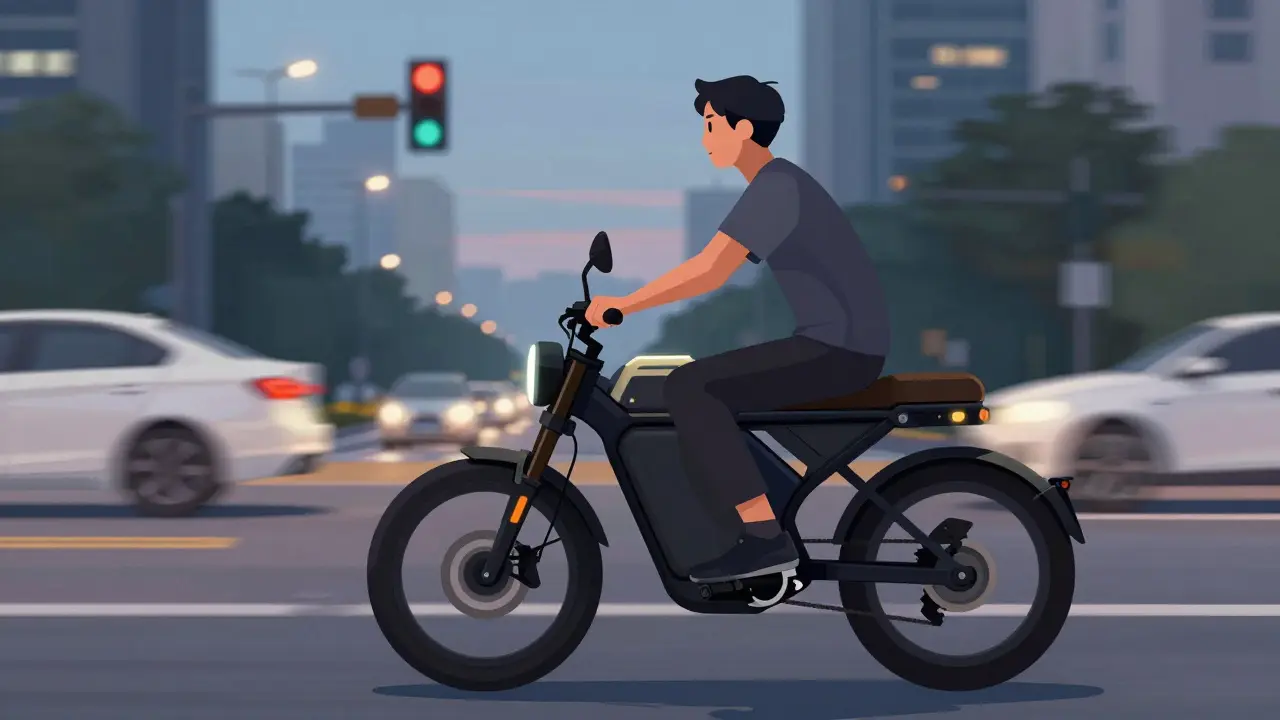
- Gemini - A newer brand, but their 300cc urban commuters have gained serious traction in cities. Lightweight, electric-assist options available.
These brands don’t just sell bikes-they sell confidence. You’ll find parts, manuals, and mechanics who know them inside out.
Best Beginner Motorcycle Models in 2026
Now, let’s get specific. These are the five models that consistently get praised by riding schools, first-time owners, and mechanic forums.
1. Honda CB300R
At 318 pounds wet and a seat height of 31.1 inches, the CB300R is the perfect middle ground. It’s not the lightest, but it’s the most balanced. The 286cc single-cylinder engine delivers 31 horsepower-plenty for city streets and highways. The upright riding position means you’re not hunched over, and the slim frame makes it easy to hold between your legs. It’s also one of the few bikes in this class with standard LED lighting and a digital dash. If you want something that looks modern but feels simple, this is it.
2. Kawasaki Ninja 400
Don’t let the Ninja name scare you. The 399cc twin-cylinder engine is smooth, not snappy. It revs cleanly and has a linear power curve. At 375 pounds wet, it’s light enough to manage but feels stable at 70 mph. The seat is low (30.9 inches), and the handlebars are wide enough for good control. Many riding schools use this bike for their courses. It’s also one of the few bikes in this range that still has a traditional analog tachometer-no confusing screens to distract you.
3. Yamaha MT-03
Yamaha’s MT-03 is a naked streetfighter with a 321cc parallel-twin engine. It’s the most fun to ride in stop-and-go traffic. The engine has more low-end torque than the Honda or Kawasaki, so you don’t need to rev it hard to get moving. The seat is 30.7 inches high, and the weight is just 358 pounds. The styling is edgy but not intimidating. If you want a bike that turns heads without turning your stomach, this one’s a winner.
4. Suzuki GSX250R
This is the sleeper pick. It’s got a 248cc twin-cylinder engine that feels more powerful than its numbers suggest. At 357 pounds, it’s light, and the seat height is 30.3 inches-among the lowest in its class. The GSX250R is designed to be forgiving. The throttle response is gentle, the brakes are predictable, and the suspension soaks up bumps without bouncing you around. It’s also one of the cheapest new bikes on the market, often under $4,500. If you’re on a tight budget but still want quality, this is your best bet.
5. Gemini G300
Launched in late 2025, the Gemini G300 is a new contender that’s already winning over urban riders. It’s a 298cc single-cylinder bike with a unique feature: a low-speed electric assist. At stops, you can press a button to get a gentle push forward-perfect for heavy traffic or uphill parking. It weighs only 315 pounds and has a 29.5-inch seat height. The controls are minimalist, and the battery adds about 10 extra miles of range if you’re stuck in traffic. It’s not for long highway rides, but if you’re commuting in a city, it’s the most practical new bike you can buy.
What to Avoid as a Beginner
Just because a bike is cheap doesn’t mean it’s safe. Here are the three most common mistakes new riders make:
- Buying used bikes with unknown history - A $2,000 Ninja 250 might look like a steal, but if the clutch is worn or the tires are bald, you’re gambling with your safety.
- Choosing bikes with high seat heights - If you’re under 5’6”, avoid anything over 31 inches. You’ll spend more time worrying about falling than enjoying the ride.
- Going for big displacement bikes - A 650cc or 750cc bike might seem like a good upgrade, but it’s too much too soon. You’ll overreact to throttle inputs and panic during emergency stops.
Stick to the list above. These bikes have been tested by thousands of new riders. They’re not glamorous, but they’re reliable.
Final Tips Before You Buy
Before you hand over your money:
- Visit a dealership and sit on every bike you’re considering. Try to touch both feet flat to the ground.
- Ask to test ride. Most shops will let you ride for 10 minutes if you’re serious.
- Check the warranty. Honda and Yamaha offer 2-year warranties on new bikes. Suzuki and Kawasaki offer 1 year.
- Buy a helmet and gear before you ride. No exceptions.
- Take a beginner rider course. Most states offer them for under $100. It’s the best $100 you’ll ever spend.
Motorcycling isn’t about speed. It’s about control, awareness, and confidence. The right bike doesn’t make you a better rider-it lets you become one.
What is the easiest motorcycle to ride for beginners?
The easiest motorcycle for beginners is the Suzuki GSX250R. It’s lightweight, has a low seat height, a smooth engine, and simple controls. It’s also affordable and reliable, making it the top choice for new riders who want to learn without stress.
Is a 250cc motorcycle good for beginners?
Yes, a 250cc motorcycle is ideal for beginners. It offers enough power for highway riding but is light and manageable in city traffic. Most new riders find 250cc bikes easy to control, especially when learning braking, cornering, and throttle control.
Should I buy a new or used beginner motorcycle?
New is better for beginners. Used bikes may be cheaper, but they often have hidden wear-worn clutches, damaged suspension, or outdated brakes. A new bike comes with a warranty, fresh tires, and factory settings that are tuned for safety. The extra cost is worth the peace of mind.
How much should I spend on my first motorcycle?
Budget between $4,000 and $6,000 for your first bike. You can find solid new models like the GSX250R under $4,500. Spending more than $7,000 on your first bike is unnecessary-you’ll learn faster on a simpler machine. Save your extra money for gear and training.
Can I ride a 600cc bike as a beginner?
Technically yes, but it’s not recommended. A 600cc bike has much more power and weight than a beginner needs. It’s harder to control at low speeds, and the sudden throttle response can lead to accidents. Most riding schools and safety experts advise starting with 250-500cc bikes.
Next Steps After Buying
Now that you’ve got your bike, here’s what to do next:
- Register it and get insurance-don’t skip this.
- Buy a helmet that meets DOT or ECE standards. No compromises.
- Take a rider course. Even if your state doesn’t require it, do it anyway.
- Join a local riding group. Riding with others helps you learn faster.
- Practice in empty parking lots. Master slow-speed turns, emergency stops, and U-turns before hitting busy roads.
Motorcycling is a journey. Your first bike isn’t your forever bike-it’s your training wheel. Choose wisely, ride smart, and enjoy the ride.
Mark Brantner
January 9, 2026 AT 20:40amber hopman
January 10, 2026 AT 02:40John Fox
January 10, 2026 AT 07:05Kate Tran
January 11, 2026 AT 12:01Jim Sonntag
January 11, 2026 AT 19:10chioma okwara
January 12, 2026 AT 15:09Deepak Sungra
January 13, 2026 AT 14:34Samar Omar
January 13, 2026 AT 18:54Tamil selvan
January 14, 2026 AT 03:29Tasha Hernandez
January 15, 2026 AT 18:44Anuj Kumar
January 16, 2026 AT 14:34