Back in 2020, finding a public EV charger in Detroit meant scanning a map, calling three gas stations, and hoping one had a working unit. Today, you can walk into almost any shopping center, grocery store, or highway rest area and find at least one fast charger. The expansion of public charging infrastructure isn’t just happening-it’s accelerating faster than most experts predicted. And it’s changing everything about how people drive electric vehicles.
Why Public Charging Stations Matter More Than You Think
Electric vehicles aren’t just for people who charge at home. About 35% of EV owners in the U.S. don’t have access to a garage or driveway. For them, public chargers aren’t a convenience-they’re a necessity. That’s why the number of public charging ports has jumped from under 100,000 in 2021 to over 240,000 by early 2026. That’s a 140% increase in just five years.
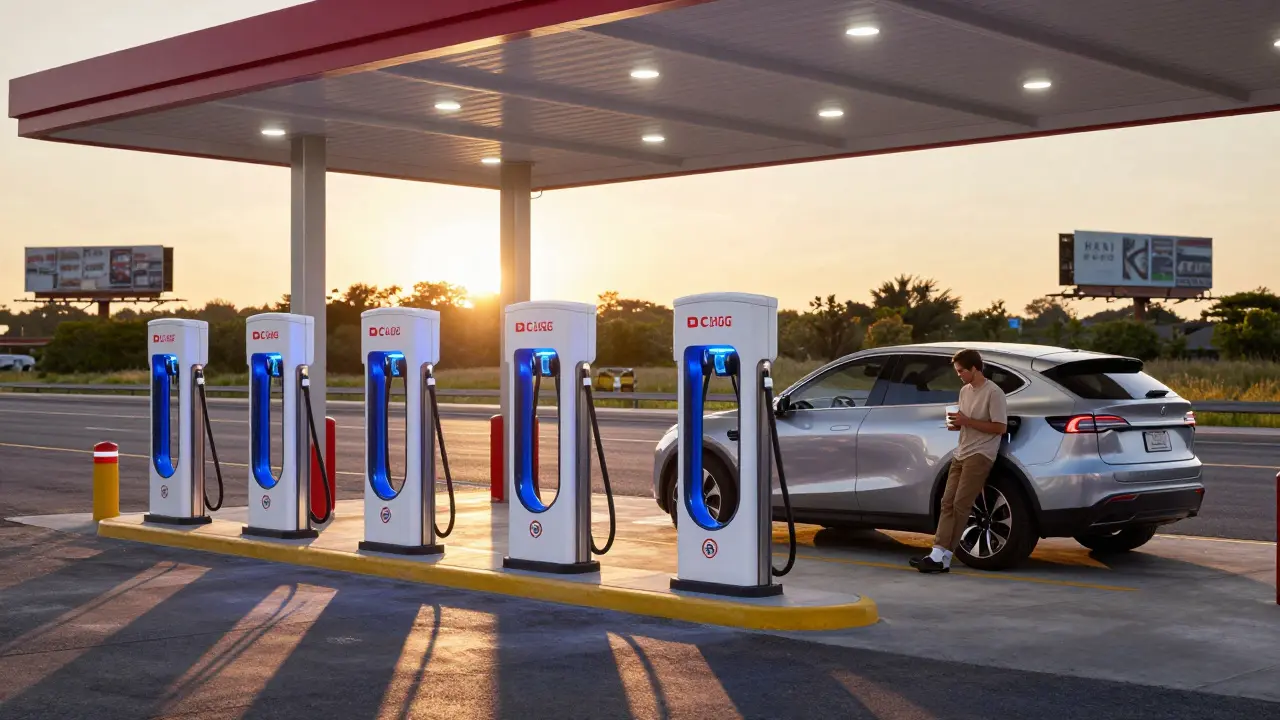
The real shift? It’s not just more chargers. It’s better chargers. DC fast chargers, which can add 200 miles of range in under 20 minutes, now make up over 60% of all public ports. Five years ago, that number was under 25%. These aren’t the slow Level 2 units you find at office parking lots. These are the kind that let you grab a coffee while your car charges for a road trip.
Who’s Building This Network-and Where
The growth isn’t happening by accident. Federal funding from the Bipartisan Infrastructure Law has poured over $5 billion into the National Electric Vehicle Infrastructure (NEVI) program. That money is being used to build charging corridors along major highways. By 2026, every interstate highway in the U.S. has charging stations every 50 miles, as required by law. That’s a huge upgrade from 2022, when large stretches of I-75 and I-90 had zero public options.
Companies like Electrify America, EVgo, and Tesla (which opened its network to non-Tesla EVs in 2024) are leading the charge. But local utilities and city governments are stepping up too. In Michigan alone, over 1,200 new public chargers were installed between 2023 and 2025, with 40% of them in rural towns that never had one before.
The pattern? Urban centers still have the most chargers, but the biggest growth is in smaller cities and along rural routes. Places like Marquette, Michigan, or Dodge City, Kansas, now have fast chargers where they once had none. That’s not just infrastructure-it’s equity.
What’s Changing Behind the Scenes
It’s not just about plugging in. The whole system is getting smarter. Most new public chargers now support:
- Plug-and-charge (no app needed-your car auto-authenticates)
- Real-time availability tracking (via Google Maps, PlugShare, and in-car systems)
- Dynamic pricing (lower rates during off-peak hours)
- Grid-balancing tech (chargers adjust power use to avoid overloading local transformers)
That last one matters more than you think. In 2023, a surge in EV charging in Phoenix overloaded a neighborhood transformer. Now, new chargers are required to have smart grid communication built in. They don’t just draw power-they talk to the grid and wait their turn if demand spikes.
Payment systems have also improved. You no longer need five different apps. Most public chargers now accept Apple Pay, Google Pay, and major credit cards. Many even let you pay with your EV’s built-in system. Tesla’s Supercharger network, for example, lets non-Tesla drivers pay directly through the car’s touchscreen.
Challenges Still Left to Solve
Don’t get it twisted-there are still problems. A 2025 survey by the EV Charging Coalition found that 18% of public chargers were out of service at any given time. Broken connectors, software glitches, and vandalism are still common. Some stations, especially older ones, still only support CCS or CHAdeMO, not both. That means some EVs can’t use them.
Another issue? Waiting. In high-demand areas like Chicago or Los Angeles, you might still wait 20-30 minutes during peak hours. That’s why cities are starting to require multiple fast chargers at new stations. A single charger is no longer enough. The new standard is four or more units per site, with at least two being 150kW+.
And then there’s the power supply. Building a 350kW charger needs a dedicated transformer. In older neighborhoods, the grid just can’t handle it. Utilities are now retrofitting poles and upgrading lines-but it takes time. That’s why new stations are being placed where infrastructure already supports it: gas stations, shopping centers, and highway exits.
What This Means for You
If you’re thinking about buying an EV, this expansion changes the game. You no longer need to live near a charger to make it work. Road trips are now realistic. Even if you have a short commute, knowing you can charge anywhere gives you freedom.
For people who already drive EVs? You’re seeing fewer “charger anxiety” moments. A 2026 survey showed that 73% of EV drivers say they feel confident about long trips-up from 41% in 2021. That’s not luck. It’s planning. It’s policy. It’s billions in investment.
And it’s not stopping. The U.S. Department of Energy now projects over 500,000 public chargers by 2030. That’s enough to support 30 million EVs on the road. Right now, we’re at about 5 million. So we’re just getting started.
What’s Next?
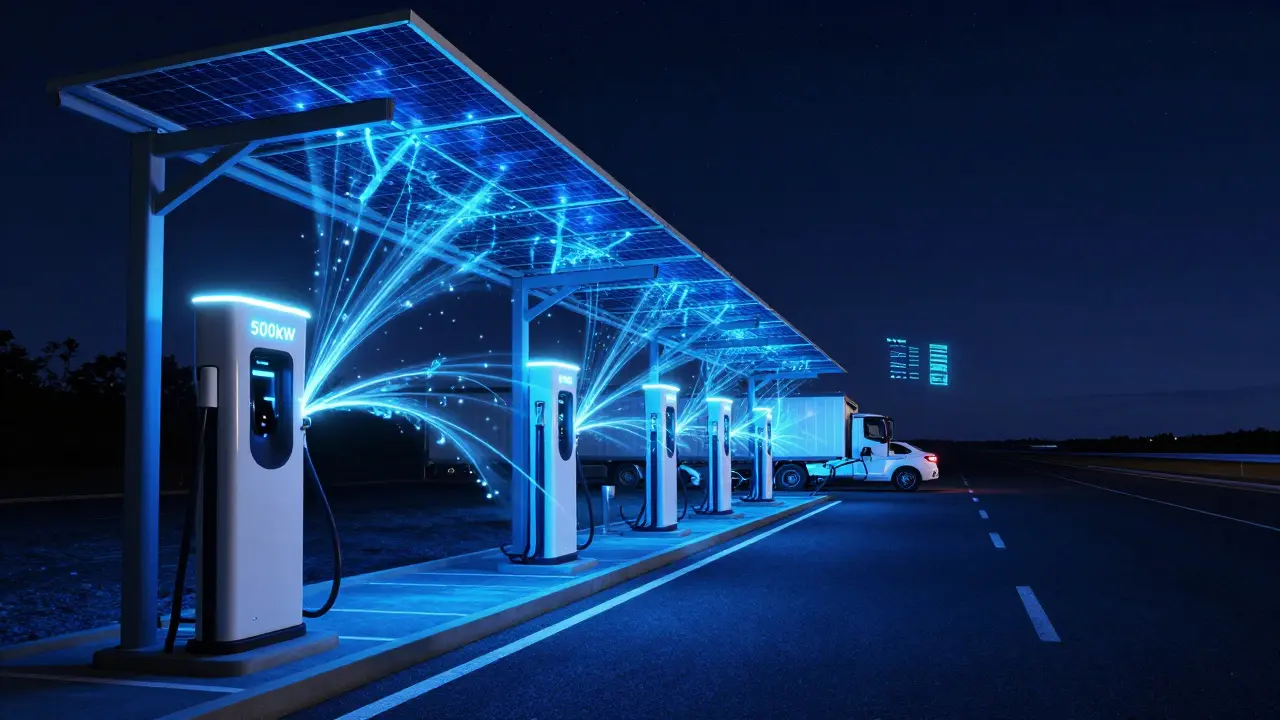
The next wave? Ultra-fast chargers-500kW and up. These can add 400 miles in under 15 minutes. Prototypes are already being tested in Ohio and Texas. They’ll need new electrical grids, but the tech is ready. By 2028, you might see them at truck stops and major highway exits.
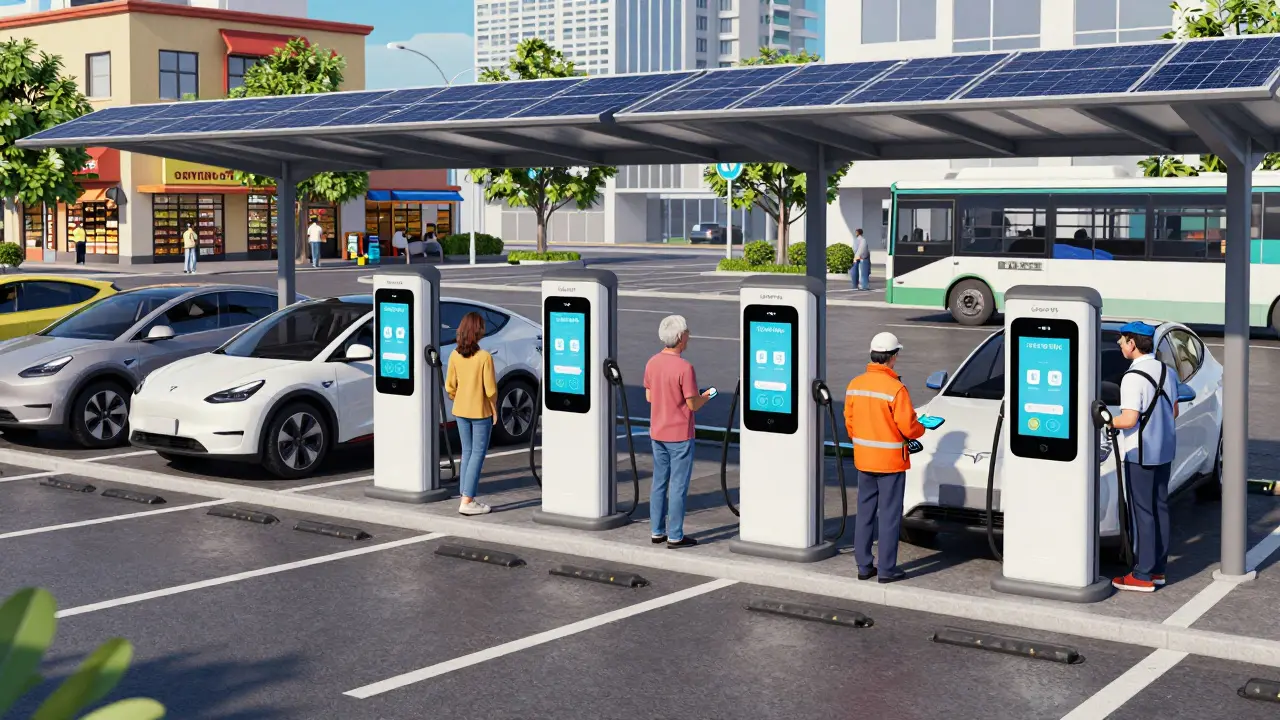
Also coming: solar canopies over charging stations. Some sites in California and Arizona are already using them. They don’t just power the chargers-they feed excess energy back into the grid. That’s the future: chargers that don’t just use electricity, but help manage it.
One thing’s clear: the days of wondering if you’ll make it to the next charger are fading. The infrastructure is here. It’s working. And it’s growing every single day.
How many public EV charging stations are there in the U.S. as of 2026?
As of early 2026, there are over 240,000 public EV charging ports across the United States. This includes both Level 2 and DC fast chargers, with the majority now being fast chargers capable of adding 200 miles of range in under 20 minutes. The number has grown by more than 140% since 2021, driven by federal funding and private investment.
Are public EV chargers reliable?
Reliability has improved significantly, but it’s not perfect. A 2025 survey found that about 18% of public chargers were out of service at any given time. Common issues include broken connectors, software errors, and vandalism. Newer installations are far more reliable, thanks to remote monitoring and mandatory maintenance contracts. Most modern stations also send alerts to operators when they go down, reducing downtime.
Do I need an app to use a public EV charger?
Not anymore. Many newer public chargers support plug-and-charge technology, which lets your EV automatically authenticate with the network using its VIN. You can pay with Apple Pay, Google Pay, or a credit card directly on the station. Some chargers even let you pay through your car’s touchscreen. Apps are still useful for finding stations and checking availability, but they’re no longer required to charge.
Can all electric cars use the same public chargers?
Most can, but not all. The two main standards are CCS (Combined Charging System) and Tesla’s NACS (North American Charging Standard). Since 2024, Tesla opened its Supercharger network to all EVs, and most new chargers now support both CCS and NACS. Older stations may only support one, so check your car’s port before you go. Most EVs sold since 2022 have CCS ports, which work with over 90% of public chargers today.
Will charging infrastructure keep growing?
Yes, and at an even faster pace. The U.S. Department of Energy projects over 500,000 public chargers by 2030, enough to support 30 million EVs. Next-generation chargers-500kW and above-are already being tested. Solar-powered stations, grid-balancing tech, and ultra-fast charging at truck stops are all part of the next phase. The expansion isn’t slowing down-it’s accelerating.