
Most people think boosting engine power means adding a turbo, upgrading the exhaust, or swapping parts. But the real magic-what actually unlocks hidden horsepower-happens inside the car’s computer. ECU remapping isn’t just a buzzword. It’s the most cost-effective way to get real, measurable performance gains without touching a single bolt.
What Exactly Is ECU Remapping?
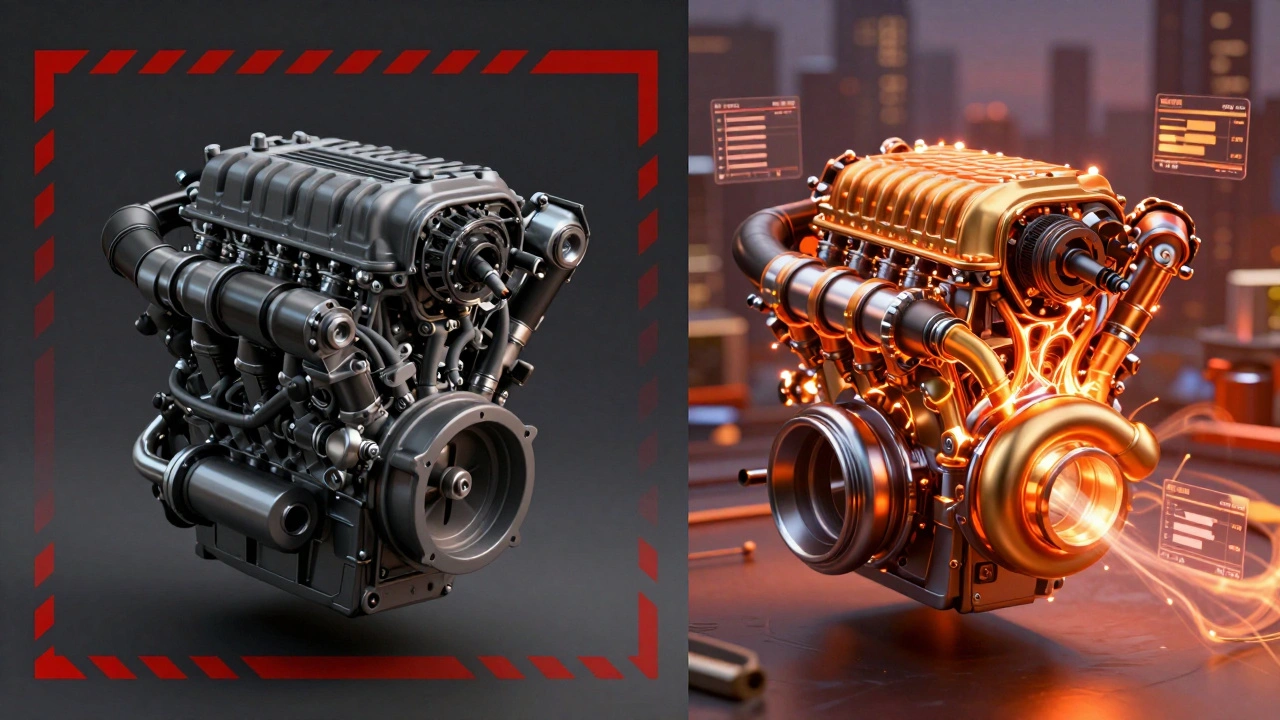
The ECU, or Engine Control Unit, is the brain of your car’s engine. It decides when to inject fuel, how much air to let in, when to ignite the spark, and how to manage boost pressure in turbocharged engines. Factory settings are programmed to work across every possible condition: cold winters, hot summers, low-quality fuel, long life, emissions compliance, and warranty protection. That means your car is running in a cautious, compromise mode.
ECU remapping changes those factory settings. It rewrites the software inside the ECU to optimize for performance instead of safety. Think of it like switching from economy mode to sport mode-but permanently, and with way more control. A professional remap doesn’t just turn up the fuel. It adjusts timing, boost curves, torque limits, and throttle response across the entire RPM range.
For example, a stock 2.0L turbo diesel SUV might make 150 horsepower and 350 Nm of torque. After a proper remap, it can hit 190 horsepower and 450 Nm-without adding hardware. That’s a 27% power increase and a 29% torque jump. Real numbers. Real results.
How Engine Tuning Works in Practice
There are two main ways to tune an engine: chip tuning and ECU remapping. Chip tuning is old-school. It involves physically replacing a chip on the ECU circuit board. Most modern cars don’t even have removable chips anymore. ECU remapping is the standard today.
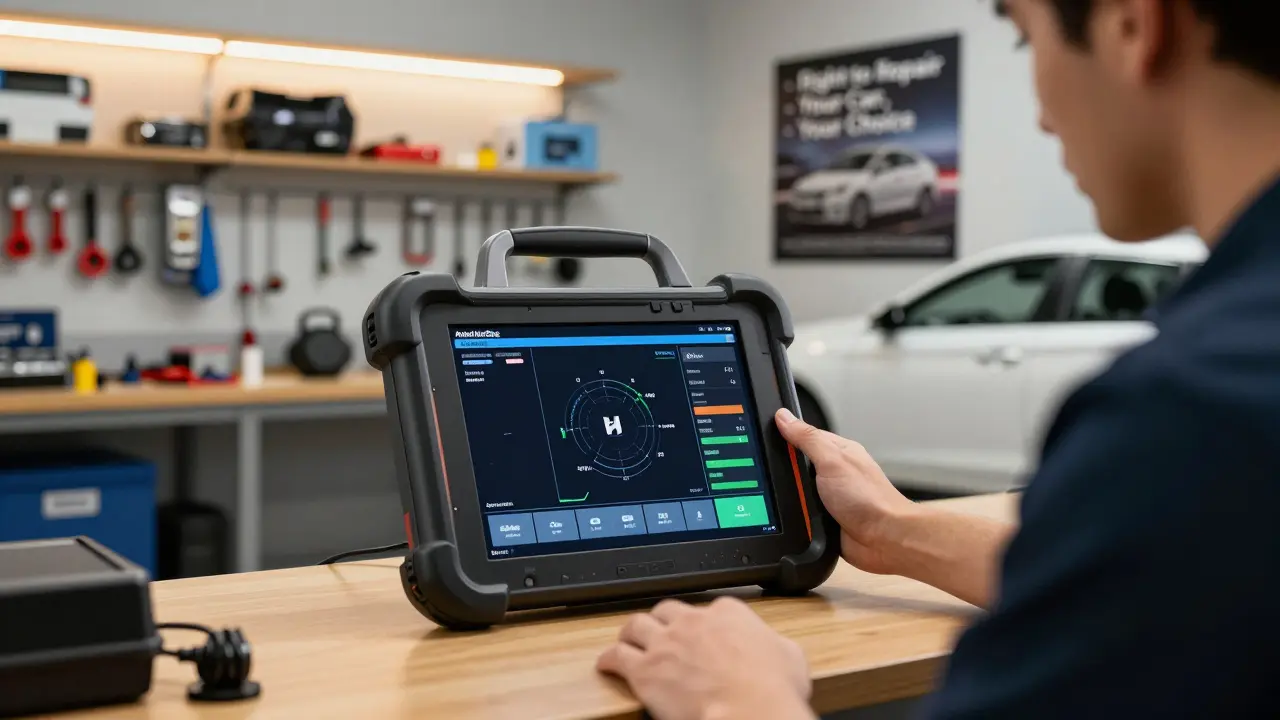
The process starts with a diagnostic tool connected to your car’s OBD-II port. The tuner downloads the original software file from your ECU. That file contains thousands of data points-fuel maps, ignition maps, boost maps, rev limits, and more. Then, using specialized software, the tuner modifies those values based on your goals: more power, better throttle response, improved fuel economy, or a mix of all three.
After the changes are made, the new file is uploaded back to the ECU. The car restarts, and now it runs on the new tune. No physical changes needed. No drilling, no welding, no cutting wires. Just software.
But here’s the catch: not all tuners are equal. Some shops use generic, one-size-fits-all maps. Others build custom tunes based on your exact setup-your exhaust, intake, intercooler, even the fuel you use. A custom tune can make 30% more power than a generic one. And it’s safer.
What Kind of Gains Can You Expect?
Performance gains depend on your car’s engine type and original factory limits. Here’s what real owners see after a professional remap:
- Gasoline turbo engines (like VW 2.0 TSI, Ford EcoBoost, BMW B48): +20% to +35% horsepower, +25% to +40% torque
- Diesel engines (like Mercedes OM642, Ford Power Stroke, Toyota 1GD-FTV): +25% to +40% horsepower, +30% to +50% torque
- Atmospheric (naturally aspirated) engines: +5% to +15%-smaller gains, but smoother throttle response
- Fuel economy: +5% to +12% if you drive gently after the tune
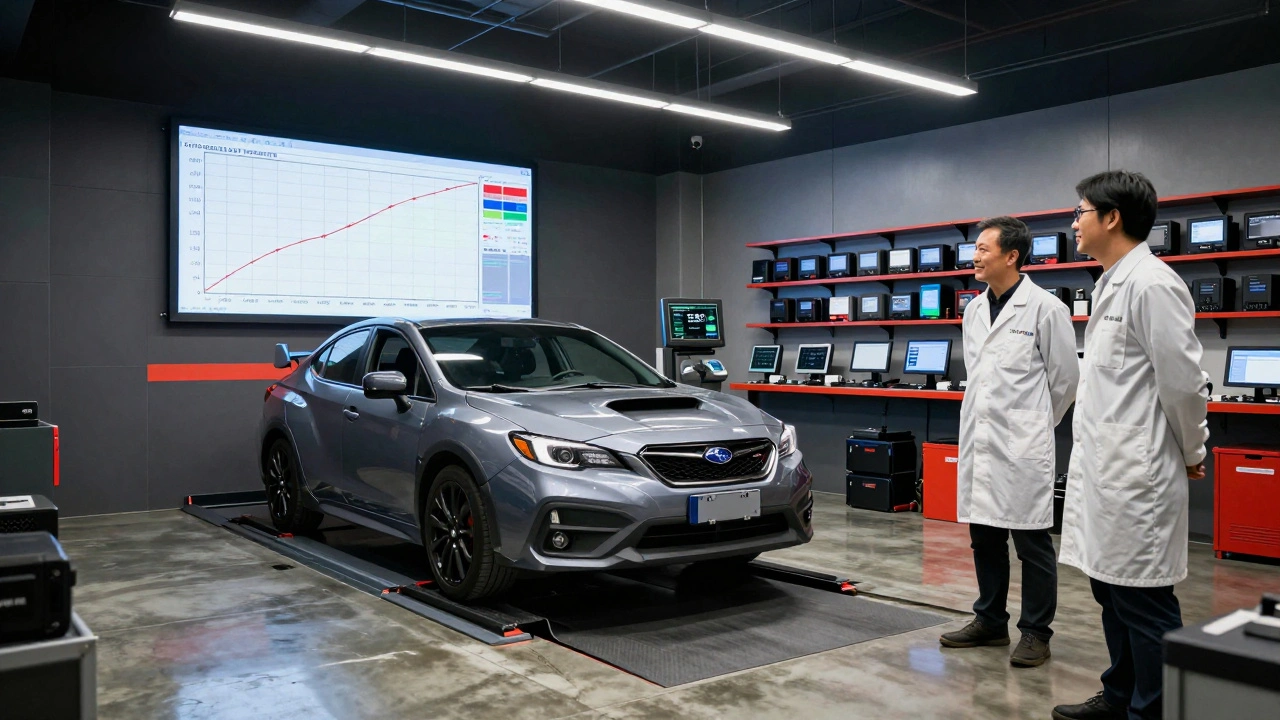
These aren’t marketing claims. They’re based on dynamometer tests done in Detroit tuning shops on 2023-2025 models. A 2024 Subaru WRX with a stock 271 hp can hit 330 hp on a Stage 1 remap. A 2023 Ford F-150 with the 3.5L EcoBoost goes from 400 hp to 490 hp. That’s the difference between feeling sluggish on the highway and passing trucks without downshifting.
Is It Safe? What Are the Risks?
Yes, it’s safe-if done right.
Bad tuning is dangerous. Too much boost can blow a head gasket. Too much fuel can wash oil off cylinder walls and destroy rings. Too little timing can cause detonation and melt pistons. That’s why you need a tuner who knows your engine’s limits.
Reputable tuners don’t push engines past their breaking point. They leave safety margins. They monitor exhaust gas temperatures, knock sensors, and air-fuel ratios in real time during testing. They also test the tune on a dyno-not just on the road-so they can see exactly how the engine behaves under load.
Most modern ECUs have built-in protection. If the engine detects a problem, it will reduce power automatically. That’s why a good tune doesn’t just make more power-it makes power more consistently.
The biggest risk isn’t the tune itself. It’s the shop. Avoid bargain basement deals on eBay or YouTube tutorials. A $150 tune from a guy with a laptop and a generic file is a gamble. A $500-$800 tune from a certified shop with dyno testing and warranty support? That’s an investment.
Does It Void Your Warranty?
Technically, yes. Under the Magnuson-Moss Warranty Act in the U.S., a dealer can only deny warranty coverage if they prove the modification directly caused the failure. So if your transmission blows and you’ve remapped your ECU, they’ll try to blame the tune. But if your power steering pump fails? They can’t say it’s because of the remap.
Most people who tune their cars also keep the original file backed up. If you need warranty work, you can flash back to stock in under 30 minutes. Many shops offer this as a free service. Some even sell you a switch that lets you toggle between stock and tuned modes with a button on your dash.
Dealers don’t have the tools to detect a remap unless they’re specifically looking for it. Most service centers just run a basic diagnostic. They won’t see the difference unless you tell them.
What Hardware Should You Pair With a Remap?
You don’t need to upgrade parts to get gains from a remap. But if you want to unlock the full potential-and make the tune last longer-you should consider a few upgrades.
- High-flow air intake: Lets more air in, improves throttle response
- Performance exhaust: Reduces backpressure, helps turbo spool faster
- Upgraded intercooler: Keeps intake air cool under boost, prevents power loss
- High-performance fuel pump: Needed for aggressive tunes on high-output engines
- Upgraded clutch (for manual cars): Stock clutches can slip under increased torque
For example, a 2022 Hyundai Veloster N with a Stage 2 remap and a cat-back exhaust and upgraded intercooler can make 320 hp-up from 275. Without the intercooler, that same tune might cause heat soak and lose 20 hp after a few hard runs.
Think of it like this: ECU remapping is the engine’s new personality. Hardware upgrades are the clothes it wears. You can have a powerful personality in sweatpants-but you’ll look and perform better in the right gear.
How to Choose a Tuner
Not all tuners are created equal. Here’s what to look for:
- They use a dynamometer. If they say they tune by ‘feel’ or ‘on the road only,’ walk away.
- They offer a warranty on their work. Reputable shops stand behind their tunes.
- They have reviews from real customers-not just testimonials on their website.
- They ask about your driving habits, fuel type, and existing mods before quoting.
- They provide before-and-after dyno sheets. Real data, not graphs with fake lines.
Look for shops that specialize in your car’s make. A tuner who knows BMWs inside out won’t do the same job for a Toyota. Detroit has several well-known shops like SpeedLab Performance and MotorCity Tuning that have been doing this since 2015. Ask around. Talk to owners of the same model. Real people know who to trust.
Can You Remap It Yourself?
You can buy ECU tuning software and a cable for $300. But unless you’re an engineer with access to a dyno, you shouldn’t.
Generic files sold online are risky. They’re made for average conditions. Your car might have a different turbo, a worn fuel injector, or a clogged air filter. A generic tune won’t account for that. It might run fine at first-then blow a turbo a month later.
Plus, if you mess up, you can brick your ECU. That’s a $2,000 repair. A professional tuner has the tools to recover a bricked ECU. You won’t.
DIY tuning is like doing your own brain surgery. It’s possible. But you’re better off letting someone who’s done it 500 times handle it.
Final Thoughts: Is It Worth It?
If you want more power, better throttle response, and a car that feels alive again-yes, it’s worth it.
ECU remapping is the single most effective upgrade you can make to a modern car. It’s cheaper than new wheels, faster than a full exhaust swap, and more impactful than any bolt-on part. You’re not just adding horsepower. You’re unlocking what the manufacturer hid to protect the engine, meet emissions, and extend warranty life.
Do it right. Pick a reputable shop. Get a dyno sheet. Keep the stock file. And enjoy the ride.
Does ECU remapping damage the engine?
No, not if done by a professional. Reputable tuners leave safety margins, monitor real-time engine data, and avoid pushing components beyond their limits. Poorly done tunes-especially cheap, generic ones-can cause damage, but a proper remap is designed to be safe and reliable.
How long does ECU remapping take?
The actual process takes 2 to 4 hours. That includes downloading the original file, modifying it, uploading the new tune, and testing on a dyno. Some shops offer same-day service, but if they promise it in under an hour, they’re likely skipping critical steps.
Can you reverse an ECU remap?
Yes. Every professional tune includes a backup of the original factory file. You can switch back to stock anytime-usually in under 30 minutes. Many shops even install a toggle switch so you can switch between modes without a laptop.
Does remapping affect fuel economy?
It depends on how you drive. If you use the extra power aggressively, fuel economy will drop. But if you drive normally, many people see a 5-12% improvement because the engine runs more efficiently. Diesel owners often report better highway MPG after a remap.
Is ECU remapping legal?
In the U.S., it’s legal for off-road or track use. On public roads, it may violate emissions regulations if it disables or alters emissions controls. Most performance tunes keep emissions systems intact, but some aggressive tunes remove DPF or EGR systems-which is illegal. Always confirm your tune complies with local laws.


Nick Rios
December 5, 2025 AT 10:42Had my 2021 Golf GTI remapped last year. No hardware changes, just software. Took it to a local shop with dyno credentials, got the before-and-after sheets, and now it feels like a different car. No check engine lights, no issues. Just smoother power all the way up to redline. Worth every penny.
Amanda Harkins
December 6, 2025 AT 04:44It’s wild how much power is just sitting there, locked behind factory software. Like the car’s been wearing a trench coat in summer and someone finally said, ‘take it off.’
Jeanie Watson
December 6, 2025 AT 14:08So… does this mean I can now ignore my mechanic? Just plug in a USB and boom, free horsepower?
Mark Tipton
December 8, 2025 AT 10:39Let me be clear: ECU remapping is not a modification. It is a violation of the manufacturer’s contractual engineering parameters, a circumvention of emissions compliance protocols, and an invitation to catastrophic engine failure if performed by anyone without a PhD in internal combustion thermodynamics and a calibrated dyno suite. The fact that this post treats it as a DIY hobby is dangerously irresponsible. I’ve seen three F-150s with blown turbos from cheap tunes. Don’t be the fourth.
Adithya M
December 9, 2025 AT 13:53You missed the part about torque curve optimization. A good remap doesn't just increase peak numbers - it flattens the curve so you get usable power from 1500 RPM. Also, you forgot to mention that modern ECUs have adaptive learning - if you use low-octane fuel after a high-performance tune, it will auto-detune to prevent knock. That’s why some people think it 'doesn't work' - they're using 87 octane and wonder why they only got 15 hp more.
Jessica McGirt
December 10, 2025 AT 21:25One thing that’s often overlooked: a professional remap doesn’t just change fuel and timing maps - it recalibrates the transmission shift points, traction control thresholds, and even throttle response curves. That’s why you feel the difference even before you hit the gas. It’s not just power - it’s harmony.
Donald Sullivan
December 12, 2025 AT 19:15Mark Tipton is right about the risks - but he’s also ignoring that 90% of people who get a proper tune never have an issue. I’ve been tuning cars since 2012. I’ve seen bad tunes kill engines. I’ve also seen stock engines die from poor maintenance. Blame the guy with the laptop, not the tech. And if you’re scared of software, maybe you shouldn’t own a car made after 2005.
Tina van Schelt
December 14, 2025 AT 17:31Imagine your engine is a jazz musician. Factory settings? He’s playing smooth, safe, radio-friendly covers. A remap? He’s finally let loose in a smoky basement club, improvising, bending notes, screaming with the horns - and the crowd goes wild. Hardware upgrades? That’s the fedora, the gold chain, the leather boots. The soul’s already there - you just gotta unlock it.
Ronak Khandelwal
December 16, 2025 AT 14:07Guys, this is the real magic of modern cars - we’re not just fixing engines anymore, we’re redefining their spirit 🌟. I remapped my Toyota Innova (yes, a work van!) and now it pulls like a sports car on highways. My kids say it feels like the car is smiling. And yes, fuel economy went up 8% because I’m not babying it anymore - the engine knows how to breathe now. You don’t need to be an engineer. You just need to trust someone who is. And maybe a good cup of chai while you wait 😊