How long does it really take to charge your electric car? If you’ve ever stared at a charging station wondering if you’ll make it to work on time, you’re not alone. The answer isn’t simple-it depends on the type of charger you’re using. There are three main types: Level 1, Level 2, and DC fast charging. Each one delivers power differently, and knowing the difference can save you hours-or even days-of waiting.
Level 1 Charging: The Plug-It-In Option
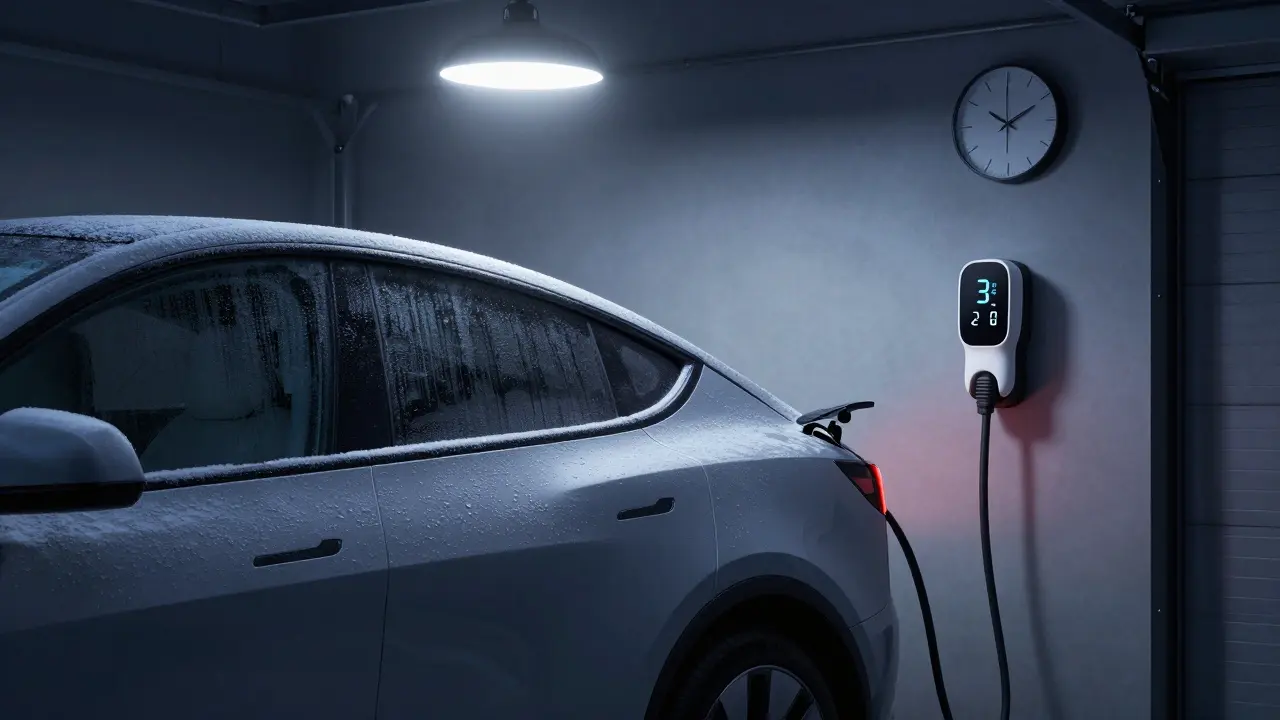
Level 1 charging uses a standard 120-volt household outlet. It’s the slowest way to charge an EV, but it’s also the most accessible. If you bought your EV with a portable charger, chances are it came with a Level 1 cable. You just plug it into any regular wall socket, and you’re good to go.
Don’t expect miracles. Most Level 1 chargers deliver about 1.4 to 2.4 kW of power. That means you’re adding roughly 3 to 5 miles of range per hour. If your car has a 250-mile range and you’re down to 50 miles left, you’ll need nearly 40 hours to fully recharge. That’s longer than a weekend trip.
People who use Level 1 charging usually have short daily commutes-under 30 miles-and charge overnight. It works for someone who drives to the grocery store and back, not for someone who takes road trips. In Detroit, where winter temps drop below zero, battery efficiency drops even more, making Level 1 even slower. You might lose 10-15% of your range in freezing weather, so you’ll need to charge longer just to make up for the cold.
Level 2 Charging: The Sweet Spot for Home and Public Use
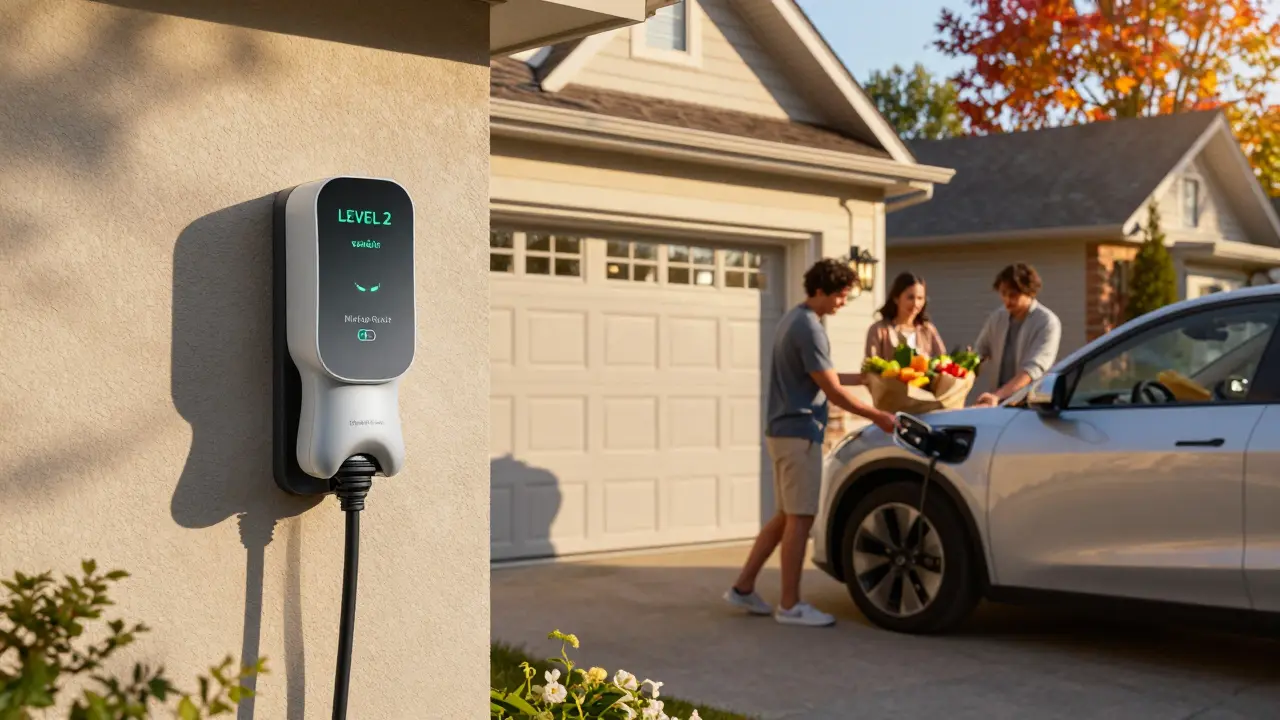
Level 2 charging runs on 240 volts-the same as your electric dryer or oven. This is what most EV owners install at home and what you’ll find at public charging stations, workplaces, and shopping centers.
Level 2 chargers deliver between 3.3 kW and 19.2 kW, depending on the unit and your home’s electrical setup. Most common home units are 7.2 kW or 11.5 kW. That means you can add 25 to 75 miles of range per hour. A full charge for a 250-mile EV? Around 4 to 8 hours. Most people plug in at night and wake up to a full battery.
Installing a Level 2 charger at home costs between $500 and $1,500, including the unit and professional installation. Many states, including Michigan, offer rebates that cut that cost in half. The federal tax credit covers 30% of the cost, up to $1,000. That makes Level 2 one of the best value upgrades for EV owners.
Public Level 2 stations are often free or low-cost at malls, libraries, and workplaces. You can run errands while your car charges. If you’re in Ann Arbor or Grand Rapids, you’ll find dozens of these stations. They’re not fast, but they’re reliable and gentle on your battery-no heat stress, no wear. For daily driving, Level 2 is the gold standard.
DC Fast Charging: When You Need Power Now
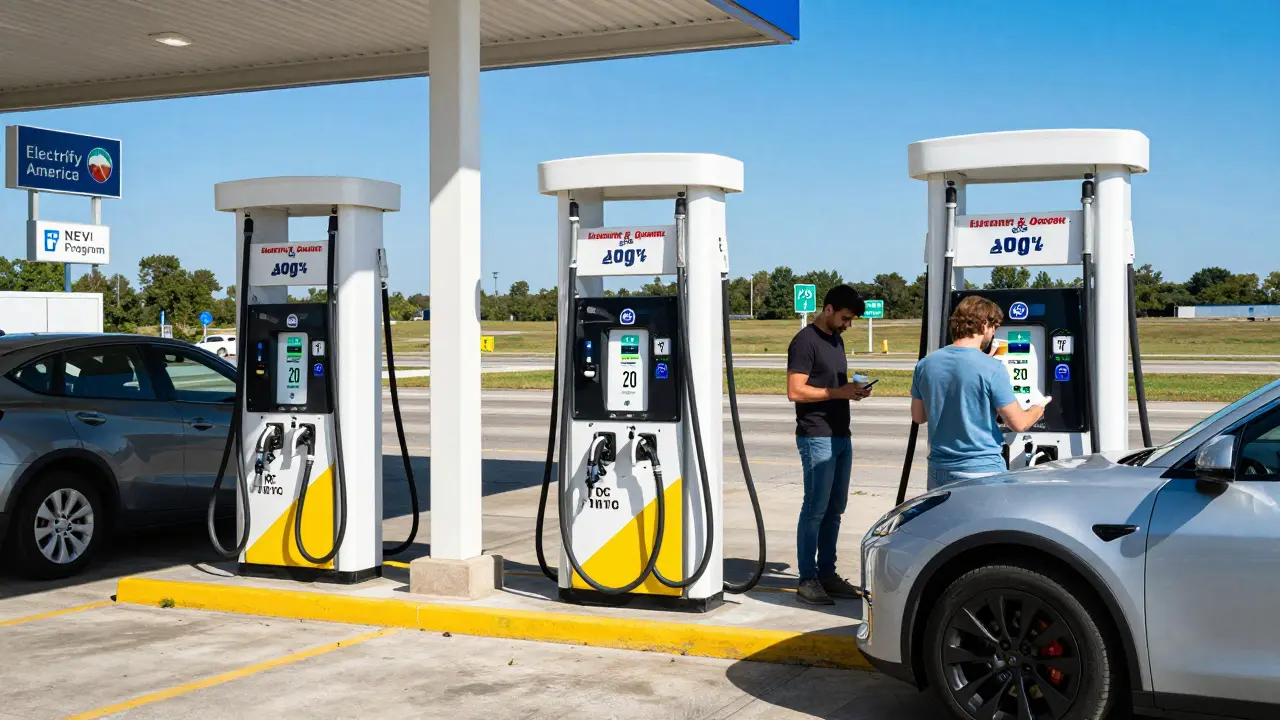
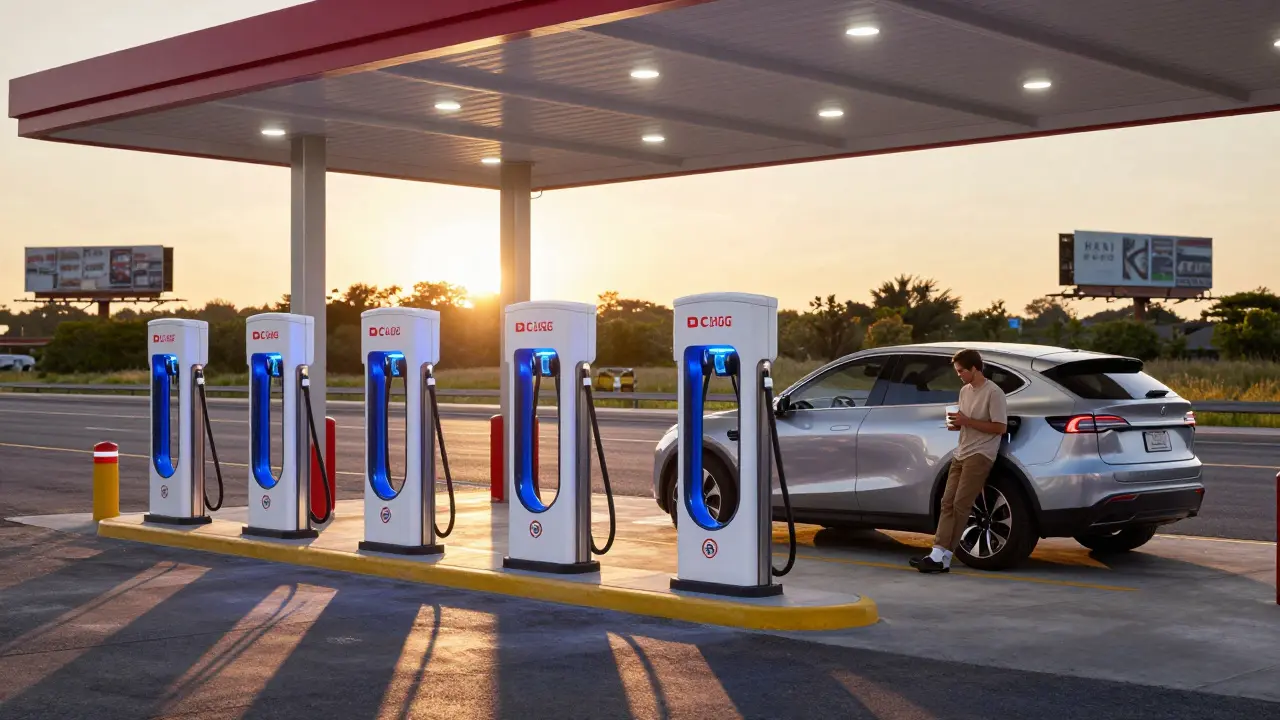
DC fast charging is the only option that can refill your battery in minutes instead of hours. These are the big, industrial-looking chargers you see along highways-often branded as Tesla Superchargers, Electrify America, or EVgo.
DC fast chargers deliver between 50 kW and 350 kW. A 150 kW charger can add 100 to 200 miles of range in 15 to 20 minutes. That’s enough to get you from Toledo to Cleveland, or from Lansing to Grand Rapids, with a coffee break in between.
But here’s the catch: DC fast charging isn’t meant for everyday use. It heats up your battery fast, and repeated use can shorten its lifespan over time. Most manufacturers recommend using DC fast charging only when you’re on the road. Your owner’s manual probably says so.
Also, not all EVs can handle the same speed. A 2025 Hyundai Ioniq 6 can charge at up to 225 kW, while a 2024 Nissan Leaf maxes out at 50 kW. That means two cars plugged into the same 150 kW station will charge at wildly different rates. The Leaf might take 45 minutes to get 80%, while the Ioniq 6 hits 80% in under 20.
Cost is another factor. DC fast charging usually costs more than Level 2-often $0.35 to $0.60 per kWh. That’s 2 to 3 times the price of home charging. In Michigan, where electricity averages $0.15 per kWh at home, you’re paying triple the rate at a fast charger.
Real-World Charging Scenarios
Let’s say you drive a 2025 Chevrolet Bolt EUV with a 247-mile range. Here’s what your typical week looks like:
- Monday to Friday: You drive 28 miles to work. You plug in at home overnight using Level 2. You gain 60 miles overnight-plenty to cover your commute and a few extra errands.
- Saturday: You drive to Detroit Zoo, then to a friend’s house in Ferndale. You use a public Level 2 charger for 45 minutes while you eat lunch. You gain 50 miles.
- Sunday: You’re heading to Mackinac Island. You need to charge before hitting I-75. You stop at an Electrify America station in Flint. You plug in at 10 a.m. and get 80% in 22 minutes. You’re back on the road by 10:25 a.m.
This mix of charging types is how most EV drivers operate. You don’t need DC fast charging every day. You just need it when you need it.
What About Battery Health?
Charging too fast or too often at high power can degrade your battery faster. Lithium-ion batteries prefer slow, steady charging. That’s why your phone doesn’t charge at 100% speed all the time-it throttles down to protect itself.
EVs do the same. Most systems automatically reduce charging speed once the battery hits 80%. That’s why a 15-minute DC fast charge might only get you to 80%, even if the station says it can do 200 miles in 20 minutes. The last 20% takes longer to protect the battery.
Studies from the Idaho National Laboratory show that EVs charged mostly on Level 2 and only occasionally on DC fast charging retain 90% of their original capacity after 150,000 miles. Those charged daily on DC fast chargers dropped to 85% in the same distance.
Bottom line: Use DC fast charging for trips. Use Level 2 for daily life. Level 1 is fine if you drive less than 20 miles a day and have no other option.
Charging Infrastructure in Michigan
Michigan is investing heavily in EV infrastructure. The state has over 2,000 public charging ports, with more than 600 being DC fast chargers. The Michigan Department of Transportation has installed chargers along all major interstates: I-75, I-96, I-94, and I-69.
Most of these chargers are part of the National Electric Vehicle Infrastructure (NEVI) program, which requires stations to be reliable, open to all EVs, and capable of charging multiple vehicles at once. You’ll rarely find a station with only one port anymore.
Apps like PlugShare and ChargePoint show real-time availability. In Detroit, you can usually find an open DC fast charger within 10 minutes of driving. The same goes for Grand Rapids, Kalamazoo, and Lansing.
How to Choose the Right Charging Setup
Here’s a quick guide:
- If you drive less than 20 miles a day and have a garage: Level 1 is enough. Just plug in every night.
- If you drive 20-70 miles a day: Install a Level 2 charger. It’s the smartest long-term move.
- If you take weekly road trips: Level 2 at home + DC fast charging on the road. That’s the ideal combo.
- If you live in an apartment: Look for public Level 2 chargers near your building. Some complexes are installing shared chargers. Ask your landlord.
Don’t feel pressured to buy a DC fast charger for your home. They’re expensive ($3,000-$7,000), require major electrical upgrades, and most EVs can’t even use them at full speed. Stick with Level 2 unless you’re running a fleet or charging multiple EVs daily.
What’s Next for EV Charging?
By 2026, 350 kW chargers are becoming common. Some new models, like the Lucid Air and Porsche Taycan, can charge at 270 kW and refill 200 miles in under 15 minutes. Tesla’s V4 Superchargers can hit 250 kW and support both CCS and NACS plugs.
Wireless charging is starting to appear in test zones in Ann Arbor and Dearborn. It’s not ready for mass use yet, but it’s coming. Battery tech is improving too-solid-state batteries, expected by 2028, will charge faster and last longer.
For now, the best advice is simple: Know your charger type. Match it to your driving habits. And don’t stress about charging speed-you’ll get used to it faster than you think.
How long does it take to charge an EV with Level 1 charging?
Level 1 charging adds about 3 to 5 miles of range per hour using a standard 120-volt outlet. For a typical EV with a 250-mile range, a full charge takes 40 to 80 hours. It’s only practical for drivers who travel less than 20 miles a day and charge overnight.
Is Level 2 charging worth the investment?
Yes, for most EV owners. Level 2 adds 25 to 75 miles of range per hour, letting you fully charge overnight. Installation costs $500-$1,500, but federal and state rebates in Michigan can cut that by up to 50%. It’s the most cost-effective and battery-friendly option for daily use.
Can I use DC fast charging every day?
You can, but it’s not recommended. Frequent DC fast charging heats up the battery, which can reduce its lifespan over time. Most manufacturers suggest using it only for road trips. For daily charging, stick with Level 2 to preserve battery health and save money.
Why does my EV charge slower after 80%?
The car’s battery management system slows down charging after 80% to protect the battery from overheating and stress. This is normal and helps extend battery life. The last 20% can take as long as the first 80%, so plan your stops accordingly.
Are public DC fast chargers reliable in Michigan?
Yes. Michigan has over 600 DC fast chargers along major highways, all part of the NEVI program. They’re required to be open to all EVs, regularly maintained, and capable of charging multiple vehicles. Apps like PlugShare show real-time status, and most stations are operational 95% of the time.
Tonya Trottman
January 13, 2026 AT 17:06So I’ve been charging my Leaf on Level 1 for two years now in Kerala, and honestly? It’s fine. I drive 15 km to work, back, then to the market. My battery drops to 20% by Friday, I plug it in Friday night, and by Monday morning it’s still at 85%. No rush. No stress. No fancy install. The cold doesn’t hit here like Michigan, so range loss? Barely a blip. People act like EVs need to be charged like smartphones, but if your life doesn’t demand speed, why force it?
Rocky Wyatt
January 14, 2026 AT 23:38Level 2 is the only way to live. I installed mine last winter after my wife nearly cried because she missed her yoga class waiting for the car to charge. We got the 11.5kW unit, paid $1200 out of pocket, got the federal credit, and now our car charges faster than we make coffee. People who say ‘just use Level 1’ haven’t tried driving 50 miles a day with kids, groceries, and a dog that needs the vet. This isn’t a luxury. It’s sanity.
Santhosh Santhosh
January 16, 2026 AT 04:03I read this whole thing slowly because I care about how things work. I’ve been driving an EV in Bangalore for three years, and I’ve learned that charging isn’t about speed-it’s about rhythm. Level 1 is like breathing. Level 2 is like walking. DC fast is like sprinting. You don’t sprint every day. Your body doesn’t like it. Your battery doesn’t like it. And honestly? Your wallet doesn’t like it either. I charge at home on Level 2 every night. I use DC only once a month when I visit my parents in Mysore. That’s it. It’s not about having the fastest charger. It’s about having the right one for your life.
ujjwal fouzdar
January 17, 2026 AT 04:35Let me tell you something about DC fast charging… it’s not just about speed. It’s about power. It’s about the raw, unfiltered energy of the modern age. When you plug into a 150kW charger, you’re not just charging a car-you’re connecting to the future. And yet, people treat it like a vending machine. ‘Oh, I’ll just use it every day.’ No. No. No. That’s like eating fast food for every meal. You’ll get full, sure. But your soul? Your battery? They’ll wither. Slow charging is meditation. Fast charging is a scream. Choose wisely.
Anand Pandit
January 17, 2026 AT 07:34Hey! Just wanted to say this post is spot on. I’m a new EV owner in Pune and was totally overwhelmed by all the charging options. This broke it down so clearly. I went with a Level 2 at home after reading this-installed it last week, and now I wake up to a full car every morning. No more range anxiety. Also, the 80% rule? Total game-changer. I used to panic when it slowed down, but now I just grab coffee and chill. Thanks for the clarity!
Reshma Jose
January 18, 2026 AT 12:27My landlord said no to installing a charger in my apartment so I’ve been using public Level 2s near the mall. They’re free, clean, and usually empty on weekdays. I plug in while I get my chai. One time I waited 20 mins for a DC fast charger and it was broken. PlugShare saved me. Just use the damn app. And stop judging people who use Level 1-they might not have a garage or live in a 3rd floor walkup. Everyone’s situation is different.
rahul shrimali
January 19, 2026 AT 21:42Level 1 is fine if you drive less than 20 miles a day. Level 2 is the sweet spot. DC fast is for emergencies. That’s it. No more talk. Just charge and go
Eka Prabha
January 21, 2026 AT 14:23Let’s be real-this whole EV infrastructure push is a corporate greenwashing scheme. The government says ‘NEVI program’ like it’s a miracle, but who’s really paying? You are. The chargers are owned by private conglomerates who charge triple the grid rate. Your battery degradation? That’s a planned obsolescence feature. They want you to replace your car every 5 years, not 15. And don’t get me started on how Tesla controls the NACS standard. It’s not innovation. It’s monopoly. The real solution? Public transit. But that’s not sexy enough for Silicon Valley.
Bharat Patel
January 21, 2026 AT 21:00I think about charging like I think about sleep. You need rest. But not all rest is the same. Deep sleep is slow, quiet, healing. That’s Level 2. Light sleep? That’s Level 1. You can survive on it, but you won’t feel your best. Then there’s the caffeine nap-fast, intense, temporary. That’s DC fast charging. You wake up energized, but you know you’re not truly rested. The best life? A balance. Sleep deep most nights. Take a caffeine nap when you’re running late. Don’t make the caffeine nap your default. That’s how burnout starts. And so is battery decay.
Bhagyashri Zokarkar
January 23, 2026 AT 20:49i just dont get why people make such a big deal about charging times like its some kind of life or death thing?? i mean i charge my car at night while i sleep and i wake up and its full like magic and i drive to work and its fine. i dont even think about it. why are we all so obsessed with speed?? its just a car. not a rocket ship. also i think they make the battery thing up to sell you new ones. like seriously. my phone still works after 5 years. why cant a car??