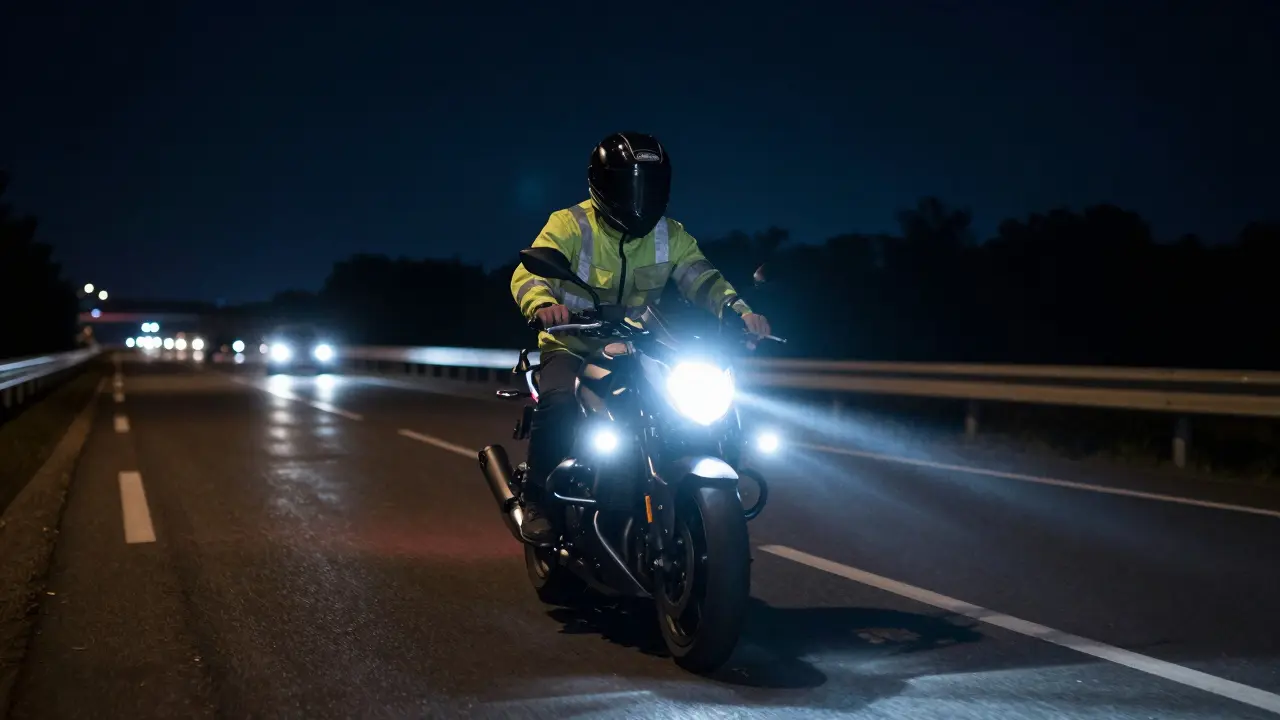
Why Night Riding Is Different
Driving a motorcycle at night isn’t just darker-it’s riskier. Your reaction time drops, depth perception fades, and other drivers don’t see you as easily. In the U.S., motorcycle fatalities at night are nearly three times higher than during daylight, according to the National Highway Traffic Safety Administration. That’s not because riders are reckless-it’s because they’re under-equipped.
You can’t rely on instinct. You need gear, light, and strategy. This isn’t about riding faster. It’s about riding smarter when the world goes black.
Lighting That Actually Works
Most stock motorcycle headlights are designed for daytime visibility, not night survival. A basic halogen bulb might light up 50 feet ahead-barely enough to stop if something jumps out. You need more.
Upgrade to LED or HID headlights. LEDs use less power, last longer, and throw light 100-150 feet ahead. HID kits can go even farther, but they need proper housing to avoid blinding oncoming traffic. Don’t just slap on a bright bulb-make sure it’s aimed correctly. A misaligned headlight can blind others and leave you in the dark.
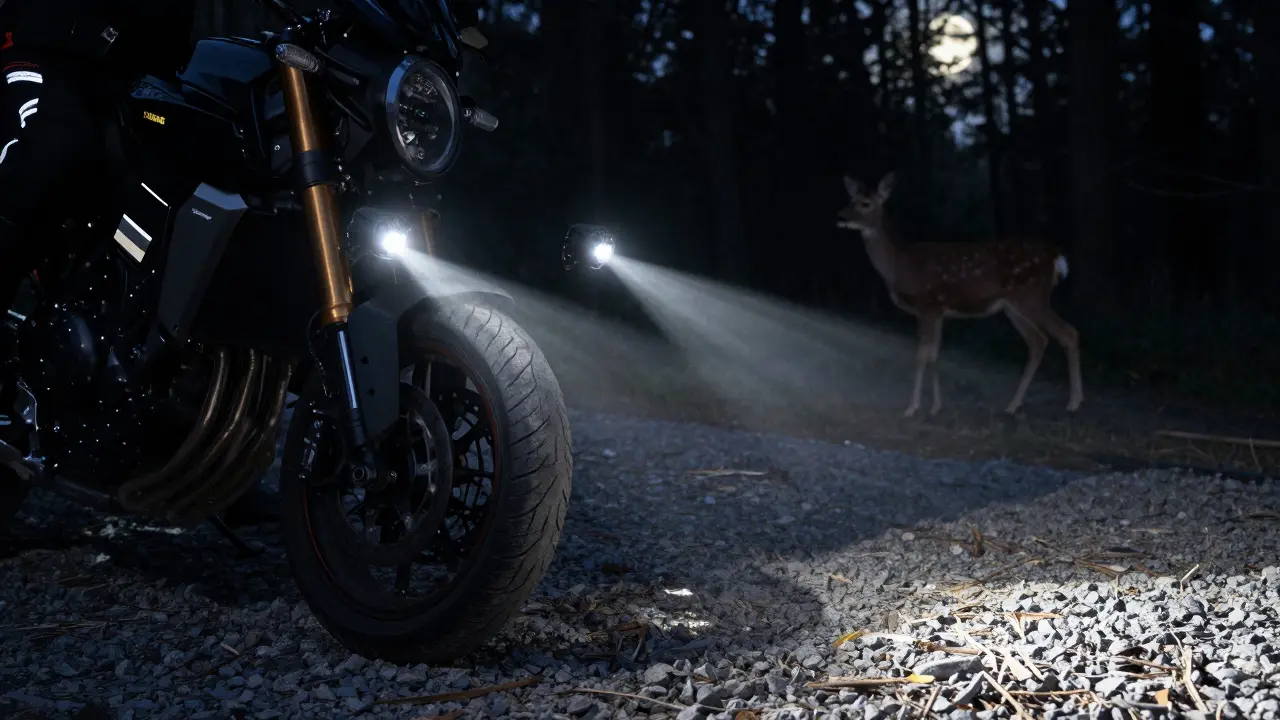
Install auxiliary lights. Two small LED fog or driving lights mounted low on the forks help illuminate the road edge, curbs, and debris. They don’t replace your main beam-they supplement it. Riders who use them report spotting animals, potholes, and gravel 2-3 seconds earlier.
Don’t forget your taillight and brake light. A dim or cracked lens means cars behind you won’t see you slowing down. Replace them yearly, even if they still glow. A clean, bright brake light can mean the difference between a near-miss and a rear-end collision.
Visibility Beyond the Lights
Light helps you see-but what helps others see you? That’s where reflective gear comes in.
A white helmet doesn’t cut it. Wear reflective vests, jackets, or strips on your sleeves and legs. Even a $20 reflective belt wrapped around your waist makes you stand out in headlights. Studies show riders wearing reflective gear are seen 40% sooner by drivers at night.
Use your bike’s reflectors. If they’re missing, peel off the old ones, clean the surface, and stick on new adhesive strips. Put them on the wheel spokes, frame, and rear fender. A spinning reflector catches light better than a static one.
Turn on your turn signals early-like 300 feet before a turn. Don’t wait until the last second. At night, drivers aren’t watching for subtle signals. They’re scanning for movement. Make yours impossible to miss.
Navigation Without GPS Glare
GPS is great-but staring at your phone or screen at 60 mph? That’s how crashes happen. Most riders use handlebar mounts, but the screen’s brightness messes with your night vision.
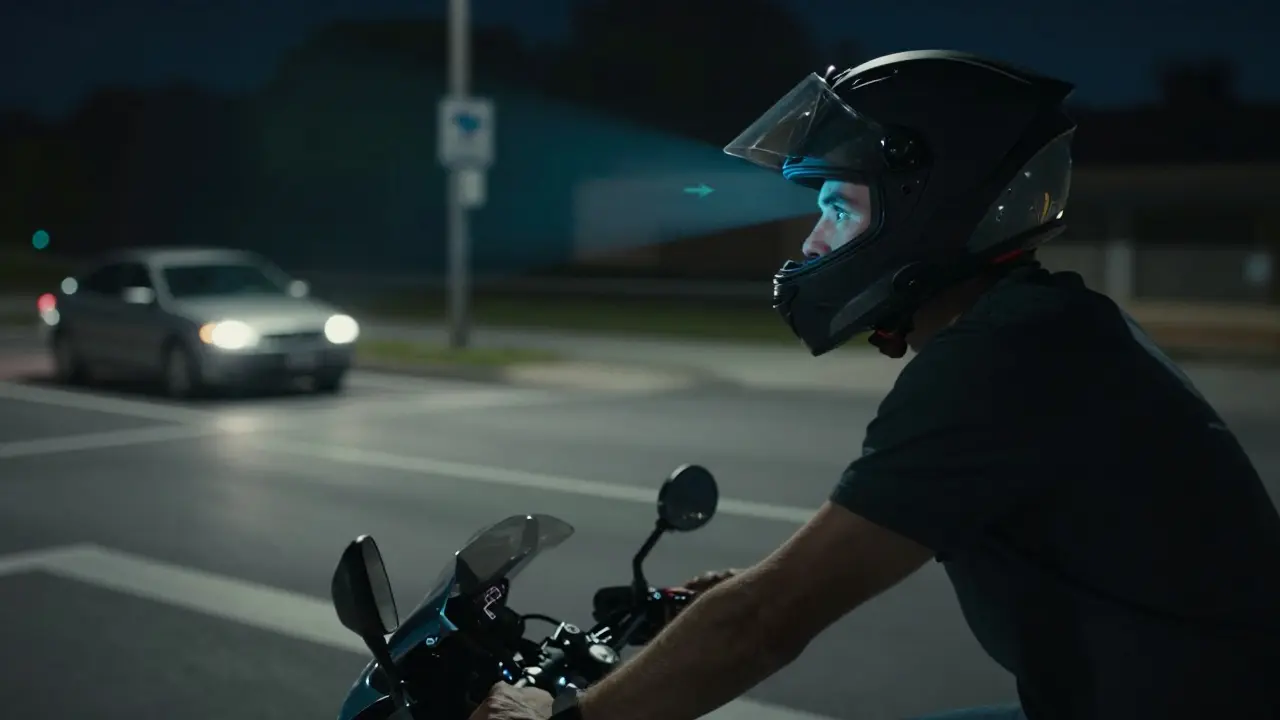
Use a helmet-mounted display. Devices like the Garmin Zumo or Sena SMH10 project navigation cues directly into your line of sight. They’re dimmable, voice-controlled, and don’t require you to look down.
If you’re not ready for that, use voice navigation. Set your phone to speak directions before you start riding. Know your turns ahead. If you’re unsure, stop at a safe spot-don’t fumble with your phone while moving.
Learn to read road markings. At night, lane lines, edge stripes, and center dividers become your map. White lines mean you’re on the right side of the road. Yellow means centerline. Faded lines? Slow down. They’re your only guide when streetlights disappear.
Where to Ride-and Where Not To
Not all roads are equal at night. Highways are safer than backroads. Why? More light, fewer surprises, and drivers expect motorcycles.
Avoid rural roads with no streetlights. That’s where deer, cattle, and fallen branches show up without warning. Even well-known routes can turn dangerous after dark. A road you rode safely at noon might hide a washed-out shoulder or a hidden dip.
Stick to well-lit arterial roads. These have consistent lighting, clear signage, and higher traffic volume-which means more eyes on the road. If you’re lost, pull over and check your route. Better to be 10 minutes late than 10 seconds too late.
Watch for intersections. They’re the #1 crash spot at night. Drivers turning left don’t see you. Assume every car at an intersection is about to turn into you. Slow down. Cover your brake. Be ready to swerve.
What to Carry-Beyond the Helmet
You don’t need a full toolkit for night riding, but you need a few essentials.
- A spare bulb for your headlight and taillight
- Small LED flashlight (for checking tire pressure or spills)
- Reflective emergency triangle or flares
- Water and a snack (fatigue hits harder at night)
- A charged power bank for your phone or GPS
Keep it all in a waterproof bag attached to your tank or saddle. If you break down, you won’t be fumbling in the dark with cold hands.
How Fatigue Changes Your Ride
Night riding is mentally exhausting. Your brain works harder to process low-light visuals. After 90 minutes, your reaction time slows by 30%. That’s like having a 0.05% blood alcohol level-even if you’re sober.
Plan for breaks. Stop every 60-75 minutes. Walk around. Stretch. Drink water. Don’t rely on coffee. It masks fatigue but doesn’t fix it.
Watch for tunnel vision. When you’re tired, your peripheral vision shrinks. You start focusing only on the road ahead. That’s dangerous. Train yourself to scan: left shoulder, center, right shoulder, mirror, ahead. Repeat. Every 5 seconds.
Final Rule: Assume You’re Invisible
The best night rider doesn’t hope drivers see them. They act like they don’t.
Slow down before curves. Leave extra space. Don’t ride in blind spots. Use your horn if you feel unsafe. A quick beep can wake up a distracted driver.
And if the weather turns foggy, rainy, or icy? Don’t push it. Turn around. Ride another night. There’s no prize for being the first one home in the dark.
Night riding isn’t for everyone. But if you do it, do it right. Gear up. Light up. Slow down. Stay alert. The road doesn’t care how good you are. It only cares if you’re prepared.
Is it legal to ride a motorcycle at night without additional lights?
In the U.S., federal law requires motorcycles to have at least one headlight, one taillight, and reflectors. But state laws vary. Some states, like California and Texas, require auxiliary lights for night riding on rural roads. Even if it’s legal, riding with only stock lights is dangerous. Most crashes happen because drivers didn’t see the rider-no matter the law.
What color lights are best for night riding?
White is the only safe color for headlights. Blue, green, or purple lights may look cool, but they reduce contrast and make it harder to see road details. Red and amber are fine for taillights and turn signals, but never use them as primary lighting. Stick to 5000K-6000K white LEDs-they mimic daylight and improve depth perception.
Do motorcycle helmets with built-in lights help?
They help, but not the way most think. A helmet light points where you look, not where you’re going. That’s useful for scanning intersections or side roads. But it doesn’t replace a strong headlight. Use it as a secondary tool, not your main source of illumination. Also, make sure it’s not too bright-it can blind you when you look down at your gauges.
Can I use my phone’s flashlight as a headlight?
No. Phone flashlights are not designed for motion, speed, or weather. They’re dim, unstable, and drain your battery fast. Even the brightest phone light only reaches 20-30 feet. That’s less than half the distance you need to stop safely at 40 mph. It’s also illegal in most states to use a phone as a primary light source while riding.
How do I know if my headlight is aimed correctly?
Park your bike 25 feet from a wall. Turn on the headlight. The brightest part of the beam should hit the wall 2-3 feet below the center of the headlight and be slightly angled to the right (for right-hand traffic). If it’s too high, it blinds others. If it’s too low, you can’t see far enough ahead. Adjust using the screws on the headlight housing-most bikes have them. If you’re unsure, get it checked at a shop.
Jess Ciro
December 17, 2025 AT 14:33Kate Tran
December 19, 2025 AT 07:05amber hopman
December 19, 2025 AT 12:16Jim Sonntag
December 20, 2025 AT 05:07Deepak Sungra
December 21, 2025 AT 01:31Samar Omar
December 21, 2025 AT 23:05chioma okwara
December 23, 2025 AT 03:56Sarah Meadows
December 24, 2025 AT 00:49VIRENDER KAUL
December 25, 2025 AT 21:26Mbuyiselwa Cindi
December 26, 2025 AT 00:09Krzysztof Lasocki
December 26, 2025 AT 19:55Henry Kelley
December 28, 2025 AT 00:08