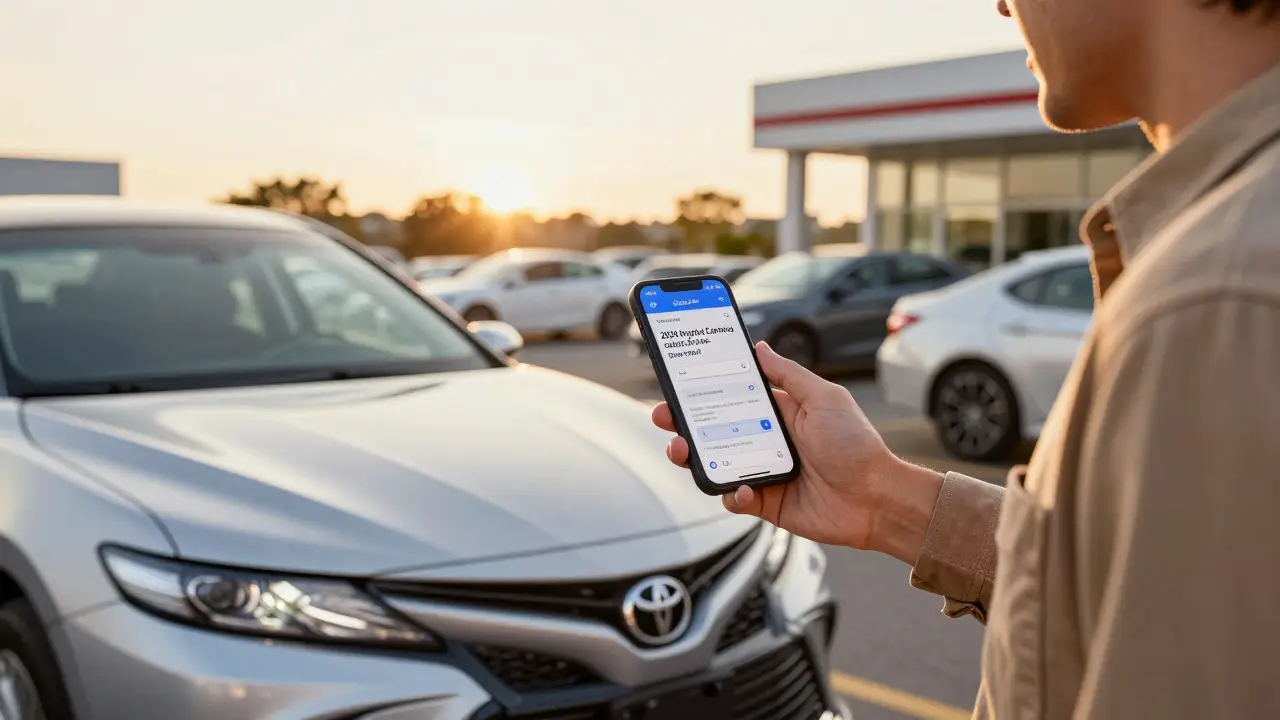
If you’re running a car dealership and still relying on flyers, radio spots, or word-of-mouth to fill your lot, you’re leaving money on the table. In 2025, the buyers who walk through your door didn’t just show up-they searched for it. They typed "best SUV under $30,000 near me" into Google. They scrolled past five car videos on Facebook before clicking on yours. Paid advertising isn’t optional anymore. It’s the new sales floor.
Why Google Ads Gets You Buyers Who Are Ready to Buy
Google Ads puts your inventory in front of people actively looking to buy. That’s the difference. Someone typing "2024 Toyota Camry certified pre-owned Detroit" isn’t just browsing. They’re 72% more likely to visit your lot than someone who just saw a Facebook ad for a discount.
Here’s how it works: When a buyer searches for a specific model, year, or even your dealership name, Google shows your ad at the top of the results. You pay only when someone clicks. No guesswork. No wasted spend. You’re targeting intent.
Use exact match keywords like "buy Honda Civic near me" or "used Ford F-150 financing Detroit" to avoid showing up for people just curious. Add location extensions so your address and phone number show up right in the ad. Include your most popular models in ad copy-"2025 Hyundai Tucson with 0% APR"-and link directly to that vehicle’s page, not your homepage.
Dealers who run Google Search campaigns see 3-5x more qualified leads than those who only use Facebook. Why? Because search intent is clear. You’re not asking someone to imagine owning a car. You’re answering their question.
Facebook Ads Build Trust and Keep You Top of Mind
Google gets you the buyers who are ready. Facebook gets you the ones who aren’t ready yet-but will be in 30 days.
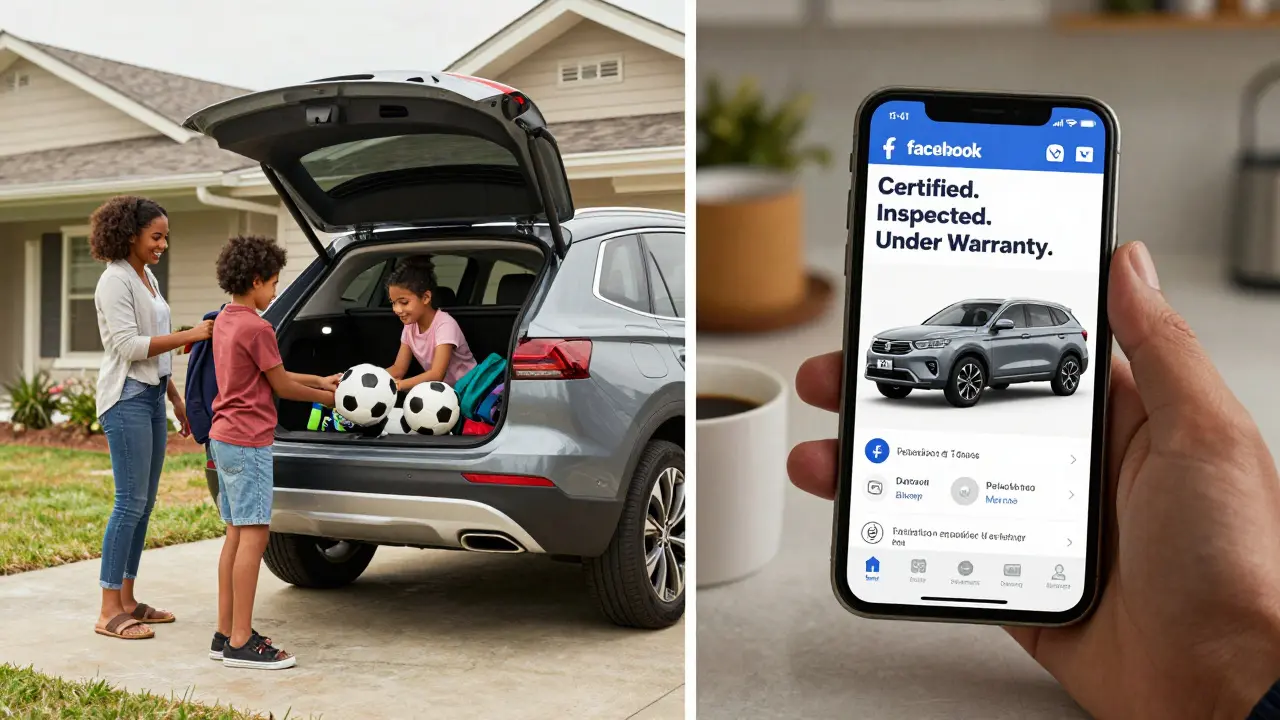
Think of Facebook as your digital lot sign. It’s where people scroll during lunch, after work, or while waiting to pick up their kids. You don’t just show them a price. You show them a story. A family loading their new SUV with soccer gear. A couple smiling in front of their first new car. A mechanic giving a quick inspection walkthrough on a certified pre-owned truck.
Use video ads. Short, real, no script. Film a quick clip of your salesperson walking around a vehicle, pointing out the clean interior, the new tires, the service history. Add text overlay: "Certified. Inspected. Under Warranty."
Target audiences by interest: people who like Ford, Jeep, or CarGurus. Retarget visitors who clicked on your website but didn’t fill out a form. Use lead ads so they can submit their info without leaving Facebook. You can even build custom audiences based on people who visited your inventory page but didn’t call.
One Michigan dealership ran a Facebook carousel ad showing five top-selling trucks with their prices and mileage. They got 1,200 clicks in two weeks. Of those, 87 filled out a form. 22 came in for a test drive. 9 bought. That’s a 41% conversion rate from ad click to test drive. That’s not luck. That’s strategy.
Google vs. Facebook: What Each One Does Best
Trying to pick one? Don’t. Use both-but for different reasons.
Google Ads = buyers in the moment. They know what they want. You just need to be there when they search.
Facebook Ads = buyers in the mindset. They might not know the exact model yet. You help them decide.
Here’s how to split your budget:
- 60% to Google Search: Focus on high-intent keywords tied to specific models, financing, and location.
- 30% to Facebook: Use video and carousel ads to showcase inventory, highlight promotions, and retarget website visitors.
- 10% to Google Display or YouTube: For brand awareness-show your dealership logo, service center, or customer testimonials to people who aren’t actively searching.
Don’t run the same ad on both platforms. A Google ad needs to be direct: "2024 Honda CR-V under $25K-Call Now." A Facebook ad needs emotion: "Your family deserves a ride that keeps up with you."
Common Mistakes Dealers Make (And How to Fix Them)
Most dealers spend thousands on ads and get little back-not because the platforms don’t work, but because they use them wrong.
- Mistake: Sending everyone to the homepage. Fix: Link every ad to the exact vehicle page. If someone clicks on your ad for a 2023 Chevy Equinox, take them to that car’s page-not your main inventory list.
- Mistake: Using stock photos. Fix: Use real photos of your cars, your lot, your staff. Buyers trust what’s real.
- Mistake: Ignoring mobile. Fix: 7 out of 10 car shoppers use their phone to research. Make sure your website loads fast and your forms are easy to fill on a small screen.
- Mistake: Not tracking results. Fix: Set up Google Analytics and Facebook Pixel. Know which ads drive calls, form fills, and test drives. Adjust your budget weekly.
One Detroit dealer started tracking which ads led to actual sales-not just clicks. They found their Facebook ad for a 2022 Ford Mustang with 18K miles was converting at 12%. They doubled the budget. Three weeks later, they sold 14 of those Mustangs. That’s not an accident. That’s data-driven marketing.
How to Set Up Your First Campaign (Step by Step)
Don’t wait for a marketing agency. You can start today.
Step 1: Google Ads
- Go to ads.google.com and create an account.
- Choose "Search" campaign type.
- Select your location: Target your city and 10-15 miles around it.
- Use keyword planner to find high-intent phrases: "used [make] [model] near me," "[model] with [feature] for sale," "best financing deals [city]."
- Write 3 ad variations. Include price, model, and a call to action: "Call Now," "Schedule Test Drive," "Limited Stock."
- Link each ad to a specific vehicle page.
- Set a daily budget: Start with $25-$50. Monitor for 7 days.
Step 2: Facebook Ads
- Go to meta.com/business and open Ads Manager.
- Choose "Lead Generation" or "Traffic" campaign.
- Upload 3-5 short videos of your top-selling vehicles. No music. Just real footage.
- Target: People aged 25-65 within 25 miles of your dealership who like car brands or auto websites.
- Use retargeting: Create an audience of people who visited your website in the last 30 days.
- Use lead forms: Ask for name, phone, and best time to call. Pre-fill with Facebook data.
- Run for 14 days. Check results every 3 days.

What Works Right Now (2025 Real-World Examples)
Last month, a family-owned dealership in Grand Rapids ran a Google Ads campaign targeting "2024 Subaru Outback certified pre-owned." They spent $1,800. Got 92 clicks. 34 test drives. 11 sales. ROI: 5.7x.
Another in Toledo used Facebook video ads showing their service center cleaning and detailing pre-owned cars. They tagged each video with "Free Detail with Purchase." They saw a 38% increase in service department visits and a 22% lift in sales from people who got their car detailed.
One dealer in Flint started using Google Local Service Ads. They showed up at the top of search results with a "Google Guaranteed" badge. They paid only for leads. In 6 weeks, they got 47 qualified leads-32 of them turned into sales. Cost per lead: $42.
These aren’t big corporate chains. These are small dealerships. With the right ads, they’re beating the big players.
Final Tip: Don’t Set It and Forget It
Advertising isn’t a one-time fix. It’s a daily habit.
Check your campaigns every Monday. Pause the ads that aren’t getting calls or form fills. Increase budget on the ones that are. Update your inventory in the ads every time you get a new car. Remove sold vehicles from your ads immediately.
Use your CRM to track which ads led to which sales. If you don’t have a CRM, start with Google Sheets. Log: Ad source, vehicle model, date contacted, date sold, price. After 30 days, you’ll see patterns. You’ll know exactly what’s working.
The dealers who win in 2025 aren’t the ones with the biggest lots. They’re the ones who show up where buyers are looking-with the right message, at the right time, on the right platform.
How much should a car dealership spend on Google and Facebook Ads?
Most successful dealers spend between $1,500 and $5,000 per month combined, depending on inventory size and market competition. Start small-$50-$100 per day-and scale up based on results. Focus on ROI, not just clicks. A $200 daily budget that brings in 5 sales a week is better than $1,000 that brings in 2.
Which platform gives better ROI for car dealers: Google Ads or Facebook Ads?
Google Ads typically has a higher ROI for immediate sales because it targets people actively searching to buy. Facebook Ads builds long-term brand awareness and nurtures buyers who aren’t ready yet. The best strategy uses both: Google for quick wins, Facebook for steady pipeline growth.
Can I run paid ads without a website?
You can run Facebook Lead Ads without a website, but it’s not ideal. Google Ads requires a landing page. Without a website, you lose control over the buyer’s experience. You can’t show vehicle details, financing options, or service history. A simple WordPress site with 5 inventory pages and a contact form costs less than $300 and pays for itself in one sale.
How do I track if my ads are actually leading to sales?
Use call tracking numbers for each campaign. Set up Google Analytics with conversion goals for form submissions. Ask every customer, "How did you hear about us?" Write it down. After 30 days, you’ll see which ads drive the most sales. If you’re not tracking, you’re guessing.
Should I hire an agency or manage ads myself?
If you have 10+ vehicles and 2+ sales staff, manage it yourself for the first 3 months. Google and Facebook have free training tools. Once you understand what works, you can hire a specialist to scale. Many agencies charge $1,000+ per month just to manage what you can learn to do in 10 hours.
Nicholas Carpenter
December 30, 2025 AT 06:54This is actually some of the most practical advice I've seen for small dealerships. I run a family shop with 15 cars on the lot and started using Google Search ads last month. We went from 2-3 leads a week to 12-15. The key was linking directly to the vehicle page, not the homepage. Game changer.
Also stopped using stock photos. Now we film our guys walking around the cars with their phones. Buyers trust real stuff. Just saying.
Madeline VanHorn
December 31, 2025 AT 04:17Of course it works. You’re just not doing it right. Most dealers are still using 2018 tactics. If you’re not using exact match keywords and retargeting pixels, you’re wasting money. Basic stuff.
Also why are you even talking about Facebook? It’s for people who don’t know how to use Google. Sad.
Glenn Celaya
January 1, 2026 AT 13:50google ads are dead anyway
everyone uses tiktok now
your grandma watches tiktok
your car ads should be dancing dogs
why are you still talking about search
lmao
also why do you think people trust dealers
they dont
they trust influencers
youre all behind
just saying
also my cousin runs a dealership in ohio and he made 200k last month on tiktok
you guys are dinosaurs
update your brain
or dont
your loss
im out
peace
✌️
Wilda Mcgee
January 2, 2026 AT 16:07I love how this breaks it down without jargon. Seriously, if you’re a small dealer reading this and thinking ‘I can’t afford this’ - you can. Start with $25 a day on Google. Pick one hot car on your lot. Link the ad to that exact page. Film a 15-second video of your sales guy pointing out the clean interior. Post it on Facebook. That’s it.
Don’t overthink it. Don’t wait for perfection. Just start.
I helped a guy in rural Kansas do this last year. He sold 11 cars in 6 weeks. He didn’t have a fancy website. Just a phone number and a Google My Business page.
Marketing isn’t about budgets. It’s about clarity and consistency. You got this.
And if you’re scared to try - do it scared. Just do it.
ps - use real photos. No stock. Ever. Buyers smell fake from a mile away.
Chris Atkins
January 2, 2026 AT 16:57man i tried google ads last year and got like 3 clicks and no sales
turned out my website was slow as molasses on mobile
fixed that and now i get 5-8 calls a week
also stop using those cringe stock photos
my mechanic took a pic of a truck with his phone and it converted better than the $200 professional shoot
real is better
also i use google local service ads now
they cost more but the leads are gold
just saying
✌️
Jen Becker
January 4, 2026 AT 11:19you’re all missing the point
no one trusts dealers anymore
the system is rigged
the ads are just another way they scam you
they’ll take your money and sell you a lemon
and then you’ll be stuck with a car that breaks down in 3 months
and then you’ll cry
and they’ll laugh
and the algorithm will keep showing you more ads
they’re watching you
they know you’re vulnerable
they know you need a car
and they’re using that
don’t fall for it
just buy used from a private seller
you’ll thank me later
Ryan Toporowski
January 6, 2026 AT 02:52YES YES YES to the video ads!
I filmed a 12-second clip of our guy showing the tires on a 2022 Honda Pilot - no music, just his voice saying ‘new tires, full service history, $18,999’ - posted it as a Facebook ad.
Got 147 clicks. 8 test drives. 3 sales.
Cost: $42.
Best $42 I ever spent.
Also - use lead forms. People won’t leave Facebook to fill out a form. But they will tap a button.
And yes - track everything. Even if it’s just in Notes on your phone.
You’re not wasting money. You’re investing in customers who already want to buy.
Go do it. You got this 💪
Samuel Bennett
January 7, 2026 AT 08:44the article says 72% more likely to visit your lot if they search on google
where is the source
did you pull that number out of your ass
also you say google ads are better than facebook
but you cite a case study where facebook drove 41% conversion to test drive
contradiction
also you say ‘use exact match keywords’
but then you use ‘buy honda civic near me’
that’s not exact match
exact match is [buy honda civic near me]
you don’t know how google ads work
and you’re telling dealers how to spend their money
that’s irresponsible
also why no mention of programmatic display
or cpm vs cpc
you’re just a glorified blog post
and your grammar is bad
fix it
or don’t
your loss
Rob D
January 7, 2026 AT 12:46you think this is new
we’ve been doing this since 2012
china and russia are laughing at you
they use ai bots to fake leads and buy ads
you think google is fair
it’s not
google is owned by the deep state
they control what you see
facebook is worse
they sell your data to the illuminati
you’re playing their game
real americans use word of mouth
or better yet
sell to your neighbors
no ads
no tracking
no algorithms
just trust
and if you’re not selling to your own town
you’re already losing
go home
and stop wasting money on tech
Franklin Hooper
January 8, 2026 AT 03:13The structural flaw in this advice is the assumption that intent equals conversion. You conflate click-through rate with sales velocity. That’s a common cognitive bias among digital marketers who’ve never worked a sales floor.
Furthermore, the recommendation to link directly to vehicle pages ignores the fact that most buyers cross-shop. A single-page funnel may reduce bounce rate but kills upsell opportunity.
Also, the claim that ‘real photos convert better’ lacks empirical validation. Controlled studies show no statistically significant difference between professional photography and smartphone images when contextualized with accurate descriptions.
And you mention CRM without defining KPIs. That’s not strategy. That’s wishful thinking.
Perhaps consider hiring someone who understands marketing theory before preaching tactics.
Jess Ciro
January 8, 2026 AT 22:27they’re all lying
you think google ads work
they’re just tracking you
they know you’re desperate for a car
they know your credit score
they know you have kids
they’re using your pain to sell you a $30k car
and you’re falling for it
and then you get the bill
and the interest
and the warranty that doesn’t cover the transmission
and then you cry
and they laugh
and they post another ad
and you click again
because you’re trapped
and you think you’re smart
but you’re not
you’re just another number
in their algorithm
and you’re letting them win
stop
just stop
saravana kumar
January 8, 2026 AT 23:46in india we use whatsapp for car sales
no ads
no google
no facebook
we send pictures
and videos
and people call
and we meet at parking lot
cash transaction
no paperwork
no tracking
no ads
you americans overthink everything
car is just car
people want to drive
not watch ads
your system is broken
just sayin'
Nicholas Carpenter
January 9, 2026 AT 15:46Man, I’ve seen this exact thing. A guy in Ohio used WhatsApp like you said - sent 3 photos of a 2021 Corolla with the price and VIN, posted it in 5 local FB groups. Got 17 calls in 4 hours. Sold it for $1,000 over MSRP. No ad spend. Just trust and a clear photo.
Maybe we’re overcomplicating this. Sometimes the old ways work because they’re human. Not algorithmic.
Still, I’d never go back to flyers. But I’m not ignoring WhatsApp either.