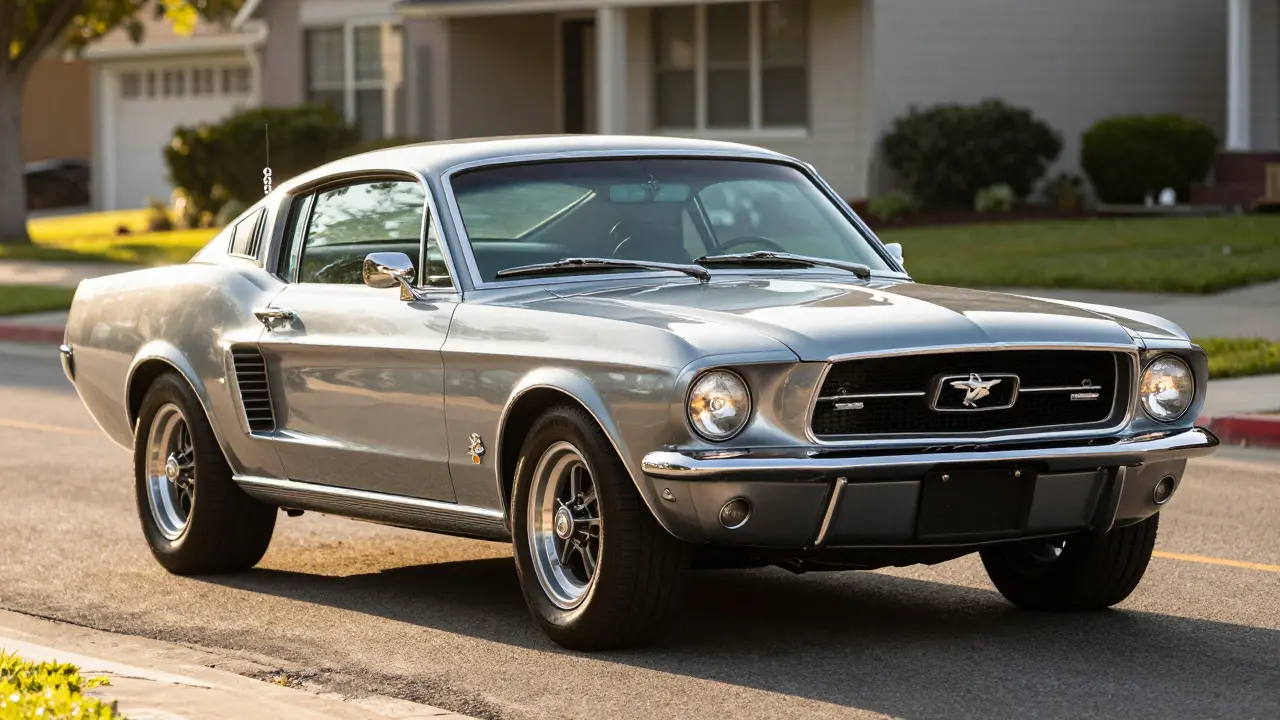
There’s something magnetic about a classic car. The curves, the chrome, the smell of leather and oil-it pulls you in. But if you’ve ever sat behind the wheel of a 1967 Mustang or a 1971 BMW 2002, you know the truth: driving one today means dealing with brakes that feel like they’re made of rubber, a transmission that refuses to shift smoothly, and an engine that sputters when it’s cold. That’s where restomods come in. They’re not just restored classics. They’re rebirths-vintage looks with modern guts.
What Exactly Is a Restomod?
A restomod is short for "restored and modified." It takes a classic car-usually from the 1950s to the early 1990s-and upgrades it with modern parts while keeping its original appearance. Think of it as giving your grandfather’s pocket watch a quartz movement and a water-resistant case, but keeping the same face and hands.
Unlike a full restoration, which aims for factory-original condition, a restomod doesn’t care about authenticity. It cares about usability. You can drive it in the rain without worrying about electrical shorts. You can cruise on the highway without the engine screaming at 70 mph. You can stop quickly when a kid runs into the street. That’s the point.
Popular base models for restomods include the Chevrolet Camaro, Ford Mustang, Porsche 911, Volkswagen Beetle, and the Jeep CJ-7. These cars have strong aftermarket support, plenty of donor parts from modern vehicles, and a loyal fanbase that’s willing to invest in upgrades.
Why Choose a Restomod Over a Stock Classic?
Why not just buy a new car? Because a restomod gives you the soul of a classic with the reliability of today’s engineering. A 1970s muscle car might look stunning, but its drum brakes, carburetor, and manual steering make it a handful on modern roads. A restomod fixes all that.
Modern suspension systems turn a bouncy, wallowing classic into a car that hugs the road. Fuel injection replaces temperamental carburetors. Power steering and disc brakes become standard. Even the interior gets upgraded-air conditioning, Bluetooth, digital gauges, and modern seatbelts are common additions.
Insurance companies and collectors notice the difference. A well-done restomod often holds its value better than a stock classic because it’s actually drivable. You’re not just keeping history alive-you’re making it usable.
Key Modern Upgrades in a Restomod
Not every restomod is the same. Some are subtle. Others are full-blown performance monsters. But most follow a few core upgrade paths:
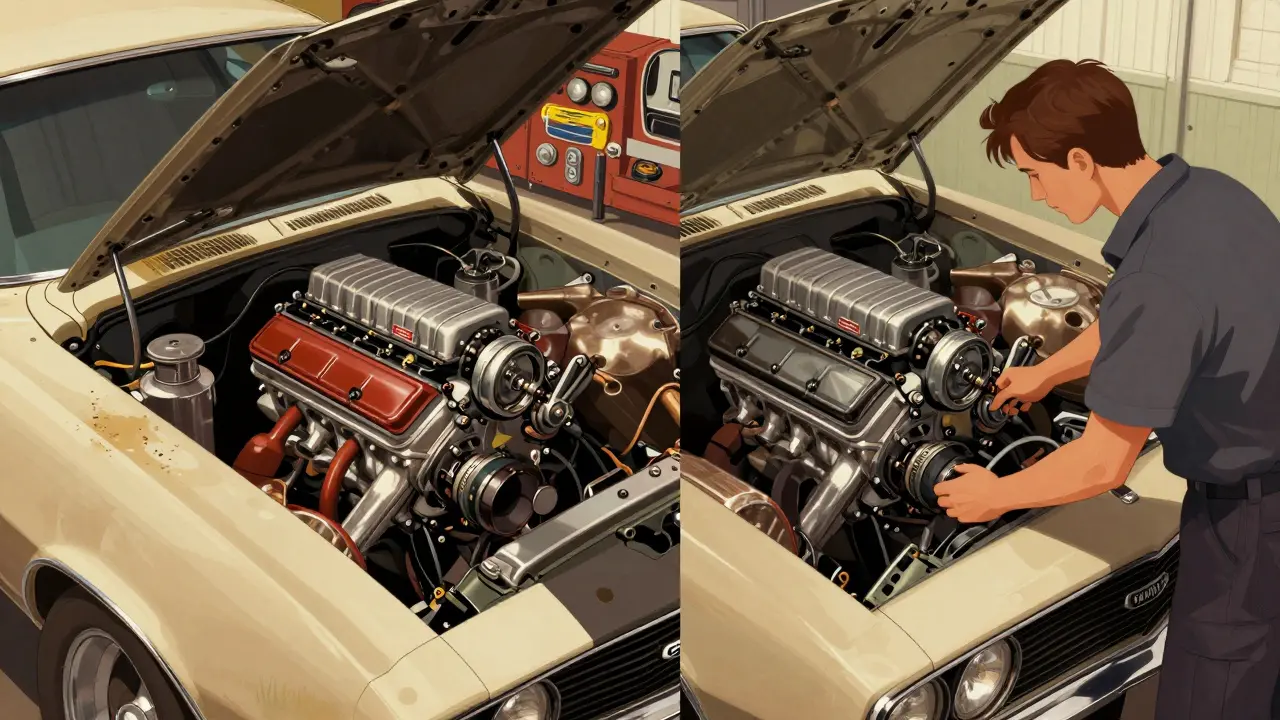
- Engine and drivetrain: Swapping in a modern LS V8 from a Chevrolet Silverado is one of the most popular moves. It’s powerful, reliable, and fits neatly into older engine bays. Many also use fuel-injected inline-fours or turbocharged engines from late-model Hondas or Toyotas for better efficiency.
- Brakes and suspension: Modern disc brake kits with ABS, adjustable coilovers, and rack-and-pinion steering systems are standard. Companies like Classic Performance Products and Global West make bolt-on kits designed specifically for vintage cars.
- Electrical system: Old wiring harnesses are fire hazards. Most restomods get a complete rewiring with modern fused circuits, LED lighting, and CAN bus-compatible components that play nice with digital dashboards.
- Interior comfort: Seats from late-model BMWs or Audis fit well in classic cabins. Modern climate control units are mounted discreetly under dashboards. Sound deadening material cuts road noise without changing the car’s look.
- Transmission: Five- or six-speed manual transmissions are common, but many builders opt for modern automatics like the 6L80 or 8HP70-smooth, efficient, and strong enough to handle 500+ horsepower.
One builder in Oregon swapped a 1968 Datsun 510’s original 1.6L engine for a 2.0L turbo from a 2015 Subaru WRX. The result? 300 horsepower, fuel economy near 25 mpg, and the same classic silhouette. That’s the magic.
What to Avoid in a Restomod
Just because you can upgrade something doesn’t mean you should. Overdoing it turns a restomod into a Frankenstein car that loses its soul.
Here are common mistakes:
- Changing the body shape: Adding widebody fenders or a rear wing might look cool, but it defeats the purpose. The goal is to preserve the original lines.
- Using modern paint that looks too new: A factory-correct color with a high-gloss modern clear coat is fine. A candy apple finish with flake? That’s a show car, not a restomod.
- Ignoring safety: No seatbelts? No roll cage? That’s asking for trouble. Even if you’re not racing, modern safety standards exist for a reason.
- Going too far with tech: A 10-inch touchscreen where the radio used to be? It’s flashy, but it looks out of place. Stick to hidden screens or digital gauges that mimic vintage dials.
The best restomods feel like they were always meant to be this way. The upgrades should feel seamless, not slapped on.
How Much Does a Restomod Cost?
Prices vary wildly. A basic restomod-engine swap, brakes, wiring, and new interior-can start around $40,000. A high-end build with custom suspension, a turbocharged engine, full leather interior, and hand-finished details can hit $150,000 or more.
Compare that to a stock classic in good condition: a clean 1970s Mustang might run $35,000-$60,000. But if you want to drive it regularly, you’ll likely spend another $20,000-$40,000 on repairs, upgrades, and maintenance. A restomod skips that step.
Some builders offer turnkey restomods. Companies like Classic Recreations, RestomodX, and Vintage Motor Cars specialize in complete builds. You pick the model, the engine, the color, and they deliver a car ready to drive off the lot.
Is a Restomod Right for You?
Ask yourself these questions:
- Do you want to drive this car on weekends, or just show it at car shows?
- Are you okay with spending more upfront to avoid future repairs?
- Do you care about originality, or do you value reliability and comfort more?
- Can you afford the cost of a professional build-or do you have the skills to do it yourself?
If you answered yes to driving it regularly and not wanting to spend your weekends fixing it, a restomod is probably your best bet. It’s the sweet spot between nostalgia and practicality.
Where to Find Restomod Parts
You don’t need to buy everything from a specialty shop. Many parts are sourced from modern donor vehicles:
- GM LS engines and transmissions come from junkyards of 2000s Silverados and Camaros.
- Brake calipers and rotors from late-model Honda Accords or Ford F-150s fit many classic cars with minor modifications.
- Seats from late 1990s BMWs and Mercedes are popular for their comfort and fit.
- Wiring harnesses from companies like Painless Performance or Classic Industries are designed specifically for restomods.
Online forums like ClassicCars.com, RestomodTalk, and Reddit’s r/restomods are goldmines for advice, parts leads, and builder recommendations. Many sellers ship parts internationally.
Final Thoughts: The Future of Classic Cars
Classic cars are aging. Parts are harder to find. Mechanics who know how to fix a 1972 VW Bus are getting rare. If we want these cars to survive, they need to be driven-not locked in climate-controlled garages.
Restomods aren’t a betrayal of heritage. They’re an evolution. They honor the design and emotion of the past while making it safe, reliable, and enjoyable for today’s roads.
More people are choosing restomods every year. Insurance companies are starting to offer specialized policies for them. Car shows now have dedicated restomod categories. Even manufacturers like Ford and Chevrolet are releasing their own factory-backed restomod kits.
There’s a reason for that. People don’t want to choose between beauty and practicality anymore. With a restomod, you don’t have to.
Are restomod vehicles legal to drive on public roads?
Yes, as long as they meet your state’s emissions and safety standards. Most restomods pass inspection because they use modern brakes, seatbelts, lighting, and emissions systems. Some states offer classic vehicle registration with reduced requirements, but the car must still be roadworthy. Always check with your local DMV before starting a build.
Do restomods retain their value?
Well-executed restomods often hold or increase value better than stock classics. A pristine 1969 Camaro might sell for $70,000, but a restomod with a 500-horsepower LS7, modern suspension, and premium interior can command $120,000+. Buyers today want drivability. Originality matters less than reliability.
Can I do a restomod myself?
Yes, but it’s not a weekend project. A full restomod takes 6 months to 2 years, depending on your skill level and how much you’re changing. Wiring, suspension, and engine swaps require tools and knowledge. Many people start with a partial build-like upgrading brakes and adding A/C-before tackling a full conversion. Joining a restomod forum can help you avoid costly mistakes.
What’s the difference between a restomod and a resto-original?
A resto-original means the car is restored to factory specifications using period-correct parts. No modern upgrades. A restomod intentionally adds modern components for performance, safety, or comfort. The goal of a resto-original is authenticity. The goal of a restomod is usability.
Do restomods require special insurance?
Yes, standard auto insurance won’t cover a restomod properly. Companies like Hagerty, Grundy, and American Collectors Insurance specialize in classic and modified vehicles. They offer agreed-value policies, which pay out the full insured amount if the car is totaled-unlike regular insurance, which uses market value and may undervalue your build.



Rahul U.
January 13, 2026 AT 13:16Love this breakdown! 🚗💨 I grew up in Delhi with a 1978 Ambassador that my dad kept running on hope and diesel fumes. A restomod with AC and power steering would’ve saved my spine-and his sanity. Modern LS swap? Yes please. Also, Bluetooth in a classic? Non-negotiable.
E Jones
January 13, 2026 AT 19:33Let me tell you something the car industry doesn’t want you to know-restomods are just the first step. Once they get you hooked on ‘modernized classics,’ they’ll start replacing the entire chassis with carbon fiber and calling it ‘heritage-inspired EV.’ Mark my words: in 10 years, your ‘1967 Mustang’ will be a Tesla Model S with a fiberglass body glued on. The government’s already pushing this through the EPA loophole. They don’t want you to feel nostalgia-they want you to buy a subscription. And don’t get me started on the lithium mines in Bolivia…
Barbara & Greg
January 15, 2026 AT 17:39While I appreciate the technical ingenuity behind restomods, I must express my profound concern regarding the erosion of automotive authenticity. To modify a vehicle designed by mid-century engineers-many of whom viewed their work as art-is to commit a form of cultural vandalism. The soul of a car resides in its originality; to retrofit it with modern electronics is to silence its voice. One cannot preserve history by rewriting it with Bluetooth.
selma souza
January 17, 2026 AT 02:15There is a comma missing after ‘chrome’ in the first paragraph. Also, ‘sputters when it’s cold’ should be ‘sputters when it is cold’ for grammatical precision. And ‘donor parts’ is not a real term-it’s ‘parts sourced from donor vehicles.’ This entire article reads like a blog post written by someone who’s never changed a spark plug.
Frank Piccolo
January 18, 2026 AT 13:24Look, I get it. You want your ’69 Camaro to have cruise control and heated seats. But let’s be real-Americans built these cars to be raw, loud, and unapologetic. Now we’re turning them into Teslas with vinyl roofs. Meanwhile, Germany and Japan are building actual performance cars that don’t need to look like something from 1972 to be cool. This isn’t evolution. It’s surrender.
James Boggs
January 19, 2026 AT 20:42Excellent summary. I’ve been building a ’71 Datsun 240Z restomod for two years now-LS3, 6L80, Wilwood brakes, and a hidden 8-inch screen behind the original radio face. It’s the perfect balance. And yes, it passes emissions in California. Highly recommend the Painless harness. Safe, clean, and reliable.
Addison Smart
January 21, 2026 AT 20:29There’s something deeply human about this idea-taking something beautiful from the past and giving it a chance to live in the present. I’ve traveled across 17 countries, and I’ve seen restomods in Tokyo, Cape Town, and Prague. In every place, they spark conversations. Not because they’re flashy, but because they bridge generations. My grandfather drove a ’57 Chevy. My daughter drives my restomod version. She calls it ‘Grandpa’s ghost with A/C.’ And honestly? That’s the point. We don’t have to choose between memory and motion. We can have both.
David Smith
January 22, 2026 AT 17:30Okay but have you seen the price tag on these things? $150K for a car that looks like a ’68 Mustang? My cousin bought a perfectly good ’68 Mustang for $38K and spent $12K on a carb rebuild and new tires. Now you’re telling me he should’ve just thrown $112K at a bunch of aftermarket parts and called it a day? What a scam. Also, I saw a guy on YouTube put a Tesla motor in a VW Beetle. It’s not a restomod-it’s a cry for help.
Lissa Veldhuis
January 22, 2026 AT 17:52Who even cares about the original paint job anymore? If you're gonna spend $100K on a car you're not even gonna drive to the grocery store then just buy a Ferrari. And why are people so obsessed with hiding the touchscreen? Just slap a 12 inch screen in there and call it a day. Also the idea that you need 'modern seatbelts' is laughable-my grandpa drove a ’65 Impala with a lap belt and lived to 92. I’m not saying don’t upgrade-I’m saying stop pretending you’re saving lives with airbags in a car that looks like it belongs in a museum