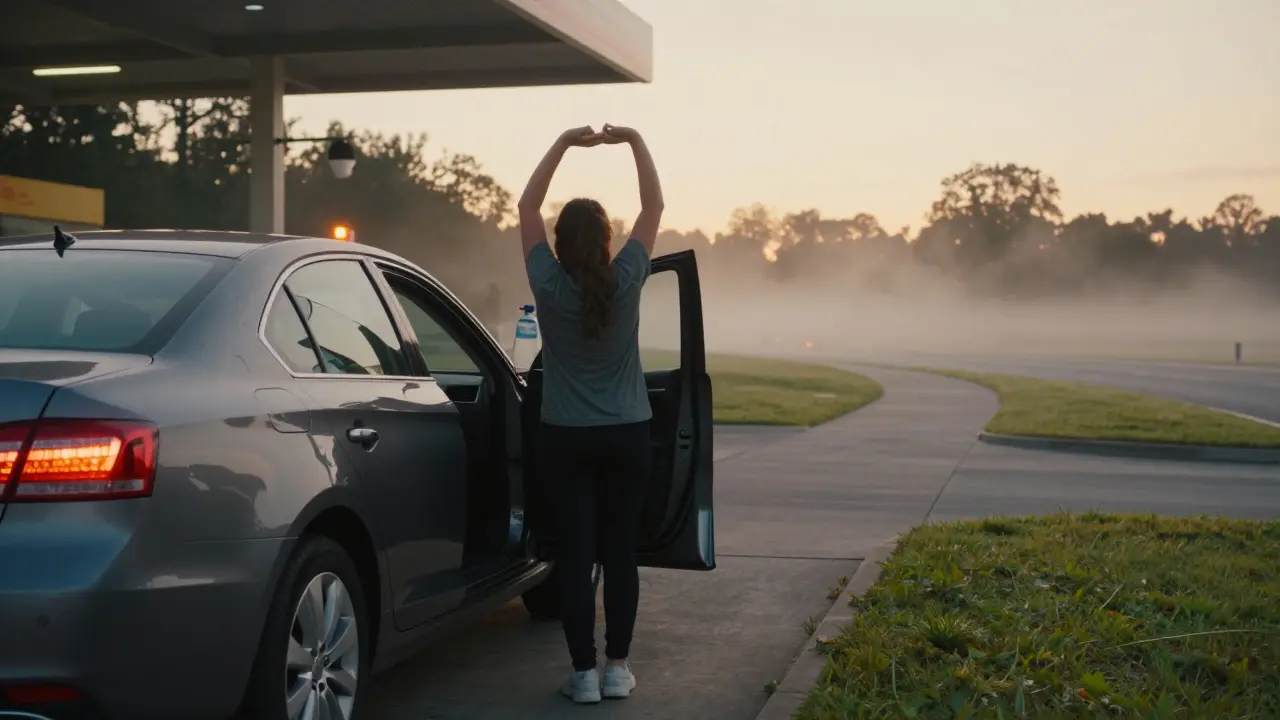
Driving for hours on end might feel like a normal part of a road trip, but your body doesn’t see it that way. By the third hour, your reaction time slows. By the sixth, you’re not just tired-you’re at risk. Every year, drowsy driving causes over 100,000 crashes in the U.S. alone, according to the National Highway Traffic Safety Administration. Most of these happen on highways during early morning or late-night hours, when your body naturally craves sleep. But you don’t need to wait for a near-miss to change your habits. Staying alert on a road trip isn’t about coffee and loud music. It’s about smart planning, body awareness, and small adjustments that add up.
Why Your Brain Turns Off Behind the Wheel
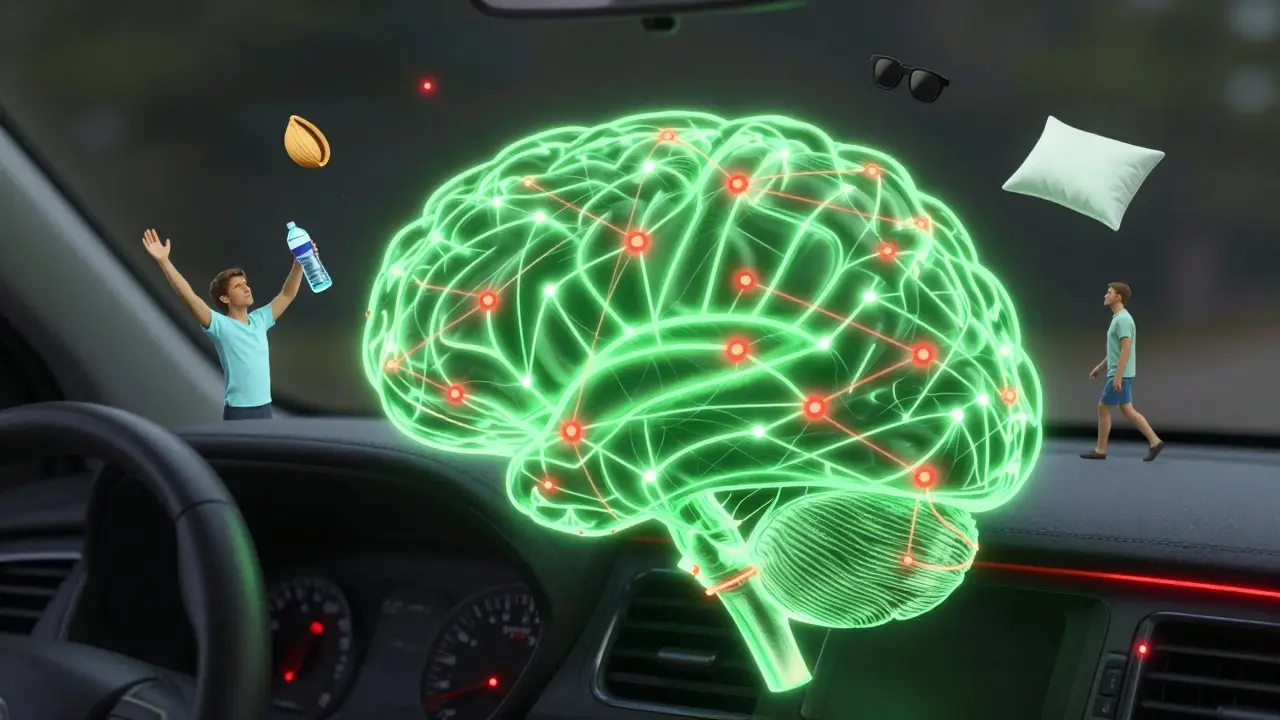
Your brain isn’t designed to focus for eight straight hours on a monotonous task. When you’re driving on a straight highway with little variation in scenery, your visual cortex starts to disengage. That’s when microsleeps happen-brief, uncontrollable lapses in attention that last 2 to 3 seconds. At 65 mph, that’s like driving the length of a football field blindfolded. You might think you’re fine because you’re not nodding off, but fatigue doesn’t always look like snoozing. It shows up as delayed braking, drifting between lanes, or missing exits you swore you’d remember.
Studies from the AAA Foundation for Traffic Safety show that drivers who sleep less than five hours in the past 24 hours are nearly five times more likely to crash than those who sleep seven or more. Even losing two hours of your usual sleep can double your crash risk. And caffeine? It only masks fatigue-it doesn’t fix it. That energy drink might keep your eyes open, but your brain is still running on fumes.
Plan Your Route Like a Pro
Most people plan road trips around sights and stops, not rest. That’s backwards. Start by mapping your drive with rest breaks built in-not just gas stations, but places where you can stretch, walk, and reset. Aim to stop every 100 to 150 miles, or every two hours, whichever comes first. Don’t wait until you feel tired. By then, it’s too late.
Use apps like Roadtrippers or Google Maps to find rest areas with walking paths, picnic tables, or even small parks. If you’re driving through rural areas, plan stops near towns with sidewalks or trails. Even a five-minute walk around the parking lot boosts blood flow and wakes up your nervous system. Stand up. Shift your weight. Look up at the sky. These small movements interrupt the autopilot mode your brain slips into.
Also, avoid driving between 2 a.m. and 6 a.m. That’s when your circadian rhythm dips hardest. If you must drive then, swap drivers. If you’re solo, pull over and take a 20-minute power nap. Set an alarm. Don’t try to "just rest your eyes." Sleep-even short bursts-reboots your brain’s alertness system.
What You Eat and Drink Matters More Than You Think
Heavy meals make you sleepy. That burger and fries you grabbed at the gas station? It’s not just bad for your waistline-it’s a safety hazard. High-fat, high-carb foods trigger insulin spikes and then crashes, leaving you sluggish within 30 minutes. Instead, pack snacks that stabilize energy: nuts, fruit, hard-boiled eggs, Greek yogurt, or whole-grain crackers with peanut butter. Keep water handy. Dehydration reduces concentration and increases fatigue. Aim for at least one liter of water per three hours of driving.
Coffee can help, but timing matters. Drink it 15 to 20 minutes before a stretch of driving you know will be tough. Caffeine takes about 20 minutes to kick in, so pairing it with a short nap (called a caffeine nap) gives you a double boost. The nap lets your brain clear adenosine, the chemical that makes you tired, and the caffeine blocks it from coming back. It’s one of the most effective tricks professional drivers use.

Move Your Body-Even in the Car
Staying still for hours tightens your muscles, reduces circulation, and dulls your senses. Simple in-car stretches can make a huge difference. While stopped at a red light or rest area, do these:
- Roll your shoulders back five times, then forward five times
- Turn your head slowly left and right-don’t force it, just let it move
- Press your feet into the floorboards and lift your heels, then reverse
- Clench your fists for five seconds, then open them wide
These movements signal your brain that you’re awake. They also reduce stiffness that can lead to discomfort-and distraction. If you’re driving with a passenger, take turns doing seated stretches together. It turns a boring drive into a quick wellness ritual.
Know Your Warning Signs
You don’t need to be asleep at the wheel to be in danger. Watch for these signs:
- Yawning constantly, even after drinking water
- Difficulty keeping your eyes open or focusing on the road
- Missing traffic signs or exits
- Drifting out of your lane or hitting rumble strips
- Feeling disconnected from your surroundings
If you notice even one of these, don’t wait. Pull over. Turn on your hazard lights. Take a 20-minute nap. Drink a glass of water. Walk around for five minutes. Then reassess. If you’re still feeling foggy, don’t keep driving. Sleep is not optional. It’s your safety system.
Technology Can Help-But Don’t Rely on It
Modern cars come with driver assistance features: lane departure warnings, blind-spot alerts, and fatigue detection systems. Some even monitor your eye movements and alert you if you look away too long. These are helpful, but they’re not magic. They don’t replace your responsibility. Many systems only trigger after you’ve already drifted. By then, it’s too late.
Use tech as a backup, not a crutch. If your car has a fatigue alert, treat it like a smoke alarm. Don’t ignore it. Turn it on, but don’t assume it’ll catch everything. Your eyes, your body, your judgment-those are your primary tools.
Traveling With Others? Share the Load
Driving solo on a long trip is tempting, but it’s risky. If you’re traveling with friends or family, assign driver shifts. Even if someone isn’t a confident driver, they can handle short stretches. Rotate every two to three hours. Let the person who slept best the night before take the morning leg. The person who’s groggy? Let them nap in the back seat.
And if you’re the one driving, don’t feel guilty about asking for a break. Say it out loud: "I need to stop for 20 minutes." It’s not weakness. It’s smart planning. The person who gets behind the wheel after a nap will drive better, faster, and safer.
What to Pack for Road Trip Wellness
Forget the snacks and phone chargers. Here’s what you actually need:
- Water bottles (at least two per person)
- Healthy snacks (nuts, fruit, protein bars)
- A small travel pillow for neck support during naps
- A lightweight blanket or shawl for warmth
- UV-blocking sunglasses to reduce eye strain
- A small flashlight or phone light for checking rest areas at night
- Hand sanitizer and wet wipes for quick clean-ups
These items cost little but add up to big safety wins. A good pillow helps you nap more effectively. Sunglasses reduce visual fatigue. Water keeps your brain sharp. Pack them like you pack your GPS.
When to Call It Quits
There’s no shame in ending your drive early. If you’ve been on the road for 10 hours and still have 150 miles to go, find a hotel. Sleep. Start fresh in the morning. That extra $80 for a room might save you thousands in medical bills, legal fees, or car repairs after a crash.
And if you’re feeling overwhelmed, anxious, or emotionally drained? That’s a red flag too. Stress and fatigue go hand in hand. If you’re arguing with your travel partner, replaying work emails in your head, or feeling tense behind the wheel-pull over. Breathe. Reset. Sometimes, the best road trip isn’t the fastest one. It’s the one where you arrive whole.
How long can you safely drive without stopping?
Most experts recommend stopping every two hours or 100 to 150 miles. Even if you feel fine, your reaction time and focus decline after this point. A short break to walk and stretch resets your alertness system.
Can caffeine really help with driver fatigue?
Yes-but only if used correctly. A cup of coffee 15 to 20 minutes before a nap can double your alertness. Caffeine takes about 20 minutes to kick in, so pairing it with a short rest lets your brain clear sleep chemicals. But caffeine doesn’t replace sleep. It just masks the symptoms.
Is it safe to drive after only 4 hours of sleep?
No. Driving after less than five hours of sleep increases your crash risk by nearly five times, according to AAA. Your brain isn’t fully rested, and your reaction time is slower than if you were legally drunk. Don’t risk it.
What should I do if I start feeling drowsy while driving?
Pull over immediately in a safe location. Turn on your hazard lights. Take a 20-minute nap. Drink a glass of water. Walk around for five minutes. Do not try to push through. If you’re still tired afterward, find a place to sleep for the night.
Do driver fatigue alerts in cars actually work?
They can help, but they’re not foolproof. Most systems detect signs of drowsiness after you’ve already started drifting or blinking too slowly. They’re a backup, not a replacement for your own awareness. Always trust your body’s signals over a dashboard alert.
Long road trips are about freedom, adventure, and connection. But none of that matters if you’re not safe. The best journey isn’t the one with the most miles. It’s the one where you arrive rested, alert, and ready to enjoy it all.
Vishal Gaur
January 8, 2026 AT 10:13so i read this whole thing and honestly the caffeine nap thing is wild but i tried it last month driving from bangalore to mysore and holy shit it worked. i drank coffee, laid back for 15 mins, woke up like a new person. no more drifting into the shoulder. why didnt anyone tell me this sooner?
Raji viji
January 8, 2026 AT 21:19let me cut through the fluff-this article is basically a glorified yoga pamphlet wrapped in AAA marketing jargon. you think stretching your neck at red lights is going to stop a microsleep? please. the real solution is stopping driving altogether if you’re sleep-deprived. no amount of peanut butter or sunglasses fixes biological reality. your brain isn’t a laptop you can reboot with a hard reset.
Nikhil Gavhane
January 9, 2026 AT 07:00thank you for writing this. i used to push through fatigue like a hero, until i almost hit a deer at 3am last year. now i stop every two hours, no excuses. even if it’s just walking around the gas station for five minutes. it’s not about being lazy-it’s about coming home alive.
Sheetal Srivastava
January 10, 2026 AT 05:25While I appreciate the performative wellness framing, the underlying epistemological framework is deeply anthropocentric and ignores the phenomenological collapse of somatic awareness under prolonged monotony. The article presumes agency where none exists-your ‘microsleeps’ are not lapses, they’re ontological resignations to the neoliberal grind. Have you considered that the road itself is the antagonist? Not your circadian rhythm, but the capitalist imperative to optimize motion?
Rajashree Iyer
January 11, 2026 AT 00:24you ever feel like the road is whispering to you? not in words, but in vibrations-the hum of tires, the rhythm of the engine… it’s a lullaby from the universe saying ‘rest now.’ and we ignore it. we drink coffee like it’s holy water and think we’re winning. but the road remembers. it remembers every time you chose speed over soul. and one day, it will remind you… with silence.
Bhavishya Kumar
January 11, 2026 AT 15:30Correction: The National Highway Traffic Safety Administration reports approximately 91,000 crashes annually due to drowsy driving, not 100,000. Furthermore, the phrase ‘your brain turns off’ is a misleading anthropomorphization. Neurologically, cortical deactivation occurs, not total shutdown. Also, ‘caffeine nap’ is not a scientifically recognized term-‘caffeine and sleep synergy’ is preferred. Please revise for accuracy.
Bhagyashri Zokarkar
January 12, 2026 AT 11:00i dont even know why im reading this like im tired af and driving right now and i just ate a burger and im like why does everyone make this so complicated its just sleep or dont drive im so done with wellness culture like its a podcast not a survival guide
Vishal Bharadwaj
January 13, 2026 AT 18:07lol this is peak woke driving advice. next they’ll tell us to meditate before merging. the real problem? people who think they can drive after 4 hours of sleep. you know who else thinks they’re fine? drunk drivers. wake up. this article is just fearmongering dressed up as self-help. if you’re tired, don’t drive. end of story. no need for peanut butter or shoulder rolls.
ujjwal fouzdar
January 13, 2026 AT 20:44there’s a silence between the miles that speaks louder than any alarm clock. the road doesn’t care if you’re late. it doesn’t care if you have a meeting. it doesn’t care if you’re ‘just one coffee away’ from being fine. it only cares if you’re awake. and when you’re not… it takes. not your car. not your money. your life. and it doesn’t ask permission. so tell me-when your eyes close for three seconds… who are you really trying to impress? your boss? your instagram followers? or the ghost of the person you could’ve been if you’d just pulled over?
Rakesh Dorwal
January 14, 2026 AT 19:53India has zero drowsy driving laws. Meanwhile, the west is selling you $20 travel pillows and ‘wellness road trips.’ wake up. if you’re tired, stop. no apps, no snacks, no philosophy. just pull over. and if you’re in rural India? good luck finding a rest stop. this article is written for people who have the privilege to nap.
Parth Haz
January 15, 2026 AT 21:05Thank you for the comprehensive overview. I would like to add that consistent hydration and proper lumbar support are often overlooked factors in maintaining cognitive performance during prolonged driving. Furthermore, the recommendation to rotate drivers every two to three hours aligns with occupational safety guidelines in professional transport sectors. Safety is not a suggestion-it is a responsibility.