Motorcycle Purchase: What to Know Before You Ride Away
When you make a motorcycle purchase, the act of buying a two-wheeled vehicle designed for personal transportation and recreation. Also known as bike buying, it’s not just about picking a color or engine size—it’s about understanding what keeps you safe, legal, and ready for the road.
A motorcycle recall, a manufacturer-issued fix for a safety defect that could lead to crashes or injuries is something every buyer needs to check before handing over cash. A 2024 NHTSA report found nearly 1 in 5 new motorcycles had open recall notices at time of sale. That’s not a glitch—it’s standard. Always enter the VIN on the NHTSA website before you buy. A motorcycle insurance, a policy that covers liability, damage, and medical costs for riders isn’t optional in most states, and skipping it can leave you bankrupt after a single accident. Even if you’re riding slow, the risk isn’t. And don’t forget motorcycle gear, protective clothing and equipment like helmets, armor, and gloves designed to reduce injury in a fall. Leather, CE-rated armor, and a DOT-approved helmet aren’t accessories—they’re your first line of defense.
People think a motorcycle purchase ends when they ride off the lot. It doesn’t. The real work starts the second you turn the key. You’ll need to know how to check for hidden damage, understand warranty limits, and track maintenance records—just like with a car. Many buyers don’t realize that poor service history can void even the best extended warranty. And if you’re buying used, the total cost of ownership includes more than the sticker price: insurance premiums, tire wear, chain maintenance, and potential repair bills add up fast. A $5,000 bike might cost you $1,200 a year in upkeep. That’s not a secret—it’s just rarely discussed.
What you’ll find here isn’t a list of top bikes or flashy reviews. It’s the real talk—what actually matters when you’re standing in front of a dealer, holding the keys, and wondering if you made the right call. From how to spot a tampered odometer to why your knee armor matters more than your exhaust note, these posts cut through the noise. You’ll learn how to avoid scams, what to ask during a test ride, how recalls affect resale value, and why skipping a helmet inspection could cost you more than money.
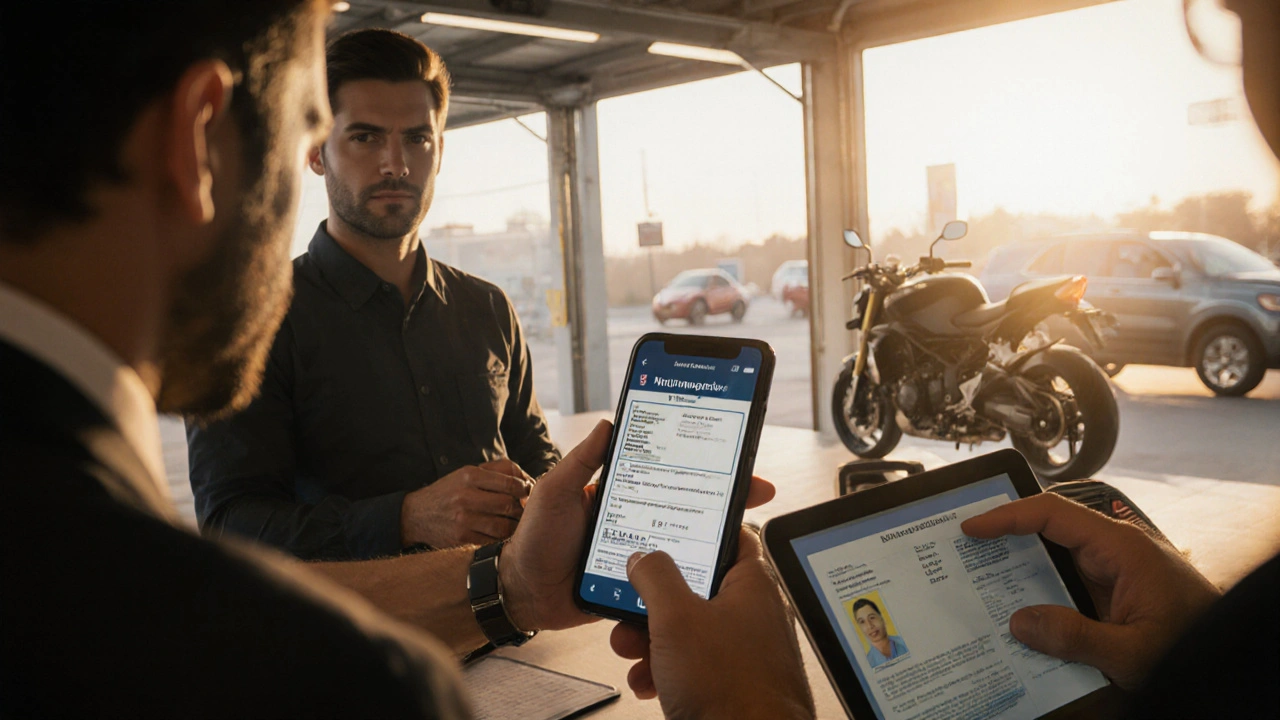
Motorcycle Insurance Binding at Purchase: Proof and Timing
- 11 Comments
- Nov, 16 2025
Learn exactly when and how motorcycle insurance becomes active at purchase, what proof dealers require, and how to avoid fines or delays when buying your bike.