Off-Road Loading: What You Need to Know About Hauling Gear for Terrain
When you're heading into the backcountry, off-road loading, the practice of safely securing gear and equipment for vehicles used in rugged terrain. Also known as vehicle hauling for terrain, it's not just about fitting everything in—it's about keeping your rig stable, your gear intact, and yourself safe when the road disappears. Skip this step, and you risk tipping, broken parts, or worse—a wreck because your toolbox slid into the brake pedal.
Good off-road loading, the practice of safely securing gear and equipment for vehicles used in rugged terrain starts with weight distribution. Heavy items like spare tires, winches, and fuel cans belong low and centered, not stacked on the roof or piled behind the rear axle. A high center of gravity turns a stable 4x4 into a rollover risk on a side slope. cargo securement, the methods and tools used to prevent gear from shifting during off-road travel isn’t optional—it’s law in many states for commercial haulers, and smart for anyone with a roof rack or trailer. Straps, tie-downs, and load bars aren’t just accessories; they’re your first line of defense against a flying cooler or a loose generator.
Then there’s the gear itself. off-road gear, equipment designed specifically for durability and function in harsh, unpaved environments like winches, recovery boards, and roof-top tents all add weight—and they all need a home. A roof-top tent might look cool, but if it’s mounted wrong, it can ruin your suspension or tear your rack off during a bump. And don’t forget the little things: a loose water jug can crack your windshield. A poorly secured tool kit can turn into a missile in a sudden stop. Real off-roaders don’t just pack—they plan. They test their loads on gravel roads before hitting the trails. They check straps after the first mile. They know that what works on pavement fails on rocks.
And it’s not just about the vehicle. Your trailer, hitch, and tires all play a part. Overloading a hitch can warp your frame. Tires rated for highway use won’t handle heavy loads on sharp rocks. 4x4 modifications, upgrades made to enhance a vehicle’s capability for off-road hauling and terrain navigation like upgraded shocks, heavier springs, or larger tires aren’t just for looks—they’re often necessary when you’re carrying extra weight over rough ground. But mods mean nothing if you’re still loading your truck like it’s a grocery run.
What you’ll find in the posts below isn’t theory. It’s real advice from people who’ve learned the hard way. From how to stack gear in a Jeep Wrangler without killing your suspension, to why your pickup’s bed liner isn’t enough to stop a shifting generator, to how to tell if your trailer hitch is rated for your load—these are the stories and fixes that keep people out of ditches and back on the trail.
Vehicle Weight and Payload Management for Overlanding: How to Stay Safe and Efficient on the Trail
- 13 Comments
- Nov, 21 2025
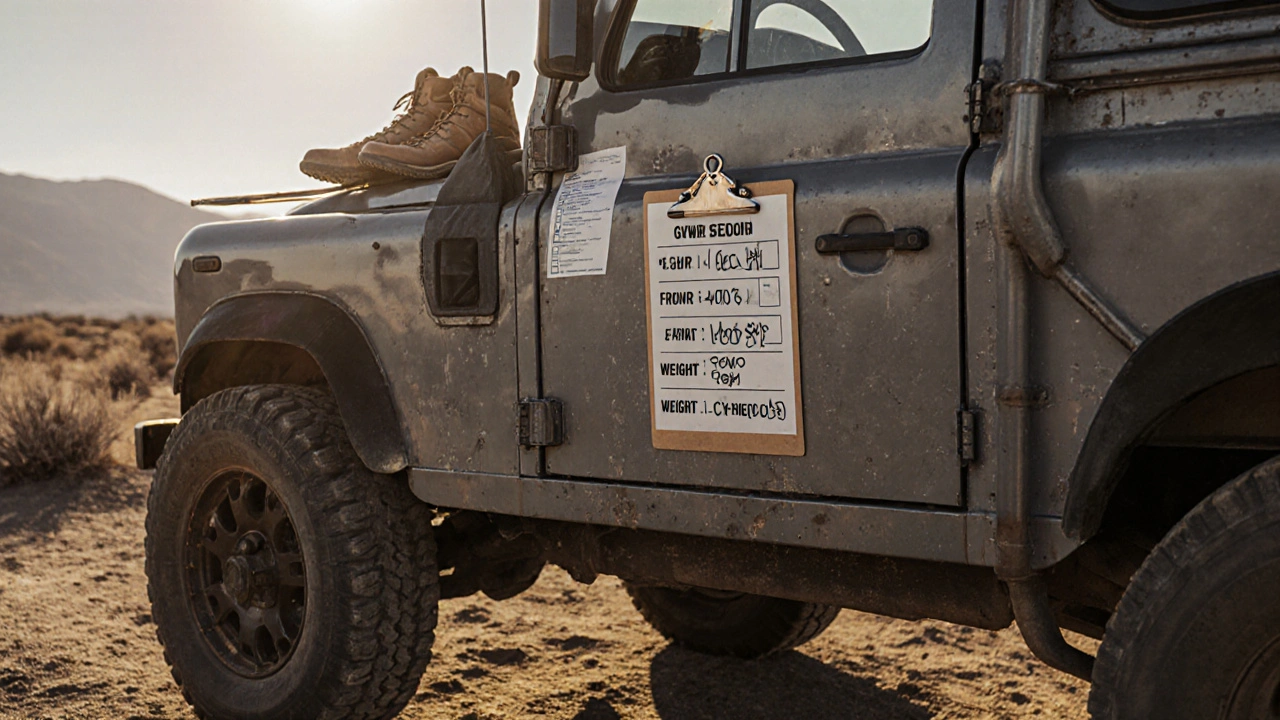
Learn how to safely manage vehicle weight and payload for overlanding. Avoid dangerous overload, improve handling, and keep your rig reliable on rough terrain with practical tips and real-world examples.