SUV Cargo Space: How Much You Really Need and Which Models Deliver
When you think about SUV cargo space, the usable volume behind the rear seats in a sport utility vehicle designed for hauling gear, kids, or gear for outdoor adventures. Also known as cargo capacity, it's not just a number on a spec sheet—it’s the difference between a weekend trip that goes smoothly and one where you’re cramming suitcases into the front seat. Most people buy an SUV thinking they need tons of room, but then never use more than half of it. Meanwhile, others regret not getting more space after they start hauling bikes, strollers, or camping gear. The real question isn’t how big the trunk is—it’s whether it fits your life.
Compact SUVs, smaller, fuel-efficient models like the Honda HR-V, Hyundai Kona, and Kia Seltos that balance maneuverability with practical storage. Also known as subcompact crossovers, they’ve become the go-to for city drivers who still need to carry gear. These often have 24 to 28 cubic feet behind the rear seats—enough for a few grocery bags or a small stroller. But fold the seats down, and you jump to 50+ cubic feet. That’s enough for a full-size cooler, a few suitcases, or even a folded kayak. On the other end, midsize and full-size SUVs like the Toyota Highlander or Ford Explorer offer 40+ cubic feet behind the third row and over 80 when folded flat. That’s not just storage—it’s a mobile warehouse.
Cargo organization, the systems and features that help you keep items secure and easy to access in an SUV’s cargo area. Also known as storage solutions, these include tie-down hooks, removable bins, under-floor compartments, and sliding rails. A big trunk means nothing if your cooler slides into the back seat during a hard stop. Some SUVs have hidden cubbies under the floor, like the Subaru Forester, or a fold-flat load floor like the Mazda CX-5. Others have built-in dividers or even power-operated tailgates that make loading heavy stuff easier. These aren’t gimmicks—they’re what keep your stuff from turning into a mess every time you hit a bump.
What you really need depends on how you use your SUV. If you’re hauling kids’ gear, a stroller, and a few backpacks, a compact SUV with 25 cubic feet behind the seats is plenty. If you’re into camping, fishing, or moving furniture, you’ll want at least 40 cubic feet behind the second row and a low, wide opening to slide things in. And don’t forget the shape—the width of the opening matters more than the total number. A narrow hatchback-style opening can make it impossible to fit a full-size bike, even if the total volume looks good on paper.
Real-world cargo space isn’t about matching a brochure number. It’s about whether your dog’s crate fits, if your golf bag slides in without tipping, or if you can still fit a stroller and a cooler side by side. The best SUVs don’t just have big trunks—they have smart designs that make loading, securing, and accessing your stuff easy. And that’s what you’re really shopping for.
Below, you’ll find real reviews, comparisons, and practical guides that show exactly which SUVs deliver on space, which ones don’t, and how to make the most of what you’ve got—no fluff, no hype, just what works.
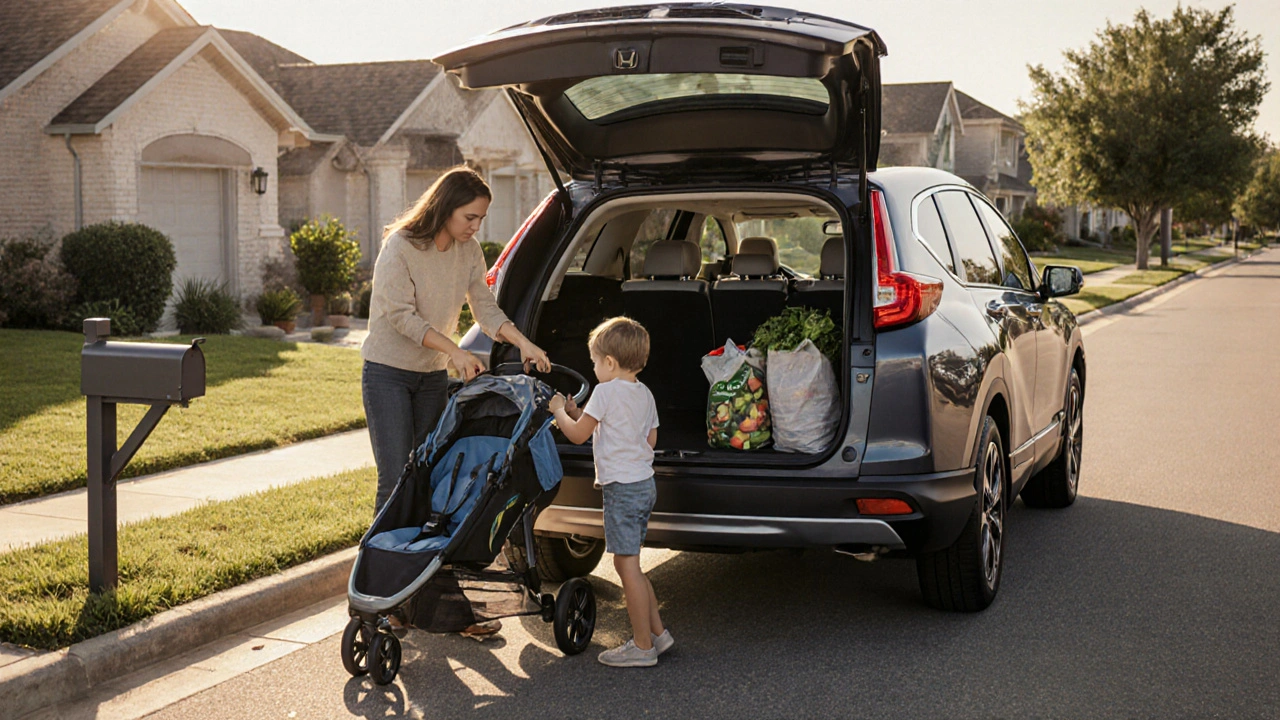
Two-Row vs. Three-Row SUVs: Which One Fits Your Seating and Cargo Needs?
- 10 Comments
- Nov, 19 2025
Choosing between a two-row and three-row SUV comes down to real-life seating needs and cargo space. Learn the tradeoffs in cost, comfort, and practicality to pick the right one for your family.