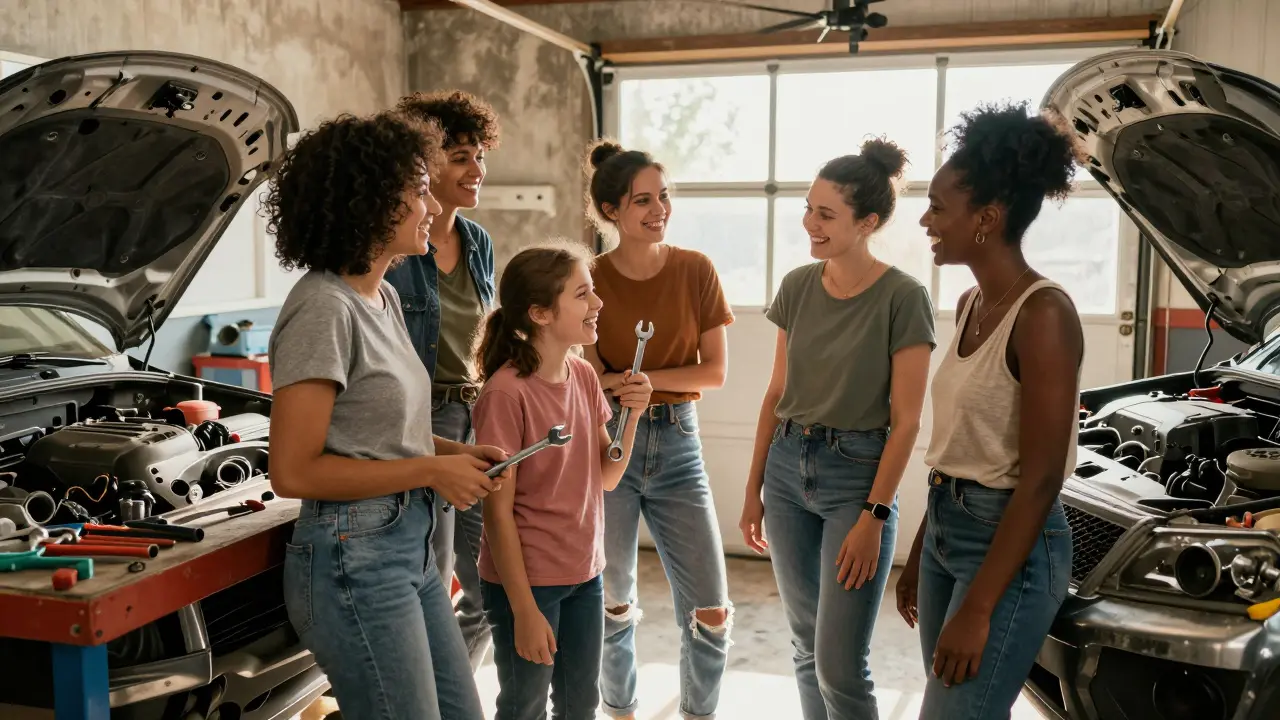
For decades, the image of the car enthusiast has been stuck in a mold: grease-stained overalls, a wrench in hand, and a man behind the wheel. But that picture is changing - fast. Across the U.S., from garage basements in Detroit to parking lots in Fort Collins, women are taking over the driver’s seat, not just as passengers, but as builders, mechanics, racers, and leaders. And they’re not doing it alone. Women automotive groups are forming everywhere, creating spaces where skill matters more than gender, and passion is the only requirement for entry.
Why Women Automotive Groups Matter
It’s not about dividing the car world. It’s about fixing a broken system. The automotive industry has long been male-dominated, and that’s not just a social issue - it’s a practical one. Studies from the Society of Women Engineers show that teams with gender diversity solve technical problems 30% faster. That’s not a coincidence. When women are welcomed into car clubs, repair shops, and track events, the whole community benefits.
Think about it: if you’ve ever walked into a shop and felt like you needed a degree just to ask about brake pads, you know the problem. Women automotive groups fix that by creating environments where asking questions is encouraged, not mocked. These groups don’t shut men out - they open the door wider so everyone can walk through.
How These Groups Actually Work
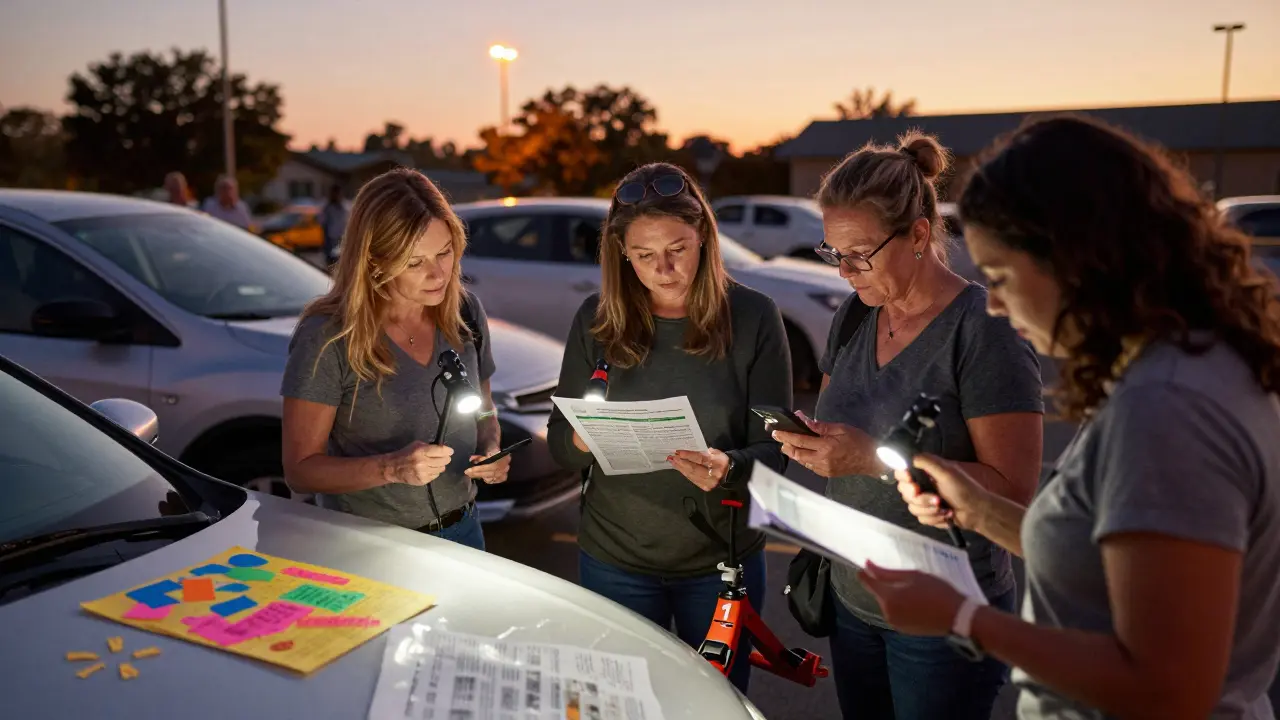
These aren’t fancy clubs with membership fees and velvet ropes. Most are grassroots. A few women meet at a local Walmart parking lot to swap tire-changing tips. Someone starts a Facebook group called “Colorado Women Who Fix Their Own Cars.” A mechanic in Austin hosts monthly wrench nights - open to anyone who wants to learn how to replace a clutch.
Take Women in Automotive, a national network with chapters in 27 states. They don’t host races or car shows - not at first. They start with basics: how to read a check engine light, how to change a brake rotor, how to talk back to a mechanic who talks down to you. Their motto? “No question is too small.”
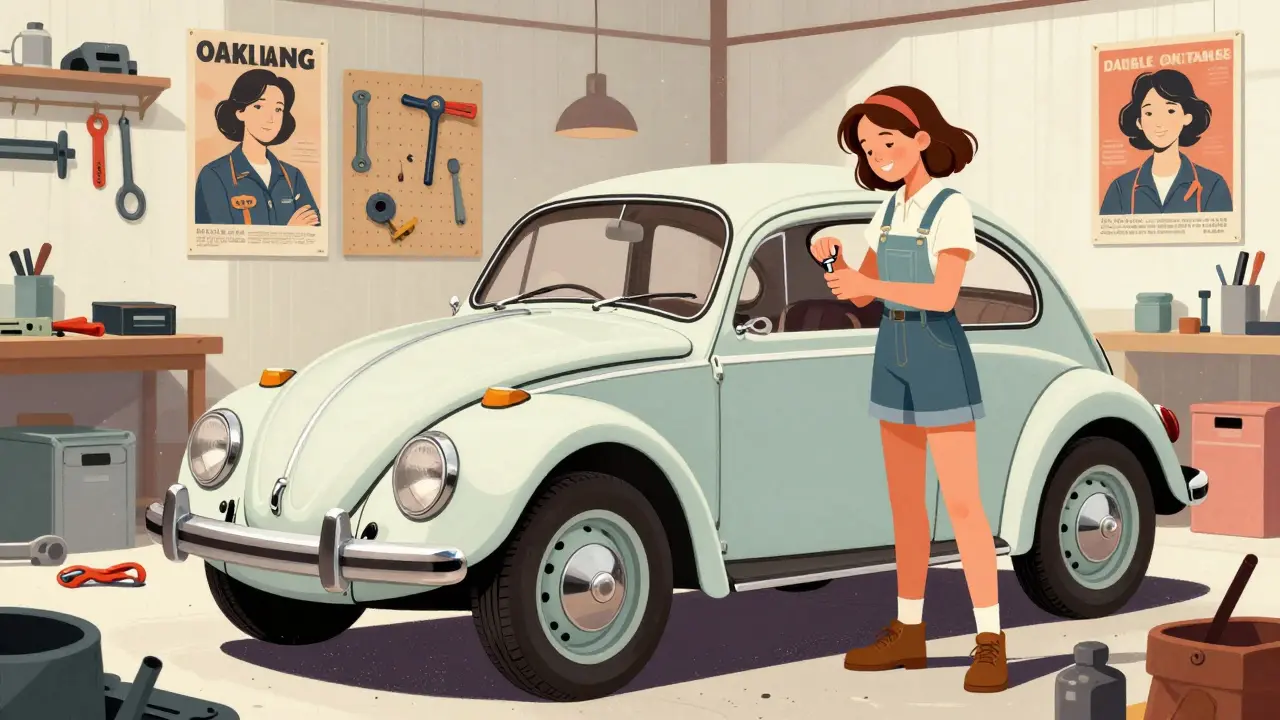
Then there’s Girls Garage in Oakland, which teaches teenage girls to build cars from scratch. One 16-year-old built a 1967 VW Beetle from parts she found at junkyards. She didn’t have a father who tinkered with cars. She didn’t grow up with a toolbox. But she had access to a space where someone believed she could learn.
What’s Different About These Spaces
Traditional car clubs often operate like secret societies. You need to know someone. You need to have the right car. You need to have the right attitude. Women automotive groups throw that out the window.
Here’s what you’ll find instead:
- Tools are shared, not hoarded
- Knowledge is taught, not guarded
- Everyone gets a turn at the jack
- Failure is part of the lesson - not a reason to leave
In one group in Portland, a woman brought in her 2004 Honda Civic with a blown head gasket. No one had ever fixed one before. They looked up the repair manual together. Took three weekends. Spent $200 on parts. Got it running. The whole group cheered. That’s not just a car repair - that’s community building.
Breaking the Stereotypes - One Wrench at a Time
Some people still think women don’t like cars. That’s nonsense. A 2023 survey by J.D. Power found that 68% of women consider car performance a top buying factor - same as men. But they’re often ignored by marketing, left out of forums, and talked over in garage talks.
Women automotive groups change that by simply existing. They show up. They fix things. They post videos of themselves replacing alternators. They write blogs titled “I Didn’t Know This About My Transmission - And You Shouldn’t Either.”
And slowly, the culture shifts. Car shows now have “Women’s Corner” sections. YouTube channels like “Auto Girl” and “She Drives” have hundreds of thousands of subscribers. Even big manufacturers like Ford and Toyota are partnering with these groups to design better interiors - because women are finally being asked what they actually want.
How to Find or Start a Group Near You
You don’t need a business plan. You don’t need a website. You just need to show up.
Here’s how to get started:
- Look on Facebook or Meetup for “women car enthusiasts” + your city
- Check local community colleges - many offer free auto repair classes for women
- Visit your local auto parts store and ask if they host women’s nights
- If nothing exists? Start one. Post a sign at the library. Put up a flyer at the gas station. Say: “Anyone who wants to learn how to fix their car - meet at the park Saturday at 10.”
One woman in Boise started her group with a single Instagram post. Four people showed up. Now it’s 47 members. They meet every third Saturday. Bring your car. Bring your questions. Bring your fear. Leave it at the door.
What This Means for the Future of Cars
This isn’t just about empowerment. It’s about innovation. When more women are involved in designing, building, and repairing cars, the products change. Seat belts now fit smaller frames. Infotainment systems have clearer menus. Car seats are easier to install. These aren’t small tweaks - they’re life-saving improvements.
And it’s not just about cars. It’s about who gets to be part of the conversation. For too long, the voice of car culture was one voice. Now, it’s growing louder - and richer - because more people are speaking.
Every time a woman learns to change her own oil, she doesn’t just save money. She rewrites a story. She proves that mechanics aren’t born - they’re made. And that anyone, no matter their background, can learn to understand the machine.
Real Stories From Real Women
Marisol, 42, from Phoenix, used to take her Toyota Camry to the shop every time the check engine light came on. She spent $1,200 a year on repairs she didn’t understand. Then she joined a local women’s auto group. She learned how to read the codes herself. Fixed a loose gas cap - $0. Saved $800 in a year.
Janet, 68, retired teacher from Ohio, bought a 1972 VW Bug on a whim. She didn’t know how to change a tire. Now she drives it to weekly meetups. Her group calls her “The Bug Whisperer.” She says: “I didn’t find the car. The car found me. And these women taught me how to listen to it.”
And then there’s 19-year-old Lila, who just finished her first engine rebuild. She posted a video of it on TikTok. Got 1.2 million views. Comments flooded in: “I’m doing this next week.” “My daughter wants to learn.” “Thank you for showing me it’s possible.”
It’s Not About Being the Only Woman - It’s About Making Room for Others
The goal isn’t to replace one group with another. It’s to make sure no one feels like an outsider in their own passion. Men can join these groups too. Many do. They learn. They listen. They help. And they realize something: the best mechanics aren’t the loudest. They’re the ones who teach.
Women automotive groups aren’t asking for special treatment. They’re asking for equal footing. And when that happens, the whole car world gets better.
So if you’ve ever felt like you didn’t belong at the track, in the shop, or at the car show - you do now. You just needed to find the right group. And if you can’t find one? Start one. The world needs more people who know how to fix things. And it needs more spaces where everyone’s welcome to learn.
Are women automotive groups only for women?
No. While these groups are created to support women who often feel excluded from traditional car spaces, most welcome allies of all genders. The goal is inclusion, not exclusion. Men who are respectful, eager to learn, and willing to listen are often active members.
Do I need to own a car to join a women’s auto group?
Not at all. Many members start with no car at all. Some borrow vehicles from friends. Others learn on donated or project cars. The focus is on learning skills - not owning a specific model. If you want to understand how your car works, you belong.
What if I don’t know anything about cars?
That’s exactly why these groups exist. You don’t need experience. You don’t need tools. You don’t even need to know the difference between a spark plug and a brake pad. The first step is showing up. The rest happens with help from others who’ve been there.
Can I start a group if I live in a small town?
Yes. Many of the most active groups started in rural areas. One group in Nebraska began with three women meeting at a diner after church. They brought their own tools. Now they have a shared garage and host quarterly workshops. All it takes is one person willing to say, “Let’s try this.”
Are these groups only for DIYers?
No. Some women join to learn how to talk to mechanics. Others want to understand car warranties, insurance, or resale value. Some just want to feel confident walking into a dealership. These groups support all levels - from curious beginners to seasoned mechanics.
What Comes Next
The movement isn’t slowing down. More high schools are adding auto shop programs for girls. Colleges are offering scholarships for women studying automotive technology. Automakers are hiring more female engineers than ever before.
But the real change happens on the ground - in garages, parking lots, and driveways. It happens when a mother teaches her daughter how to check tire pressure. When a neighbor lends a jack to someone who’s never lifted a car. When someone says, “I used to think this was too hard. Now I know I can do it.”
That’s the real power of these groups. They don’t just fix cars. They fix the idea that some people don’t belong in the garage. And that’s a change that lasts longer than any engine.


Jen Kay
January 12, 2026 AT 05:07It’s refreshing to see a piece that doesn’t reduce women’s participation in automotive culture to a PR stunt. The fact that these groups prioritize shared knowledge over ego is what makes them sustainable. I’ve seen men in traditional clubs hoard diagnostic codes like they’re classified military intel. Meanwhile, the women in my local group just hand you the wrench and say, ‘Here, try it.’ No ego. No gatekeeping. Just results.
And yes, men are welcome - if they’re quiet, observant, and willing to let someone else lead the conversation for once.
Michael Thomas
January 13, 2026 AT 09:49This is socialism for car nuts. You don’t need a women’s club to change a tire. If you’re too weak to learn, that’s your problem. America built cars. Men fixed them. Stop making everything a gender thing.
Abert Canada
January 13, 2026 AT 17:46Man, I live in Vancouver and we’ve got a group called ‘Wrench & Whisk’ - women and non-binary folks fixing up old Volvos and sharing chai while they work. One time, a dude showed up in a BMW M3 with a blown head gasket and just stood there awkwardly until someone handed him a socket set. He stayed for three months. Now he runs the tool library. The point isn’t exclusion - it’s giving people space to stop feeling like imposters.
Canada’s got similar groups in Halifax, Winnipeg, even Yellowknife. You don’t need a big city. Just a garage, a heater, and someone willing to say ‘I’ll help.’
Sandi Johnson
January 15, 2026 AT 07:47Oh wow, another article about how women are ‘finally’ allowed to be competent. Did you know men have been fixing cars since the 1890s? And now we need a whole movement just so women can turn a wrench without being called ‘cute’? I mean, I’m all for learning - but this feels like performative allyship wrapped in a bow.
Also, ‘She Drives’ has 300K subs? Cool. But how many of those are just guys watching because they think it’s hot? Just saying.
Eva Monhaut
January 16, 2026 AT 16:08I still remember the first time I changed my own brake pads - I was 29, had just left a toxic relationship, and the only thing I could control was my 2001 Corolla. I didn’t know the difference between a caliper and a catalytic converter. I cried when I got it right. Not because I was proud - but because for the first time in years, I felt like I could do something hard and no one was going to take it away from me.
These groups aren’t about gender. They’re about dignity. They’re about the quiet power of being handed a tool and being told, ‘You’ve got this.’ And if that means women start the movement? Good. Let them. Then everyone else can follow.
Marisol from Phoenix? That’s my hero. Janet? My spirit animal. Lila? The future.
mark nine
January 17, 2026 AT 19:55My sister joined a group in Kansas City. Started with a flat tire. Now she’s teaching high schoolers how to rebuild engines. No fanfare. No hashtags. Just her and a bunch of kids with grease on their hands. That’s the real story. Not the articles. Not the YouTube channels. Just people helping people.
Also, Ford’s new infotainment system? Yeah, that came from a woman in their UX team who actually rode in the backseat. Who knew?
Tony Smith
January 18, 2026 AT 23:19One must acknowledge the profound sociological implications of this cultural recalibration. The automotive workshop, historically a bastion of patriarchal ritual, is undergoing a paradigmatic shift toward epistemic equity. The dismantling of gatekeeping practices - such as the withholding of technical knowledge under the guise of ‘tradition’ - represents not merely inclusion, but a reclamation of communal wisdom.
And yet, one cannot help but observe the ironic tendency for these groups to be lauded in corporate media while grassroots organizers remain underfunded. A paradox, indeed.
Rakesh Kumar
January 19, 2026 AT 02:36Bro, I’m from Delhi and I’ve seen women in India fixing scooters with duct tape and hope. No fancy Facebook groups. No YouTube tutorials. Just moms and daughters under streetlights with screwdrivers. One woman I met replaced her husband’s clutch with a flashlight and a prayer. He came home and found his bike running better than ever.
They don’t need permission. They don’t need a movement. They just need a wrench. And a little space to be loud when they figure it out.
Also, I just bought a 1998 Honda Civic. I’m gonna learn. Any tips?
Bill Castanier
January 19, 2026 AT 19:05Minor grammatical note: ‘You don’t need a business plan’ - correct. But ‘you don’t need a website’? Actually, you do if you want it to scale beyond three people. Also, ‘Bring your fear. Leave it at the door.’ That’s poetic. But ‘fear’ isn’t a physical object. Maybe ‘leave your self-doubt at the door’? Just saying.
Also, ‘She Drives’ is great. But the host has a habit of saying ‘literally’ every three seconds. It’s distracting.
Ronnie Kaye
January 20, 2026 AT 02:22Michael Thomas just said this is ‘socialism for car nuts.’ Bro, you’re not wrong - it’s just not socialism. It’s common sense. You don’t need a union to share a jack. You just need to stop acting like the garage is your throne.
Also, I went to a women’s wrench night last weekend. There was a guy there - quiet, wore a ‘I ❤️ My Mechanic’ shirt. He didn’t talk. Just passed tools. At the end, he said, ‘I didn’t know I could learn this without being yelled at.’
That’s the whole damn point.
Priyank Panchal
January 21, 2026 AT 22:13This is cultural imperialism disguised as empowerment. In my country, women fix cars because they have to - not because someone told them they deserve a safe space. You don’t need a group to learn. You need hunger. You need necessity. Stop romanticizing struggle.
Ian Maggs
January 22, 2026 AT 22:54It is, perhaps, a profound metaphysical paradox: that the machine - an object of pure function, devoid of gender, emotion, or identity - has become the canvas upon which we project our most deeply held social anxieties. The wrench, the oil pan, the spark plug - these are neutral. Yet we have imbued them with meaning: masculinity, authority, exclusion.
And now, in this quiet, grease-stained revolution, we are reminded: the machine does not care who turns the bolt. Only whether it is turned correctly.
Perhaps, then, the true innovation is not in the car - but in the human heart that dares to reach for it.