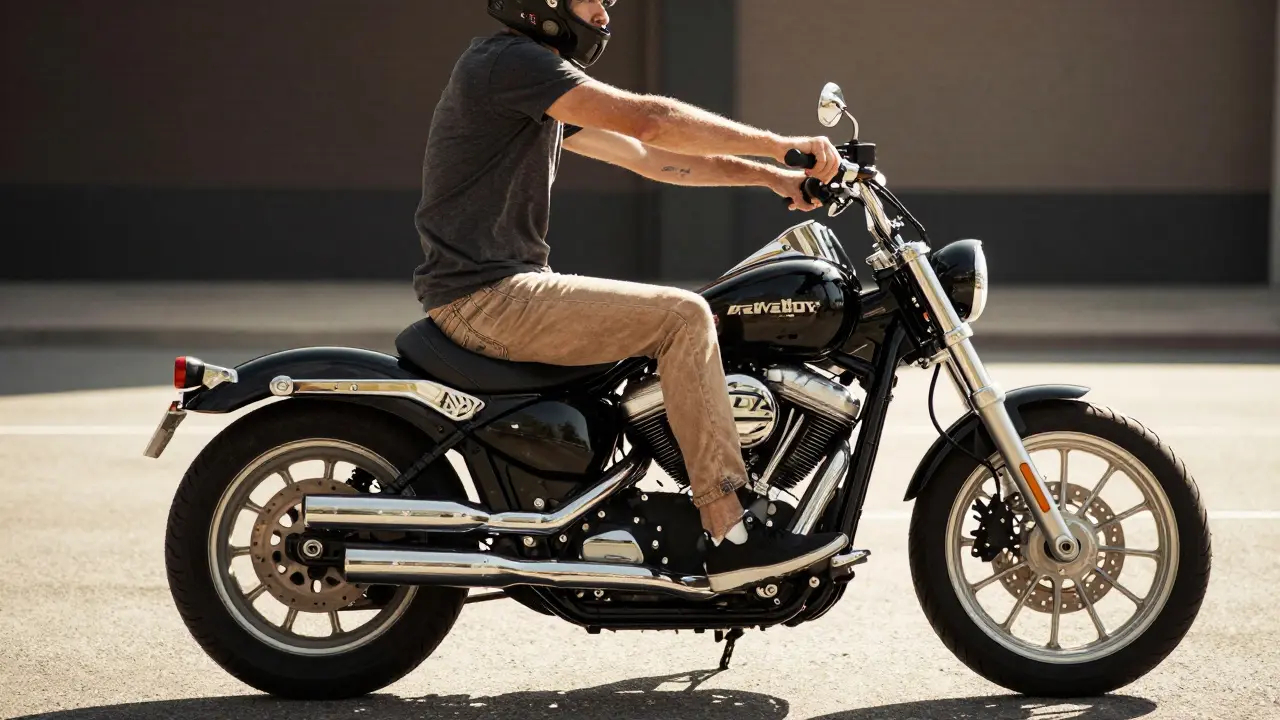
If you’re over 6 feet tall, riding a motorcycle can feel like squeezing into a too-small car. Your knees bang against the tank, your back curls forward, and your arms stretch like you’re trying to reach the steering wheel of a giant truck. It’s not about strength - it’s about ergonomics. The right motorcycle for tall riders isn’t just about power or style. It’s about two measurements most people ignore: seat-to-peg distance and bar reach.
Why Tall Riders Struggle on Standard Bikes
Most motorcycles are designed around a 5’8” to 5’10” rider. That’s the global average. But in the U.S., over 30% of adult men are 6’0” or taller. That’s millions of people crammed onto bikes built for someone 6 inches shorter. The result? Numb hands, sore lower back, and knees pressed into the gas tank. It’s not a fit issue - it’s a design flaw.
Take a typical sportbike. The seat is low, the footpegs are far forward, and the handlebars are tucked in. At 6’2”, your legs are bent at a sharp angle. Your hips are higher than your knees. Your arms are fully extended, pulling your shoulders up toward your ears. Ride for 20 minutes, and your body starts rebelling. By 45 minutes, you’re done.
Seat-to-Peg Distance: The Most Important Number
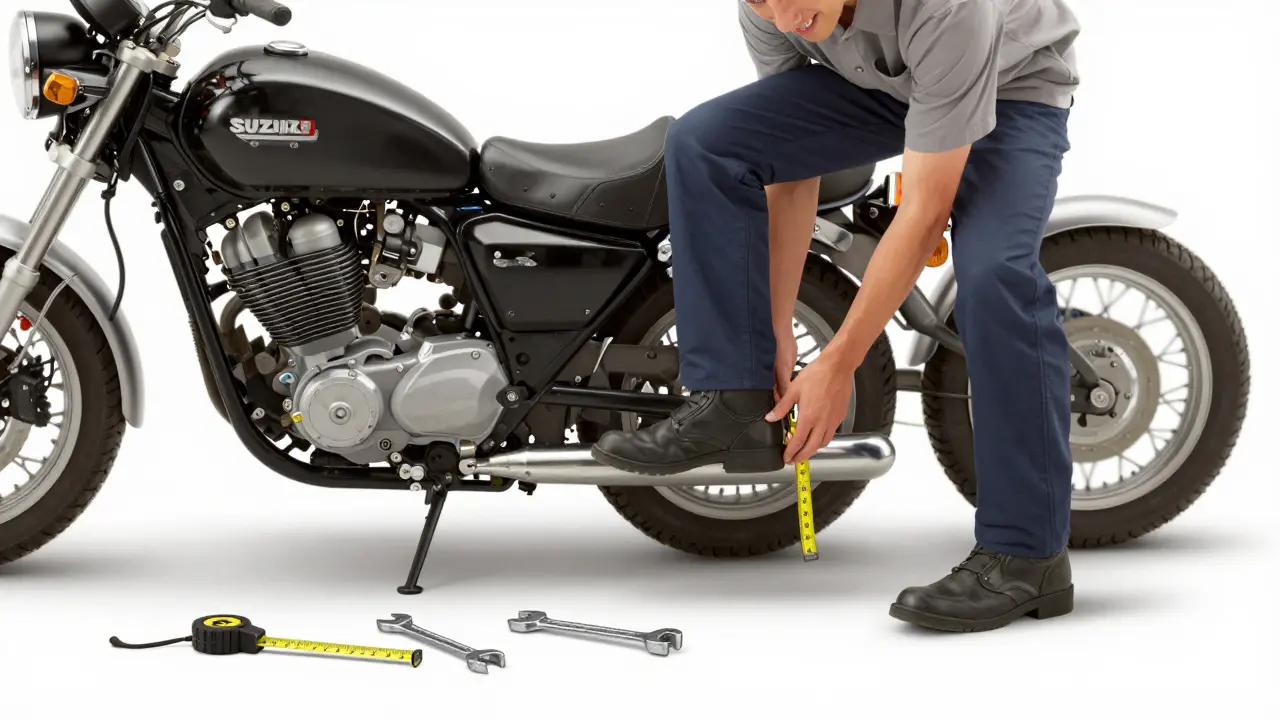
Seat-to-peg distance is the straight-line measurement from the center of the seat to the center of the footpeg. For tall riders, this number needs to be at least 36 inches. Anything under 34 inches is a red flag.
Why does this matter? Because your leg length doesn’t change. If your femur is 20 inches long and the seat-to-peg distance is only 33 inches, your knee is bent at 110 degrees. That’s not riding - that’s sitting in a cramped chair with your legs in a vise. At 36+ inches, your knee sits closer to 90 degrees - a natural, relaxed angle. Your hips stay level. Your spine stays neutral. You can ride all day without aching.
Look at the Indian Scout Bobber. Seat-to-peg distance: 35.4 inches. Not bad. But the Harley-Davidson Fat Boy? 37.8 inches. That’s why so many tall riders stick with Harleys. The same goes for the Suzuki Boulevard C50 - 37.2 inches. These bikes don’t have the longest seats, but they give your legs room to stretch.
Bar Reach: Don’t Let Your Arms Do the Work
Bar reach is how far your hands have to stretch from the seat to the handlebars. For riders over 6’0”, anything over 38 inches is too far. If you have to lean forward to grip the bars, your core is working overtime. Your shoulders tighten. Your wrists angle unnaturally. That’s how you get carpal tunnel on a weekend ride.
Compare two cruisers: the Honda Shadow Phantom and the Yamaha Star Bolt. The Shadow has a bar reach of 35 inches. The Star Bolt? 38.5 inches. Even though both bikes look similar, the Star Bolt forces you to hunch. The Shadow? You sit upright, elbows slightly bent, hands resting naturally. That’s the sweet spot.
Some bikes have adjustable handlebars. The Triumph Bonneville T120 lets you raise the bars by 1.5 inches. That’s a game-changer. A 1.5-inch lift can reduce shoulder strain by 40%. That’s not a tweak - it’s a fix.
Best Motorcycle Types for Tall Riders
Not all bikes are created equal. Here’s what actually works for tall riders - backed by real-world feedback from riders 6’1” and up.
- Cruisers: Long, low seats. Low footpegs. Wide handlebars. Perfect for stretching out. Top picks: Harley-Davidson Fat Boy (37.8 in seat-to-peg), Indian Chief (38.2 in), Suzuki Boulevard C50 (37.2 in).
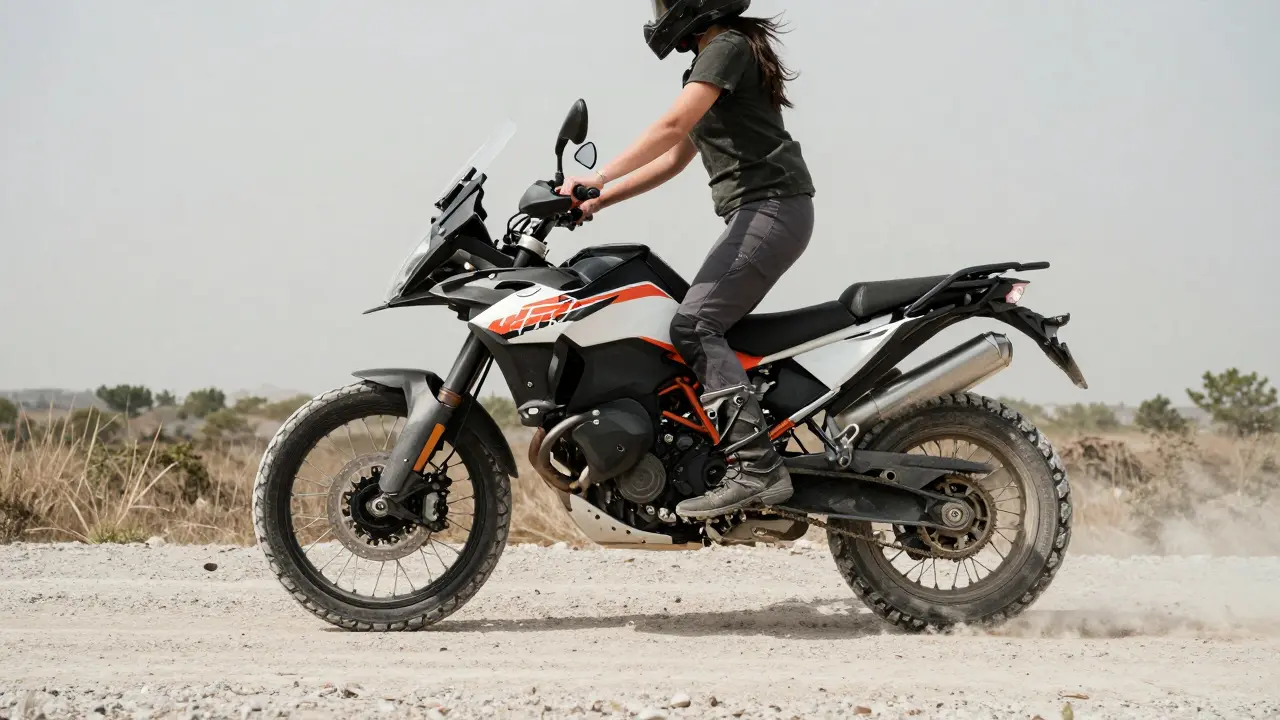
- Adventure Bikes: Tall seats, but long legroom. The seat is high, but the pegs are far back. You sit more like a horseback rider. Top picks: BMW R 1250 GS (38.5 in), KTM 1290 Super Adventure S (38.7 in), Yamaha Tenere 700 (37.5 in).
- Standard/Naked Bikes: Upright posture. Minimal forward lean. Good for daily use. Top picks: Honda CB650R (36.8 in), Kawasaki Z650 (36.5 in), Triumph Street Twin (37.0 in).
- Touring Bikes: Built for long hauls. Highest seat-to-peg distances. Adjustable windshields and bars. Top picks: Honda Gold Wing (40.1 in), Yamaha Star Roadliner (39.8 in), Kawasaki Vulcan S (37.6 in).
- Avoid: Sportbikes (Honda CBR600RR, Yamaha R6), supersport bikes, and any bike with a seat-to-peg distance under 34 inches. Even if it looks cool, your body won’t thank you.
How to Test a Bike Before You Buy
Don’t just sit on it. Test it like you’re riding.
- Put on your riding boots. Heel height matters. A 1-inch heel adds 1.5 inches of leg extension.
- Place your heel on the footpeg. Can you still bend your knee slightly? If your leg is locked straight, it’s too short.
- Grab the handlebars. Are your elbows bent at 20-30 degrees? If your arms are straight or your shoulders are hunched, the reach is too far.
- Lean forward slightly. Can you rest your hands lightly on the bars without pulling your chest toward the tank? If you have to lift your chest, the seat is too far back.
- Hold the position for 60 seconds. If your back starts to tighten, walk away.
Most dealers will let you do this. If they say “just sit on it,” find another shop. This isn’t a fashion show - it’s a biomechanical fit.
Modifications That Actually Help
Some riders try lowering the seat. Bad idea. Lowering the seat also lowers the footpegs - and that makes the seat-to-peg distance worse. You’re trading height for legroom. It’s a net loss.
Instead, try these proven upgrades:
- Adjustable footpegs: Brands like Kuryakyn and Sargent offer rearward footpeg kits. Moving pegs back 2 inches can add 3 inches of usable legroom.
- Raise the handlebars: A 1-2 inch riser kit costs under $50. It lifts your wrists and drops your shoulders. Works on cruisers, standards, and even some adventure bikes.
- Aftermarket seats: Companies like Corbin and Sargent make longer, narrower seats. They move you slightly forward, giving your legs more space. Don’t go for “low” seats - go for “long” seats.
- Clutch and brake lever extensions: If you have small hands or long arms, lever extensions help you grip without overreaching.
Real Riders, Real Results
John, 6’4”, rides a 2023 Indian Chief. He was on a Harley Sportster before. “I could barely touch the pegs. My knees were always sore. I switched to the Chief and suddenly I could ride 300 miles without a break. I didn’t even know I was in pain until it was gone.”
Maria, 6’1”, rides a KTM 1290 Super Adventure. “I thought adventure bikes were for off-road. But the seat-to-peg distance? Perfect. My legs don’t cramp. I can stand on the pegs on gravel without feeling like I’m going to fall forward.”
These aren’t outliers. They’re the rule. The right bike doesn’t make you ride harder - it makes you ride longer.
What to Look for in 2026
Manufacturers are starting to listen. Harley’s new 2026 Softail models have 1.5 inches more legroom. BMW’s R 18 B now comes with optional rear-set pegs. Even Indian’s 2026 Chief has a new seat design that adds 1.2 inches of leg clearance.
Look for models labeled “tall rider friendly” or “extended ergonomics.” They’re not marketing fluff anymore. They’re engineering updates.
If you’re shopping in 2026, prioritize seat-to-peg distance over seat height. A tall seat with good legroom is better than a low seat with cramped legs. And always test ride with your boots on.