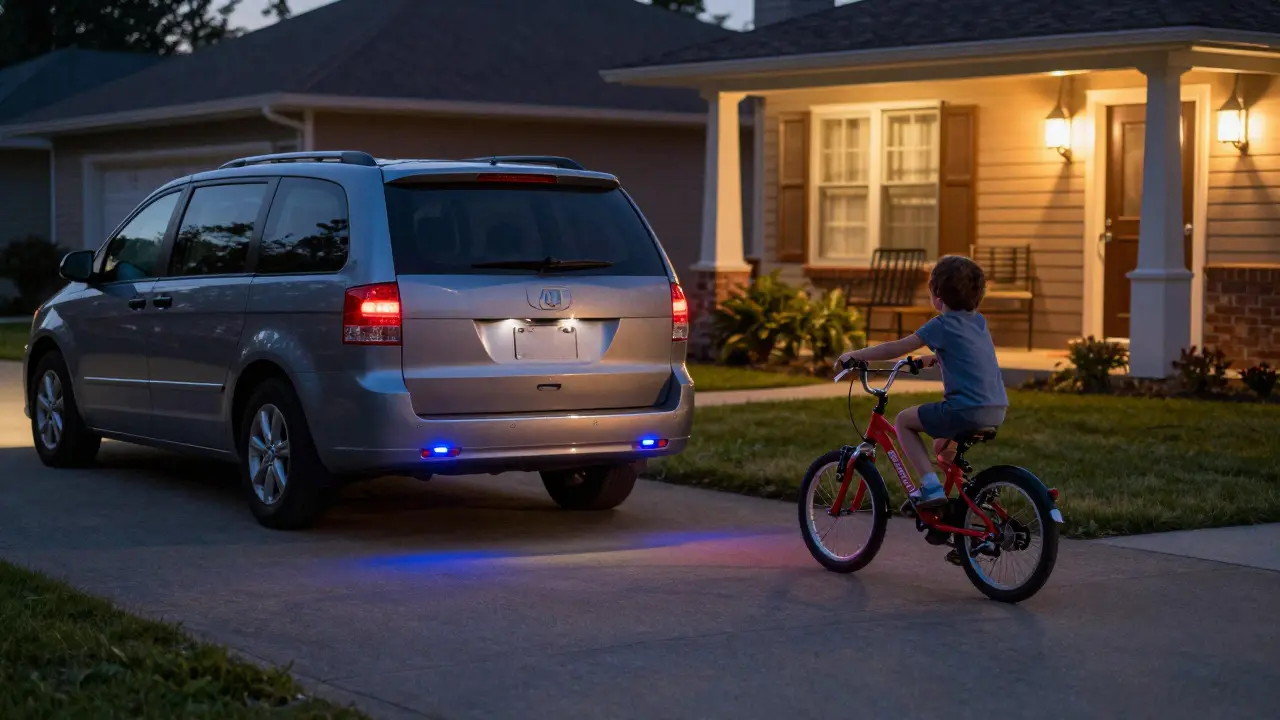
Ever backed out of a parking spot and felt that gut-punch fear when you see a kid’s bike just inches from your bumper? Or maybe you’ve heard the sickening thud of your car hitting something you didn’t see. Rear automatic braking isn’t magic - it’s engineering designed to stop those moments before they happen.
How Rear Automatic Braking Actually Works
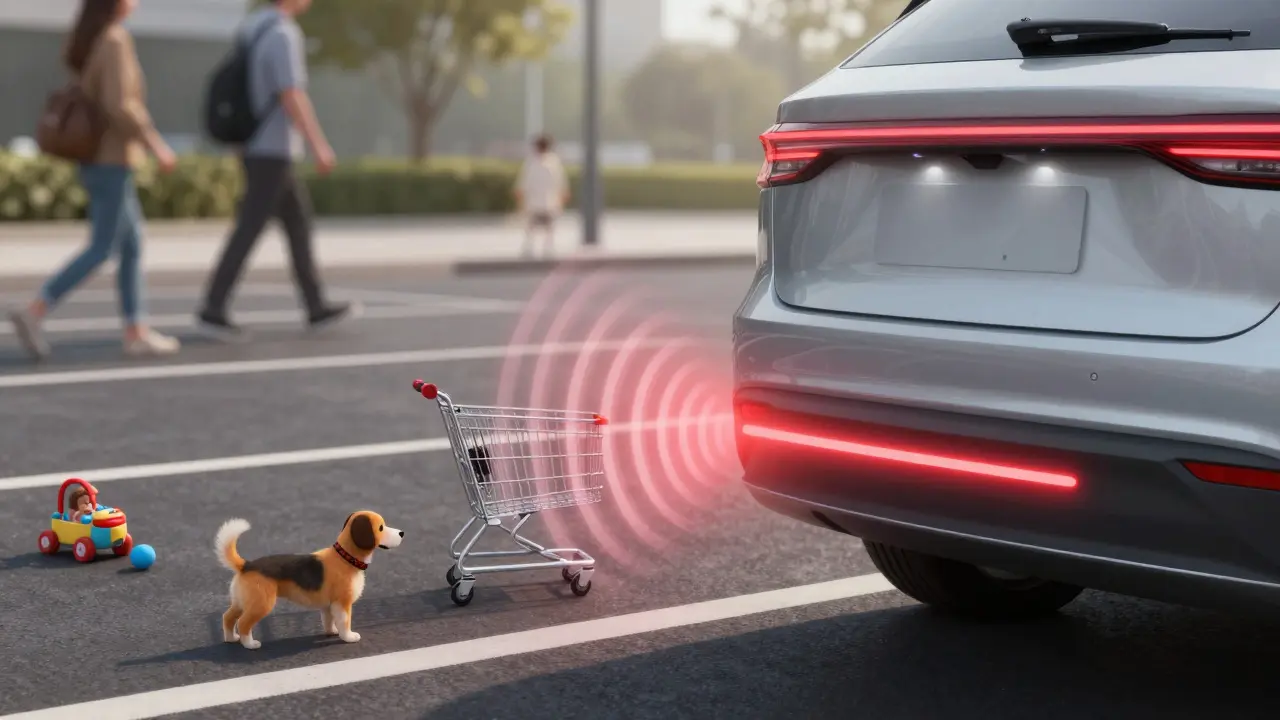
Rear automatic braking, also called reverse automatic braking or RAB, uses ultrasonic sensors and sometimes cameras mounted in your bumper to scan behind your car when you shift into reverse. If it detects an object - like a shopping cart, a pet, a child, or another vehicle - moving into your path, it doesn’t just beep. It slams on the brakes automatically, even if you’re still pressing the gas pedal.
This system doesn’t rely on you reacting fast enough. Human reaction time averages 1.5 seconds. At 5 mph, that’s about 11 feet of travel before you even lift your foot off the gas. Rear automatic braking kicks in within 0.3 seconds. That’s the difference between a scrape and a total wreck.
Most systems activate only below 8 mph - perfect for parking lots, driveways, and garages. They’re not meant for highway reversing. That’s intentional. Too much speed, and the system can’t stop you safely. At low speeds, it’s highly effective.
Real-World Impact: Data Doesn’t Lie
The Insurance Institute for Highway Safety (IIHS) studied over 1.2 million vehicles with rear automatic braking between 2018 and 2023. Their findings? Vehicles with this feature had 47% fewer backing collisions than those without. That’s not a small number. It’s nearly half the accidents.
And it’s not just about dents. In 2022, the National Highway Traffic Safety Administration (NHTSA) reported that 294 people were killed in the U.S. from backing-over crashes. Most victims were children under 5 or adults over 70. Rear automatic braking doesn’t just protect your car - it saves lives.
Some systems even alert you with visual warnings on the infotainment screen or through seat vibrations. But the real game-changer? The automatic stop. No warning. No beep. Just brakes. That’s what makes the difference.
What It Can and Can’t Do
Let’s be clear: rear automatic braking isn’t perfect. It doesn’t detect everything.
- It sees: People, pets, shopping carts, low walls, parked cars, curbs, and fixed objects.
- It misses: Thin poles, hanging tree branches, very low objects (like a dog lying flat), or objects covered in snow or mud.
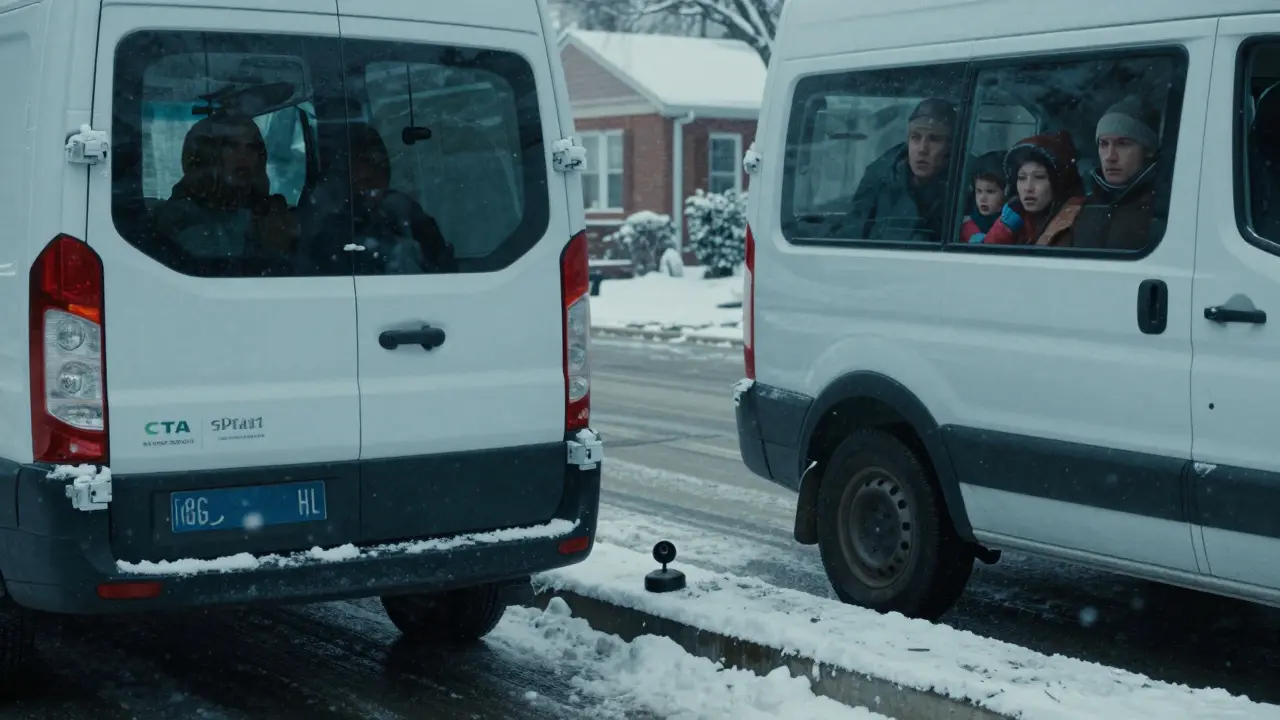
It also won’t work if the sensors are blocked. Snow buildup, dirt, or even a dirty license plate can blind the system. That’s why cleaning your rear bumper after a snowstorm isn’t just about looks - it’s about safety.
Some drivers think this system replaces mirrors and turning your head. It doesn’t. You still need to check your blind spots. Rear automatic braking is a backup - not a replacement. Think of it like airbags. You still buckle up.
Which Cars Have It? And Is It Worth It?
Since 2022, the NHTSA has required all new passenger vehicles sold in the U.S. to include rear automatic braking. That means if you bought a new car after January 1, 2022 - whether it’s a Toyota Corolla, a Ford F-150, or a Hyundai Kona - it likely has this feature.
Older cars? You can add aftermarket systems, but they’re hit-or-miss. Most only offer alerts, not automatic braking. And they often don’t integrate with your car’s existing sensors. If you’re buying used, look for models from 2018 and later. Brands like Subaru, Honda, and Toyota have had reliable systems since 2015.
Is it worth it? If you park in tight spaces, have kids, or live in a neighborhood with heavy foot traffic - yes. The cost is built into the car’s price. You’re not paying extra. You’re just getting a feature that prevents $5,000 repairs and potential lawsuits.
Common Myths About Rear Braking Systems
- Myth: It only works in daylight. Truth: Most systems use ultrasonic sensors, not cameras. It works just as well at night or in rain.
- Myth: It’s too sensitive and brakes for nothing. Truth: False activations are rare. Systems are tuned to ignore moving objects like passing cars or people walking by - only reacting when something enters your direct path.
- Myth: You can turn it off permanently. Truth: Most cars let you disable it temporarily, but it resets to on every time you start the car. Manufacturers won’t let you turn it off for good - because they know it saves lives.
What to Do If Your System Fails
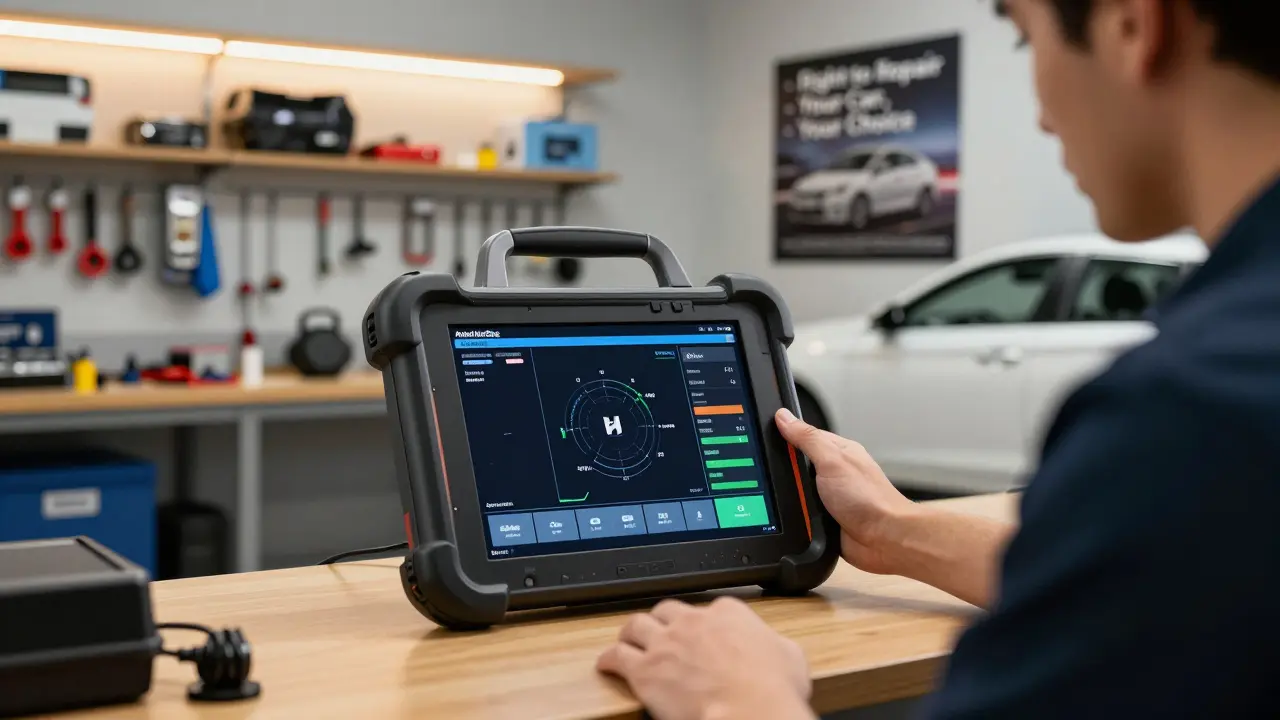
If your car suddenly stops braking when reversing, or the warning light flashes, don’t ignore it. First, check for sensor blockage. Clean the rear bumper with a damp cloth. If that doesn’t fix it, take it to a dealer. Many automakers offer free diagnostics for safety systems under warranty.
Some owners report the system works fine until winter. That’s usually ice or salt buildup. Use a soft brush and warm water to clean the sensor area. Never use high-pressure washers - they can damage the sensors.
If your car doesn’t have rear automatic braking and you’re driving a pre-2022 model, consider upgrading to a newer car. Or at least install a backup camera if you don’t have one. It’s not the same, but it’s better than nothing.
Why This Matters More Than You Think
In Detroit, where winters turn driveways into icy obstacle courses, rear automatic braking isn’t a luxury - it’s a necessity. Parents drop kids off at school. Grandparents park near grocery stores. Delivery drivers back into narrow alleys. Every one of them is at risk.
Technology like this doesn’t make you a better driver. It makes you safer - even if you’re distracted, tired, or in a hurry. And that’s the point. Cars are getting smarter so we don’t have to be perfect.
Does rear automatic braking work in the rain or snow?
Yes, most rear automatic braking systems use ultrasonic sensors, not cameras, so they work fine in rain and light snow. But heavy snow buildup on the bumper sensors can block them. Always clean your rear bumper after a snowstorm to keep the system working properly.
Can I turn off rear automatic braking permanently?
Most car manufacturers don’t allow you to turn off rear automatic braking permanently. You can usually disable it temporarily using a button or menu, but the system resets to on every time you start the car. This is intentional - the system is designed to protect you even if you forget to turn it back on.
Is rear automatic braking the same as a backup camera?
No. A backup camera only shows you what’s behind you on a screen. Rear automatic braking actively detects objects and slams on the brakes if a collision is likely. A camera helps you see; rear braking helps you avoid hitting something even if you don’t see it.
Do all new cars have rear automatic braking?
Yes. Since January 1, 2022, the U.S. government requires all new passenger vehicles to include rear automatic braking. This applies to cars, SUVs, trucks, and vans sold in the U.S. You won’t find a new model without it.
Can rear automatic braking stop a person running behind my car?
Yes. The system is designed to detect people, especially children and elderly pedestrians. If someone runs behind your car while you’re reversing, it will detect their movement and apply the brakes. That’s why it’s so effective in parking lots and driveways where kids and pets are common.