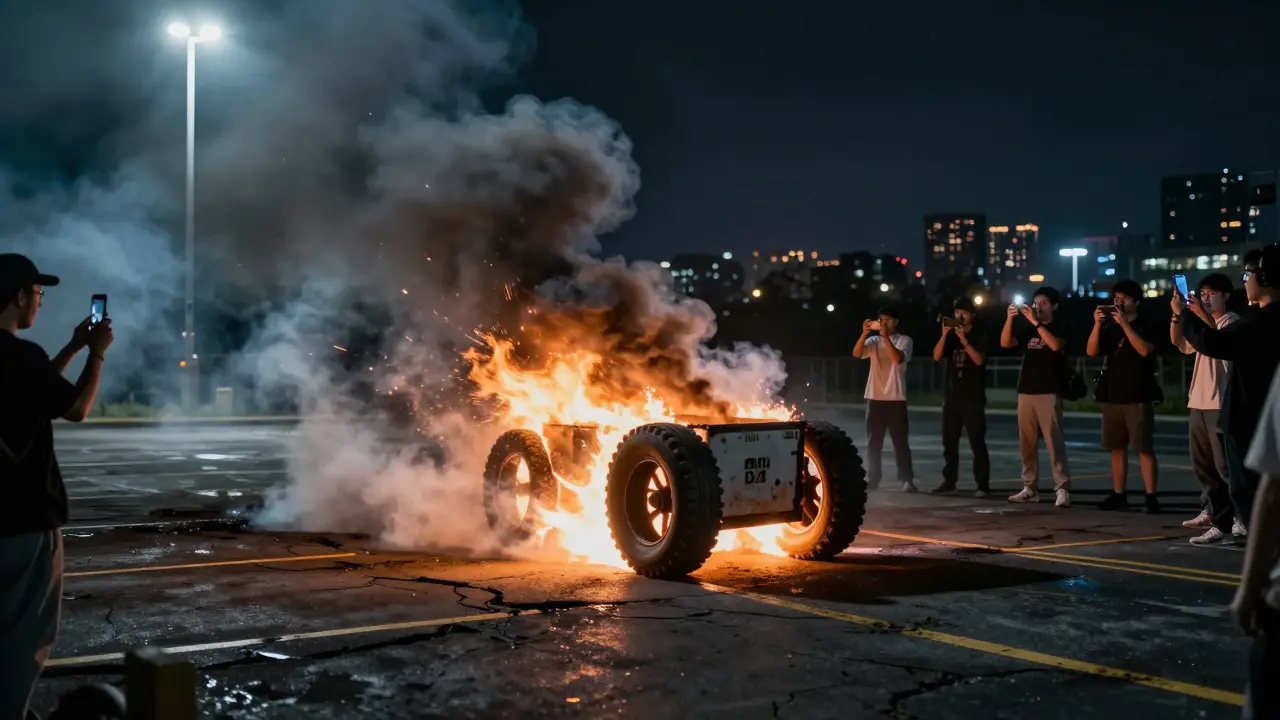
Every weekend, somewhere in a parking lot or abandoned industrial zone, a car spins in a tight circle, tires screaming, smoke curling into the air. People film it. Some cheer. Others shake their heads. But behind the spectacle of burnout boxes and stunt areas lies a growing problem: safety risks, property damage, and legal consequences that don’t go away just because the smoke clears.
What Exactly Is a Burnout Box?
A burnout box is a designated or unofficial patch of pavement-usually asphalt or concrete-where drivers spin their tires in place to create smoke and noise. These spots aren’t always marked. Sometimes they’re just the flattest, most durable surface near a gas station, an empty lot, or the edge of a highway off-ramp. In places like Southern California, Texas, and parts of Florida, burnout boxes have become semi-public gathering spots for car enthusiasts.But here’s the thing: most of these spots aren’t legal. Even if the owner of the property doesn’t mind, local ordinances in nearly every U.S. city prohibit public displays of tire smoke because they damage infrastructure, pollute air quality, and attract unsafe crowds. In 2024, Los Angeles fined over 300 drivers for burnout-related violations alone, with average penalties reaching $850 per incident.
Stunt Areas: When It Goes Beyond Smoke
Burnouts are just the start. Stunt areas are where things get dangerous. These are spots where drivers attempt donuts, handbrake turns, drifts, or even jumps-sometimes with multiple cars involved. Videos of these stunts go viral on TikTok and Instagram, often tagged with #StuntLife or #BurnoutKing. But behind the likes and shares are real consequences.In 2023, a 19-year-old driver in Atlanta lost control during a drift stunt, flipped into a concrete barrier, and killed a bystander who was filming from the sidewalk. The driver was charged with involuntary manslaughter. No one was wearing a helmet. No safety barriers were in place. No permits were issued. And yet, the event was organized through a private Discord server with over 200 members.
These aren’t isolated incidents. According to the National Highway Traffic Safety Administration (NHTSA), stunt-related crashes increased by 47% between 2020 and 2024. Most victims weren’t drivers-they were pedestrians, cyclists, or people just walking their dogs.
Why Are These Activities Still So Popular?
The appeal is simple: visibility, community, and adrenaline. For many young drivers, especially those without access to race tracks or sanctioned events, burnout boxes and stunt areas are the only way to show off their cars or skills. Social media rewards spectacle. A single viral clip can turn an unknown driver into a local legend.But the culture has shifted. What used to be a quiet, underground scene is now a public spectacle. Organizers use Instagram to announce locations. People come with coolers, lawn chairs, and phones ready to record. Some even sell merch-patches, stickers, hoodies-with logos like “Burnout Zone 7” or “Stunt City USA.”
This isn’t just about rebellion anymore. It’s become a business. And businesses need permits. They need insurance. They need safety plans. None of that exists in most of these gatherings.

The Legal Reality: You’re Not Immune
Many drivers think they’re safe if they’re not on public roads. That’s a dangerous myth. In most states, even private property doesn’t protect you from criminal charges if your actions endanger others or damage public infrastructure.Here’s what you can be charged with:
- Reckless driving-even on private land, if it’s visible to the public or affects nearby properties
- Disorderly conduct-noise complaints, blocking sidewalks, or public nuisance
- Criminal mischief-tire smoke eats through asphalt. Repairing a single burnout box can cost a city $15,000+
- Endangering public safety-if someone gets hurt, you can face felony charges
In New York, a 2024 law made it a Class A misdemeanor to perform any vehicle stunt within 500 feet of a public sidewalk or roadway, even on private property. Fines start at $1,000. Repeat offenders lose their license for up to a year.
Insurance companies don’t cover stunt-related damage. If your car flips during a burnout and you’re not at a licensed track, your insurer will deny the claim. You’re on the hook for repairs, medical bills, and legal fees.
Who Pays the Price?
It’s not just the driver. Taxpayers pay for the cleanup. Cities spend thousands repaving asphalt destroyed by tire smoke. Fire departments respond to smoke inhalation calls. Paramedics treat bystanders with hearing damage from prolonged noise exposure. Local businesses suffer when customers avoid areas known for stunt gatherings.One town in Michigan spent $42,000 in 2023 just to seal and resurface a parking lot that had been used as a weekly burnout spot for six months. The city didn’t catch a single driver. The cost was absorbed by residents through higher property taxes.
And then there’s the human cost. A 14-year-old girl in Ohio was hit by a drifting car in 2024 while walking home from school. She survived, but needed multiple surgeries. The driver, 18, had no license and no insurance. He was sentenced to 18 months in juvenile detention. The girl still has chronic pain.
What Are the Alternatives?
You don’t need to break the law to enjoy your car. There are legal, safe, and even thrilling alternatives.- Track days-organizations like NASA, SCCA, and local clubs offer affordable track time. You can do burnouts, drifts, and high-speed laps with safety gear, spotters, and emergency crews on standby. Costs range from $150 to $400 per day.
- Drift schools-places like Formula Drift’s training centers or local drift academies teach control, technique, and safety. You learn how to drift without spinning out.
- Sim racing-if you love the thrill, a high-end racing simulator with force feedback pedals can give you the same adrenaline without the risk. Many professional drivers use them to train.
- Car shows and cruise nights-show off your ride without tearing up the pavement. Many cities host legal cruise nights with police escorts and designated routes.
Some drivers who used to do burnouts now run YouTube channels showing track day footage. One guy from Texas went from posting illegal stunts to teaching safe drift techniques. He now has over 1.2 million subscribers. His message? “You don’t need to be reckless to be respected.”

What Should You Do If You See This Happening?
If you’re near a burnout box or stunt area:- Don’t film or share it. Posting content can make you legally liable in some states, even if you didn’t drive.
- Report it. Call your local non-emergency police line. Most departments have a dedicated “street racing” or “vehicle nuisance” unit.
- Warn others. If you know someone who does this, talk to them. Not with anger-with facts. Many don’t realize how serious the consequences are.
- Support legal events. Go to track days. Volunteer at car shows. Help build a culture that values skill over spectacle.
Final Thought: Skill Doesn’t Need a Crowd
There’s nothing wrong with loving your car. There’s nothing wrong with wanting to push its limits. But real skill isn’t measured by how much smoke you make. It’s measured by how much control you have. How well you understand your machine. How responsibly you use it.The best drivers don’t need a crowd. They don’t need a viral video. They just need a track, a helmet, and the discipline to know when to stop.
Are burnout boxes legal anywhere in the U.S.?
No, burnout boxes are not legally permitted on public property anywhere in the U.S. A few private facilities, like dedicated drag strips or stunt parks, allow controlled burnouts under supervision-but these are rare and require permits, insurance, and safety protocols. Most so-called "burnout boxes" are unofficial spots that violate local ordinances and can lead to fines, impoundment, or criminal charges.
Can I get in trouble even if I’m not driving?
Yes. In several states, including California and New York, simply organizing, promoting, or filming a stunt event can lead to charges. If you help coordinate the location, post about it on social media, or encourage others to attend, you can be held legally responsible under conspiracy or aiding-and-abetting laws-even if you never touched the steering wheel.
Do police actively hunt down people doing burnouts?
Yes, especially in cities with high rates of stunt activity. Many police departments now use drone surveillance, license plate readers, and social media monitoring to track these events. In 2024, Phoenix police used facial recognition software to identify drivers from Instagram videos and issued citations to over 70 people who thought they were anonymous.
What happens if my car gets impounded?
If you’re caught doing a burnout or stunt, your car can be impounded immediately. Storage fees can reach $100 per day. To get it back, you’ll likely need to pay a fine, prove you have valid insurance, and sometimes attend a driver safety course. In some states, repeat offenders face permanent forfeiture of the vehicle.
Is there a way to legally host a burnout event?
Yes-but it’s hard. You need to rent a private, approved facility with proper drainage, safety barriers, emergency services on-site, and liability insurance. You also need permits from local fire, police, and public works departments. Most small groups can’t afford the cost or paperwork. That’s why track days are a better option-they handle all the legal and safety requirements for you.
Kristina Kalolo
December 17, 2025 AT 03:48My cousin got fined $1,200 last year for doing a burnout in a Walmart parking lot-said he thought it was empty. Turns out, the security cam had been recording for 47 minutes before he showed up. No one warned him. Now he’s taking a defensive driving course.
Megan Blakeman
December 18, 2025 AT 17:21I used to film these things... I’m so ashamed now. I posted one last summer-got 80k views. Then I found out a kid got hit two blocks away at the same time. I deleted everything. I’m not proud of what I helped spread. I’m trying to make up for it by volunteering at track days now. 🙏
Akhil Bellam
December 19, 2025 AT 18:36Oh please. You’re all just jealous because you don’t have the guts to push your car to its limits. Real enthusiasts don’t need permission slips-they need passion. You think the FIA cares about your little asphalt patches? They’re too busy watching F1 drivers drift through Monaco’s tight corners. If you’re not willing to risk it, you’re not a driver-you’re a spectator with a credit card.
Robert Byrne
December 20, 2025 AT 14:20That guy in Atlanta who killed the bystander? He didn’t just lose his freedom-he lost his soul. And you know what? People like Akhil Bellam here? They’re the reason this keeps happening. You don’t glorify manslaughter. You don’t romanticize death. You don’t turn tragedy into a TikTok trend. If you think this is ‘freedom,’ you’re not a car lover-you’re a liability with wheels.
Zoe Hill
December 21, 2025 AT 02:58i just watched a video of this girl doing perfect drifts on a closed track last weekend-no smoke, no crowd, just pure control. she smiled the whole time. it was beautiful. why do we think we need chaos to prove we love cars? 🥺
King Medoo
December 21, 2025 AT 19:23Let’s be real: this isn’t about safety. It’s about control. The system wants you docile. They don’t want you to feel power. They don’t want you to roar. They want you to sit in traffic, pay your taxes, and never question authority. Burnouts are rebellion. Smoke is speech. And if you’re scared of that, maybe you’ve already lost.
Also, police drones? Facial recognition? That’s not enforcement-that’s surveillance capitalism. They’re watching you so they can charge you. And then they’ll sell your data to insurance companies who’ll raise your rates. Welcome to the future, where even your exhaust is tracked.
🔥💨 #BurnoutIsFreeSpeech
Pamela Tanner
December 23, 2025 AT 15:36There’s a reason track days cost $150–$400. They cover liability insurance, safety briefings, medical crews, and certified instructors. That’s not a price tag-that’s responsibility. If you’re willing to pay for a $50,000 car but not for $300 to learn how to handle it safely, you’re not passionate-you’re reckless. And that’s not cool. It’s dangerous. And it’s not helping the community.
Also, if you’re posting about it online? You’re part of the problem. You’re not just a viewer-you’re an amplifier. And amplifying danger isn’t fandom. It’s negligence.
ravi kumar
December 24, 2025 AT 08:38I come from India where street racing is illegal, but still happens. I’ve seen people get hurt. I’ve seen families cry. I’ve seen police beat drivers just to make an example. But here’s what I learned: passion doesn’t need chaos. My friend bought a used Honda Civic, fixed it up, and now he goes to monthly track days. He’s never been arrested. He’s never paid a fine. But he’s the most respected guy in our local car club. Skill > spectacle. Always.
Tia Muzdalifah
December 24, 2025 AT 18:20my bff’s dad used to do burnouts in the 90s in ohio. he said they’d just go out at 2am, no one else around, and do it for fun. no cameras, no crowds, no hashtags. just him, his car, and the quiet. now it’s all about clout. it’s sad. we lost the soul of it.
Amber Swartz
December 26, 2025 AT 15:44Oh my god. I just found out my ex-boyfriend was one of the guys in that viral video from last month. The one with the blue Mustang? He’s in jail now. And his mom? She’s crying on TikTok. Like, she made a whole video: ‘My son just wanted to be cool.’ No. He wanted to be famous. And now he’s a felon. I’m so mad I ever dated him.
Albert Navat
December 28, 2025 AT 08:09Let’s talk about the infrastructure cost. You think asphalt just grows back? That’s not dirt. That’s engineered polymer-modified concrete with thermal expansion joints. Tire smoke doesn’t just ‘wear’ it-it chemically degrades the binder. Cities don’t replace it. They patch it. And those patches fail faster. So you’re not just breaking pavement-you’re creating a future maintenance liability. And guess who pays? You do. Through taxes. So when you do a burnout, you’re literally stealing from your own school district.
Rae Blackburn
December 29, 2025 AT 01:10They’re lying. The government created these ‘stunt zones’ to track you. They want your data. They want your car’s VIN. They want your social media. They’re letting you do it so they can catch you later. That’s why they don’t shut it down-they just wait. Then they hit you with a felony. It’s a trap. Don’t fall for it.