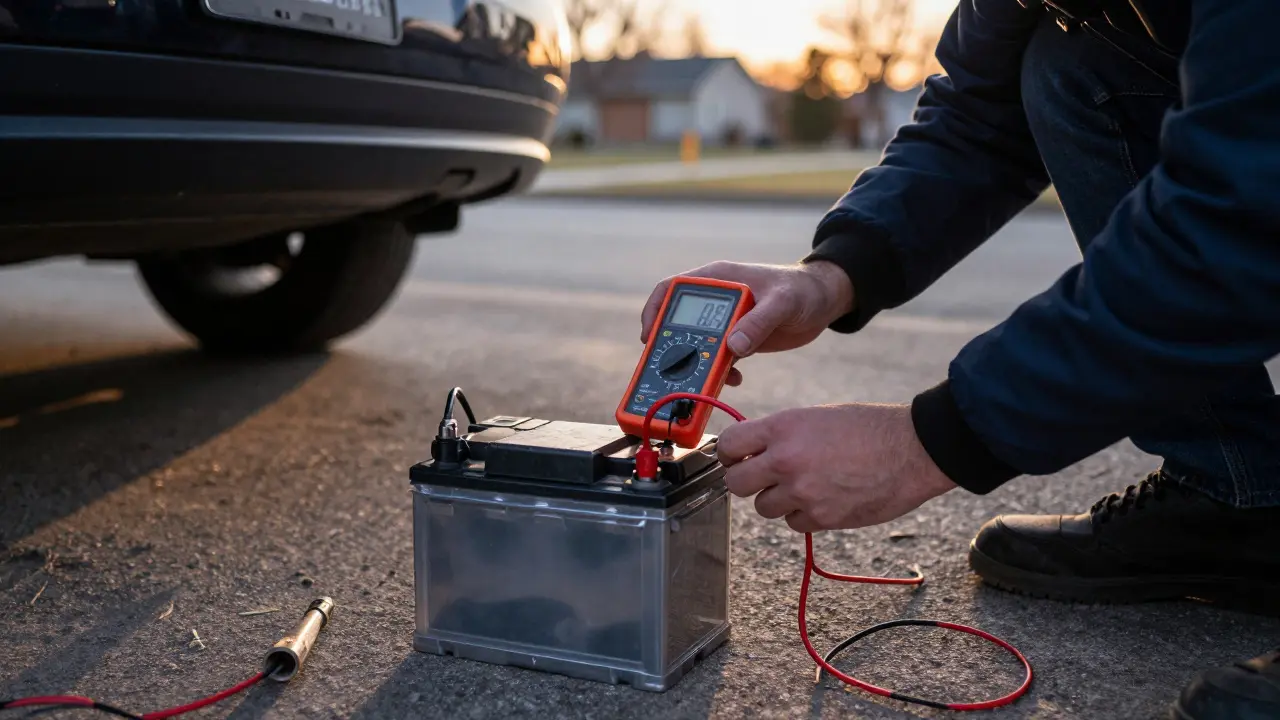
If your car won’t start, you’re not alone. Every year, millions of drivers in the U.S. face this exact problem-often at the worst possible time. Whether it’s a cold morning in New York or a quick errand after work, a car that refuses to turn over can turn into a major headache. But before you call a tow truck or panic, most no-start situations are simple to fix if you know where to look. This guide walks you through the most common causes and how to check them yourself, step by step.
Is It the Battery?
The number one reason cars won’t start? A dead battery. It’s simple, common, and easy to test. When you turn the key or press the start button, listen. If you hear a single click or nothing at all, the battery is likely the culprit. If the lights dim or flicker when you try to start the car, that’s another sign.
Most car batteries last 3 to 5 years. If yours is older than that, it’s time to consider a replacement. You can test it with a multimeter: set it to DC voltage, touch the red probe to the positive terminal and the black to the negative. A healthy battery reads between 12.4 and 12.7 volts. Below 12.0 volts? It’s weak. Below 11.8? It’s dead.
Jump-starting works in a pinch, but if the battery keeps dying, there’s a deeper issue-maybe a bad alternator, a light left on, or a parasitic drain. Don’t just replace the battery without checking the charging system.
Is the Starter Motor Failing?
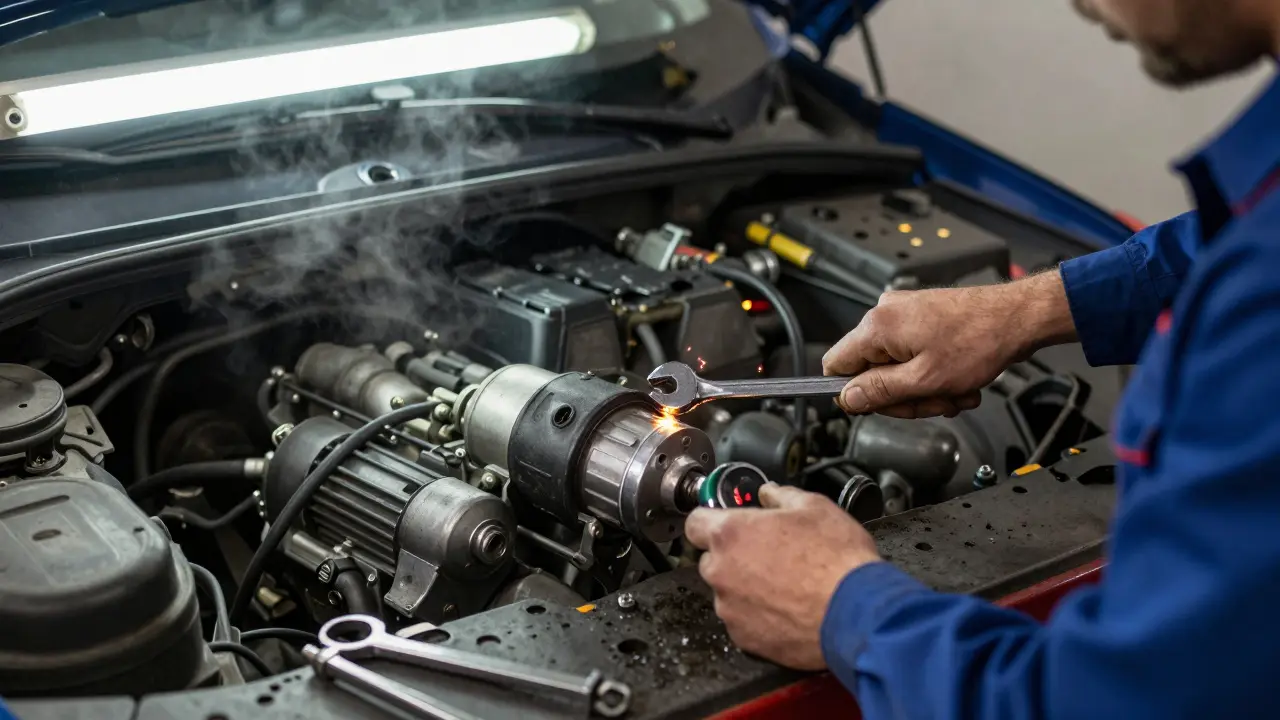
If you hear a rapid clicking noise when you turn the key, that’s often the starter solenoid trying-and failing-to engage the engine. The starter motor draws a huge amount of current. When it’s worn out, it can’t spin the engine fast enough to start it.
Try this: tap the starter with a wrench or hammer while someone else tries to start the car. If it turns over after a few taps, the starter is likely sticking. This is a temporary fix, though. A worn starter will fail completely soon.
Another clue: if the car starts sometimes but not others, especially after sitting for a while, that’s classic starter behavior. Heat builds up under the hood, and the internal brushes or solenoid get sluggish. Replacing a starter isn’t hard on most cars, and parts cost between $150 and $300 depending on the model.
Check the Fuel System
Here’s something people forget: your car needs fuel to start. Sounds obvious, but if you’re running on fumes, the fuel pump might not be able to deliver enough pressure. A bad fuel pump won’t always make noise-it just stops working.
Listen near the fuel tank when you turn the key to the “on” position (before cranking). You should hear a low humming sound for a couple of seconds. No sound? The fuel pump relay might be bad, or the pump itself is dead. You can test fuel pressure with a gauge, but most DIYers skip this and just replace the pump if other checks don’t explain the issue.
Also, check your fuel filter. On older cars, a clogged filter can starve the engine. Modern cars have filters built into the tank, but if you’ve never changed yours and your car has over 80,000 miles, it’s worth considering.
Ignition Problems: Spark and Key
No spark? No start. The ignition system needs to deliver a strong spark to the spark plugs. If your car cranks normally but won’t catch, that’s usually an ignition or fuel delivery issue.
Start with the basics: are the spark plugs worn out? Most last 30,000 to 100,000 miles depending on type. Old, fouled, or cracked plugs won’t ignite the fuel-air mix. Replacing them is cheap and easy on many cars-just remove the coil packs or wires and swap them out.
Also, check the ignition coil. One bad coil can cause a misfire or prevent the engine from starting at all. If you have a code reader, look for P0300 (random misfire) or P0351-P0358 (individual coil faults). No code reader? Swap coils between cylinders. If the misfire moves, you found the bad one.
And don’t overlook the key. Modern cars use transponder keys or key fobs with chips. If the chip is damaged or the battery in the fob is dead, the car’s security system will block the engine from starting-even if everything else works. Try using a spare key. If it starts, replace the fob battery or get a new key programmed.
No Crank, No Start? The Security System
If the car doesn’t even try to crank, and the battery and starter are fine, the anti-theft system might be locked out. Many cars from 2005 onward have immobilizers. If the system doesn’t recognize the key, it cuts fuel and spark.
Look for a flashing security light on the dashboard. If it’s blinking steadily when you turn the key, the system isn’t happy. Try this: leave the key in the “on” position for 10-15 minutes. Sometimes, the system resets. If the light goes off and the car starts, you’ve got a faulty key or a glitch in the module.
If you’ve replaced the battery recently or disconnected it, the system might need to relearn the key. Consult your owner’s manual for the reset procedure. Some cars require a scan tool to clear the immobilizer code.
Other Common Issues
There are a few less common but still frequent problems:
- Broken timing belt: If the belt snaps, the engine won’t turn over. This usually happens with little warning. If your car has over 60,000 miles and you don’t know when the belt was last replaced, assume it’s overdue. On interference engines, a broken belt can destroy the valves.
- Bad neutral safety switch: If the car only starts in neutral-not park-it’s this switch. It tells the computer it’s safe to start. A worn switch can be replaced for under $100.
- Dirty throttle body: On some fuel-injected cars, a clogged throttle body can cause a no-start condition after sitting overnight. Cleaning it with throttle body spray often fixes it.
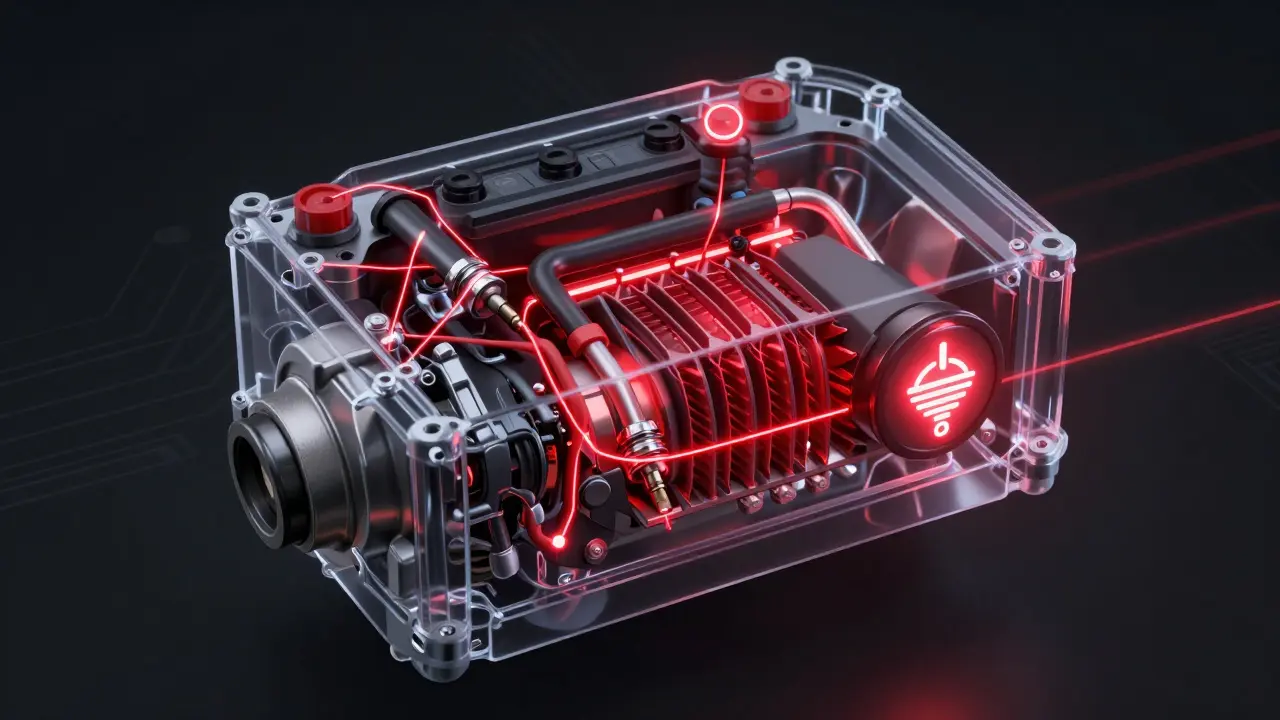
- Broken crankshaft position sensor: This sensor tells the engine computer where the crankshaft is. If it fails, the computer doesn’t know when to fire the spark plugs or inject fuel. The car will crank but never start. It’s a common failure on many GM, Ford, and Honda models.
Quick Checklist to Rule Out the Basics
When your car won’t start, follow this order:
- Check the battery voltage with a multimeter (should be 12.4V+).
- Listen for the fuel pump hum when turning the key to “on.”
- Try the hazard lights. If they’re dim or flickering, the battery is weak.
- Listen for clicking sounds-this points to starter or solenoid.
- Use a spare key. If it works, the fob battery is dead.
- Look at the dashboard. Is the security light flashing?
- If it cranks but won’t start, check for spark (pull a plug wire and hold it near metal while someone cranks-watch for a spark).
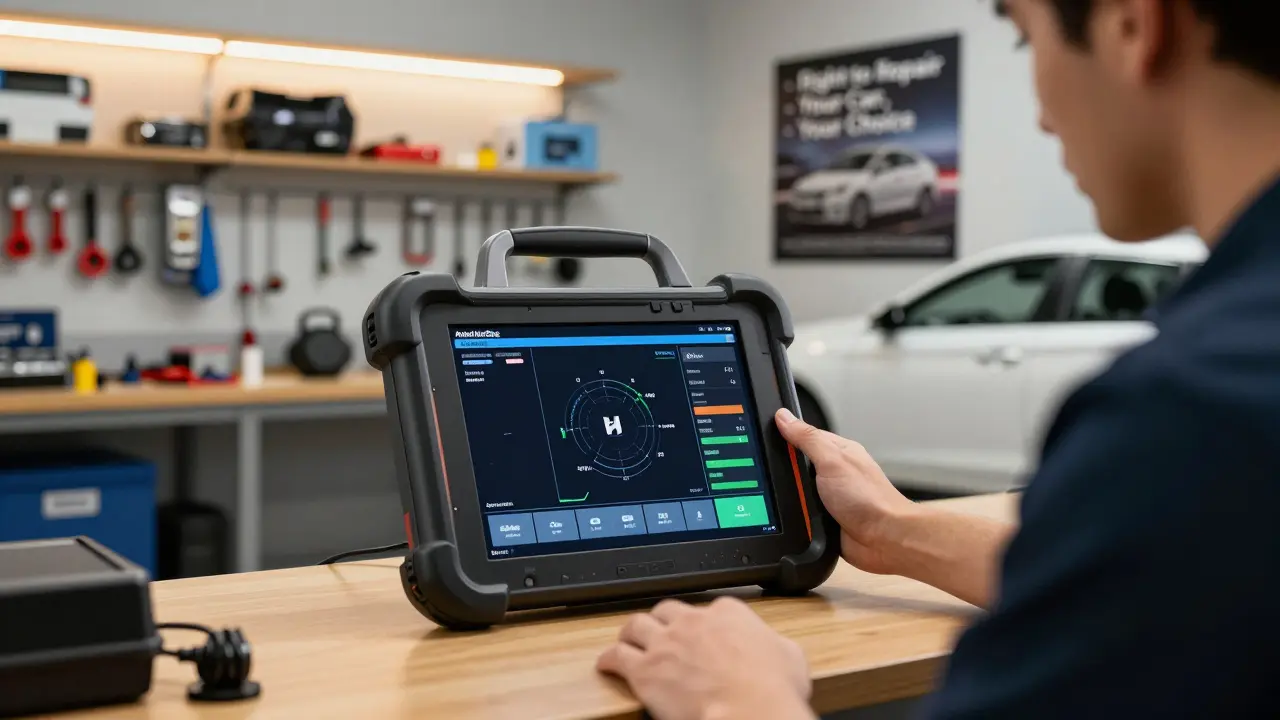
If you’ve gone through all these and still can’t find the issue, it’s time to get a professional scan tool. Many auto parts stores offer free code reading. A P0335 code (crank sensor) or P0087 (fuel pressure) will point you in the right direction.
When to Call a Mechanic
You can fix most no-start problems yourself if you’re patient and methodical. But if you’ve checked the battery, starter, fuel, and ignition-and still nothing-there’s likely a deeper electrical fault, a failed ECU, or internal engine damage. Don’t keep guessing. A mechanic with a scan tool can read live data from your engine and pinpoint the fault in minutes.
Also, if you smell gasoline, hear a grinding noise, or see smoke, stop trying to start the car. That’s a safety issue. Call for help.
Why does my car click but not start?
A rapid clicking noise usually means the battery doesn’t have enough power to engage the starter. It could be a dead battery, corroded terminals, or a bad starter solenoid. Test the battery voltage first. If it’s below 12.0 volts, charge or replace it. If the voltage is fine, the starter itself may be failing.
Can a bad alternator cause a no-start condition?
Yes. A failing alternator won’t recharge the battery while driving. Over time, this drains the battery until it can’t start the engine. If your car starts fine after a jump but dies again after running for 10-15 minutes, the alternator is likely at fault. You can test it by checking battery voltage with the engine running-it should be between 13.8 and 14.7 volts.
Why won’t my car start after I filled up?
This usually happens if you accidentally put diesel into a gasoline engine-or if the fuel cap was left off and water got into the tank. But more commonly, it’s because the fuel pump was starved before filling, and now the system needs time to repressurize. Try turning the key to “on” for 10 seconds, then off. Repeat 3-4 times before cranking. If it still won’t start, the fuel pump may be damaged from running dry.
Does a car need to be in park to start?
Most modern cars require the transmission to be in Park or Neutral for safety. If the neutral safety switch is faulty, the car won’t start even if it’s in Park. Try shifting into Neutral and attempting to start again. If it works, the switch needs replacing.
How do I know if my spark plugs are bad?
If your car cranks normally but won’t start, and you’ve ruled out fuel and battery, bad spark plugs are likely. Other signs include rough idling, misfires, or poor acceleration. Remove a plug and inspect it: black soot means rich fuel, white or melted means overheating, and oily deposits mean oil is leaking into the combustion chamber. Replace them if they’re worn, cracked, or fouled.
Preventative Tips to Avoid Future No-Starts
Most no-start problems are preventable:
- Replace your battery every 4 years, even if it still works.
- Keep terminals clean and tight. Corrosion kills connection.
- Use a battery maintainer if you don’t drive often.
- Replace spark plugs and ignition coils on schedule-don’t wait for failure.
- Change the fuel filter every 40,000-60,000 miles.
- Always keep a spare key and fob battery on hand.
- Have your alternator tested during routine oil changes.
By staying ahead of these small issues, you’ll avoid being stranded. A little maintenance goes a long way.


Indi s
February 25, 2026 AT 15:49Been there. My old Civic died on me last winter. Just a click when I turned the key. Thought it was the battery, but turns out the terminal was corroded. Cleaned it with baking soda and a toothbrush, and it started like nothing. Don’t overcomplicate it. Sometimes it’s just dirt.
Also, always keep a wire brush in your glovebox. Life saver.
Rohit Sen
February 26, 2026 AT 18:56Most of this is common sense. If you don’t know how to check a battery voltage, maybe you shouldn’t be driving.
Also, ‘parasitic drain’? Sounds like a Tesla marketing term. Just unplug your phone charger and stop leaving the dome light on.
Vimal Kumar
February 27, 2026 AT 11:37Really appreciate this breakdown. I’m new to car stuff and this felt like a friend walking me through it step by step.
One thing I’d add-don’t panic if the security light flashes. I once thought my car was stolen because of it. Turned out the fob battery was dead. Took 10 minutes to fix. Stay calm, check the basics first.
And yeah, keep a spare key. I learned that the hard way after locking mine in the trunk.
Amit Umarani
February 28, 2026 AT 06:41‘Tap the starter with a wrench’? That’s not a fix, it’s a folk remedy. You’re not repairing the starter-you’re temporarily jarring a worn brush into contact. This is dangerous advice if taken as a permanent solution.
Also, ‘fuel pump hum’? Not all pumps are audible. Some are insulated. You can’t rely on sound alone. Always use a pressure gauge for confirmation.
And ‘replace spark plugs every 30k’? That’s outdated. Modern iridium plugs last 100k. You’re misinforming people.
Noel Dhiraj
March 2, 2026 AT 04:12Just want to say this guide saved my week. My car wouldn’t start after the rain and I was about to call a tow. Followed the checklist-battery was at 11.9, cleaned terminals, tried the spare key, and boom. Started right up.
Don’t let fear stop you from trying. You don’t need to be a mechanic to fix 90% of these problems. Just take it slow, stay calm, and trust the process.
And yeah, keep a jumper pack in the trunk. Best $50 I ever spent.
vidhi patel
March 3, 2026 AT 06:48This article contains multiple grammatical errors and inconsistent punctuation. For instance, the phrase ‘if you’ve gone through all these and still can’t find the issue’ is syntactically malformed. It should read ‘if you have gone through all of these steps and still cannot identify the issue.’
Furthermore, the use of contractions such as ‘don’t’ and ‘can’t’ is inappropriate for instructional material. The tone is overly casual and lacks professional rigor. This could mislead readers with improper language usage.
Priti Yadav
March 4, 2026 AT 00:06Did you know the government and car manufacturers are in cahoots to make us buy new batteries every 4 years? It’s all planned obsolescence.
I’ve had the same battery since 2011. I just tap it with a hammer every time it acts up. Works fine. The ‘12.4V rule’? That’s a scam. My multimeter says it’s 11.5V and the car starts every time.
Also, they say ‘check your alternator’-but what if it’s not the alternator? What if the whole electrical grid is being sabotaged by satellite signals? I’ve seen it happen. People wake up and their cars just… won’t start. Coincidence? I think not.
Ajit Kumar
March 5, 2026 AT 19:03It is imperative to address the fundamental misconception embedded within this guide: the assertion that ‘a healthy battery reads between 12.4 and 12.7 volts’ is technically imprecise. According to the Society of Automotive Engineers (SAE J557), a fully charged 12-volt lead-acid battery at 25°C exhibits an open-circuit voltage of 12.6 to 12.8 volts under no load. The provided range of 12.4 to 12.7 is therefore inaccurate and may lead to erroneous diagnostic conclusions.
Furthermore, the suggestion to ‘tap the starter with a wrench’ constitutes an unsafe and unprofessional practice. Such an action may result in physical damage to the solenoid housing, misalignment of internal components, or even personal injury due to accidental shorting. The proper procedure involves disconnecting the battery, removing the starter, and testing its torque and current draw on a bench. Anything less is irresponsible.
Additionally, the reference to ‘fuel pump hum’ is misleading. Many modern vehicles utilize submerged, noise-dampened fuel pumps housed within sealed tanks. Auditory verification is not a reliable diagnostic criterion. One must employ a fuel pressure test gauge, calibrated to within ±1 psi, and measure under static and dynamic conditions.
Lastly, the use of colloquial expressions such as ‘in a pinch’ and ‘don’t just replace’ undermines the scientific rigor expected of technical documentation. This guide, while well-intentioned, lacks the precision necessary to serve as a credible reference for automotive diagnostics.