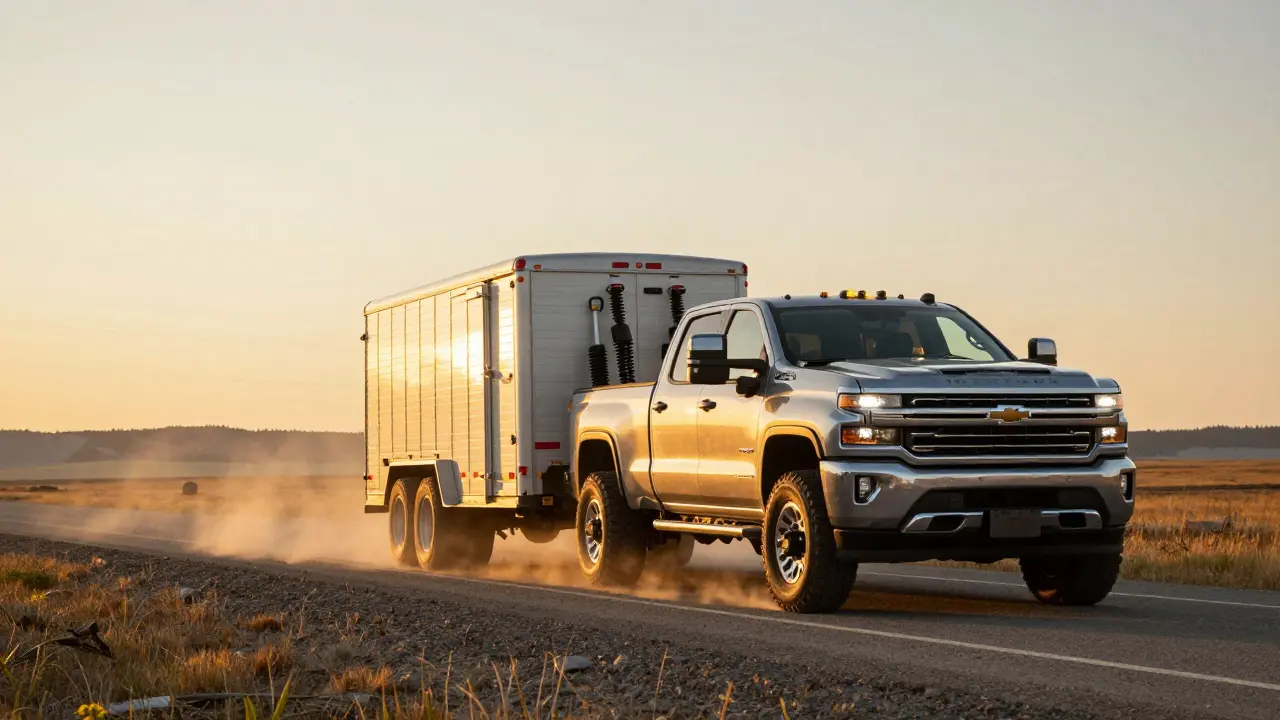
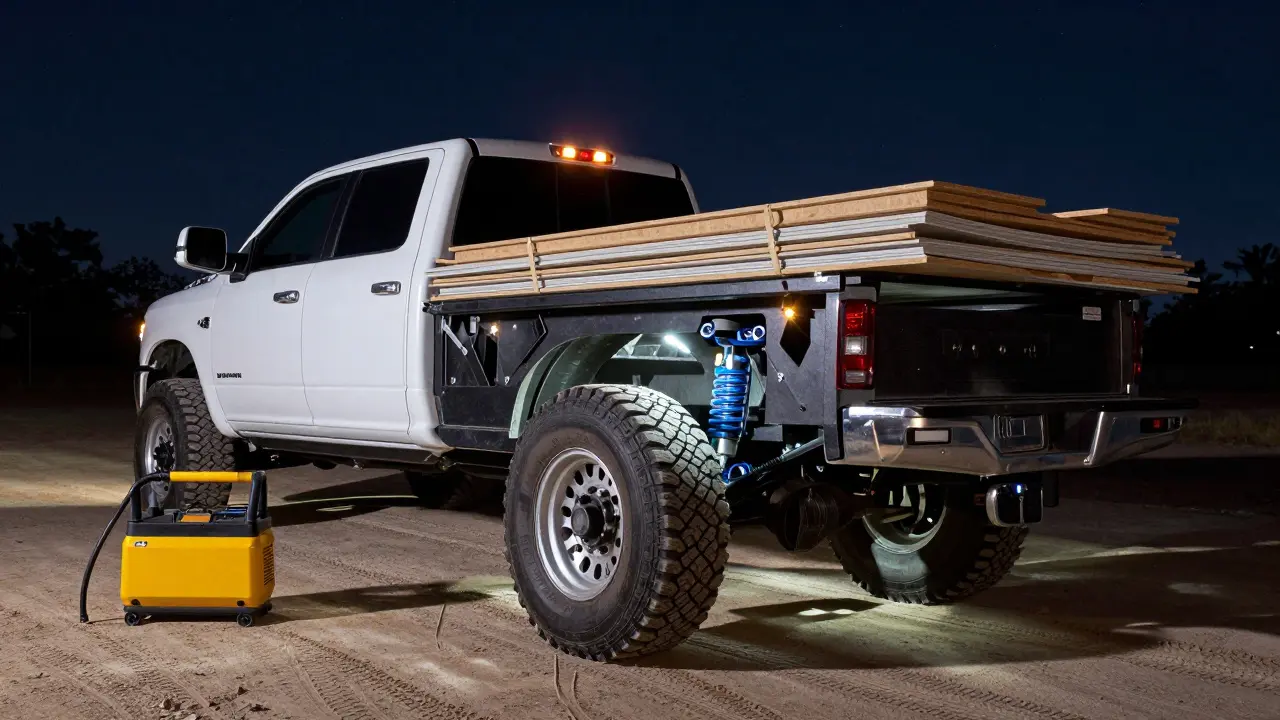
When you’re hauling a full bed of lumber, towing a trailer up a steep hill, or just driving over rough roads every day, your truck’s suspension is the unsung hero doing all the heavy lifting. Most factory suspensions are built for average loads and smooth highways-not for the real world where you’re carrying 2,000 pounds of gear and hitting potholes like they’re speed bumps. Upgrading your truck’s suspension isn’t about making it look cool or lowering the ride height. It’s about safety, control, and keeping your truck from breaking down under pressure.
What Your Factory Suspension Can’t Handle
Stock truck suspensions are designed with a compromise: they work okay for light daily driving and can handle a little extra weight, but they’re not built for serious loads. When you overload them, the rear end drops, the front end lifts, and your headlights aim at the sky. Your tires wear unevenly. Your brakes take longer. Your steering feels loose. And over time, the leaf springs sag, the shocks wear out, and the control arms start to rattle.
A 2024 study by the National Highway Traffic Safety Administration found that 37% of pickup truck accidents involving cargo were linked to improper suspension loading. That’s not a small number. It means nearly 4 in 10 crashes happen because the truck couldn’t handle the weight it was carrying.
Factory shocks are usually tuned for comfort, not control. They’re soft to absorb small bumps, but they compress too easily under heavy loads. That’s why your truck bounces like a trampoline when you hit a bump with a full bed. Upgrading isn’t about getting stiffer shocks alone-it’s about matching the whole system to your actual use.
Load-Bearing Upgrades: The Core Fixes
If you regularly haul more than 1,000 pounds in the bed or tow over 7,000 pounds, you need load-bearing upgrades. Here’s what actually works:
- Leaf spring helpers - These are add-on springs that slip between your existing leaf springs. They don’t replace them-they kick in only when you’re loaded down. Brands like Timbren and AirLift make rubber or air-assist helpers that lift the rear by 1 to 2 inches under load. No installation required. Just bolt them on.
- Heavy-duty leaf springs - If your springs are already sagging, replacing them with a heavier-rated set is the fix. Look for springs rated for 3,500 to 5,000 pounds of payload. For example, a 2023 Ford F-150 with stock springs might handle 2,300 pounds; upgrading to a 3,500-lb-rated set gives you real breathing room.
- Airbag suspension kits - These let you adjust ride height on the fly. Fill them with air to lift the rear when towing, then let air out for normal driving. They’re ideal for people who haul different loads daily. A typical kit costs $500-$800 and installs in a weekend with basic tools.
Don’t waste money on coil spacers or lift kits meant for off-roading. Those raise the truck but don’t add load capacity. They might even make things worse by changing suspension geometry and stressing components.
Performance Upgrades: Control Over Comfort
Once you’ve fixed the load issue, it’s time to tackle control. A truck that doesn’t sway, dive, or bounce when you’re hauling is a truck you can trust.
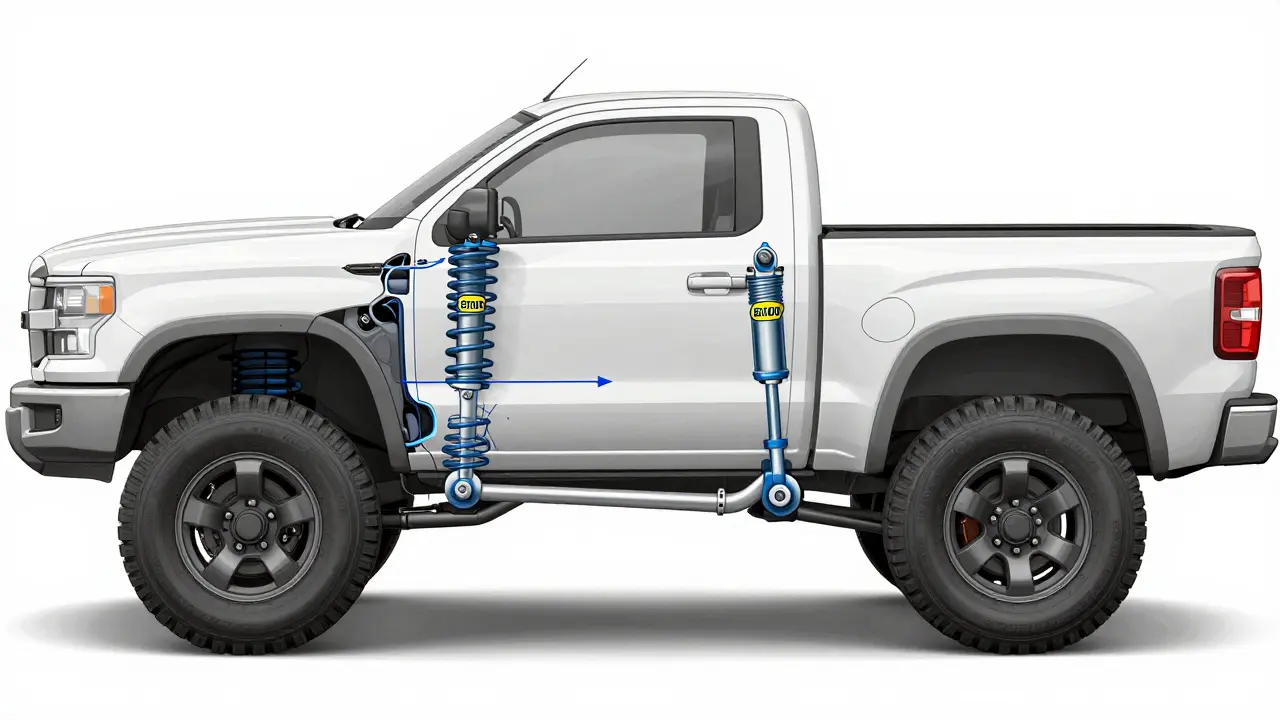
- Performance shocks - Replace stock shocks with adjustable or monotube shocks. Fox 2.0, Bilstein 5100, and Rancho RS9000XL are popular choices. They’re built with better seals, thicker piston rods, and gas charging that prevents fade under heavy use. Unlike stock shocks that get hot and lose damping, these stay cool and consistent-even after hours on the highway with a trailer.
- Stabilizer bars - A front and rear sway bar reduces body roll when cornering with a load. Stock sway bars are thin and flexible. Upgrading to a 1.5-inch solid steel bar cuts sway by 40%. This isn’t just about handling-it’s about keeping your trailer straight and your cargo from shifting.
- Control arm upgrades - If you’re running lifted suspensions or heavy loads, the stock control arms can bend or wear out. Aluminum or reinforced steel arms with polyurethane bushings last longer and reduce flex. They’re especially critical for trucks with 4WD systems that get stressed under load.
Many people skip this step because they think “it’s just a truck.” But if you’re towing a 9,000-pound fifth wheel and your truck wobbles at 65 mph, you’re not just uncomfortable-you’re dangerous.
Real-World Examples: What Works
Take a 2022 Chevrolet Silverado 2500HD. Owner Mike from Montana hauls cattle trailers and firewood. His truck sagged 3 inches when loaded. He installed Timbren rear helper springs ($220) and swapped stock shocks for Bilstein 5100s ($650). Result? The rear now sits level under load, steering feels tight, and brake distance dropped by 15%. He’s had zero suspension issues in 18 months.
Another example: Sarah, a contractor in Texas, uses her 2021 Ram 2500 to haul tools and drywall. She added an airbag kit ($700) and a rear sway bar ($300). Now she can switch from empty to fully loaded in under a minute with a button. Her tire wear went from every 15,000 miles to every 40,000 miles.
These aren’t special cases. They’re common fixes that work because they match the truck’s job-not someone’s Instagram feed.
What Not to Do
Don’t install a 6-inch lift kit just because it looks aggressive. It raises your center of gravity, increases wind resistance, and makes your suspension geometry worse. It doesn’t help with load capacity-it hurts it.
Don’t buy “heavy-duty” shocks that aren’t rated for your truck’s exact model. A shock that works for a Ford F-250 might not fit or function right on a Toyota Tundra. Always check the manufacturer’s compatibility chart.
Don’t ignore alignment after upgrades. Even a 1-inch lift changes your camber and toe. Get a four-wheel alignment after any suspension change. Otherwise, you’ll eat through tires in 10,000 miles.
Cost Breakdown: What You’ll Really Pay
Here’s a realistic cost range for upgrading a full-size pickup:
| Upgrade Type | Cost Range | Installation Time | Load Capacity Gain |
|---|---|---|---|
| Leaf Spring Helpers | $150-$300 | 1-2 hours | 1,000-1,500 lbs |
| Heavy-Duty Leaf Springs | $400-$800 | 3-5 hours | 1,500-2,500 lbs |
| Airbag Suspension Kit | $500-$800 | 4-8 hours | Adjustable up to 2,000 lbs |
| Performance Shocks (Front & Rear) | $600-$1,200 | 4-6 hours | Improved control, not capacity |
| Front & Rear Sway Bars | $250-$500 | 2-3 hours | Reduces sway by 30-40% |
Most people start with helpers and shocks-$800 total-and see immediate improvement. Full upgrades (airbags, shocks, sway bars) run $2,000 but are worth it if you’re working the truck hard.
When to Replace vs. Upgrade
Check your suspension if:
- Your truck sits lower than it used to when empty
- You hear clunking or squeaking over bumps
- Your tires show cupping or uneven wear
- Braking feels spongy or the front dives badly
- You’ve added aftermarket accessories (winch, bumper, roof rack) that add 300+ pounds
If your truck is over 8 years old and you’re doing heavy work, it’s not a matter of if-it’s a matter of when. Suspension parts wear out. They’re not lifetime components.
Final Thought: It’s Not About Looks
Truck suspension upgrades aren’t for show. They’re for safety, efficiency, and longevity. A properly upgraded suspension means fewer tire replacements, better fuel economy (because you’re not dragging extra weight), and less stress on your engine and brakes. It also means you can sleep better knowing your trailer won’t fishtail or your cargo won’t shift on a sharp turn.
Don’t wait until your leaf springs snap or your shocks blow out. Plan ahead. Match your upgrades to your actual use. And remember: a truck that handles its load well is a truck that lasts.
Do I need to upgrade both front and rear suspension?
You don’t always need to upgrade both. If you’re mainly hauling in the bed, rear upgrades (leaf springs, airbags, shocks) are your priority. But if you’re towing heavy trailers, front shocks and sway bars matter too-they prevent nose-diving and improve steering control. Most serious users upgrade the rear first, then add front components later.
Can I install suspension upgrades myself?
Yes, if you have basic tools and mechanical experience. Leaf spring helpers and airbag kits are DIY-friendly. Shocks and sway bars require lifting the truck, removing old parts, and torquing bolts correctly. If you’re unsure, get it done by a shop. A bad installation can damage your frame or steering components.
Will upgrading my suspension void my warranty?
Under the Magnuson-Moss Warranty Act, manufacturers can’t void your entire warranty just because you installed aftermarket parts. They can only deny coverage if they prove the upgrade directly caused the failure. For example, if your rear axle breaks because you overloaded the truck, they can deny it. But if your transmission fails later, they still have to cover it. Keep receipts and installation records.
How often should I inspect my upgraded suspension?
Check it every 10,000 miles or twice a year. Look for cracks in springs, leaks around shocks, worn bushings, and loose bolts. Airbag systems need a monthly air pressure check. A quick visual inspection takes 5 minutes and can save you from a breakdown.
Are airbag suspensions better than leaf spring helpers?
It depends on your needs. Airbags give you adjustable ride height and better comfort when unloaded, but they’re more complex and can fail. Leaf spring helpers are simple, reliable, and always ready. If you haul the same weight every time, helpers are better. If your loads vary daily, airbags win.