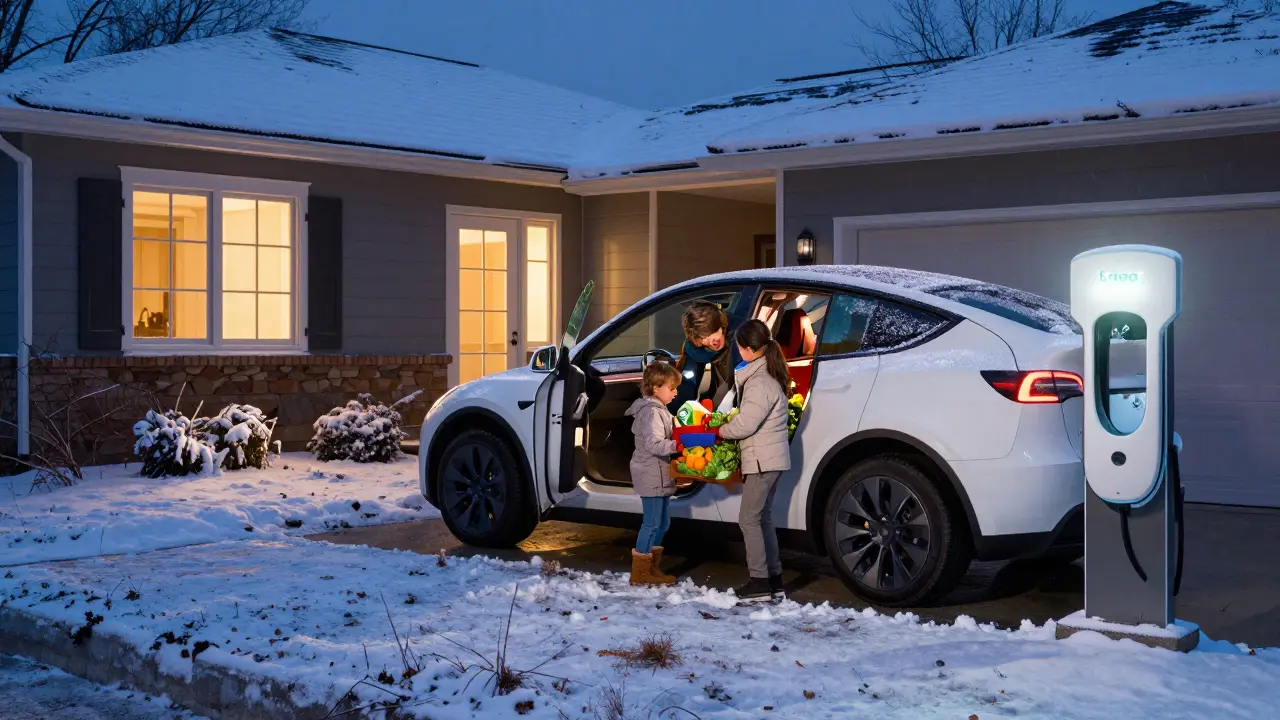
When you think about switching to an electric vehicle, the first thing that comes to mind is probably range. How far can it really go on a single charge? Then you wonder: where do I charge it? And how much will all this actually cost me over time? These aren’t just questions-they’re the three biggest hurdles standing between you and your next car.
Range: What You Really Get vs. What They Advertise
Most EVs list a range of 300 to 400 miles on their website. That number? It’s based on ideal lab conditions-constant speed, no wind, 72°F weather, and zero climate control. Real life doesn’t work that way. If you’re driving in Colorado winters, using the heater, or hitting highway speeds above 70 mph, you’re likely looking at 20% to 30% less range. A Tesla Model Y rated at 330 miles might realistically give you 230 miles in January. That’s not a defect. That’s physics.
Most drivers don’t need 300 miles. The average American drives about 37 miles per day. For city commutes, errands, and weekend trips, even a 200-mile EV like the Hyundai Kona Electric works fine. But if you drive long distances regularly-say, to Denver or Boulder twice a month-you’ll want something with at least 280 miles of real-world range. The Ford Mustang Mach-E Extended Range, the Rivian R1T, and the Lucid Air all deliver that. And they do it without sacrificing performance.
Charging: It’s Not Just About Speed
Charging an EV isn’t like filling a gas tank. You can’t just plug in and walk away. You have to plan. Home charging is the easiest. A Level 2 charger (240V) adds about 25 to 30 miles of range per hour. Most people charge overnight and wake up to a full tank. No trips to the station needed.
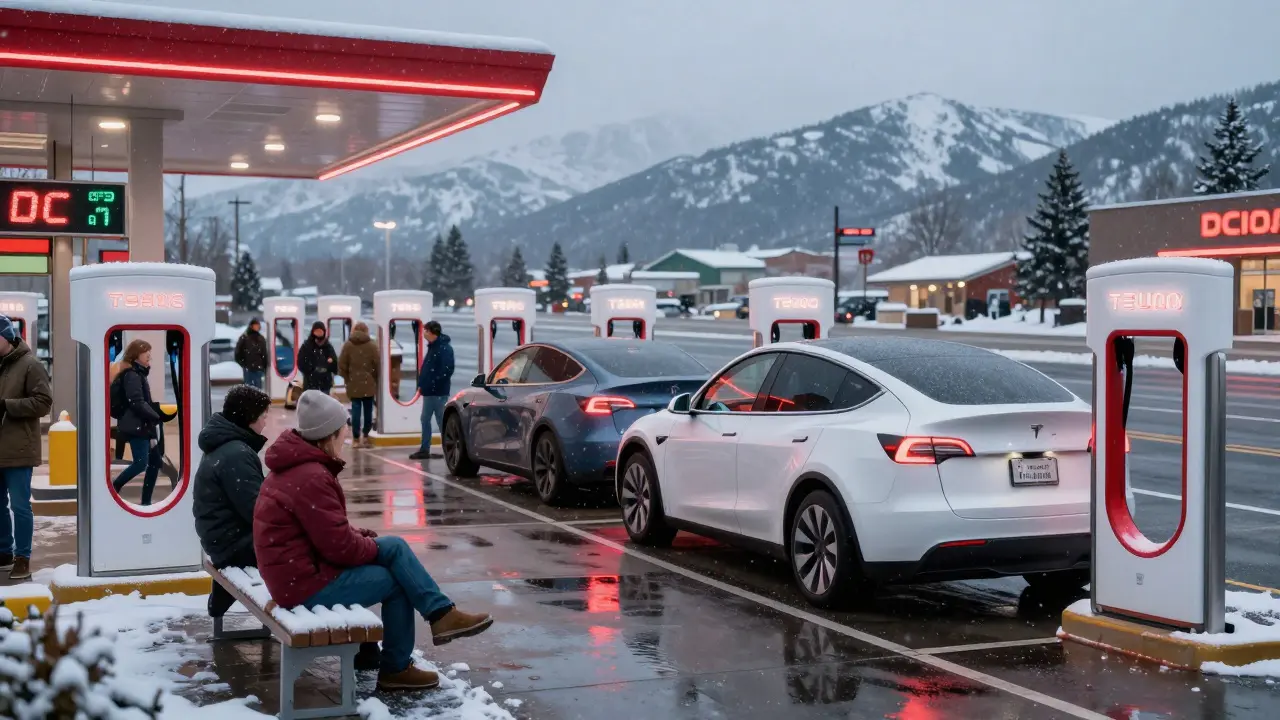
But what about road trips? That’s where DC fast charging comes in. These are the big chargers you see at rest stops and shopping centers. They can add 150 to 250 miles in 20 minutes. But not all EVs can use them equally. The Tesla Supercharger network is the fastest and most reliable, but non-Tesla EVs can use it now too-with an adapter. The issue? Congestion. During holidays, you might wait 20 minutes just to get to a charger. And not every fast charger works with every car. Some older EVs, like the first-generation Nissan Leaf, max out at 50 kW. Newer ones like the Hyundai Ioniq 6 can hit 350 kW.
Charging networks also vary by region. In Fort Collins, you’ll find plenty of Electrify America and EVgo stations. But if you head into rural Wyoming or eastern Colorado, coverage drops fast. Tesla’s network still leads in reliability and density. If you’re planning to drive cross-country, Tesla’s Supercharger map is the one to trust.
Total Cost of Ownership: The Real Math
People think EVs are expensive. And yes, the upfront price is often higher. A base Tesla Model 3 starts around $30,000 after federal tax credit. A comparable gas car like the Honda Civic costs $24,000. But here’s where it flips: over five years, the EV saves you money.
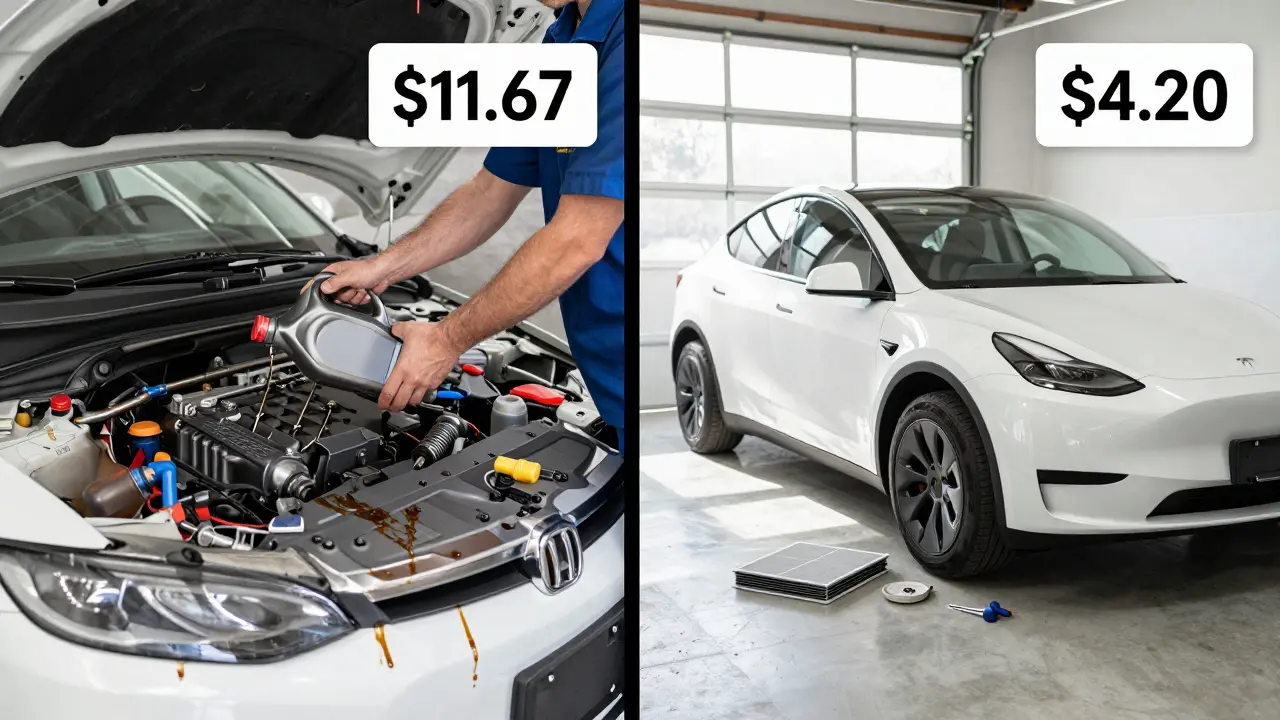
Let’s break it down. Electricity costs about $0.14 per kWh in Colorado. An EV that uses 30 kWh per 100 miles will cost about $4.20 to drive 100 miles. A gas car that gets 30 mpg at $3.50/gallon costs $11.67 for the same distance. That’s $7.47 saved per 100 miles. Drive 12,000 miles a year? That’s over $890 saved annually just on fuel.
Then there’s maintenance. EVs have no oil changes, no spark plugs, no transmission fluid. Just brake pads (which last longer thanks to regenerative braking) and tires. A study by Consumer Reports found EV owners spend 50% less on maintenance over five years. One Tesla owner in Fort Collins told me he’s spent $180 on his Model Y in three years-just tires and a cabin air filter.
Insurance is higher for EVs-about 15% more on average-because parts are pricier and repair shops are fewer. But that’s offset by lower fuel and maintenance costs. Over five years, most EVs save $5,000 to $10,000 compared to similar gas cars. That’s like getting a free trip to Hawaii every year.
Depreciation and Resale: What Happens After You Buy?
Early EVs lost value fast. The first Nissan Leaf? Worthless after three years. But that’s changed. Newer models hold their value better. According to iSeeCars, the Tesla Model 3 retains 60% of its value after three years. The Hyundai Ioniq 5 holds 63%. Even the Ford Mustang Mach-E keeps 58%. Compare that to the Honda Civic at 55% or the Toyota Camry at 51%.
Why? Battery longevity. Most EV batteries are guaranteed for 8 years or 100,000 miles. Real-world data shows they lose only 10-15% capacity over 10 years. That means even a used EV from 2020 still has plenty of range. And demand for used EVs is rising. In Colorado, used EVs sell 20% faster than used gas cars.
What You Should Buy Today
Not every EV is right for everyone. Here’s who should pick what:
- City drivers: Go for the Chevrolet Bolt EV or Nissan Leaf. Under $25,000 after credit. Range is fine for daily use.
- Family haulers: The Tesla Model Y or Hyundai Ioniq 6. Spacious, long-range, fast charging.
- Adventure seekers: The Rivian R1T or Ford F-150 Lightning. Off-road capability, towing, and over-the-air updates.
- Long-distance commuters: The Lucid Air or Tesla Model S. 400+ miles real-world range, premium charging access.
Don’t fall for the hype of the newest model. The 2024 Hyundai Ioniq 6 is better than the 2025. The 2023 Tesla Model Y is still a top pick. Waiting for 2026 won’t save you money-it’ll cost you more in gas and maintenance.
Hidden Costs and Pitfalls
There are traps. One big one: home charging installation. If your electrical panel is outdated, you might need a $2,000 upgrade. Check with your utility first-some, like Xcel Energy in Colorado, offer rebates up to $600.
Another? Public charging fees. Some networks charge $0.40 per kWh. That’s more than your home rate. Stick to home charging when you can. Use public chargers for emergencies or road trips.
And don’t forget about tax credits. The federal EV tax credit is still $7,500 for new EVs under $55,000 (or $80,000 for SUVs and trucks). But you have to buy from a U.S.-based manufacturer. Rivian, Ford, and Tesla qualify. Lucid does too. Chinese brands like BYD? Not yet.
Final Thought: It’s Not About the Car. It’s About the Habit.
Switching to an EV isn’t just swapping gas for electricity. It’s changing how you think about driving. You start planning trips around charging. You notice how quiet the car is. You realize you’re not paying at the pump every week. You stop worrying about oil leaks and engine noise.
For most people, the switch isn’t hard. It’s better. The car is smoother, quieter, and cheaper to run. And with charging networks expanding every year, range anxiety is fading fast. In Fort Collins, you can now drive from downtown to the Wyoming border and back on one charge. That wasn’t true five years ago.
If you’re ready to stop filling up, stop paying for oil changes, and start saving money every month-there’s never been a better time to go electric.
How far can a modern electric vehicle really go on a single charge?
Most modern EVs list ranges between 300 and 400 miles, but real-world driving-especially in cold weather or at highway speeds-cuts that by 20% to 30%. A Tesla Model Y rated at 330 miles may realistically deliver 230 miles in winter. For daily driving, 200 miles is often enough. For long trips, aim for 280+ miles of real-world range.
Is home charging enough, or do I need public chargers?
For most people, home charging is more than enough. A Level 2 charger adds 25 to 30 miles of range per hour. Overnight charging covers 90% of daily driving needs. Public fast chargers are useful for road trips or emergencies, but they’re slower than advertised due to congestion and shared use. Plan to use them sparingly to save money and time.
Are electric vehicles really cheaper to own than gas cars?
Yes, over five years, most EVs save $5,000 to $10,000 compared to similar gas vehicles. Lower fuel costs-electricity is about $4.20 per 100 miles versus $11.67 for gas-and minimal maintenance (no oil changes, fewer moving parts) add up fast. Insurance is higher, but that’s offset by fuel and repair savings. The Tesla Model 3, for example, costs less to own than a Honda Civic after three years.
Do EVs hold their value well?
Modern EVs hold value better than early models. The Tesla Model 3 retains 60% of its value after three years. The Hyundai Ioniq 5 holds 63%. Even the Ford Mustang Mach-E keeps 58%. That’s on par with or better than popular gas cars like the Toyota Camry (51%) and Honda Civic (55%). Battery longevity and strong demand for used EVs are key reasons.
What should I look for when buying a used EV?
Check the battery health report-most EVs show this in the infotainment system. Look for models with at least 85% remaining capacity. Avoid EVs with more than 80,000 miles if they’re older than five years. Make sure the warranty is still active (most last 8 years/100,000 miles). And confirm the charging port type matches your local networks. Tesla, CCS, and CHAdeMO are the main standards.



John Fox
March 13, 2026 AT 09:13No more gas stations. No more oil changes. Just chill.