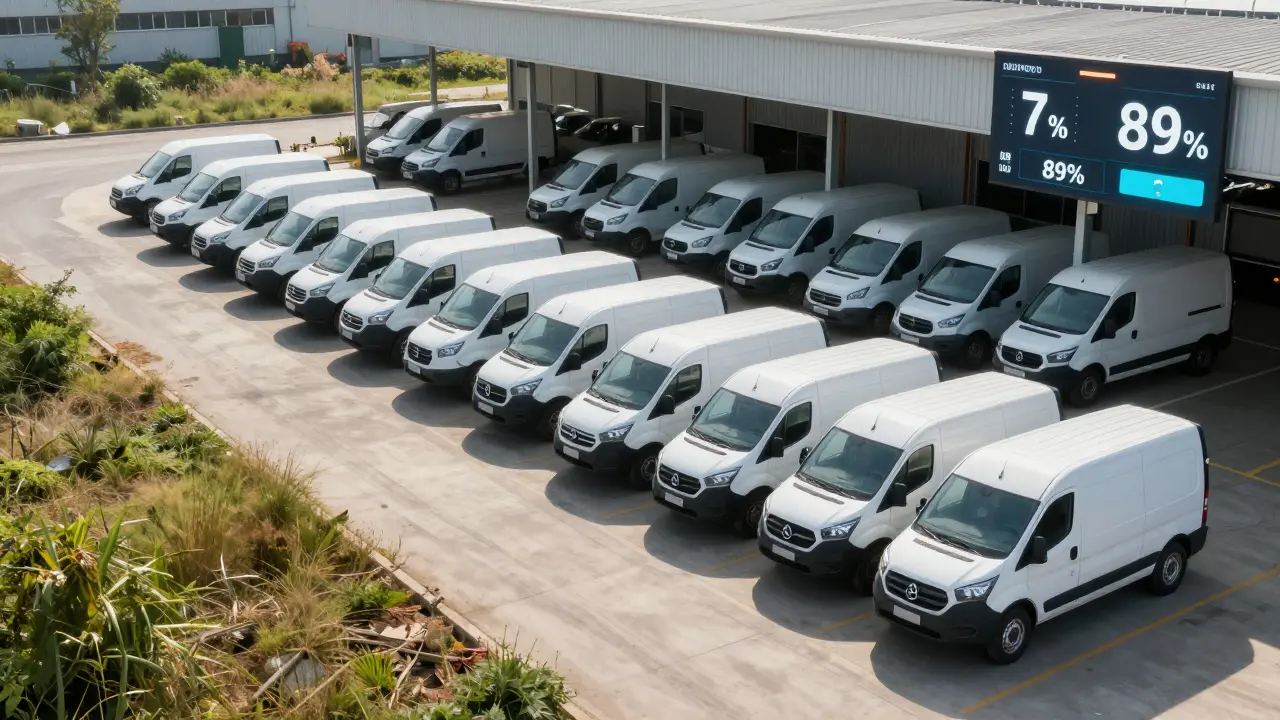
Running a fleet that’s too big wastes money. Running one that’s too small hurts productivity. The sweet spot isn’t guesswork-it’s data. Companies that nail fleet size optimization and vehicle replacement planning save 20% to 40% on operating costs each year, according to the National Association of Fleet Administrators. Yet most still rely on outdated calendars or gut feelings to decide when to retire a vehicle. That’s like changing your car’s oil only when it makes a weird noise.
Why Fleet Size Matters More Than You Think
It’s not just about how many vehicles you own. It’s about how many you need. Too many trucks sitting idle? You’re paying for insurance, storage, depreciation, and maintenance on assets that aren’t earning. Too few? Your drivers are running overtime, customers are waiting, and you’re losing business to competitors with better logistics.
Take a regional delivery company in Oregon. They had 45 vans. But their dispatch software showed that 12 of them were used less than 3 days a month. Those 12 vans cost $18,000 a year each to operate-including fuel, tires, insurance, and repairs. By removing them and adjusting routes with the remaining 33, they cut annual costs by $216,000 and reduced emissions by 18%. No new tech. Just better use of what they already had.
Fleet size isn’t a fixed number. It’s a dynamic equation tied to seasonal demand, delivery zones, driver availability, and even weather patterns. A company that doesn’t adjust its fleet size quarterly is leaving money on the table.
Vehicle Replacement: Don’t Wait for the Engine to Die
Most fleets replace vehicles based on age-“We swap them every five years.” But age doesn’t tell the whole story. A van driven 150,000 miles in three years is a different beast than one driven 40,000 miles in the same time. Mileage, usage type, and maintenance history matter far more than the calendar.
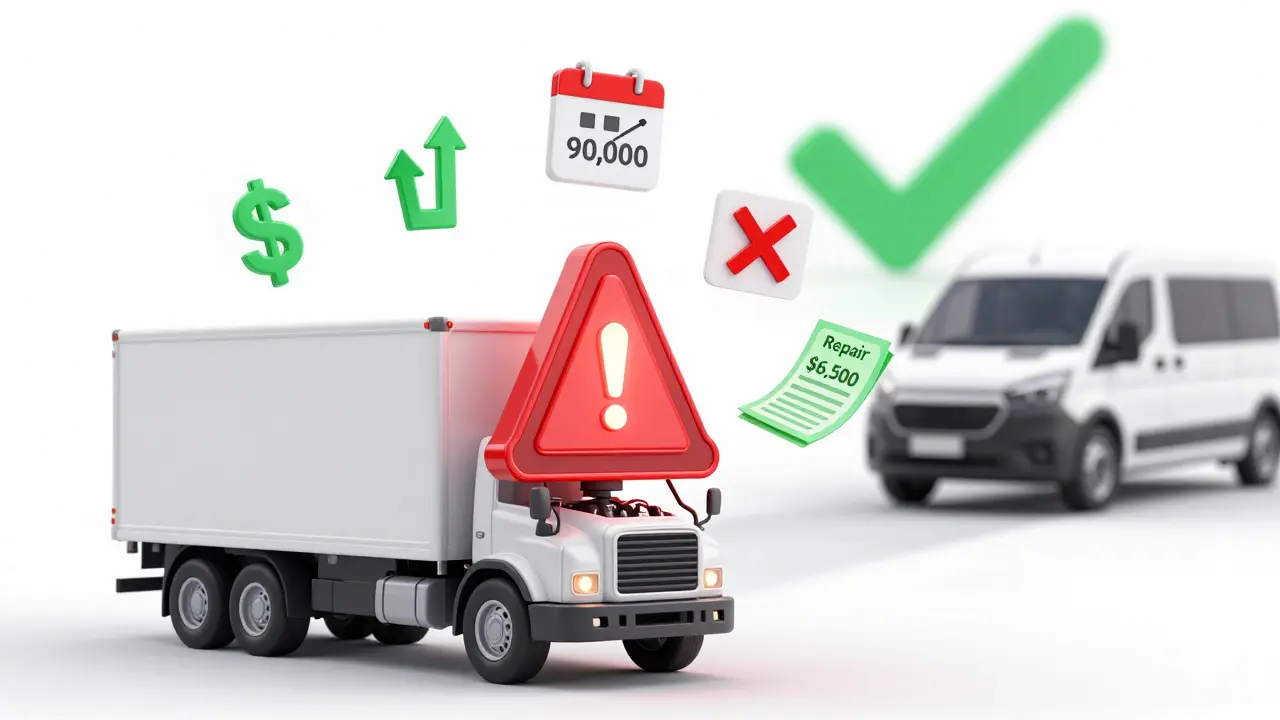
Here’s the rule of thumb: replace when maintenance costs exceed 25% of the vehicle’s current market value. That’s not a guess-it’s a widely used industry benchmark backed by the Fleet Management Association. If a 2020 Ford Transit costs $25,000 today and you’re spending $6,500 a year on repairs, you’re past the tipping point.
Another red flag: frequent breakdowns during peak hours. One landscaping company in Idaho kept replacing their mowing trucks every four years. But after switching to a usage-based replacement model, they found that three of their trucks were costing $4,200 a year in repairs after hitting 90,000 miles. Replacing those three early saved them $11,000 in lost jobs and overtime pay over the next year.
Waiting for a vehicle to fail isn’t cost-effective. It’s risky. It causes scheduling chaos. It wears out your drivers. And it often forces you to buy at the worst time-when inventory is low and prices are high.
How to Build a Data-Driven Replacement Plan
You can’t optimize what you don’t measure. Start by collecting these five data points for every vehicle in your fleet:
- Mileage-track total and monthly
- Repair costs-itemize by part (brakes, transmission, suspension)
- Fuel efficiency-miles per gallon or kWh per mile for EVs
- Utilization rate-how many hours per day is it actually in use?
- Resale value trend-check Kelley Blue Book or fleet auction sites monthly
Put this into a simple spreadsheet or fleet management software. Set alerts when:
- Annual repair costs hit 20% of the vehicle’s value
- Fuel efficiency drops more than 15% from its original rating
- Utilization falls below 60% for three consecutive months
These aren’t arbitrary numbers. They’re thresholds that signal when a vehicle stops being an asset and starts being a liability.
Matching Fleet Size to Real Demand
Seasonal spikes? Holiday rushes? Weather delays? Your fleet should flex with them. A snow removal service in Minnesota doesn’t need 20 plow trucks in June. But they need every one of them-and maybe a few rentals-in January.
Use historical data to map your demand cycles. Look at the last three years. When did your busiest months hit? How many vehicles were actually in use during those peaks? Now look at your slow months. How many vehicles sat unused for more than 10 days?
Here’s what works: keep a core fleet of vehicles you use year-round, then rent or lease extras for peak periods. A moving company in Eugene does this. They own 12 trucks for regular moves. During summer, they rent 8 more from a local fleet provider. Their annual cost? $138,000. If they owned 20 trucks year-round? $210,000. That’s a $72,000 savings-just by matching size to actual need.
Don’t forget to factor in driver availability. You can have all the trucks in the world, but if you don’t have enough licensed drivers, you’re still bottlenecked. Track driver hours, overtime, and turnover. If drivers are burning out, it’s not a HR issue-it’s a fleet sizing issue.
Technology That Makes This Easy
You don’t need a billion-dollar system. But you do need tools that connect the dots. Here’s what works for small to mid-sized fleets:
- Telematics systems (like Geotab or Samsara) track mileage, idling time, fuel use, and location
- Fleet management software (like Fleetio or UpKeep) logs repairs, schedules maintenance, and calculates cost-per-mile
- Route optimization tools (like OptimoRoute or Route4Me) show if you’re over-deploying in certain zones
One HVAC company in Washington state added telematics to their 18-service vans. Within six months, they saw that four vans were spending 30% of their time idling. Those vans were also getting 12% worse fuel economy than the others. They replaced two of them early and reassigned the other two to routes with more stop-and-go traffic. Result? $28,000 saved in fuel and maintenance in one year.
These tools aren’t luxuries. They’re the difference between guessing and knowing.
When to Buy New vs. Used vs. Electric
Replacement isn’t just about when-it’s about what. The answer depends on your use case.
New vehicles are best for high-mileage, safety-critical, or customer-facing fleets. A food delivery company needs clean, reliable, modern vans. New vehicles come with warranties, better fuel economy, and fewer repairs.
Used vehicles make sense for low-mileage, non-critical roles. Think warehouse shuttles, yard maintenance, or administrative transport. A used 2021 Ford F-150 with 50,000 miles can cost $25,000 less than a new one and still have 5+ years of life left.
Electric vehicles are now cost-effective for fleets that drive 15,000+ miles a year with predictable routes. The total cost of ownership for an electric cargo van is 30% lower than a gas model after five years, according to the U.S. Department of Energy. But only if you have charging infrastructure. If you don’t, EVs will cost you more in downtime than they save in fuel.
Don’t go all-in on EVs unless your routes are stable and your garage has chargers. Start with one or two. Track the savings. Then scale.

Common Mistakes That Cost Fleets Thousands
Here’s what goes wrong-and how to avoid it:
- Replacing based on age-A 3-year-old van with 180,000 miles is more expensive to run than a 7-year-old one with 60,000.
- Ignoring utilization-If a vehicle sits idle 70% of the time, it’s not a fleet asset. It’s a storage problem.
- Not tracking repair trends-If the same part fails three times in a year, it’s not bad luck. It’s a design flaw or misuse.
- Buying without a plan-Buying a new truck because the boss likes the color? That’s not planning. That’s impulse.
- Overlooking driver feedback-Drivers know which vehicles break down, which are slow, and which are dangerous. Listen to them.
The best fleets don’t just react. They predict. They use data to see around corners.
What Success Looks Like
Here’s a real outcome from a mid-sized construction fleet in Idaho:
- Reduced fleet size from 34 to 26 vehicles
- Replaced 8 vehicles based on repair cost thresholds, not age
- Switched 5 trucks to electric models for urban jobs
- Added seasonal rentals for winter snow removal
- Annual savings: $189,000
- Driver satisfaction: up 40%
- Carbon emissions: down 31%
This didn’t happen overnight. It happened because they stopped guessing and started measuring.
Start Small. Think Big.
You don’t need to overhaul your entire fleet tomorrow. Pick one vehicle type. Track its costs for 90 days. Ask: Is this vehicle earning its keep? If not, what’s the replacement plan? Then do it again with another.
Fleet optimization isn’t about buying the cheapest vehicles. It’s about owning the right ones-no more, no less-and replacing them at the exact moment they stop making sense. The money you save isn’t just on fuel or tires. It’s on stress, downtime, missed deliveries, and burned-out employees.
Start measuring. Start asking. Start replacing smarter.
How often should I replace vehicles in my fleet?
Replace vehicles based on cost and performance, not calendar years. Most experts recommend replacing when annual repair costs exceed 25% of the vehicle’s current market value. High-mileage vehicles (over 120,000 miles) or those with frequent breakdowns should be replaced even if they’re only 3-4 years old. Low-mileage vehicles may last 8+ years if well-maintained.
Is it better to own or lease fleet vehicles?
Own if you use vehicles heavily (15,000+ miles/year) and have control over maintenance. Leasing is better for seasonal fleets, low-mileage roles, or if you want to avoid long-term depreciation risk. Leasing also makes it easier to upgrade to electric or newer models every 2-3 years without upfront costs.
Can electric vehicles work for my fleet?
Yes-if your routes are predictable and under 150 miles per day, and you have charging infrastructure. Electric vans and trucks have lower fuel and maintenance costs, but upfront prices are higher. For fleets driving 18,000+ miles annually, EVs pay for themselves in 3-5 years. Start with one or two to test reliability and charging logistics before scaling.
What data should I track to optimize my fleet?
Track mileage, fuel consumption, repair costs by component, utilization rate (hours used per day), idling time, and resale value trends. Use this data to identify underused vehicles, high-cost repairs, and efficiency drops. Even a simple spreadsheet can reveal big savings if you update it monthly.
How do I know if my fleet is too big?
If more than 20% of your vehicles sit idle for 10+ days a month, your fleet is likely oversized. Also check utilization rates-if vehicles are used less than 60% of available hours, you’re paying for excess capacity. Look at your busiest days: could you cover them with fewer vehicles using better routing or rentals?



Lissa Veldhuis
December 18, 2025 AT 08:58Michael Jones
December 18, 2025 AT 18:21allison berroteran
December 20, 2025 AT 09:53Gabby Love
December 21, 2025 AT 20:48Jen Kay
December 22, 2025 AT 09:25Michael Thomas
December 23, 2025 AT 07:51Abert Canada
December 23, 2025 AT 21:11Xavier Lévesque
December 24, 2025 AT 09:15Thabo mangena
December 24, 2025 AT 15:39Karl Fisher
December 24, 2025 AT 22:23Flannery Smail
December 26, 2025 AT 11:22Emmanuel Sadi
December 27, 2025 AT 08:23Nicholas Carpenter
December 28, 2025 AT 11:08Chuck Doland
December 28, 2025 AT 19:32