Most riders focus on chain tension, tire pressure, and brake pads-but the real secret to a smooth, quiet, and long-lasting motorcycle ride lies in places you can’t see. Greasing the pivot points on your bike isn’t glamorous, but skipping it will cost you in noise, wear, and eventually, safety. If your swingarm creaks when you hit a bump, your linkage feels stiff when you lift the rear wheel, or your center stand groans under pressure, you’re not just dealing with noise-you’re accelerating wear on parts that shouldn’t wear out this soon.
Why Pivot Points Need Grease
Pivot points on a motorcycle are the hidden joints that let parts move under load. The swingarm pivots on bearings or bushings inside the frame. The linkage connects the swingarm to the shock absorber. The center stand and side stand each have their own pivot pins. These aren’t simple pins sliding in holes. They’re engineered to handle hundreds of pounds of force, thousands of cycles, and exposure to dirt, water, and road salt. Without proper lubrication, metal grinds against metal. Dust gets trapped. Bearings seize. Bushings crack. And then-boom-you’re replacing parts that should’ve lasted 50,000 miles but only made it to 15,000 because no one greased them.
Think of it like your knee joint. Without synovial fluid, you’d feel every step. Same with your bike. Grease is the fluid that lets these parts move smoothly without screaming.
Where to Find the Pivot Points
Let’s break it down by component. Not every bike is the same, but the big three are nearly universal:
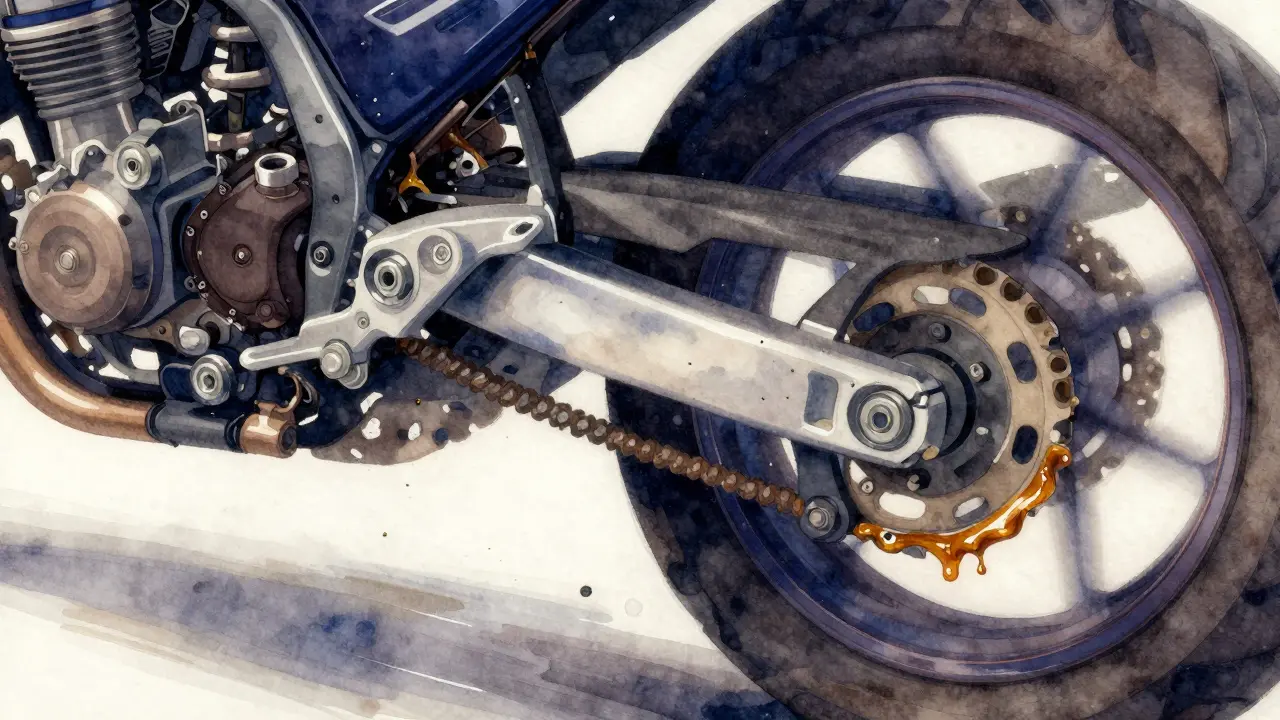
- Swingarm pivot: Located where the swingarm connects to the rear of the frame. You’ll need to remove the rear wheel and sometimes the chain to access it. Look for a large bolt or shaft running through the swingarm. That’s the pivot pin. Around it are bearings or bushings.
- Linkage pivot: Found on bikes with a single-sided swingarm or multi-link rear suspension. It’s the joint between the swingarm and the shock’s mounting arm. Often hidden behind a plastic cover. You’ll need to remove the cover and inspect the bolts or pins holding it together.
- Center and side stands: These are easy to spot. The stand folds up and down on a pin. That pin rubs against a metal or plastic bushing. Over time, that bushing wears out if it’s dry.
Some bikes have sealed bearings that don’t need greasing. But most-especially older models, dirt bikes, or budget-friendly cruisers-use plain bushings that absolutely need regular maintenance.
Tools and Materials You Need
You don’t need a fancy shop to do this. Just grab:
- High-quality, water-resistant grease (NLGI #2 lithium-based or synthetic motorcycle-specific grease)
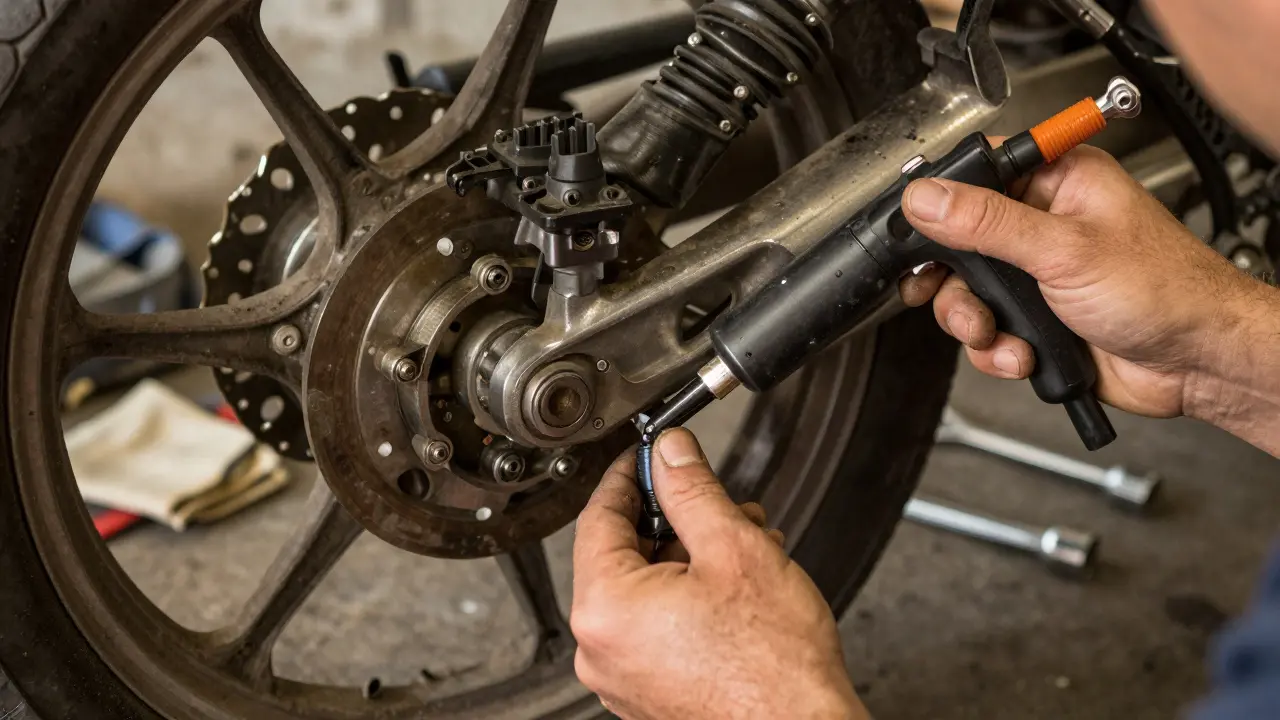
- Grease gun with needle tip (for hard-to-reach points)
- Socket set and torque wrench
- Brake cleaner or degreaser
- Lint-free rags
- Plastic zip ties (to hold parts in place while working)
- Shop manual for your bike (or a reliable online source)
Don’t use automotive grease. It’s too thin and washes out too easily. Don’t use WD-40 as a lubricant. It’s a solvent, not a lubricant. It’ll strip away what little grease is left and leave you worse off.
How to Grease the Swingarm Pivot
Start with the swingarm. It’s the most critical point because it handles the biggest loads when you’re accelerating, braking, or hitting bumps.
- Jack up the rear of the bike and support it securely on a stand. Never work under a bike held by a jack alone.
- Remove the rear wheel. This gives you access to the pivot bolts.
- Loosen and remove the pivot bolts. On some bikes, you’ll need to remove the chain tensioner or chain guard first.
- Slide the swingarm out just enough to expose the pivot shaft and bushings. Don’t fully remove it unless you’re replacing parts.
- Use brake cleaner to remove old grease, dirt, and grit. Let it dry completely.
- Apply fresh grease to the bushings and the pivot shaft. Use a grease gun with a needle tip to inject grease into any grease fittings if your bike has them.
- Reassemble in reverse order. Torque the pivot bolts to factory specs-over-tightening crushes the bushings. Under-tightening lets the swingarm wobble, which wears out the frame.
Pro tip: If you hear a clicking sound when you bounce the rear of the bike after greasing, you didn’t get enough grease in. Go back and add more.
How to Grease the Linkage
The linkage is often overlooked because it’s hidden. But on bikes with monoshock rear suspension, this joint transfers all the suspension movement. If it’s dry, your ride gets harsh, and the shock works harder than it should.
- Remove the plastic cover on the linkage. It’s usually held by 4-6 bolts.
- Inspect the pivot pins. Look for rust, discoloration, or play. If the pin spins freely in the bearing, it’s fine. If it’s stiff or gritty, it’s time to clean and regrease.
- Use a small brush or cotton swab dipped in cleaner to remove old grease from the pin and bore.
- Apply a thin, even layer of grease around the pin. Don’t overfill-the excess will attract dirt.
- Reinstall the cover and torque bolts to spec. Test the movement by hand. It should glide smoothly.
Some bikes have sealed linkage bearings. If yours does, you can’t service it. But if you hear a clunk or feel resistance, those bearings are failing. Replace them. Don’t try to grease a sealed bearing-it’s already too late.
How to Grease the Center and Side Stands
This one’s quick. But if you’ve ever tried to lower your bike onto the center stand and heard a metallic screech, you know why it matters.
- Extend the stand fully.
- Locate the pivot pin. It’s usually a bolt or shaft running through the stand and frame.
- Remove the pin if possible. If not, spray degreaser around the joint and let it sit for 5 minutes.
- Wipe away the gunk with a rag. Use a toothbrush to get into tight spots.
- Apply grease directly to the pin and inside the bushing. If there’s a grease zerk (fittings), pump in 3-5 shots.
- Move the stand up and down several times to spread the grease.
- Wipe off excess. Grease on the outside attracts dust and turns into grinding paste.
For side stands, do the same. If the stand leans unevenly or doesn’t hold the bike steady, the pivot is worn or dry.
How Often Should You Do This?
There’s no magic number. But here’s a practical rule: grease the pivot points every 10,000 miles or every 2 years-whichever comes first. If you ride in rain, sand, salt, or dusty trails, do it every 5,000 miles. If you store your bike for winter, clean and grease everything before putting it away. That’s when moisture gets trapped and corrosion starts.
Some riders do it during every oil change. That’s overkill unless you ride hard. But if you ride 3,000 miles a year and live in a snowy state, once a year is smart.
Signs You’re Behind
You don’t need to be a mechanic to know when your pivot points are dry. Here’s what to listen and feel for:
- Creaking or squeaking when you bounce the rear end
- Stiff or uneven suspension movement
- Difficulty lifting the bike onto the center stand
- Visible rust on pivot pins
- Excessive play in the swingarm (you can wiggle it side to side)
If you notice any of these, don’t wait. Grease it now. You’re not just saving money-you’re preventing a dangerous failure. A seized linkage could lock up your rear suspension. A worn swingarm pivot can crack the frame. Both are expensive repairs.
What Happens If You Ignore It?
I’ve seen bikes brought in with rusted pivot pins that had to be drilled out because they seized so badly. I’ve seen swingarms with grooves worn into them from metal-on-metal grinding. I’ve seen frames cracked from years of vibration caused by a dry linkage.
Greasing these points costs maybe $10 in grease and an hour of your time. Replacing a swingarm bushing? $150. Replacing the entire swingarm? $600. Replacing the frame? $2,000 and a whole new bike.
This isn’t about being a perfectionist. It’s about being smart. Your bike moves in ways you don’t see. Those movements need lubrication. Otherwise, they’ll destroy themselves.
Final Tip: Keep a Record
Write down the date you last greased your pivot points. Put it in your service log. Or take a photo of the date on a sticky note taped to your tank. It’s easy to forget. But if you know you did it 18 months ago, you won’t wait until it’s too late.
Motorcycles are simple machines. But they’re not maintenance-free. The parts you can’t see are the ones that hold everything together. Grease them. It’s the quietest, cheapest way to make your bike last longer and ride better.
Can I use regular automotive grease on my motorcycle pivot points?
No. Automotive grease is designed for cars, not motorcycles. It’s too thin and washes out easily under high heat and vibration. Use a high-quality, water-resistant NLGI #2 lithium-based grease made for motorcycles. It stays put longer and resists dirt and moisture better.
Do sealed bearings need greasing?
No. Sealed bearings come pre-greased and are designed to be maintenance-free. If they’re making noise or feel stiff, they’re worn out and need replacement. Don’t try to grease them-opening them will ruin the seal and let dirt in.
How do I know if my swingarm bushings are worn out?
Remove the rear wheel and try to wiggle the swingarm side to side. If there’s more than 1-2 millimeters of play, the bushings are worn. You might also see visible cracks, discoloration, or metal shavings around the pivot area. If you’re unsure, take it to a shop-they can measure the bore with a micrometer.
Can I grease the pivot points without removing the rear wheel?
On some bikes, yes-if they have grease fittings (zerk fittings) on the swingarm pivot. But most bikes don’t. To properly clean and lubricate, you’ll need to remove the rear wheel and swingarm. Skipping this step means you’re just adding grease on top of old grime, which makes things worse over time.
Is it safe to use a pressure washer to clean pivot points?
No. High-pressure water can force dirt into bearings and wash out grease that’s still in place. It can also damage seals and cause rust inside components. Use a degreaser and a brush instead. Let it sit, scrub gently, then wipe dry before applying fresh grease.