
Most people think lowering their auto insurance rates means sacrificing coverage-dropping comprehensive, raising deductibles, or dropping uninsured motorist protection. But that’s not true. You can pay less without giving up the protection you actually need. The key isn’t cutting coverage-it’s optimizing it.
Shop Around Every Year
Insurance companies change their pricing models all the time. A company that gave you a great rate last year might be hiking prices this year because of claims in your zip code. Meanwhile, a new competitor might be offering discounts for safe drivers in your area. You won’t know unless you compare.One study from the Consumer Federation of America found that drivers who shopped around every year saved an average of $400 compared to those who stayed with the same insurer. That’s not a fluke. It’s standard. One driver in Ohio switched from State Farm to Geico after a year and cut her premium by 32%-while keeping the same liability, collision, and uninsured motorist limits.
Don’t wait for renewal. Use comparison sites like The Zebra or Insurify to get quotes from at least three providers. Make sure you’re comparing identical coverage levels. Change one thing-like lowering your deductible-and the numbers won’t be fair. Use the exact same policy details for each quote.
Ask About Every Available Discount
Most drivers don’t know they qualify for discounts. Insurance companies have dozens of them, but they won’t volunteer the information. You have to ask.Common discounts include:
- Safe driver discount (no accidents or tickets in 3+ years)
- Multi-policy discount (bundling home and auto)
- Good student discount (for teens with a B average or higher)
- Low-mileage discount (under 7,500 miles per year)
- Anti-theft device discount (factory-installed or aftermarket)
- Defensive driving course discount (completed within the last 3 years)
- Pay-in-full discount (paying the whole premium upfront)
- Military or veteran discount
- Membership discount (AAA, AARP, alumni associations)
One driver in Texas asked her insurer about discounts and found out she qualified for four she didn’t know existed. Her premium dropped $180 a year-no coverage changes. Another driver in Washington state saved $220 by taking a defensive driving course, even though he’d never had a ticket.
Call your agent. Don’t just log in. Say, “What discounts do I qualify for right now?” Write down every one they mention. Then ask, “Are there any others I might not know about?”
Increase Your Deductible Strategically
Raising your deductible is often the first thing people think of to save money. But it doesn’t have to mean you’re taking on more risk.If you have $2,000 in savings set aside for car repairs, you can safely raise your collision deductible from $500 to $1,000. That could cut your premium by 10-20%. But only do this if you can actually pay that amount out of pocket if you need to. Don’t raise it to $2,500 just because the premium looks lower-unless you’ve got that cash ready.
Here’s how to do it right: Look at your last three years of claims. If you’ve never filed a claim for damage, you’re a low-risk driver. That means you can afford a higher deductible. If you’ve filed once in five years, you’re still a good candidate. If you’ve filed every year? Don’t raise it. You’re not saving money-you’re gambling.
Improve Your Credit Score
In most states, your credit score directly affects your auto insurance rate. Insurers use it as a predictor of how likely you are to file a claim. It’s not about how responsible you are with money-it’s about statistics. People with higher scores file fewer claims.One report from the Federal Trade Commission showed drivers with poor credit paid nearly 100% more than those with excellent credit. That’s not a myth. It’s data.
Improving your score doesn’t mean taking on debt. Pay down credit card balances. Dispute errors on your report. Keep old accounts open. Make payments on time. Even a 20-point increase can drop your premium by 5-10%. In states where credit scoring is allowed (that’s 46 of them), this is one of the biggest levers you can pull.
If you live in California, Hawaii, Massachusetts, or Michigan, credit scores aren’t used for pricing. But if you’re in Texas, Florida, or Illinois, this could be your biggest opportunity.
Drive Less or Drive Smarter
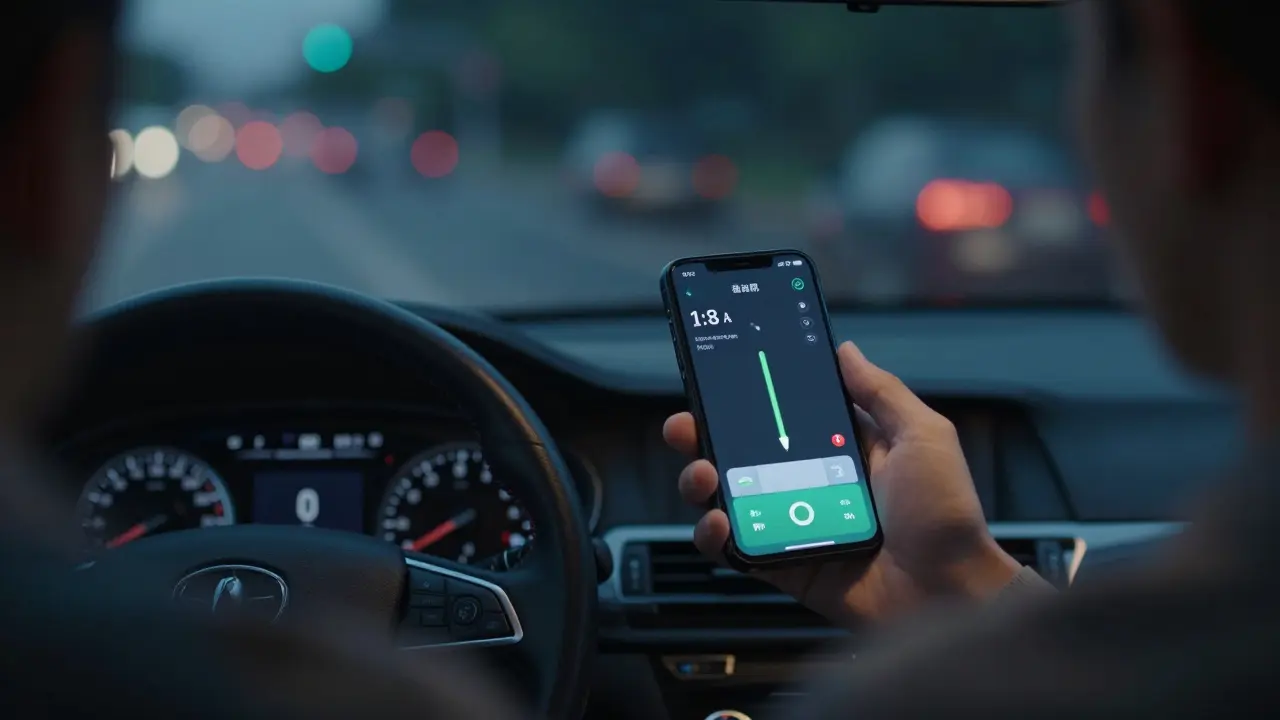
Mileage matters. The more you drive, the higher your risk of an accident. Many insurers now offer usage-based programs.Telematics programs like Progressive’s Snapshot, State Farm’s Drive Safe & Save, or Allstate’s Drivewise use a device or app to track how you drive. They look at speed, braking, time of day, and mileage. Drivers who use these programs and drive safely often save 10-30%.
You don’t need to drive less to qualify. You just need to drive better. One driver in Colorado cut his premium by 27% after using Snapshot for six months. He didn’t stop commuting-he just avoided hard braking and late-night driving.
If you work from home two days a week, tell your insurer. Some companies offer low-mileage discounts if you drive under 8,000 miles a year. You don’t need to prove it unless they ask. But if you’re honest, they’ll reward you.
Choose the Right Car
It’s not just about the car you own now-it’s about the car you’ll buy next. Insurance costs vary wildly between models.For example, a 2025 Toyota Corolla costs about 40% less to insure than a 2025 Tesla Model Y. Why? Repair costs, theft rates, and safety ratings. The Corolla has lower parts costs, fewer high-tech sensors to replace, and a lower theft rate. The Tesla’s battery repairs can cost $15,000 after a minor crash. Insurers know that.
Before you buy a car, check its insurance costs. Use the IIHS (Insurance Institute for Highway Safety) or NHTSA databases. Look up the model’s “loss cost” rating. Avoid cars with high repair costs, poor safety ratings, or high theft rates. Even a $3,000 cheaper car might save you $600 a year in insurance.
Review Your Coverage Needs
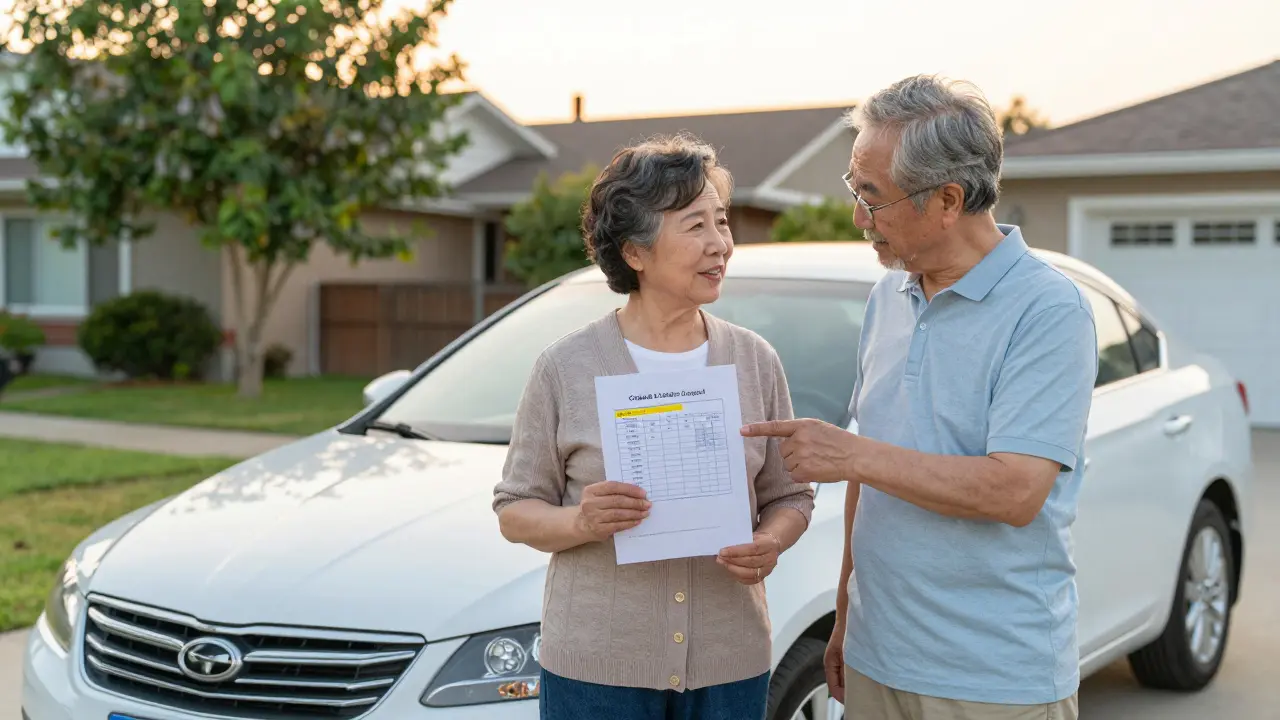
You don’t need full coverage on a 12-year-old car. If your vehicle is worth less than $3,000, collision and comprehensive coverage might not be worth it.Here’s the math: If your annual premium for comprehensive and collision is $400, and your car is worth $2,500, you’re paying 16% of the car’s value every year to insure it. That’s not smart. Once your car is older than 10 years and has over 100,000 miles, consider dropping those coverages.
Keep liability. That’s the legal minimum and protects you if you hurt someone else. Keep uninsured/underinsured motorist coverage-it’s cheap and critical. But collision and comprehensive? Only keep them if the car is still worth more than the cost of the coverage over two years.
Ask About Group Discounts
Your employer, alumni association, or even your gym might have a group insurance deal. Many large employers partner with insurers to offer discounted rates to employees. You might not even know it’s available.One nurse in Arizona found out her hospital had a partnership with USAA. She switched and saved $280 a year. A teacher in Illinois got a discount through her state teachers’ association. A Costco member in Oregon saved 15% just by mentioning his membership.
Ask your HR department. Check your membership benefits. Call your insurance agent and say, “Do you offer group discounts through any employers or organizations?”
Don’t Pay for Unnecessary Add-Ons
Insurance companies love to sell you extras: roadside assistance, rental reimbursement, gap insurance, mechanical breakdown coverage. Some are useful. Most aren’t.Rental reimbursement? Only get it if you can’t afford to rent a car for a week while yours is in the shop. Gap insurance? Only needed if you’re leasing or have a high loan-to-value ratio on a new car. Mechanical breakdown? If your car is under warranty, you don’t need it. If it’s out of warranty, it’s often cheaper to pay for repairs yourself.
One driver in Georgia canceled her $45-a-year rental reimbursement coverage and saved $540 over five years. She never used it. She used a rideshare app instead. That’s common. Most people never use these add-ons.
Review your policy line by line. Ask your agent: “Is this required? What happens if I remove it? How often do people actually use this?”
Re-Evaluate After Major Life Changes
Your insurance rate changes when your life changes. Marriage, moving, retiring, or even getting a better job can affect your rate.Married drivers pay less on average-insurers see them as more stable. Moving to a safer neighborhood? Your rates drop. Retiring and driving less? That’s a discount. Getting a promotion that requires a longer commute? You might need to adjust-but don’t assume your rate will go up automatically.
Call your insurer after any big life event. Don’t wait for renewal. Say, “I just got married,” or “I moved to a new zip code,” or “I retired last month.” They’ll recalculate your rate. Often, you’ll save money without doing anything else.
Insurance isn’t a set-it-and-forget-it product. It’s a service you manage. The companies want you to stay put. But you don’t have to. By shopping smart, asking questions, and adjusting your coverage based on real needs-not fear-you can pay less and still be protected.
Can I lower my auto insurance rate without raising my deductible?
Yes. Raising your deductible is just one option. You can lower your rate by shopping around, asking for discounts, improving your credit score, driving less or more safely, dropping unnecessary coverage on older cars, or bundling policies. Many drivers save hundreds without touching their deductible.
Does my credit score really affect my car insurance?
In 46 states, yes. Insurers use credit-based insurance scores to predict claim risk. Drivers with poor credit pay up to twice as much as those with excellent scores. Even a small improvement-like paying down credit card debt-can reduce your premium by 5-10%. This doesn’t apply in California, Hawaii, Massachusetts, or Michigan.
Should I drop comprehensive and collision on an old car?
If your car is worth less than $3,000 and you’ve had no claims in the last five years, it’s usually smart to drop comprehensive and collision. The cost of coverage often exceeds the value of what you’d get paid out after an accident. Keep liability and uninsured motorist coverage-they’re cheap and essential.
How often should I shop for new auto insurance quotes?
At least once a year. Insurance rates change frequently due to claims, competition, and your driving record. Drivers who shop annually save an average of $400 per year compared to those who stay with the same company. Don’t wait for renewal-start comparing three months before it ends.
Do telematics programs really save money?
Yes, for safe drivers. Programs like Snapshot or Drive Safe & Save track your driving habits and reward low-risk behavior. Drivers who avoid hard braking, late-night driving, and high speeds often save 10-30%. If you’re a cautious driver, it’s one of the easiest ways to lower your rate without changing your coverage.
What car models are cheapest to insure?
Cars like the Toyota Corolla, Honda Civic, Subaru Outback, and Hyundai Elantra are consistently among the cheapest to insure. They have lower repair costs, fewer expensive tech features, strong safety ratings, and low theft rates. Avoid luxury, electric, or high-performance models unless you’re prepared for higher premiums.
Can I get a discount just for being a member of an organization?
Yes. Many insurers offer discounts for memberships in AAA, AARP, alumni associations, professional groups, or even Costco. These discounts range from 5% to 15%. Always ask your insurer if they partner with any organizations you belong to-many people miss out because they never ask.
kelvin kind
January 24, 2026 AT 21:11Just switched insurers last year after reading this. Saved $380. No drama, no coverage cuts. Best decision ever.
Ananya Sharma
January 25, 2026 AT 04:45Let me tell you something about insurance companies-they’re not your friends. They use your credit score because it’s easier than actually assessing risk. It’s systemic exploitation wrapped in actuarial jargon. You think you’re saving money? You’re just playing their game. And don’t get me started on telematics. That’s just surveillance with a discount sticker. They’re tracking your braking patterns like you’re a criminal. It’s dystopian, and you’re all just nodding along like it’s normal.
Sarah McWhirter
January 26, 2026 AT 20:48Oh sweetie, you’re so cute thinking they care about your ‘safety.’ 😘 They just want you to think you’re in control so you don’t sue them when they deny your claim after a fender bender. I once had a guy at Geico tell me my ‘low mileage’ discount was revoked because my car’s odometer was ‘inconsistent with my reported usage.’ Turns out I drove 7,501 miles. Not 7,499. That’s it. They cancelled my discount for ONE MILE. 😂
Ian Cassidy
January 27, 2026 AT 07:46Telematics programs are legit if you drive clean. My Snapshot saved me 22% last year. No hard braking, no 2 a.m. runs to the gas station. Simple. They don’t spy-they score. And if you’re not a reckless driver, why be mad?
Zach Beggs
January 28, 2026 AT 10:38Good breakdown. I dropped comprehensive on my 2013 Honda after it hit 120k miles. Premium dropped $210/year. Still have liability and UM/UIM. Feels smart, not cheap.
Kenny Stockman
January 29, 2026 AT 17:14Biggest tip I got? Call your agent and say, ‘What am I missing?’ Not ‘What discounts do I have?’-ask what you might not know. I got a 12% discount for being a member of my local library’s board. No joke. They had a partnership. Never would’ve known unless I asked.
Antonio Hunter
January 29, 2026 AT 18:15People overlook the life event angle. I got married in 2022 and didn’t think to call my insurer. Six months later, I noticed my rate dropped. Turned out they automatically re-evaluated-but only because my spouse had an excellent driving record. If you’ve had a major life change-marriage, retirement, move, job change-call them. Don’t wait. It’s free money, and they’re not going to tell you. Most people don’t know this, and it’s one of the most underutilized levers in the whole system.
Paritosh Bhagat
January 30, 2026 AT 11:11Umm, hello? You’re telling people to ‘improve their credit score’ like it’s a moral obligation? Have you ever tried getting a decent score if you’re a single parent working two jobs? Or if you had medical debt? This isn’t ‘smart finance’-it’s classism disguised as advice. And then you say ‘just pay your bills on time’-as if that’s the only variable. You’re not helping. You’re blaming. 💔
Ben De Keersmaecker
January 31, 2026 AT 14:40Minor grammatical note: ‘uninsured/underinsured motorist coverage’ should be hyphenated as ‘uninsured-underinsured motorist coverage’ when used attributively. Also, ‘$15,000 after a minor crash’-that’s for a Tesla battery replacement? That’s accurate. Shocking, but accurate. Good data overall. Thanks for the clarity.
Aaron Elliott
February 2, 2026 AT 08:18While the article presents a superficially plausible framework for cost reduction, it fundamentally fails to interrogate the structural inequities embedded within the actuarial logic of the insurance-industrial complex. The implicit assumption-that individual behavioral optimization can neutralize systemic pricing arbitrage-is not merely naive; it is ideologically complicit. One does not ‘shop around’ to escape exploitation; one must dismantle the system that renders such exploitation profitable. Your $400 savings are a placebo. The real cost is the normalization of algorithmic oppression.
Chris Heffron
February 3, 2026 AT 06:19Love the telematics tip! 🚗💨 I got 18% off with State Farm’s program. Didn’t even know I was a ‘safe driver’ until the app told me I brake like a grandma. 😄
Adrienne Temple
February 3, 2026 AT 15:32Just did this last month! Dropped collision on my 2011 Camry, asked about discounts, and found out I qualified for the AAA discount I forgot I had. Saved $290. I didn’t even have to do anything! Just called and said, ‘Hey, what am I missing?’ 😊
Sandy Dog
February 4, 2026 AT 17:56Okay so I did EVERYTHING you said-shopped around, got the defensive driving discount, improved my credit by 30 points, joined AAA, dropped collision, turned on telematics… and then my rate went UP 12% because my neighbor got his car stolen and now my ZIP CODE is ‘high risk’ 😭 I cried for 3 hours. I’m not even kidding. I had to go to therapy. My therapist said I have ‘insurance trauma.’ I’m not sure if I’m a victim of capitalism or just really bad at math. 😭😭😭