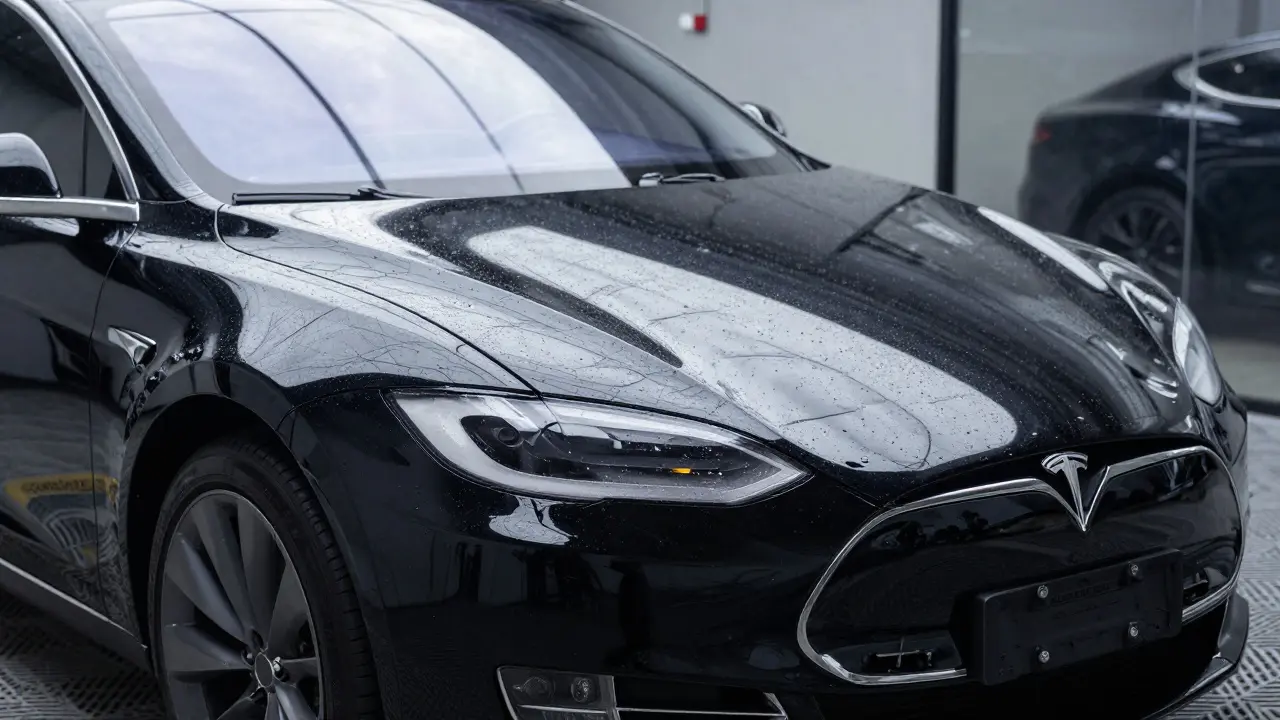
When you own a luxury car, you don’t just drive it-you protect it. A $150,000 Tesla Model S or a $200,000 Rolls-Royce Phantom isn’t just transportation. It’s a statement. And that statement starts with the paint. One scratch, one swirl mark, one bird dropping left too long, and you’re looking at thousands in repair costs. That’s why ceramic coatings and paint protection film (PPF) have become the gold standard for luxury car owners. But what’s the real difference? And which one actually works better for your vehicle?
What Is Ceramic Coating?
Ceramic coating is a liquid polymer applied by hand to a car’s paint. Once cured, it forms a hard, glass-like layer that bonds with the factory paint. Think of it like a permanent, ultra-durable clear coat that’s way tougher than what came from the factory. Most professional-grade ceramic coatings last between 3 and 7 years, depending on the brand and how well they’re maintained. Brands like Gtechniq, CQuartz, and Opti-Coat are the ones luxury detailers trust.
Here’s what ceramic coating actually does:
- Repels water, dirt, and grime-rain beads up and rolls right off
- Blocks UV rays that cause paint to fade over time
- Resists chemical stains from bird droppings, tree sap, and road salt
- Creates a high-gloss finish that makes paint look deeper and richer
- Makes washing easier-you can go weeks without a full wash and still look clean
But it’s not magic. Ceramic coatings don’t stop rock chips or deep scratches. They’re designed to protect against everyday wear, not physical impacts. If you drive on gravel roads or park under trees with falling branches, you’ll still need something extra.
What Is Paint Protection Film (PPF)?
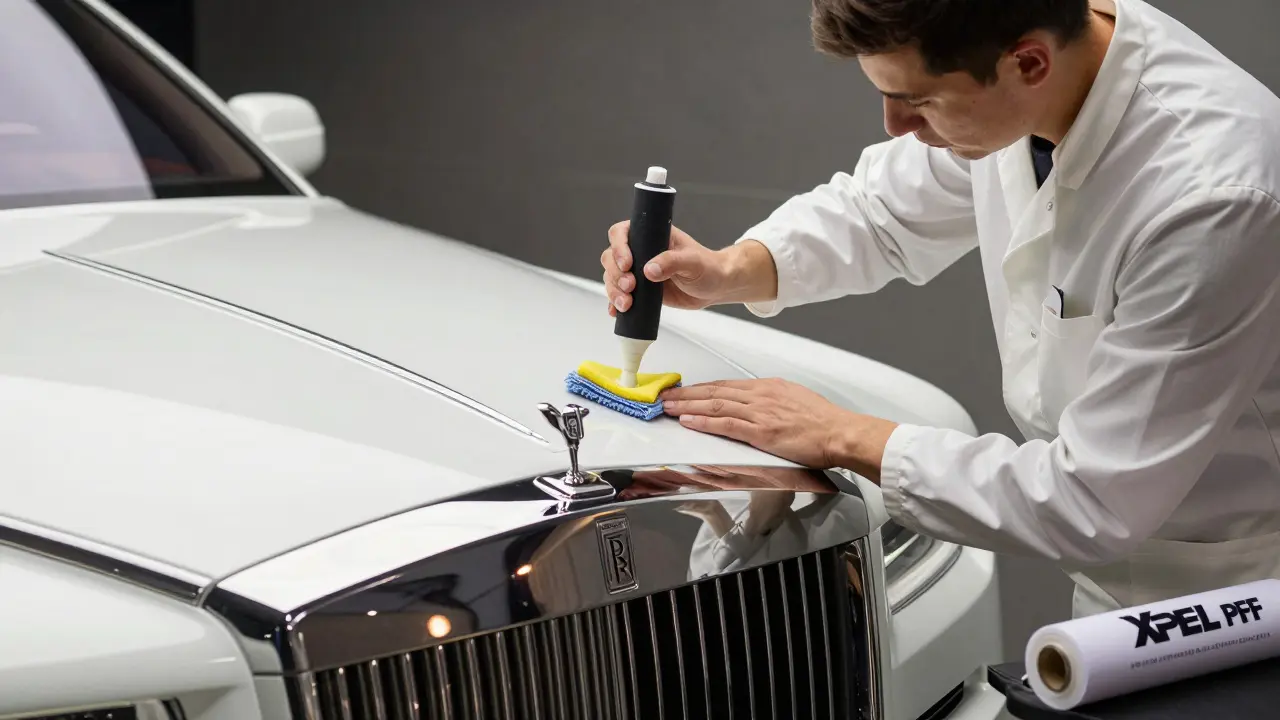
Paint Protection Film, or PPF, is a clear, flexible urethane film applied directly over the car’s paint. It’s the same material used on military helicopters and fighter jets to protect against debris. Modern PPF is nearly invisible-no yellowing, no bubbling, and it self-heals minor scratches with heat.
High-end PPF brands like XPEL, STEK, and 3M Scotchgard Pro come with warranties that last up to 10 years. They’re installed in panels: front bumper, hood, fenders, mirrors, door handles, and sometimes the entire car. The key advantage? It stops damage before it happens.
PPF handles things ceramic coating can’t:
- Rock chips from highway driving
- Scuffs from parking lot doors
- Minor abrasions from car wash brushes
- Deep scratches from keys or shopping carts
And here’s the kicker: if you get a scratch on PPF, you can often just pour warm water over it or leave the car in the sun for an hour. The film’s topcoat reflows and the scratch disappears. It’s like magic for your paint.
Ceramic Coating vs. PPF: The Real Comparison
Many luxury car owners assume they have to choose one. They don’t. But if you’re trying to decide where to invest your money, here’s how they stack up:
| Feature | Ceramic Coating | Paint Protection Film (PPF) |
|---|---|---|
| Protection Type | Chemical and environmental | Physical impact and abrasion |
| Duration | 3-7 years | 5-10 years |
| Self-Healing | No | Yes (with heat) |
| Installation | Hand-applied liquid | Professionally cut and heat-formed film |
| Cost (Full Car) | $1,200-$3,500 | $2,500-$7,000 |
| Best For | Urban driving, show cars, gloss enhancement | Highway driving, gravel roads, daily drivers |
PPF costs more upfront because it’s labor-intensive. A full-wrap installation can take 2-4 days. Ceramic coating takes 1-2 days. But PPF physically shields the paint. Ceramic coating enhances it. They’re not competitors-they’re partners.
Why Most Luxury Owners Use Both
If you’ve ever seen a $300,000 Ferrari with a ceramic-coated body but no PPF on the front end, you’ve seen a mistake waiting to happen. One gravel stone at 70 mph, and you’re looking at a $15,000 paint repair. That’s why top-tier detailers in Detroit, Miami, and Los Angeles now recommend a two-layer defense:
- Apply PPF to high-impact areas: hood, fenders, bumper, mirrors, door edges
- Apply ceramic coating over the entire car-including over the PPF
This combo gives you the best of both worlds. The PPF takes the hits. The ceramic coating seals everything, adds gloss, and makes cleaning effortless. You’re not just protecting your car-you’re preserving its value. A luxury car with full PPF and ceramic coating can retain 15-20% more resale value than one without.
Some owners skip PPF because they think ceramic coating is enough. Others skip ceramic because they think PPF looks “plastic.” That’s outdated thinking. Modern PPF is optically clear. And ceramic coatings don’t look glossy-they look liquid. The depth you see in a showroom isn’t polish. It’s the coating.
What to Avoid
Not all detailing shops are equal. A $400 ceramic coating job at a mall kiosk? It’s likely a 1-year product with no cure time. Real ceramic coating needs:
- At least 8 hours of climate-controlled curing
- Paint correction before application (removing swirls and scratches)
- Technicians certified by the brand (Gtechniq, CQuartz, etc.)
Same goes for PPF. Cheap film yellows. Poor installation leaves bubbles and edges that peel. Look for shops that use laser-cut templates and infrared heat guns. Ask to see their installation gallery. If they don’t have before-and-after photos of luxury cars, walk away.
Real-World Example: A Detroit Owner’s Story
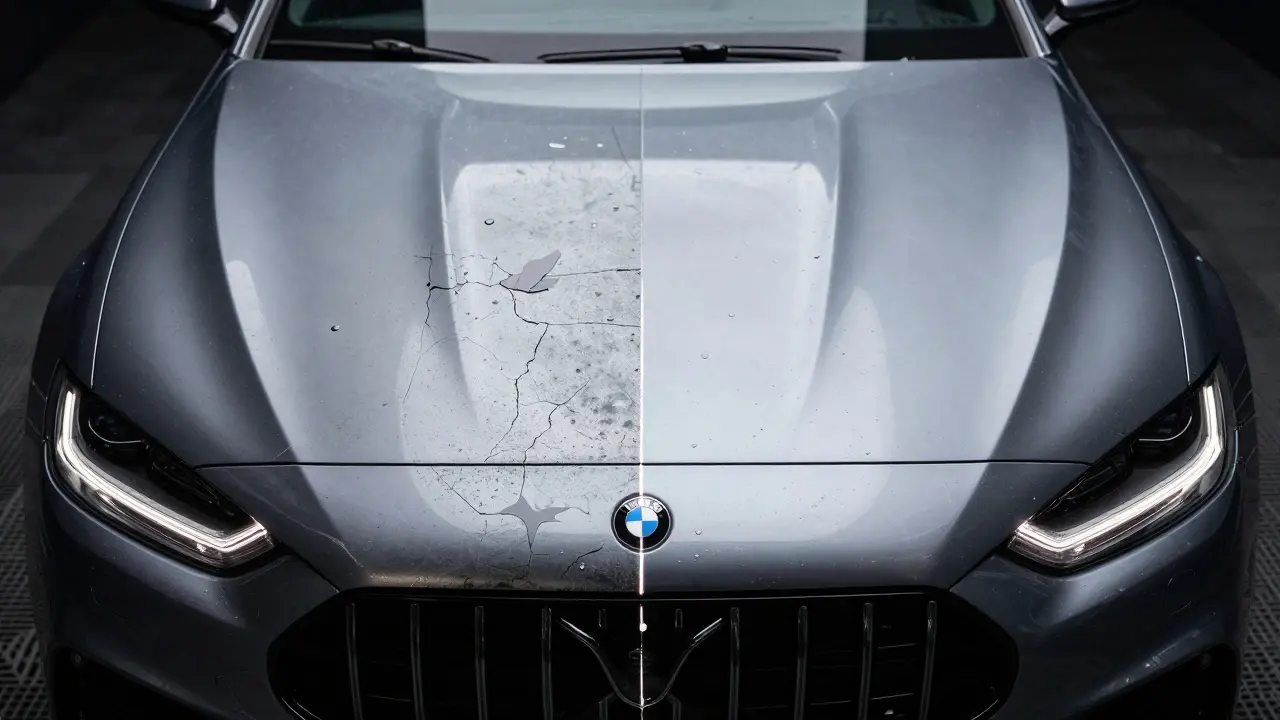
A client in Plymouth, Michigan, brought in his 2024 BMW M8. He’d driven it 1,200 miles and already had two rock chips on the hood. He’d paid $1,800 for a ceramic coating at a local shop six months earlier. It was already dulling. He wanted something that would last.
We installed XPEL PPF on the front half of the car, then applied CQuartz Finest Reserve over the entire vehicle. The total cost was $5,800. Two years later, he’s still driving it daily. No chips. No swirls. No fading. He says, “It looks better now than it did when I drove it off the lot.”
Is It Worth It?
Let’s say you own a $120,000 Porsche 911. You drive it 10,000 miles a year. In 5 years, without protection, you’ll likely need a full repaint: $8,000-$12,000. With PPF and ceramic coating, you’ll spend $6,000 upfront and never touch the paint again. That’s not an expense-it’s insurance.
And if you plan to sell? Buyers of luxury cars notice details. They run their hands over the paint. They check for imperfections. A flawless surface says, “This car was cared for.” That’s worth more than a few extra thousand dollars.
Final Thoughts
Ceramic coating and PPF aren’t just trendy-they’re necessary for anyone serious about preserving a luxury vehicle. One protects against chemistry. The other protects against physics. Together, they create a shield that’s unmatched in the automotive world. Don’t pick one. Don’t wait for damage. Do both. Your paint-and your wallet-will thank you.
Can you apply ceramic coating over paint protection film?
Yes, and it’s actually recommended. Applying ceramic coating over PPF enhances gloss, makes cleaning easier, and adds UV protection to the film. Most premium PPF brands, like XPEL and STEK, are designed to work with ceramic coatings. The coating bonds to the top layer of the film and doesn’t interfere with its self-healing properties.
How long does paint protection film last?
High-quality PPF lasts between 5 and 10 years, depending on the brand and environment. Brands like XPEL and 3M Scotchgard Pro offer warranties up to 10 years. Factors like sun exposure, climate, and washing habits affect longevity. In colder climates with road salt, film may degrade slightly faster-but still outlasts most ceramic coatings.
Does ceramic coating prevent scratches?
Ceramic coating resists light scratches from washing or debris, but it won’t stop rock chips, key scratches, or deep abrasions. It’s harder than factory clear coat, but it’s still paint. For true scratch protection, you need PPF. Ceramic coating is best for preventing chemical damage and maintaining shine.
Can I wash my car normally after applying ceramic coating or PPF?
Yes, but avoid automatic car washes with brushes. Hand washing with a microfiber towel and pH-neutral soap is ideal. PPF can handle pressure washing, but keep the nozzle at least 12 inches away. Ceramic coating should never be washed with harsh chemicals or wax-based products-it can break down the bond.
Is ceramic coating worth it for a daily driver luxury car?
Absolutely. Daily drivers face the most exposure: rain, road salt, bird droppings, tree sap. Ceramic coating makes maintenance easier and prevents long-term fading. Even if you drive 15,000 miles a year, a good coating will keep your paint looking new for years. Combined with PPF on high-impact areas, it’s the smartest investment you can make.
Bhagyashri Zokarkar
February 21, 2026 AT 09:14Rakesh Dorwal
February 21, 2026 AT 11:23Vishal Gaur
February 22, 2026 AT 08:08Nikhil Gavhane
February 22, 2026 AT 22:46Rajat Patil
February 23, 2026 AT 15:47deepak srinivasa
February 25, 2026 AT 15:25pk Pk
February 25, 2026 AT 20:05NIKHIL TRIPATHI
February 26, 2026 AT 21:40Shivani Vaidya
February 28, 2026 AT 12:14Rubina Jadhav
March 2, 2026 AT 10:11sumraa hussain
March 3, 2026 AT 18:18Raji viji
March 4, 2026 AT 09:02Rajashree Iyer
March 5, 2026 AT 10:26Parth Haz
March 6, 2026 AT 00:11