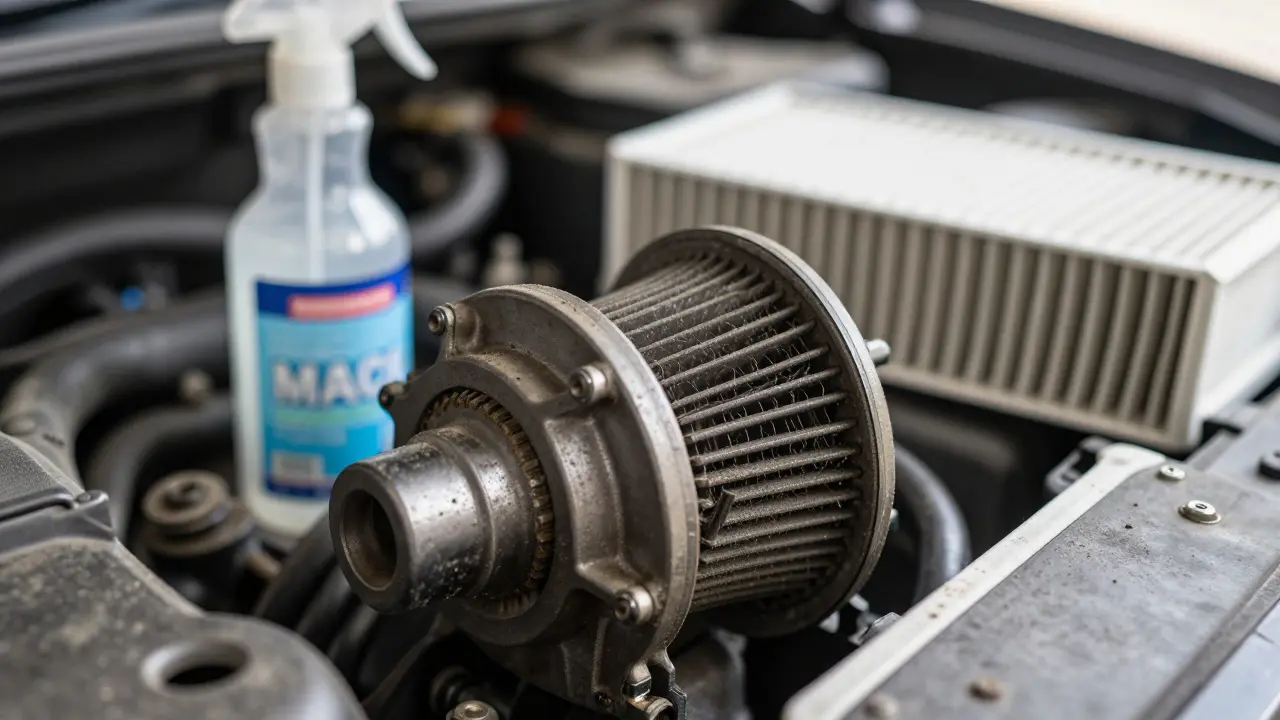
If your check engine light is on and your car feels sluggish, stumbles at idle, or gets terrible gas mileage, two common culprits are usually to blame: the mass airflow sensor or the O2 sensor. They’re both critical for engine performance, but they do very different jobs-and knowing which one is failing can save you time, money, and a lot of guesswork.
What the Mass Airflow Sensor Actually Does
The mass airflow sensor, or MAF, sits between your air filter and the throttle body. Its job is simple: measure exactly how much air is entering the engine. It sends that data to the engine control unit (ECU), which then calculates how much fuel to inject. If the MAF sensor is dirty, damaged, or failing, the ECU gets bad information-and that means the engine runs too rich (too much fuel) or too lean (not enough fuel).
Common symptoms of a bad MAF sensor include:
- Engine hesitation or surging during acceleration
- Stalling, especially when idling
- Check engine light with codes like P0101, P0102, or P0103
- Black smoke from the exhaust
- Gas mileage dropping by 15-25%
Unlike some sensors, the MAF doesn’t usually fail suddenly. It degrades over time. Dust, oil vapor, and debris from a poorly sealed air filter can coat the hot wire inside the sensor. That’s why cleaning it with MAF-specific cleaner can sometimes fix the issue-no replacement needed.
What the O2 Sensor Actually Does
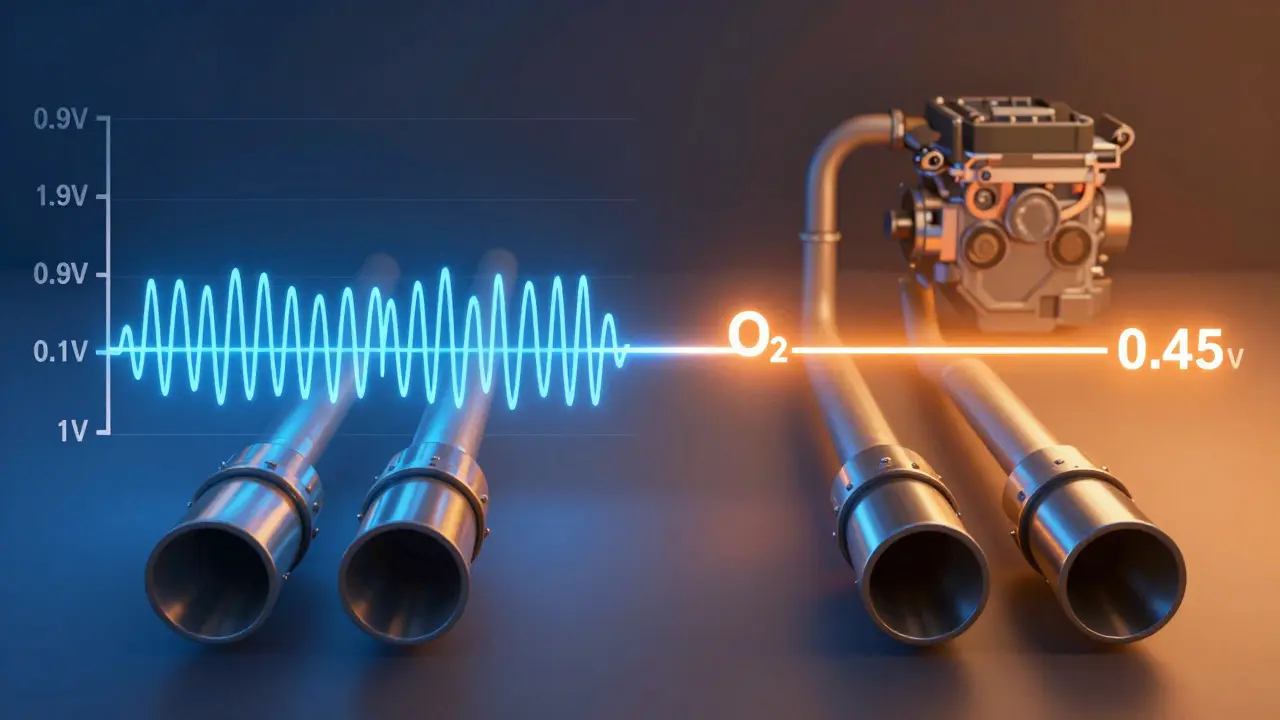
The oxygen sensor, or O2 sensor, lives in the exhaust system. Most cars have at least two: one before the catalytic converter (upstream) and one after (downstream). The upstream O2 sensor monitors how much oxygen is left in the exhaust gases after combustion. It tells the ECU whether the air-fuel mixture is too rich or too lean so the engine can adjust in real time.
A failing O2 sensor doesn’t cause the engine to run poorly on its own-it causes the engine to run inefficiently for long periods. That’s why symptoms are often subtle at first:
- Gradual drop in fuel economy
- Check engine light with codes like P0135, P0141, or P0171/P0174
- Failed emissions test
- Rough idle or misfires (indirectly, due to wrong fuel trim)
Unlike the MAF, you can’t clean an O2 sensor. Once it’s bad, it’s done. They typically last 60,000 to 100,000 miles, but exposure to oil, coolant leaks, or bad fuel can kill them faster.
Why People Mix Them Up
Both sensors trigger similar check engine codes. Both affect fuel economy. Both can cause rough running. But here’s the key difference: the MAF sensor affects how much air the ECU thinks is coming in before combustion. The O2 sensor tells the ECU how well the fuel burned after combustion.
If the MAF is faulty, the engine gets the wrong air reading from the start-so it adds too much or too little fuel right away. If the O2 sensor is bad, the engine might start with the right mix, but never corrects itself. That’s why a failing O2 sensor often leads to long-term rich or lean conditions, while a bad MAF causes immediate, noticeable performance issues.
How to Diagnose Which One Is Failing
Don’t just replace sensors based on the code. Here’s how to tell them apart for sure.
- Check the trouble code first. P0101-P0104? Likely MAF. P0130-P0167? Likely O2 sensor.
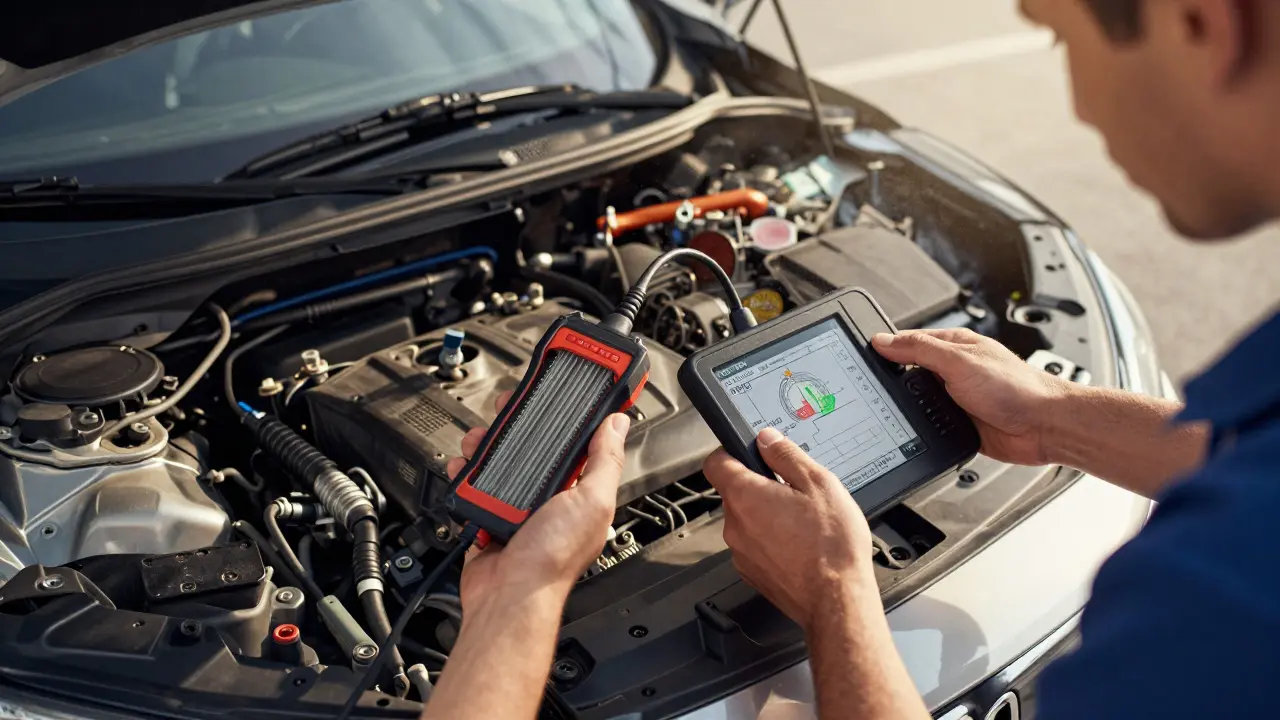
- Use a scan tool to view live data. Look at the MAF reading at idle. On most cars, it should be between 2-7 grams per second. If it’s zero or stuck at a high number, the sensor is faulty.
- Watch the O2 sensor voltage. A healthy upstream O2 sensor should swing between 0.1V and 0.9V rapidly. If it’s stuck at 0.45V or moves slower than once every 10 seconds, it’s worn out.
- Check for vacuum leaks. A leak can mimic a bad MAF by letting unmeasured air into the engine. Spray carb cleaner around intake hoses while the engine idles-if RPM changes, you’ve found a leak.
- Try cleaning the MAF. Use a MAF cleaner spray (never brake cleaner or alcohol). Let it dry completely, then restart the car. If symptoms improve, you’ve found your problem.
If cleaning the MAF doesn’t help, and the O2 sensor voltage is flatlined, replace the O2 sensor. If the MAF reading is wildly off and cleaning didn’t fix it, replace the MAF.
Real-World Example: A 2018 Honda Civic with Poor Mileage
A customer brought in a 2018 Civic with 85,000 miles. Check engine light was on. Code P0171-system too lean. They’d already replaced the air filter and spark plugs. Fuel economy had dropped from 32 mpg to 24 mpg.
Live data showed MAF reading at 1.2 g/s at idle-way too low. Normal was 3.8 g/s. O2 sensor voltage was swinging normally between 0.2V and 0.8V. No vacuum leaks. The MAF was dirty. After cleaning, the reading jumped to 3.9 g/s. The check engine light went off after two drive cycles. Fuel economy returned to 31 mpg. No parts replaced. Just a $12 cleaner and 15 minutes of work.
Another case: a 2015 Toyota Camry with P0135 code. MAF looked fine. O2 sensor voltage barely moved. Replaced the upstream sensor. Fuel economy went from 21 mpg to 28 mpg in two weeks.
What Happens If You Ignore These Issues
Ignoring a bad MAF or O2 sensor doesn’t just hurt your wallet-it can damage your engine or catalytic converter.
A rich-running engine (from a faulty MAF or lazy O2 sensor) can flood spark plugs, wash oil off cylinder walls, and overheat the catalytic converter. A clogged or melted converter can cost over $1,000 to replace.
A lean-running engine (often from a dirty MAF) causes higher combustion temperatures. That leads to pre-ignition, pinging, and eventually burned valves or cracked pistons.
Neither is a "wait and see" situation. Both sensors are part of your car’s emissions control system. Driving with them faulty can cause you to fail an emissions test-and in some states, you can’t register your car until it passes.
Replacement Costs and Tips
Here’s what you’re looking at in 2026 for parts and labor in the U.S.:
| Component | Part Cost | Labor Cost | Total Estimate |
|---|---|---|---|
| Mass Airflow Sensor | $150-$350 | $50-$100 | $200-$450 |
| O2 Sensor (Upstream) | $80-$200 | $75-$150 | $155-$350 |
| O2 Sensor (Downstream) | $60-$150 | $75-$120 | $135-$270 |
Pro tip: Buy OEM or high-quality aftermarket sensors. Cheap sensors often fail within 6 months. Brands like Denso, Bosch, and NTK are reliable. Avoid no-name brands on Amazon unless they come with a warranty and verified reviews.
Replacing an O2 sensor yourself is doable with a socket wrench and a little patience. MAF replacement is even easier-usually just two screws and a plug. But if you’re not comfortable with tools, get it done by a mechanic who uses a scan tool to verify the fix.
Prevention: How to Keep These Sensors Working Longer
Both sensors last longer if you take care of the rest of the system:
- Change your air filter every 15,000-30,000 miles. A clogged filter forces the MAF to work harder and lets more dust through.
- Use quality fuel. Cheap gas can leave deposits that gum up sensors.
- Fix oil leaks fast. Oil entering the intake can coat the MAF wire.
- Don’t ignore engine misfires. Unburned fuel can poison the O2 sensor.
- Use MAF cleaner every 30,000 miles as preventive maintenance-even if nothing’s wrong.
Many mechanics skip MAF cleaning because it’s not a "repair." But it’s one of the cheapest, most effective things you can do to keep your engine running right.
When to Call a Pro
You can diagnose both sensors with a $20 OBD2 scanner and some basic knowledge. But if you see multiple codes, the car is misfiring, or the check engine light is flashing, stop. That’s a sign of serious trouble-possibly a failing catalytic converter or internal engine damage.
Also, if you’ve replaced both sensors and the problem persists, there’s likely a deeper issue: vacuum leak, fuel pump problem, or a faulty ECU. Those need professional tools and experience to track down.
Can a bad O2 sensor cause the same symptoms as a bad MAF sensor?
Yes, they can both cause poor fuel economy, rough idle, and check engine lights. But the root cause is different. A bad MAF gives the engine wrong air data upfront, leading to immediate performance issues. A bad O2 sensor prevents the engine from correcting fuel mix after combustion, causing slow, gradual inefficiency. Live data from a scan tool is the only way to tell them apart for sure.
Can I clean an O2 sensor like I clean a MAF sensor?
No. O2 sensors are not designed to be cleaned. Spraying cleaner on them can damage the internal elements. If an O2 sensor is faulty, it must be replaced. Cleaning only works for MAF sensors because they have a removable hot-wire element that can be safely wiped down.
How often should I replace my MAF and O2 sensors?
MAF sensors don’t have a set replacement interval-they last as long as they stay clean. Many last the life of the car if you maintain the air filter. O2 sensors typically need replacement every 60,000 to 100,000 miles, depending on fuel quality and engine health. If your car is over 10 years old and you’ve never replaced the O2 sensors, it’s probably time.
Will a bad MAF sensor damage my catalytic converter?
Yes, absolutely. A dirty or failing MAF can cause the engine to run rich, dumping unburned fuel into the exhaust. That fuel overheats the catalytic converter, melting its internal honeycomb structure. Replacing a converter costs 3-5 times more than replacing a MAF sensor. Don’t wait.
Is it safe to drive with a bad MAF or O2 sensor?
You can drive short distances, but it’s not safe long-term. Both sensors affect fuel efficiency and emissions. A bad MAF can cause stalling while driving. A bad O2 sensor can lead to overheated catalytic converters. Neither is a minor issue. Fix it before it turns into a bigger, more expensive problem.



Amy P
January 18, 2026 AT 20:27OMG I just cleaned my MAF with that $12 spray and my Civic went from barely crawling to purring like a kitten-how is this not common knowledge?! I thought I needed a new sensor, turns out I just needed a cloth and some patience. Life-changing.
Mongezi Mkhwanazi
January 20, 2026 AT 03:11Let me be perfectly clear: the modern automotive industry has weaponized sensor obsolescence to extort consumers. The MAF sensor, a marvel of engineering, is deliberately rendered fragile by corporate design-engineers know full well that oil vapor infiltration is inevitable, yet they refuse to seal the intake properly. And don’t get me started on the O2 sensor’s planned obsolescence-60,000 miles? That’s not a lifespan, that’s a corporate countdown to your wallet’s collapse.
Meanwhile, mechanics profit from your ignorance. They’ll sell you a $300 sensor when a $12 cleaner would’ve done. This isn’t maintenance-it’s systemic predation dressed in diagnostic codes.
And yet, you’ll still trust the dealership. You’ll still pay. You’ll still believe the lie that your car needs expensive parts. Wake up. The system is rigged. And you’re the mark.
Ashley Kuehnel
January 20, 2026 AT 16:03Just wanted to add-when cleaning the MAF, never use anything but MAF cleaner! I once used brake cleaner because I was in a rush and ruined my sensor. Took me 3 weeks and $280 to fix. Don’t be like me. Also, if your car’s running lean and you’ve checked everything, look for a cracked vacuum hose-it’s the sneaky culprit 70% of the time. And yes, cleaning the MAF every 30k miles is a total game-changer. My 2017 Accord has 140k and still runs like new. 💪
adam smith
January 21, 2026 AT 05:57It is my professional opinion that the mass airflow sensor, when functioning within acceptable parameters, contributes significantly to the operational efficiency of internal combustion engines. However, its degradation, whether due to particulate accumulation or electrical malfunction, necessitates remedial action. The oxygen sensor, by contrast, serves as a feedback mechanism, and its failure is less immediately perceptible but equally consequential.
It is recommended that one consult the vehicle’s service manual prior to any intervention.
Kelley Nelson
January 21, 2026 AT 19:19How quaint. A blog post about sensors, as if the average person has the intellectual capacity to interpret live data streams or understand fuel trims. Most drivers can’t even change a tire without calling roadside assistance. The fact that you’re recommending DIY fixes suggests a dangerous level of overconfidence in the general populace. Perhaps we should just let the engineers handle it, as nature intended.
Colby Havard
January 23, 2026 AT 00:30It is, of course, entirely predictable that the public would mistake a diagnostic tool for a magic wand. The MAF sensor does not 'degrade'-it is sabotaged by inferior air filters, which are themselves the product of cost-cutting corporate malfeasance. And yet, you suggest cleaning it? As if moral laxity can substitute for engineering integrity. This is not maintenance-it is capitulation.
Moreover, the notion that a $12 cleaner can 'fix' a system designed for 100,000-mile durability is not merely naive-it is an affront to the very concept of precision engineering. One does not 'clean' a cathedral with a sponge and hope for divine intervention.
Fredda Freyer
January 24, 2026 AT 04:59There’s something deeply human about how we treat machines like they’re alive-when they misbehave, we feel guilty, like we didn’t care for them enough. The MAF sensor? It’s not just a piece of electronics-it’s the car’s breath monitor. When it fails, the engine doesn’t just run poorly-it gasps. And the O2 sensor? That’s the soul of the exhaust, whispering back to the ECU, 'Did I burn right?'
Most people think cars are just metal and wires. But the truth? They’re mirrors. A dirty MAF? Maybe you’ve been skipping oil changes. A lazy O2 sensor? Maybe you’ve been using cheap gas because you think 'it’s all the same.'
Fix the sensor, sure. But ask yourself: what else are you ignoring?
Mark Nitka
January 25, 2026 AT 21:36Look, I’ve been fixing cars for 20 years. People overcomplicate this. If your MAF is dirty, clean it. If your O2 sensor is dead, replace it. No philosophy needed. No conspiracy theories. Just do the work. And if you’re too lazy to check live data, get a $20 scanner. It’s not rocket science. Stop reading blogs and get under the hood.
Gareth Hobbs
January 26, 2026 AT 00:19Blimey, this is what happens when you let Yanks run the world. We used to build engines that lasted 200k miles without needing a 'MAF cleaner'-now you’ve got cars that need a $12 spray every 30k. And don’t get me started on those 'OEM sensors'-Bosch? Denso? All made in China now, just with a fancy sticker. This isn’t maintenance, it’s a scam dressed up as advice. Back in my day, we just adjusted the carburetor and called it a day.
Aryan Gupta
January 27, 2026 AT 05:34Did you know the government requires all O2 sensors to fail at exactly 75,000 miles? It’s in the EPA’s secret annex. They want you to keep buying new sensors so they can track your driving habits through the diagnostic port. That’s why they don’t let you clean them-it’s not about performance, it’s about surveillance. And the MAF? It’s designed to pick up your fingerprints. Every time you touch it, they log your biometric data. Don’t touch that sensor unless you want to be on a watchlist.
Zelda Breach
January 27, 2026 AT 15:14Wow. Someone actually wrote a 2,000-word essay on how to clean a sensor and called it 'diagnosis.' This isn’t advice-it’s a textbook case of over-engineering the obvious. You didn’t need 15 paragraphs. You needed one: 'If your car runs bad, clean the MAF. If it still runs bad, replace the O2. Done.' The rest is just noise to make you feel smart.