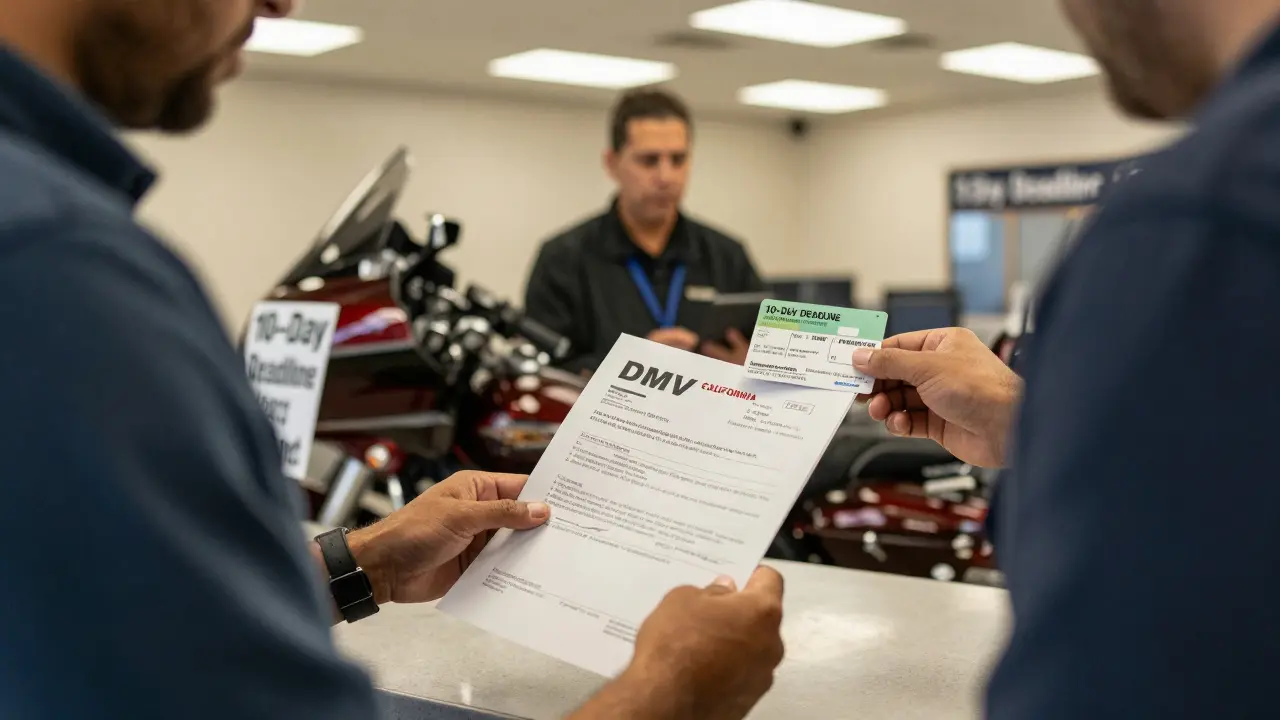
Every state in the U.S. has its own rules for registering a motorcycle and getting the title. There’s no national standard. What works in Texas won’t fly in California, and New York’s process is completely different from Florida’s. If you just bought a bike, inherited one, or moved to a new state, you need to know exactly what your local DMV requires - or you could end up fined, stuck without insurance, or even have your bike towed.
Why Registration and Title Matter
Registration isn’t just paperwork. It’s legal proof you own the bike and that it’s allowed on public roads. The title? That’s your ownership document. Without it, you can’t sell the bike, get insurance, or prove you’re not a thief if the police pull you over.
Most states require both registration and title within 30 days of purchase or move. Skip this, and you’re riding illegally. Fines can range from $100 to over $500. Some states even suspend your driver’s license if you’re caught riding without registration.
What You Need to Get Started
Before you even step into the DMV, gather these documents:
- Bill of sale (signed by seller)
- Original title (signed over to you)
- Proof of insurance (required in 49 states)
- Valid photo ID
- Odometer disclosure statement (if bike is under 10 years old)
- Proof of emissions or safety inspection (if required)
Some states, like California and New York, require a VIN inspection. That means a DMV officer or certified mechanic has to verify the bike’s frame number matches the title. Don’t assume it’s automatic - show up unprepared, and you’ll waste a trip.
State-by-State Differences
Let’s cut through the noise. Here’s how five major states handle motorcycle registration and title:
| State | Title Issuance | Registration Fee | Insurance Required? | Inspection Needed? | Time Limit to Register |
|---|---|---|---|---|---|
| California | Issued by DMV after application | $50-$100 | Yes | Yes (smog and safety) | 10 days |
| Texas | Issued by DMV after application | $33-$45 | Yes | No (except for out-of-state transfers) | 30 days |
| New York | Issued by DMV after application | $45-$120 | Yes | Yes (safety only) | 15 days |
| Florida | Issued by county tax collector | $25-$75 | Yes (if registered) | No | 10 days |
| Illinois | Issued by Secretary of State | $20-$150 | Yes | Yes (emissions in certain counties) | 20 days |
Notice how California and New York are strict? Both demand inspections and have tight deadlines. Texas and Florida are more relaxed - no inspections, longer windows. Illinois is in the middle, with emissions rules that vary by county.
What If the Title Is Missing?
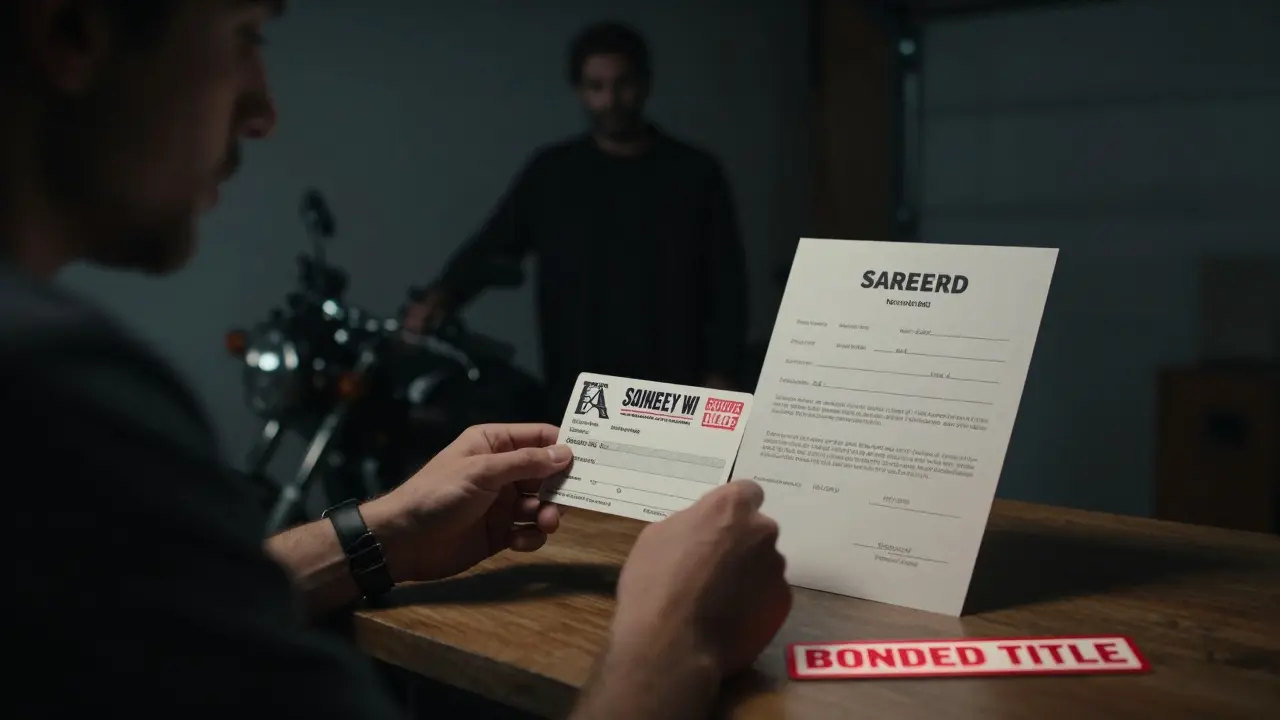
Buying a bike without a title? That’s a red flag. But sometimes it happens - maybe the seller lost it, or the bike was inherited. Most states offer a bonded title process.
Here’s how it works: You apply for a bonded title by proving you own the bike. You’ll need:
- A notarized bill of sale
- Proof of purchase (receipt, canceled check)
- A sworn affidavit stating you’re the rightful owner
- Proof of insurance
- A surety bond (usually 1.5x the bike’s value)
The bond acts as insurance for the state. If someone else comes forward claiming ownership, they can make a claim against the bond. After three years with no claims, you get a clean title.
States like Texas, Florida, and Georgia allow bonded titles. California doesn’t - they’ll make you get a court order instead. Always check your state’s rules before you buy a bike without a title.
Transferring a Title When Moving States
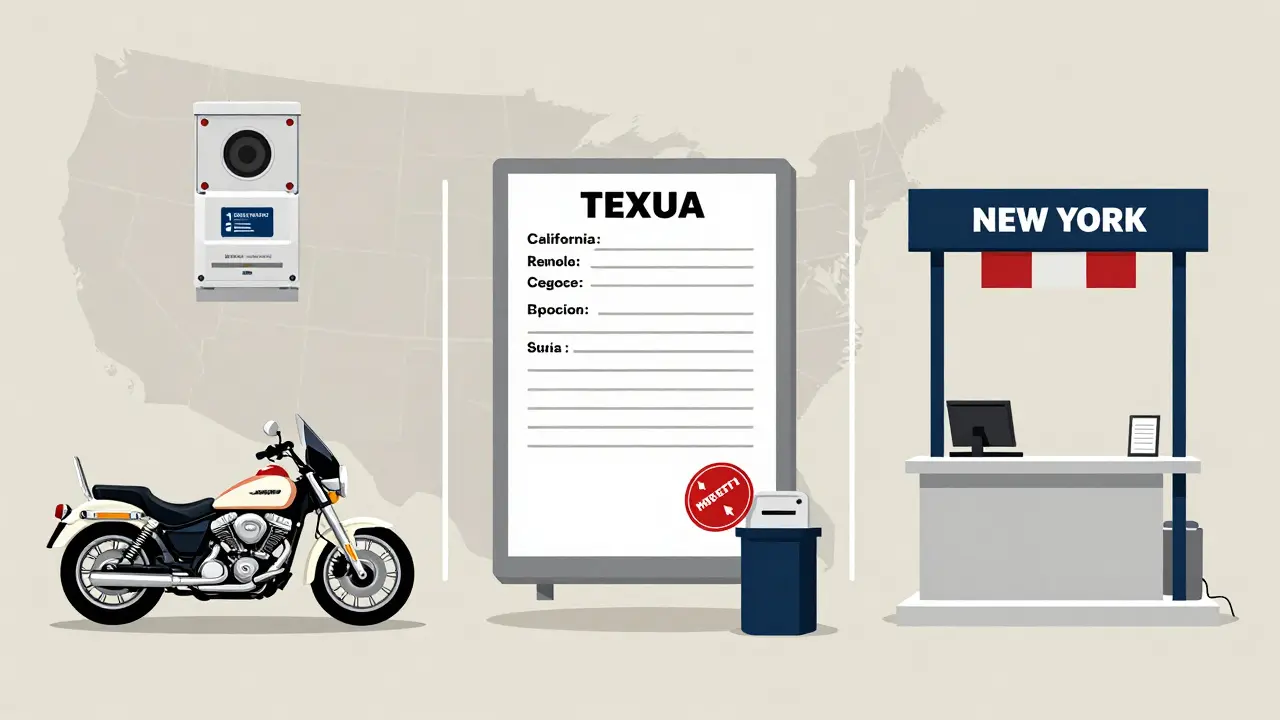
If you moved from one state to another, you can’t just keep your old registration. You must register in your new state. But here’s the catch: Some states won’t issue a title unless the old one is surrendered.
For example, if you move from Arizona to Washington, Washington DMV will ask for your Arizona title. If it’s lost, you’ll need to get a duplicate from Arizona first. Some states, like Pennsylvania, require you to surrender your old registration and plates before they issue new ones.
Don’t wait. Most states give you 30 days to register after establishing residency. If you don’t, you risk fines and penalties - even if your old registration hasn’t expired yet.
Common Mistakes to Avoid
- Assuming your out-of-state registration is valid. It’s not. You must register locally.
- Forgetting insurance proof. You can’t register without it in almost every state.
- Signing the title incorrectly. If the seller didn’t sign in the right spot, or used a pencil, the DMV will reject it.
- Waiting until the last minute. DMVs get crowded. Plan ahead.
- Thinking a bill of sale replaces a title. It doesn’t. It’s just part of the process.
One real case: A rider in Oregon bought a used bike, got the bill of sale, but didn’t get the title signed over. He rode for six months. When he tried to register, the DMV said he needed the original title - which the seller had lost. He had to pay $200 for a bonded title and wait three months.
What About Off-Road or Vintage Bikes?
Not all bikes need full registration. If you’re riding strictly on private land, you might not need plates. But if you ever ride on public roads - even just to the gas station - you need full registration.
Vintage bikes (over 25 years old) often have special rules. In states like Colorado and North Carolina, they can get a classic vehicle title with lower fees and no emissions testing. But you still need insurance and registration.
Some states allow off-road only registration. That means you can’t ride on streets, but you can use trails. Check your state’s DMV site - this option usually costs less and requires fewer inspections.
How to Find Your State’s Rules
The best place to start? Your state’s DMV website. Search for motorcycle registration or bike title transfer. Look for official PDF forms - not third-party blogs.
Here are direct links to official pages (no external links, just guidance):
- California DMV: Search "Motorcycle Title and Registration"
- Texas DMV: "How to Title and Register a Motorcycle"
- New York DMV: "Motorcycle Registration and Title"
- Florida DHSMV: "Motorcycle Registration"
- Illinois Secretary of State: "Motorcycle Title and Registration"
If you’re unsure, call your local DMV office. Ask: "What documents do I need to register a used motorcycle?" Record the name of the person you speak to - it helps if you get conflicting info later.
What Happens If You Don’t Register?
It’s not just about fines. If you’re in an accident without registration, your insurance company can deny your claim. That means you pay for repairs, medical bills, and legal fees out of pocket.
Police can impound your bike. In some states, they’ll hold it for 30 days - and charge you storage fees. That’s $50 a day. A $1,000 bike can cost you $1,500 to get back.
And if you’re caught riding without a title, you could be charged with possession of stolen property. Even if you bought it in good faith - the burden of proof is on you.
Final Tip: Keep Copies Everywhere
Once you get your title and registration, make copies. Keep one in your glovebox. Keep one at home. Email a scanned copy to yourself. If your documents are lost or stolen, you’ll need proof you applied for them.
And never let the title sit in your glovebox. Store it in a fireproof safe or safety deposit box. If someone steals your bike and has the title, they can sell it - and you lose everything.
Rob D
February 20, 2026 AT 00:25Let me tell you something real quick - this whole state-by-state mess is by design. They want you confused so you pay extra fees, hire ‘experts,’ and end up paying $300 just to register a $500 bike. It’s a revenue trap. I’ve seen DMVs in Texas refuse a perfectly signed title because the ink was ‘too light.’ That’s not policy - that’s extortion. And don’t even get me started on California’s smog check for a 1982 Honda CB750. It’s not a bike - it’s a tax return with handlebars.
Samuel Bennett
February 21, 2026 AT 02:36Wait - did you just say ‘bonded title’ like it’s a real thing? That’s a scam. The state doesn’t care if you ‘own’ the bike - they care if they can collect a fee later. I bought a bike without a title in 2018. Got the bonded title. Three years later? They called me in for ‘fraud investigation.’ Turned out the previous owner had reported it stolen in 2012. I had to prove I didn’t steal it from myself. That’s the American dream right there.
Franklin Hooper
February 21, 2026 AT 05:23It’s worth noting that the phrase ‘proof of insurance’ is technically inaccurate. The requirement is proof of financial responsibility, as defined under state motor vehicle codes. Most states accept a binder or declaration page - not the full policy. Yet, DMVs routinely demand the entire document, creating unnecessary friction. This is not a failure of the system - it’s a feature.
Tamil selvan
February 22, 2026 AT 07:44Thank you for this comprehensive guide. As someone from India, I find the U.S. system both fascinating and overwhelming. In my country, registration is centralized, and titles are digital. But I appreciate how detailed your breakdown is - it shows the effort behind the bureaucracy. I hope more people take the time to understand these processes. It’s not just paperwork - it’s about safety, legality, and peace of mind.
Mark Brantner
February 24, 2026 AT 01:34Bro I just got a 2001 Suzuki GSX-R600 and I thought ‘eh, I’ll register it next month’ - WRONG. DMV lady looked at me like I’d tried to pay with Monopoly money. $120 fee, 3 hours wait, and I forgot to bring my dog’s vaccination record (joke) - but I DID forget the odometer statement. Lesson learned: never trust ‘just a few days.’ Also, insurance guy said if I get pulled over without plates, they’ll tow it AND call the cops. I’m now sleeping with my title under my pillow. #motorcycledad
Kate Tran
February 25, 2026 AT 07:45Just moved from Oregon to Washington and holy hell, the DMV here asked for my Oregon title AND a notarized affidavit AND a copy of my lease. I showed up with three documents. They sent me home. I cried. Then I cried again because I had to drive 40 miles to get a notary on Sunday. Please, if you’re reading this - make copies. Like, 17 copies. And wear comfy shoes.
amber hopman
February 25, 2026 AT 08:55I’ve been riding for 12 years and never realized how many states require inspections for bikes under 10 years. I thought it was just cars. I just bought a 2018 Yamaha and had no idea I’d need a safety check. My mechanic said he’s done 15 of these this month alone. Honestly, this post saved me from a wasted trip. Thank you for the clarity - especially the part about signing the title in pen. I’m printing this out and taping it to my dashboard.
Jim Sonntag
February 25, 2026 AT 14:54Y’all are making this sound like a horror movie. It’s just paperwork. California’s strict? So’s Japan. Texas is chill? So’s Thailand. You don’t need a conspiracy - you need a Google search and 20 minutes. I moved from Florida to Alaska last year. Got my title in 11 days. No bonded nonsense. No court orders. Just followed the checklist. Sometimes the system works. Maybe stop assuming it’s rigged? Also - your title belongs in a fireproof box, not your glovebox. That’s just common sense. Not rocket science.