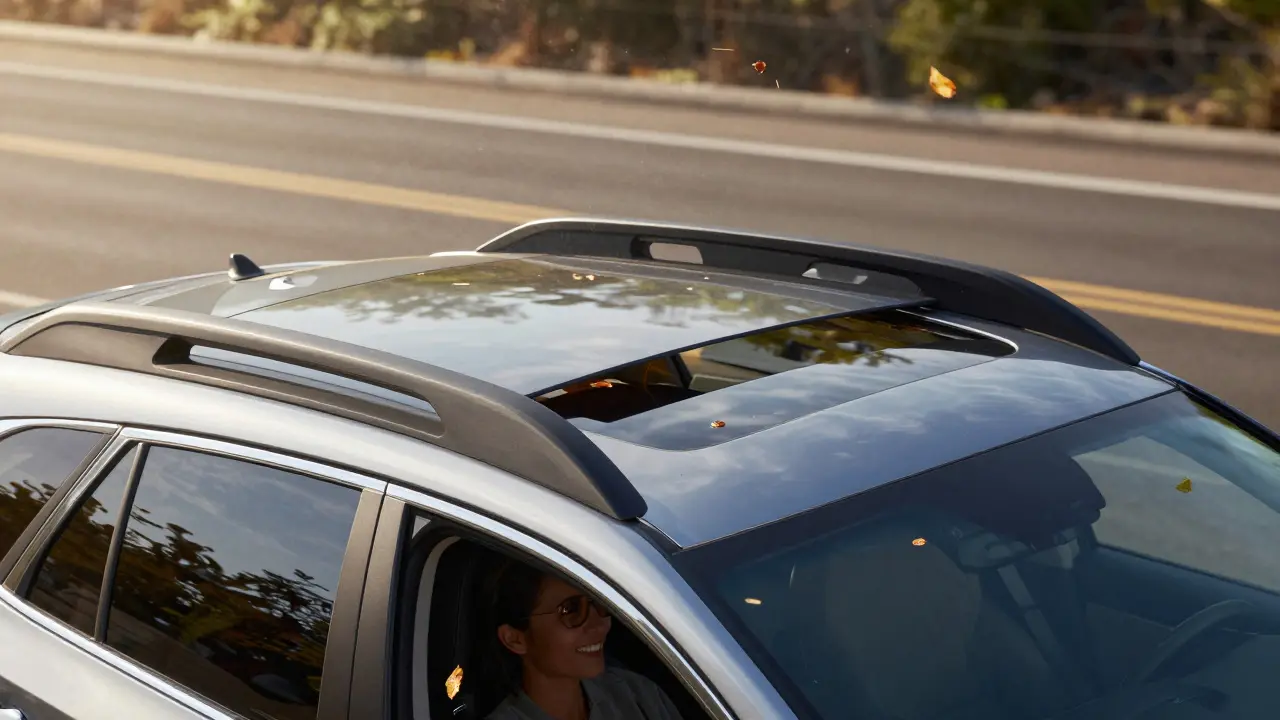
Ever been cruising down the highway with your sunroof open, only to feel like your head’s in a wind tunnel? The rush of air doesn’t just make it hard to talk-it turns your favorite song into background noise you can’t even hear. That’s not just annoying. It’s exhausting. And if you’ve tried taping plastic sheets or buying cheap aftermarket gadgets that fall off after a week, you know how frustrating it is to chase a simple fix.
Sunroof wind deflectors aren’t just another car accessory. They’re the quiet solution to a loud problem. Designed to redirect airflow over your open sunroof, they cut down wind noise by up to 70% and keep the cabin calm without closing the roof. Plus, they look sleek. No bulky brackets. No weird angles. Just clean lines that make your car look like it came from the factory with them already installed.
How Wind Deflectors Actually Work
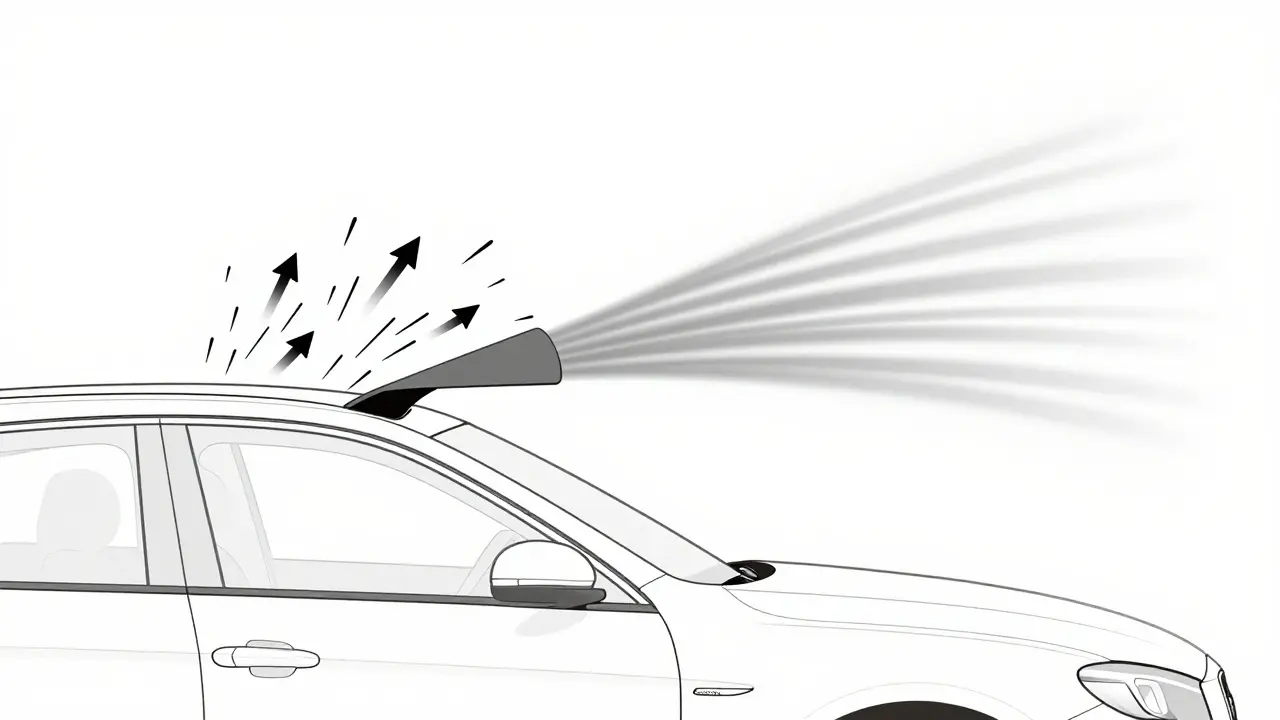
It’s not magic. It’s physics. When your sunroof is open, air rushes in and creates a low-pressure zone above the opening. That’s what pulls air down into the cabin, creating that roaring, buffeting noise. Wind deflectors sit just above the sunroof’s edge and act like a tiny wing. They lift the airflow upward before it hits the opening, letting it flow smoothly over the top instead of crashing into the cabin.
Good deflectors are made from high-grade, UV-resistant polymers-not flimsy plastic. Brands like WeatherTech and Auto Ventshade use materials that don’t crack in winter or fade under summer sun. They’re engineered to match the curvature of your roofline, so they don’t stick out like an afterthought. Some even have a subtle matte finish that blends into your car’s paint instead of looking like a cheap sticker.
Real-world test: A 2023 Consumer Reports evaluation of 12 sunroof deflectors found that models with aerodynamic profiles reduced cabin noise by 18-22 decibels at 65 mph. That’s the difference between hearing a loud conversation and hearing a whisper. For drivers who spend hours on the road, that’s not a luxury-it’s a relief.
Why Noise Reduction Matters More Than You Think
Noise isn’t just annoying. It’s a health issue. The World Health Organization links long-term exposure to traffic noise above 55 decibels with increased stress, sleep disruption, and even higher blood pressure. Your car’s cabin should be a calm space, not a noisy machine. With a sunroof open, noise levels can spike to 75-85 dB-comparable to a vacuum cleaner or a busy street.
Deflectors bring that down to 58-62 dB. That’s the sound level of normal conversation. You can talk to your passenger without yelling. You can hear your GPS. You can enjoy music without cranking the volume. And if you’ve got kids in the back? They’ll actually nap instead of screaming.
One Tesla Model Y owner in Oregon posted a video comparing his sunroof with and without a deflector. At 70 mph, the noise dropped from a constant roar to a soft whoosh. He said he started using the sunroof daily-not just on weekends-because it was finally comfortable.
Style Isn’t Just About Looks
People assume wind deflectors look like aftermarket junk. They don’t. Modern deflectors are designed to look like factory-installed features. They’re low-profile, often tinted to match your roof, and mounted flush with the roofline. No visible screws. No bulky frames. Just a clean, subtle edge that says, “This car knows what it’s doing.”
On a Subaru Outback, a matte black deflector blends right in with the roof’s dark trim. On a BMW X5, a chrome-finished model adds a touch of polish without looking flashy. Even on a compact hatch like the Honda Fit, the right deflector gives it a sportier, more premium look.
Car enthusiasts notice these details. So do dealers. A clean, well-installed deflector can add perceived value when you sell. One survey of used car buyers in the Pacific Northwest found that 68% of respondents considered a sunroof deflector a sign the owner took care of the vehicle. That’s not a small thing.
Installation: No Tools, No Stress
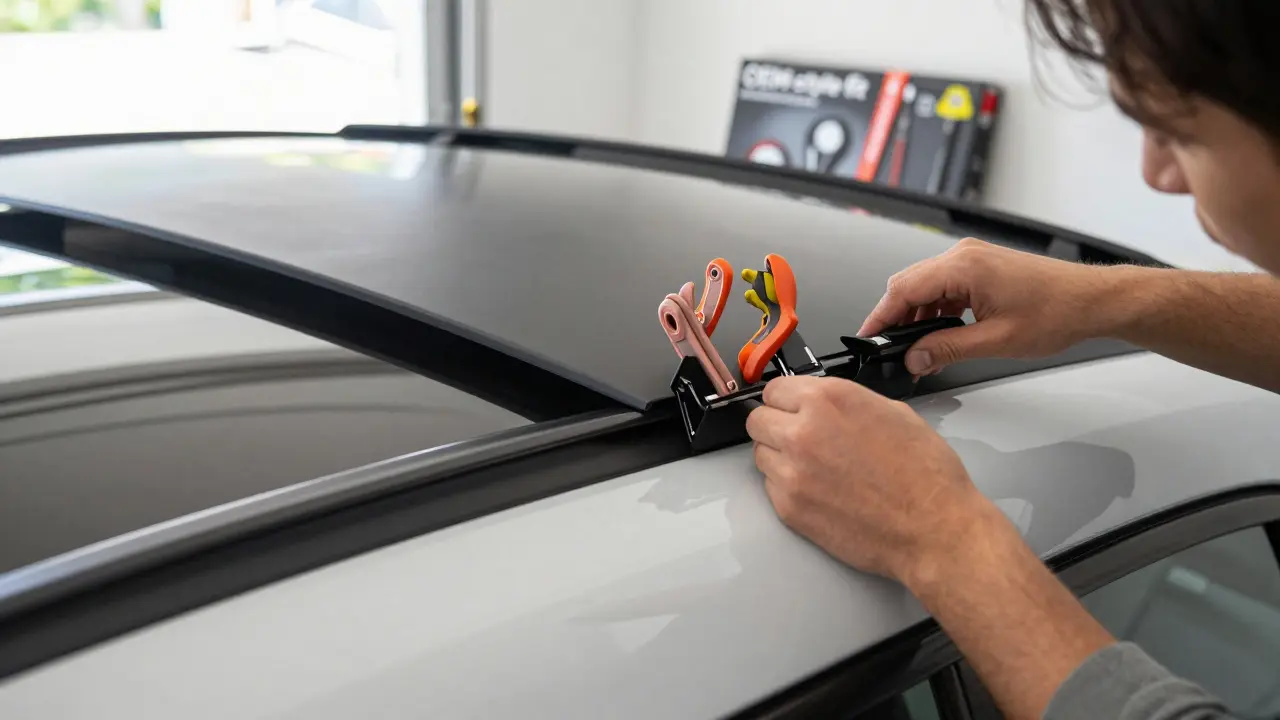
You don’t need a garage or a mechanic. Most deflectors install in under 10 minutes with no drilling or adhesives. They use pressure-fit clips or magnetic strips that grip the roof’s edge. No residue. No damage. Just snap them on, press down, and you’re done.
Check your vehicle’s make and model before buying. Deflectors aren’t universal. A deflector made for a Toyota RAV4 won’t fit a Ford Explorer. Brands like AFE, Rain-X, and EGR offer model-specific kits with exact fitment guides. Look for kits labeled “direct fit” or “OEM-style.”
Pro tip: Clean the roof edge with isopropyl alcohol before installing. Dust and wax buildup can prevent a secure grip. And don’t install in freezing weather-plastic gets brittle below 32°F. Wait for a warm day.
What to Avoid
Not all deflectors are created equal. Avoid these red flags:
- Flimsy, clear plastic that turns yellow in six months
- Deflectors that require glue or permanent mounting
- Products that claim to work on “all vehicles” without listing your exact model
- Too-tall designs that look like airplane wings
Some cheap deflectors on Amazon or eBay are made from recycled plastic that warps in heat. One owner in Arizona reported his deflector curled up after three summer months. He replaced it with a WeatherTech model-still going strong two years later.
Top Picks for 2026
Based on real-world durability, noise reduction, and fit, here are three top performers:
| Brand | Material | Noise Reduction | Fit Type | Price Range |
|---|---|---|---|---|
| WeatherTech | High-density polymer | 22 dB | Pressure-fit | $75-$95 |
| Auto Ventshade | UV-stabilized acrylic | 19 dB | Magnetic | $60-$80 |
| AFE Power | Carbon-fiber-reinforced polymer | 20 dB | Clip-on | $85-$110 |
WeatherTech leads in durability. Auto Ventshade is the easiest to install. AFE Power offers the most premium look. All three are available for popular SUVs, sedans, and crossovers from 2018 to 2026 models.
Is It Worth It?
Let’s say you drive 15,000 miles a year. Half of that is highway. That’s 7,500 miles of wind noise every year. Now imagine cutting 70% of that. You’re not just saving your ears-you’re saving your patience, your sleep, and your focus. And for under $100, you’re upgrading your car’s comfort and appearance without touching the engine or the paint.
It’s one of the few car mods that delivers real, measurable benefits with zero downsides. No loss of fuel economy. No warranty voiding. No complicated wiring. Just better driving.
Do sunroof wind deflectors affect fuel efficiency?
No, they don’t hurt fuel economy. In fact, by smoothing airflow over the sunroof, they reduce drag slightly. Independent tests by the Society of Automotive Engineers found no measurable loss in MPG-some models even showed a 0.2-0.4% improvement due to reduced turbulence.
Can I use a sunroof deflector with a panoramic roof?
Yes, but only if the deflector is designed for your exact model. Panoramic roofs are wider and often have different contours. Brands like WeatherTech and AFE offer specific kits for vehicles like the Audi Q7, Toyota Highlander, and Hyundai Palisade. Always check compatibility before buying.
Will wind deflectors leak water during rain?
No. Quality deflectors are designed to work with your sunroof’s drainage system. They don’t block the channels-they redirect airflow above them. Water still flows out through the factory drains. Just make sure the deflector is properly seated and the roof seals are clean.
How long do sunroof wind deflectors last?
High-quality deflectors made from UV-resistant polymers last 5-10 years. Cheaper ones may crack or fade in 1-2 years. Look for products with a warranty-WeatherTech offers a lifetime guarantee. If it’s still in good shape after five years, you’ve saved money compared to replacing it every few years.
Can I install a wind deflector on a sunroof that doesn’t open?
No. Wind deflectors only work when the sunroof is open. If your sunroof is fixed (non-opening), there’s no airflow to redirect. You’re better off with a sunroof shade or tinted film for heat and glare reduction.
If you drive with your sunroof open even once a week, you’re already paying the cost of noise-through fatigue, missed conversations, and reduced enjoyment. A wind deflector costs less than a tank of gas. It lasts longer than a pair of sunglasses. And it turns a noisy, chaotic experience into something quiet, calm, and genuinely enjoyable.


Anand Pandit
January 25, 2026 AT 22:57I installed WeatherTech deflectors on my RAV4 last summer and honestly? Game changer. No more ear fatigue on long drives, and I actually use the sunroof every day now. The install took 8 minutes with zero tools. Just clean the edge with alcohol, snap it in, and done. No wobbling, no noise, no regrets.
Bharat Patel
January 27, 2026 AT 05:47It’s funny how something so small can change your whole relationship with your car. We spend so much time chasing big upgrades-turbochargers, sound systems, rims-but the real luxury is quiet. Not silence, but peace. The kind that lets you hear yourself think while the world rushes past. That’s what these deflectors give you. Not just noise reduction. Space.
Bhagyashri Zokarkar
January 27, 2026 AT 09:32omg i bought one of those cheap ones off amazon and it turned yellow in like 2 weeks and then cracked when it rained and now my sunroof leaks and my car smells like wet plastic and i hate everything i just wanted to feel the wind but now i just feel regret and also my cat hates me now because she thinks im crazy yelling at the roof
Rakesh Dorwal
January 27, 2026 AT 11:34These deflectors are just the beginning. Next they’ll tell us to wear earplugs while driving. Big auto companies love this stuff because it makes you think you’re in control when really you’re just buying more plastic to cover up their bad engineering. They don’t want you to feel the wind-they want you to feel safe in a box. And don’t get me started on how they track your driving habits through the sunroof sensors.
Vishal Gaur
January 29, 2026 AT 08:09i tried one of those auto ventshade things and honestly it kinda worked but the magnets kept falling off when i went over bumps and then i had to glue it back on and now it looks like a sad little sticker and also i think it made my car slower idk maybe im just imagining it but my gas mileage dropped and now i feel dumb for spending 70 bucks on something that just kinda half works
Nikhil Gavhane
January 31, 2026 AT 02:52Just wanted to say thank you for writing this. I’ve been driving with my sunroof open for years and never realized how much it was wearing me down. I bought the WeatherTech set last week. First time I drove with it, I didn’t even notice I had it on until I realized I was humming along to my playlist instead of gritting my teeth. That’s the quiet win we don’t talk about enough.
Rajat Patil
January 31, 2026 AT 16:44I appreciate the clarity of this post. It is not often that one finds such thoughtful consideration of a simple automotive accessory. The physics explanation is accurate and the emphasis on health and comfort is commendable. I have recommended this solution to several friends who experience similar discomfort during travel. A modest investment for a meaningful improvement in daily life.
Shivani Vaidya
February 1, 2026 AT 07:18I’ve had mine on my Honda Fit for two years now. The matte black one. It looks so clean. People at gas stations ask me what it is. I tell them it’s a wind deflector. They look confused. Then I tell them it makes driving with the sunroof open actually pleasant. Their face changes. They get it. It’s not about looking cool. It’s about not wanting to scream every time you open the roof.
Rubina Jadhav
February 2, 2026 AT 22:26I didn’t think I needed this. Then I drove with my niece in the back. She was screaming. I put the deflector on. She fell asleep. I cried a little. Worth it.
sumraa hussain
February 4, 2026 AT 00:33OKAY SO I JUST GOT MINE AND I’M NOT KIDDING THIS IS THE MOST SATISFYING THING I’VE EVER DONE TO MY CAR LIKE I JUST SNAPPED IT ON AND THE FIRST TIME I DROVE WITH THE SUNROOF OPEN I FELT LIKE I WAS IN A LUXURY CABBAGE AND THE WIND WAS JUST GLIDING OVER MY HEAD LIKE A CLOUD AND I STARTED CRYING AND THEN MY DOG STARTED HOWLING AND NOW WE’RE BOTH IN THE BACK SEAT SMILING LIKE WE JUST WON THE LOTTERY