Best Van Insulation: Materials, Methods, and Real-World Solutions
When you’re building or converting a van for life on the road, best van insulation, the layering system that controls heat, cold, and noise inside your mobile home. Also known as thermal insulation for vans, it’s not just about staying warm in winter—it’s what keeps your space livable year-round without turning your van into a sauna or an icebox. Without proper insulation, even the coziest setup can feel unbearable. You might have the best mattress, the slickest kitchen, and the most efficient solar setup, but if your walls are just metal and air, you’re fighting nature every day.
The van insulation materials, the physical substances used to block heat transfer and reduce sound. Also known as thermal and acoustic insulation, it comes down to a few key players: closed-cell foam, sheep’s wool, foam board, and reflective foil. Each has trade-offs. Closed-cell foam is tough, moisture-resistant, and packs a high R-value in thin layers—perfect for tight spaces. Sheep’s wool absorbs humidity without molding and naturally regulates temperature, but it’s pricier and needs careful sealing. Foam board is cheap and easy to cut, but it doesn’t handle moisture well. Reflective foil works best when paired with another layer—it reflects radiant heat but does almost nothing for conductive heat.
What most van lifers don’t tell you is that soundproofing vans, the process of reducing road noise, engine rumble, and outside disturbances. Also known as acoustic insulation, it isn’t the same as thermal insulation. You need both. A thick layer of foam might keep the cold out, but it won’t stop the tires from sounding like a drumline on asphalt. That’s where mass-loaded vinyl or rubber-based mats come in. They add weight and dampen vibrations. Combine them with foam or wool, and you get silence. Silence means better sleep, less stress, and a space that actually feels like home.
And then there’s the van life insulation, the full system of materials, installation techniques, and design choices that make a van habitable in extreme climates. Also known as mobile home insulation, it isn’t just about what you put on the walls. It’s about sealing every gap—around windows, doors, wheel wells, and roof vents. A single crack can ruin your whole system. That’s why so many van lifers use spray foam in hard-to-reach spots and silicone sealant everywhere else. It’s messy, but it works.
Real van builders don’t follow templates. They test. They tweak. They learn from mistakes. One person swears by Thinsulate because it’s thin and doesn’t eat up floor height. Another uses rigid foam with a vapor barrier because they live in the Pacific Northwest. Someone else combines wool and foil because they want natural materials and solar heat reflection. There’s no single right answer—but there are plenty of wrong ones. Skipping insulation altogether? That’s the biggest mistake. Using the wrong material for your climate? That’s the second. Installing it poorly? That’s the third. You’ll pay for it in comfort, energy, and peace of mind.
Below, you’ll find real-world guides on how to choose, install, and upgrade your van’s insulation system. No fluff. No theory. Just what works for people who live in their vans, through snow, desert heat, and everything in between.
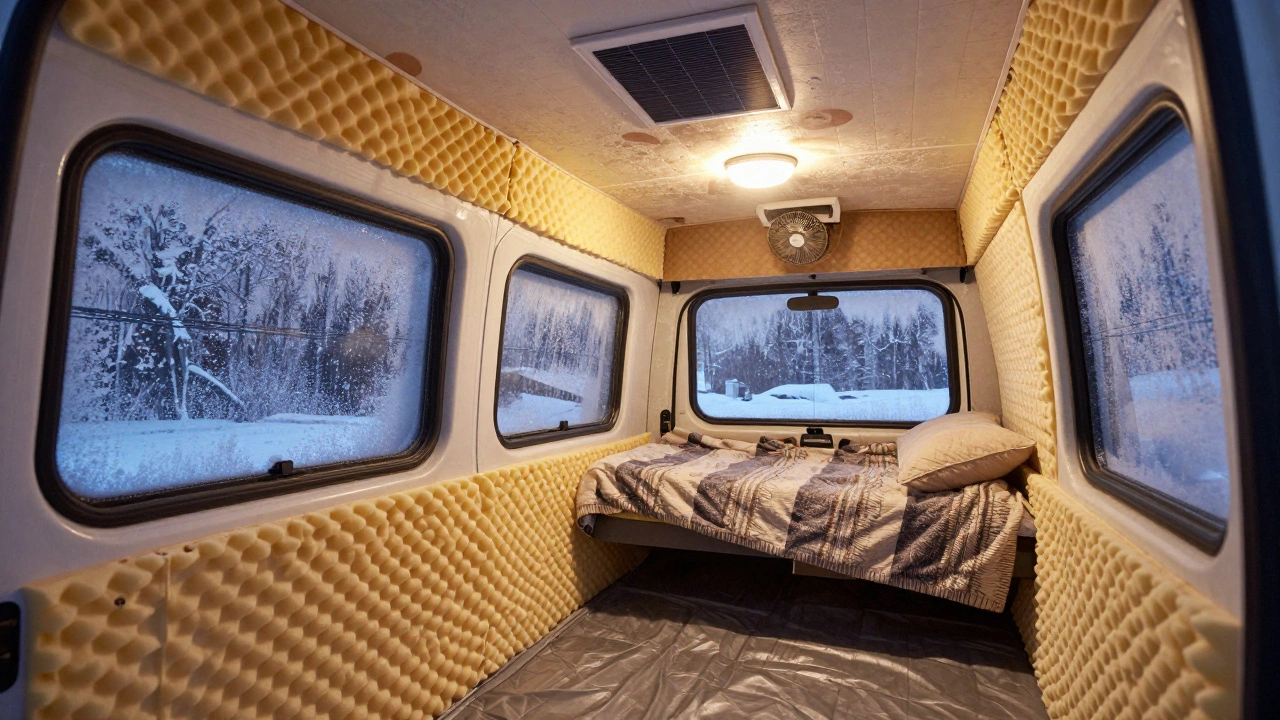
Van Insulation: Stay Warm in Winter and Cool in Summer Without Breaking the Bank
- 9 Comments
- Dec, 4 2025
Learn how to insulate your van for year-round comfort using the best materials in 2025. Save money, avoid condensation, and stay warm in winter and cool in summer with proven DIY methods.