Camper Van Insulation: Best Ways to Stay Warm, Quiet, and Comfortable on the Road
When you’re living on the road, camper van insulation, a system of materials used to control temperature and reduce noise inside a converted vehicle. It’s not just about staying warm in winter—it’s about making your van a livable space year-round. Without it, your van turns into an oven in summer and a freezer in winter. Condensation builds up, metal walls sweat, and every bump on the road sounds like a drum solo. Good insulation fixes all that.
Thermal insulation for vans, the layering of materials that slow heat transfer to keep interior temps stable is the foundation. Most van lifers use closed-cell foam, sheep’s wool, or polyisocyanurate boards because they don’t absorb moisture and hold up over time. You don’t need fancy gear—just the right thickness in the right places. Walls, floor, ceiling, and even the wheel wells need coverage. Skip the cheap fiberglass—it traps moisture and turns into mold in a few months.
Soundproofing a van, the process of reducing road noise, wind, and engine vibrations inside the cabin often gets ignored, but it’s just as important. Think about it: if you’re trying to sleep while driving through a highway or parked near a busy street, constant noise kills your peace. Mass-loaded vinyl, acoustic foam, and damping mats like Hushmat make a huge difference. You don’t need to cover every inch—just the areas where sound travels easiest: doors, floor, and around the wheel arches.
People think insulation is about adding bulk, but it’s really about smart placement. A 1-inch layer of rigid foam under your floorboards does more than three inches of fluffy batting. It stops cold from rising through the metal frame. It also keeps your bedding dry. And if you’re using propane or electric heaters, insulation cuts fuel use by half. That means fewer tank refills and lower bills.
One mistake most beginners make? Insulating before sealing gaps. Air leaks ruin insulation. Door frames, window edges, and vent openings need weatherstripping first. Then you install the insulation. Then you seal again. Do it in that order, or you’re throwing money away. Also, don’t forget ventilation. Insulation traps heat—but it also traps moisture. A roof vent or small fan keeps air moving so mold doesn’t grow behind your panels.
What works for one person won’t work for another. If you’re in Alaska, you’ll need thicker insulation than someone in California. If you drive mostly at night, soundproofing matters more than thermal performance. Your budget, climate, and driving habits decide what you need. There’s no single "best" material—just the best for your situation.
What you’ll find below are real-world guides from people who’ve done this themselves. No theory. No marketing fluff. Just what materials actually held up after 10,000 miles, how they handled rain and snow, and what they’d do differently next time. Whether you’re building your first van or upgrading an old one, these posts give you the facts you need to skip the trial-and-error and get it right the first time.
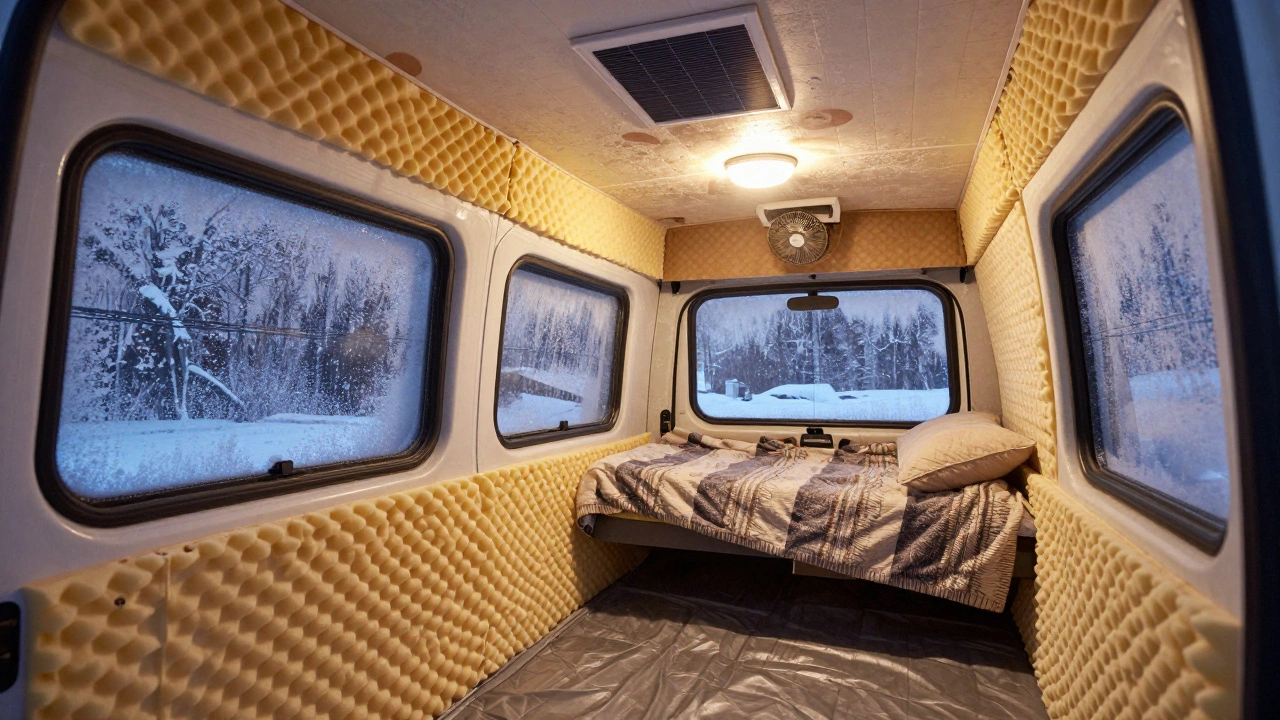
Van Insulation: Stay Warm in Winter and Cool in Summer Without Breaking the Bank
- 9 Comments
- Dec, 4 2025
Learn how to insulate your van for year-round comfort using the best materials in 2025. Save money, avoid condensation, and stay warm in winter and cool in summer with proven DIY methods.