Thermal Insulation for Vans: Keep It Cool in Summer, Warm in Winter
When you’re living on the road, thermal insulation for vans, a system that reduces heat transfer between the inside and outside of your vehicle. Also known as van insulation, it’s not just about comfort—it’s about survival in extreme weather. Without it, your van turns into an oven in July and a freezer in January. You don’t need fancy gear to fix that. You need the right materials, installed the right way.
Most van lifers start with basic foam boards or reflective foil, but those often fall short. Real thermal insulation for vans works by trapping air—no metal, no gaps, no condensation traps. Materials like polyisocyanurate, a rigid foam board with high R-value per inch, commonly used in professional construction and sheep’s wool, a natural, moisture-resistant insulator that also absorbs sound are the quiet winners. They don’t just block heat—they manage humidity, too. And that’s critical. Moisture buildup leads to mold, rust, and that permanent musty smell you can’t scrub out.
It’s not just about the material. Where you install it matters more. Skip the floor? Your van will steal heat through the metal frame. Leave gaps around windows? That’s where all the cold air sneaks in. Proper insulation wraps the walls, ceiling, and floor as one continuous layer. It’s like sealing a thermos—every seam breaks the system. And while you’re at it, don’t forget soundproofing, the practice of reducing road noise and vibrations using dense, layered materials. Many insulation products do double duty. You’re not just staying warm—you’re staying sane on long drives.
People think insulation is expensive. It doesn’t have to be. You can build a solid system for under $300 using off-cuts from local suppliers. Skip the pre-made kits that promise miracles. They’re overpriced and often use materials that shrink, sag, or trap moisture. Look for real R-values, not marketing buzzwords. A good insulation layer should give you at least R-10 for walls and R-15 for the floor. That’s the sweet spot for four-season use.
And if you’re running propane, solar, or a diesel heater? Insulation cuts your fuel use by half. Less time running the engine, less battery drain, fewer trips to refill. That’s not a luxury—it’s how you stretch your budget on the road.
Below, you’ll find real-world guides from van lifers who’ve been there. They’ve tested every product, made every mistake, and figured out what actually lasts. Whether you’re building from scratch or upgrading an old rig, you’ll find the exact steps, materials, and tips that work—no fluff, no theory, just what you need to keep your van livable no matter the weather outside.
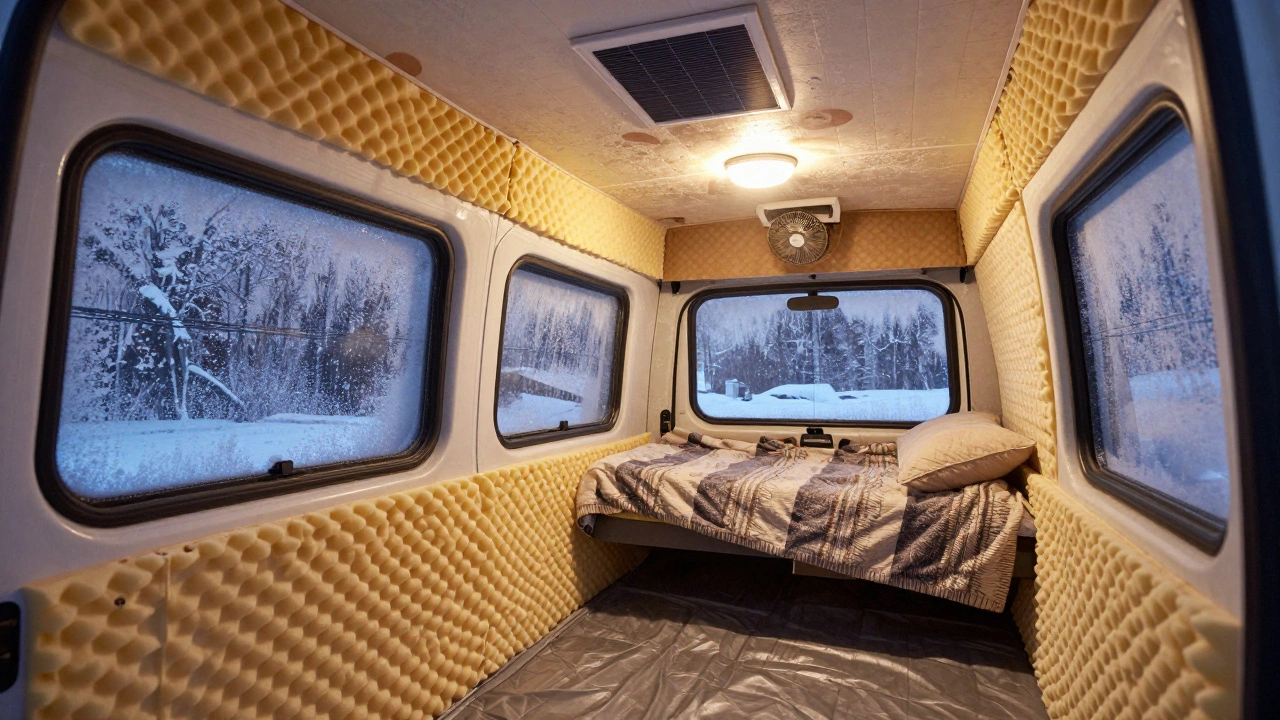
Van Insulation: Stay Warm in Winter and Cool in Summer Without Breaking the Bank
- 9 Comments
- Dec, 4 2025
Learn how to insulate your van for year-round comfort using the best materials in 2025. Save money, avoid condensation, and stay warm in winter and cool in summer with proven DIY methods.