Van Insulation: Best Ways to Stay Comfortable on the Road
When you live in a van, van insulation, the process of adding materials to control temperature and noise inside a vehicle. Also known as thermal insulation for vans, it turns a cold, noisy metal box into a livable space. Without it, your van becomes a sauna in summer and an icebox in winter. You’ll wake up with condensation on your windows, your teeth chattering, or your ears ringing from road noise. Good insulation fixes all that—and it’s not as complicated as you think.
Most van lifers use a mix of thermal insulation, materials that reduce heat transfer through walls, floors, and ceilings and soundproofing van, layers that absorb or block noise from tires, wind, and engines. Common choices include foam boards like XPS or polyiso, reflective radiant barriers, and spray foam. Some swear by sheep’s wool—it’s natural, moisture-resistant, and works well in humid climates. Others skip the fancy stuff and use recycled denim or even cardboard with foil backing. The key isn’t the brand, it’s covering every gap. Windows and doors are the biggest heat leakers, so don’t forget thermal curtains or insulated window covers.
It’s not just about staying warm or quiet. Poor insulation leads to mold, rust, and bad air quality. Moisture builds up when warm air hits cold metal, and that’s a recipe for rot. Good insulation creates a barrier that keeps humidity out and lets air circulate. Pair it with proper ventilation—like a roof vent or powered fan—and you’re not just comfortable, you’re healthy. Many van builders also tie insulation into their electrical setup. Insulated walls make it easier to hide wiring without creating hot spots. And if you use propane or electric heaters, insulation cuts your fuel use by half.
You don’t need to be a contractor to do this. Most people install it themselves over a weekend. Start with the floor—your biggest heat sink. Then walls, then ceiling. Leave room for wiring and plumbing. Measure twice, cut once. And don’t rush the sealing. Every little gap matters. If you’ve ever slept in a van that felt like a tin can on wheels, you know why this step isn’t optional.
Below, you’ll find real-world guides from people who’ve been there. They’ve tested everything from budget foam sheets to high-end spray systems. You’ll see what works in the Rockies, the desert, and the Pacific Northwest. No fluff. No hype. Just what actually keeps people warm, quiet, and safe on the road.
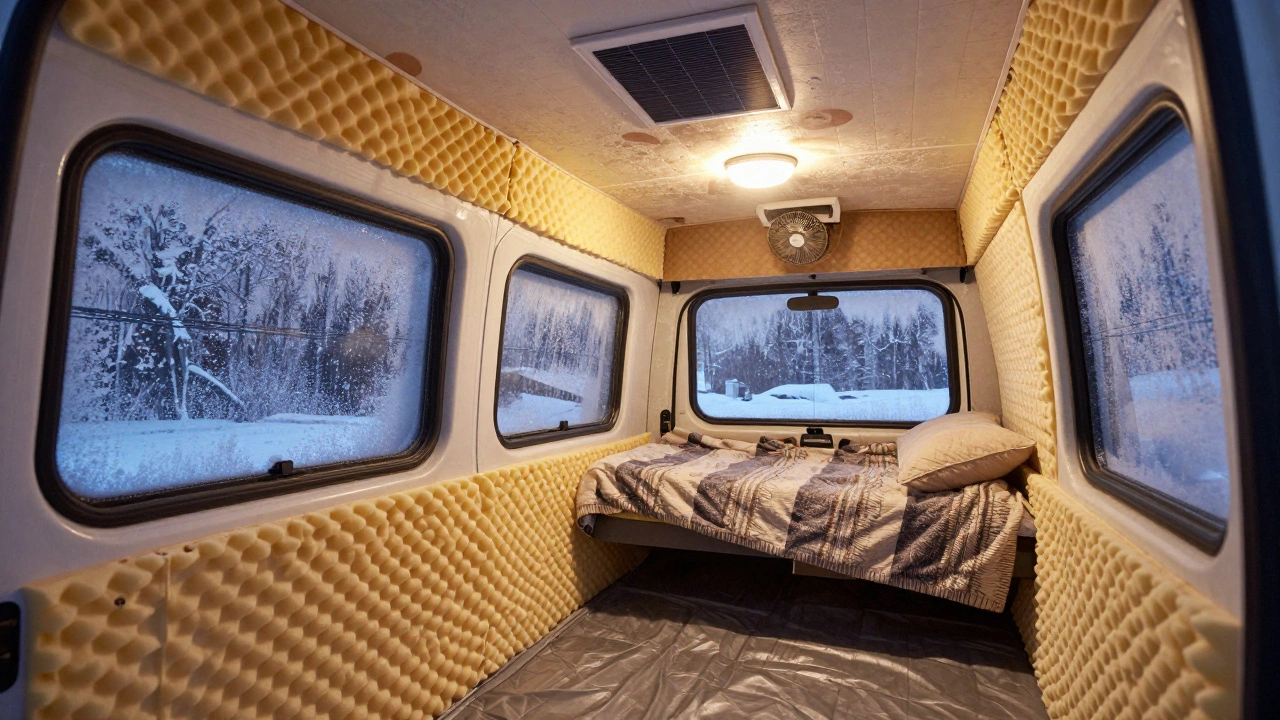
Van Insulation: Stay Warm in Winter and Cool in Summer Without Breaking the Bank
- 9 Comments
- Dec, 4 2025
Learn how to insulate your van for year-round comfort using the best materials in 2025. Save money, avoid condensation, and stay warm in winter and cool in summer with proven DIY methods.