Van Life Waste System: What You Need to Know About Holding Tanks, Dumping, and Odor Control
When you live on the road in a van, your van life waste system, the collection of tanks and pipes that handle human waste and sink water in a converted vehicle isn’t just a convenience—it’s a daily necessity. Without a working setup, you’re stuck with buckets, bad smells, and risky hygiene. Most van conversions use two separate tanks: one for black water tank, the holding container for toilet waste and another for gray water tank, the reservoir for sink, shower, and sink runoff. These aren’t fancy RV systems—they’re simple, sealed containers you empty manually, and getting them wrong can ruin your trip.
A good waste system keeps odors locked in, prevents leaks, and makes dumping quick and sanitary. That means choosing the right tank size for your usage, installing proper vents to let gas escape without stinking up your van, and using the right chemicals to break down solids without killing your septic system. Many people skip the vent hose or use cheap toilet chemicals that just mask smells instead of breaking down waste. That’s how you end up with a tank that smells like a swamp even after you’ve dumped it. The real fix? A vent that runs to the roof, enzyme-based cleaners, and dumping at designated sites only—never on the ground or into storm drains.
Where you dump matters just as much as how you store. Most rest areas, campgrounds, and RV parks have dump stations, but not all are easy to find. Apps and maps help, but you still need the right gear: a sewer hose that connects securely, gloves, and a rinse tool. Some vanlifers carry a portable tank they can carry to a station, others install a fixed outlet under their van. Either way, you need a plan for every 2–4 days, depending on how many people are using the toilet and shower. And if you’re traveling in cold weather? Freeze-up is a real risk—insulate your lines or drain the system entirely.
There’s no one-size-fits-all setup. A solo traveler might get by with a 10-gallon black tank and a 15-gallon gray tank. A couple with a shower might need double that. The key is matching your system to your habits. Don’t just copy what someone else did on YouTube. Track your usage for a week, then size up. And never ignore the smell. If your van starts smelling like a public restroom, your vent is clogged, your tank is full, or your chemicals aren’t working. Fix it before it becomes a health issue.
What follows are real-world guides from people who’ve been there—how to clean a stinky tank without bleach, how to install a waste line without drilling holes in your floor, what to do when your sensor says full but you’re not sure, and how to avoid fines at campgrounds. You’ll find tips on choosing the right toilet, managing water use to reduce gray water, and even how to deal with waste when you’re boondocking far from a dump station. This isn’t theory. It’s what works when you’re 200 miles from the nearest town with no cell service and a full tank.
Grey Water and Black Water Solutions for Vans: Practical Systems for Van Life
- 8 Comments
- Nov, 27 2025
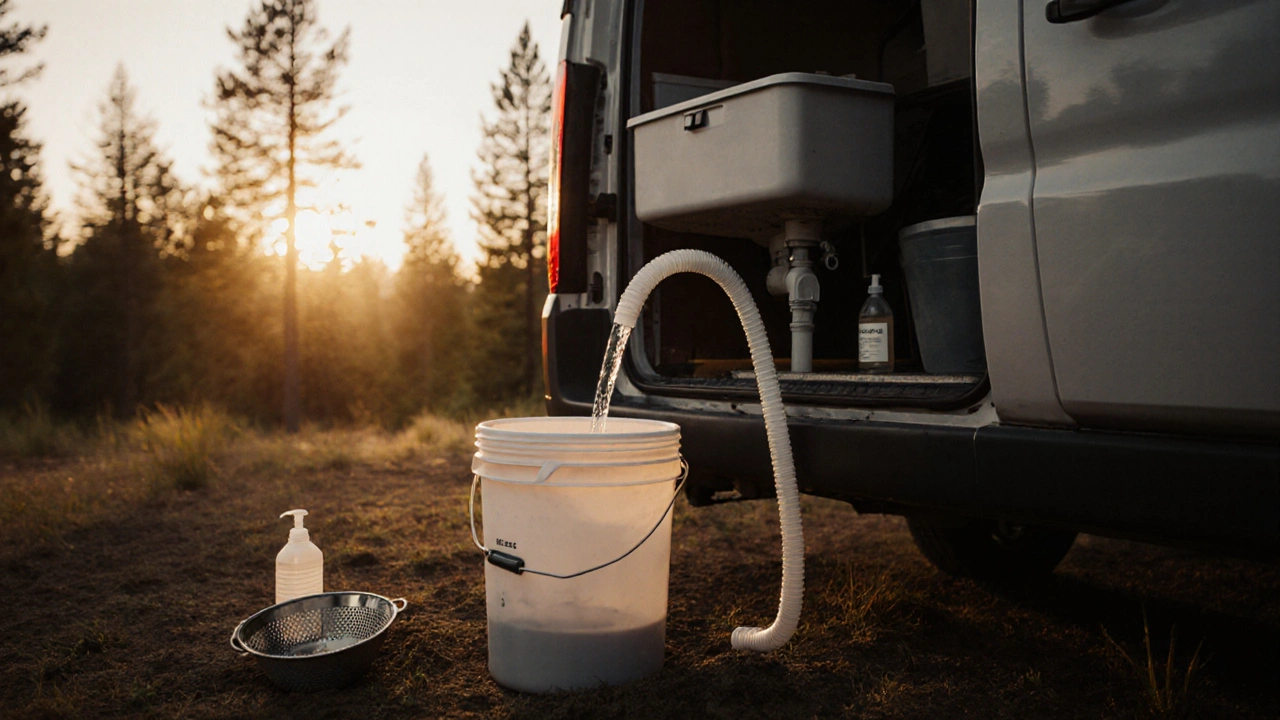
Learn practical, legal, and odor-free ways to handle grey and black water in your van. Skip bulky tanks and learn what van lifers actually use to live off-grid without sewage headaches.