When you sit behind the wheel today, your car isn’t just a machine-it’s a rolling data center. Thanks to 5G connectivity, modern vehicles now communicate faster than ever with each other, with the road, and with the cloud. This isn’t science fiction. It’s happening right now on highways from Fort Collins to Los Angeles. And it’s changing everything about how cars drive, safety works, and even how we think about traffic.
What 5G Actually Does in a Car
Most people think of 5G as faster phone downloads. But in vehicles, it’s about latency-how fast data travels. 5G cuts delay from 100 milliseconds to under 10. That’s the difference between a car reacting too late to a sudden stop… and braking in time to avoid a crash.
Traditional 4G networks struggled with real-time vehicle communication. Video from a dashcam? Too slow. A warning from a nearby truck? Too delayed. 5G fixes that. It lets your car send and receive hundreds of data points per second: speed, direction, brake status, even tire pressure. All in real time.
How 5G Powers ADAS Technology
Advanced Driver Assistance Systems (ADAS) like automatic emergency braking, lane-keeping, and adaptive cruise control have been around for years. But they mostly rely on cameras, radar, and ultrasonic sensors-things that only see what’s right in front of you.
With 5G, ADAS goes from seeing with your eyes… to seeing with the whole road. Imagine this: your car detects a child running behind a parked van. It brakes. But with 5G, the car two blocks ahead that saw the child first sends an instant alert. Your car brakes before you even see the danger.
This is called sensor fusion across networks. It’s not just your car’s sensors anymore. It’s every car, every traffic light, every road sign that’s connected. A study by the University of Michigan found that 5G-enabled ADAS reduces rear-end collisions by up to 42% in urban zones.
Vehicle-to-Everything (V2X) Communication
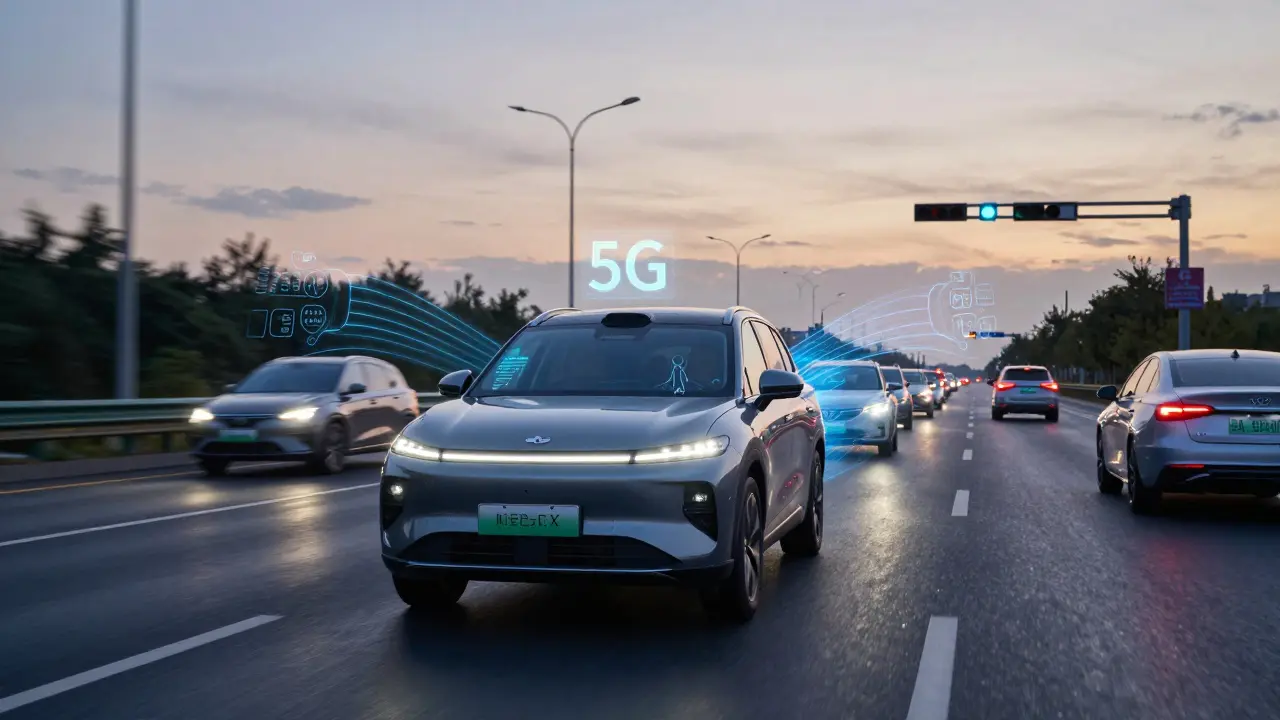
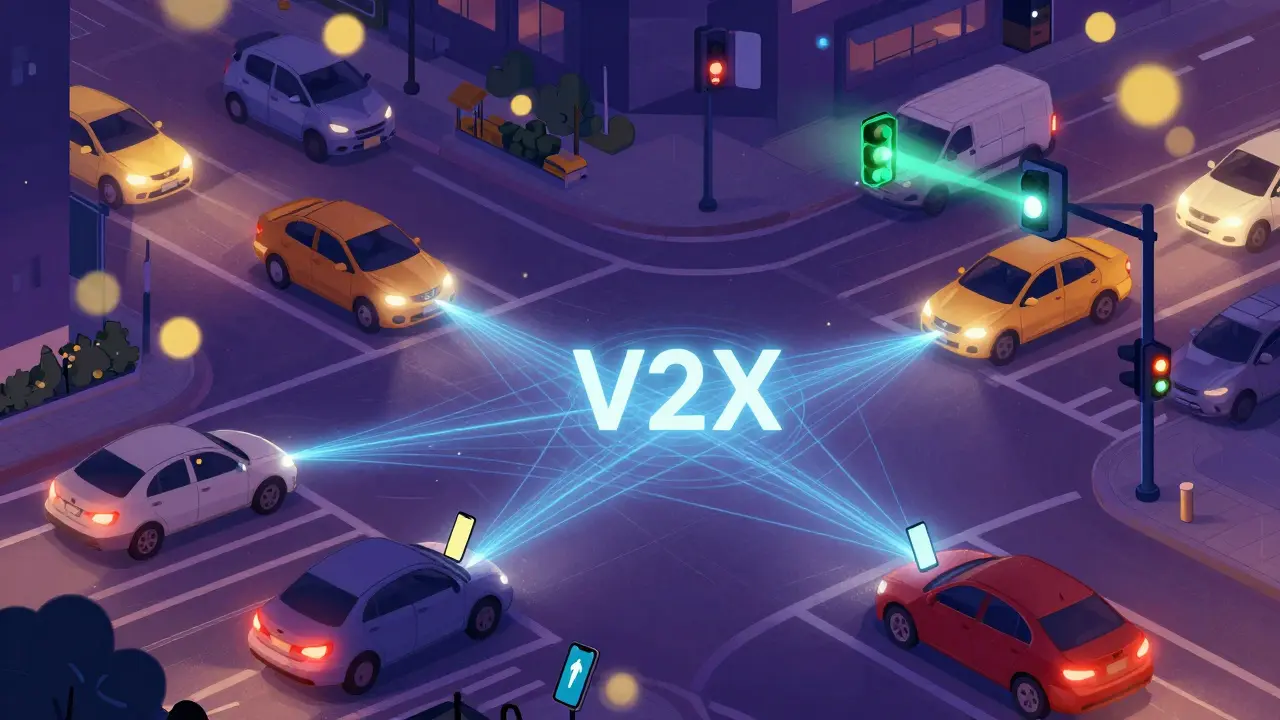
5G makes Vehicle-to-Everything (V2X) possible. That’s the umbrella term for how cars talk to:
- V2V (Vehicle-to-Vehicle): Sharing braking, swerving, or hazard data with nearby cars.
- V2I (Vehicle-to-Infrastructure): Getting real-time traffic light timing, road work alerts, or ice detection from smart poles.
- V2P (Vehicle-to-Pedestrian): Alerting drivers when someone with a smartphone is crossing the street-especially useful in fog or at night.
- V2N (Vehicle-to-Network): Streaming high-definition maps, updating software, or calling for roadside assistance without delay.
In 2025, Ford and GM rolled out 5G-enabled V2X in over 1.2 million new vehicles in the U.S. alone. The system doesn’t need line-of-sight. It works through buildings, around curves, even in heavy rain. That’s something radar and cameras can’t do.
Real-World Impact: Fewer Crashes, Smoother Traffic
Picture this: you’re on I-25 near Denver. Ten cars ahead of you hit a patch of black ice. Without 5G, you’d only know when you skid. With 5G, your car receives a warning 0.8 seconds before you reach the icy spot. That’s enough time to slow down smoothly.
According to the National Highway Traffic Safety Administration (NHTSA), if 75% of U.S. vehicles had 5G-based V2X by 2030, it could prevent over 500,000 crashes and 2,100 deaths annually. That’s not a guess. It’s modeled from real accident data.
Traffic flow improves, too. Traffic lights can adjust timing based on real-time vehicle density. Instead of sitting through a red light with no cars coming, you get a green. One pilot in Columbus, Ohio cut average commute time by 18% using 5G-connected traffic signals.
What About Privacy and Security?
Some worry: if every car is connected, who’s watching? Can hackers take control?
Yes, risks exist. But 5G automotive networks use end-to-end encryption, hardware-based security chips, and real-time anomaly detection. The U.S. Department of Transportation requires all 5G-connected vehicles to pass the NIST Cybersecurity Framework by 2025. That means:
- Data is anonymized-your name, license plate, and home address aren’t shared.
- Each vehicle has a digital identity that’s renewed every 15 minutes.
- Emergency alerts (like crash warnings) get priority over streaming music or navigation.
It’s not perfect. But it’s far more secure than the old Bluetooth or Wi-Fi systems that once connected cars.
The Bigger Picture: Cars as Part of a Smart Ecosystem
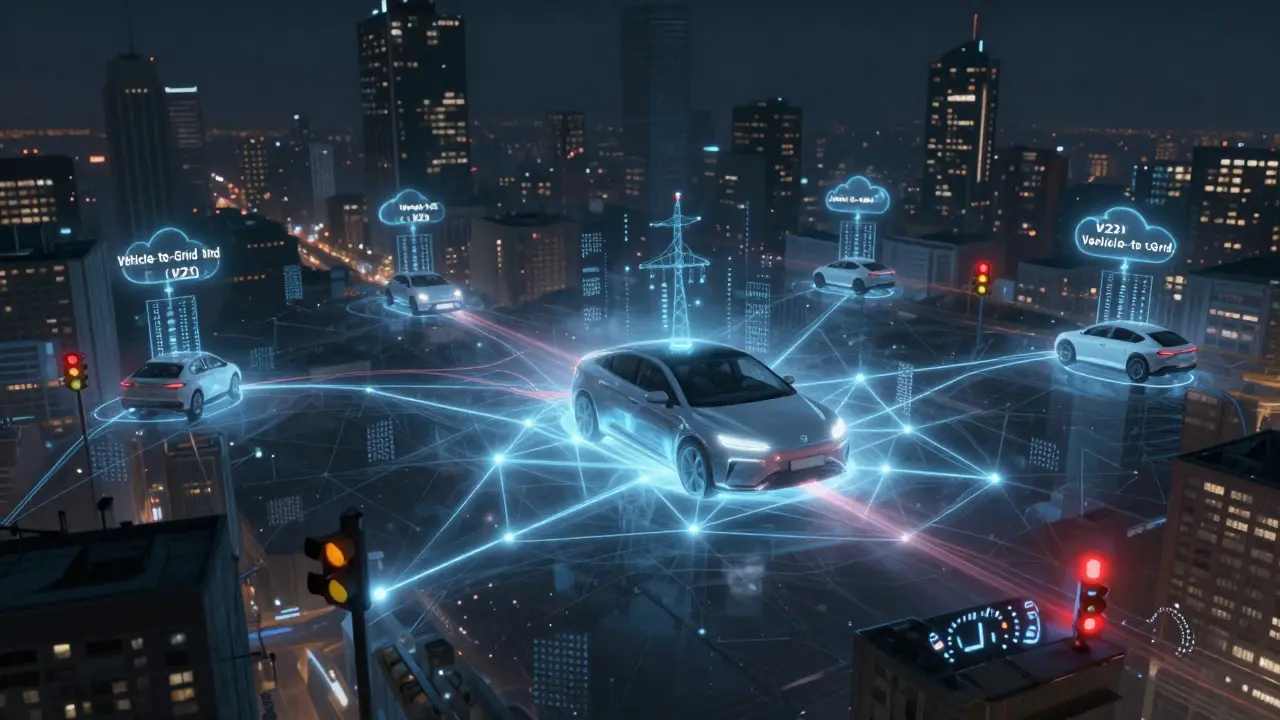
5G doesn’t just make cars smarter-it makes cities smarter. Connected vehicles feed data to municipal systems: air quality sensors, emergency response routing, even parking availability. In Fort Collins, city planners now use vehicle traffic patterns to adjust public transit schedules in real time.
Electric vehicles (EVs) benefit too. With 5G, your car can find the nearest charger, check its availability, reserve it, and even pay for it-all before you arrive. No more circling blocks looking for an open plug.
This is the future: cars aren’t just transportation. They’re nodes in a living network. And 5G is the nervous system.
What’s Next? The Road Ahead
By 2027, every new car sold in the U.S. will come with 5G as standard-not as a luxury option. Tesla, Rivian, and even Hyundai are already rolling out over-the-air updates that rely on 5G’s speed. Your car will learn your habits, predict maintenance needs, and even suggest detours based on weather patterns you’ve never seen.
Autonomous driving? It won’t happen without 5G. Self-driving cars need constant, flawless communication. One missed signal, and the system fails. 5G makes that risk negligible.
The next leap? Vehicle-to-grid (V2G) power. Your parked EV could send electricity back to the grid during peak demand. Utilities are already testing this in Texas and California. 5G makes the billing, scheduling, and safety controls possible.
| Function | Without 5G | With 5G |
|---|---|---|
| Emergency Braking | Relies on onboard sensors only | Warned by cars 500+ feet ahead |
| Navigation Updates | Static maps, updated weekly | Real-time road conditions, construction, accidents |
| Remote Diagnostics | Manual check-ups or slow uploads | Automated alerts sent to mechanic before failure |
| Over-the-Air Updates | Hours to download, often interrupted | Completed in under 2 minutes, even for full system patches |
| Autonomous Driving | High risk of sensor blind spots | Continuous sensor fusion with infrastructure and other vehicles |
Final Thoughts
5G in cars isn’t about speed. It’s about awareness. It turns isolated machines into a coordinated system that sees farther, reacts faster, and saves lives. If you’ve ever been in a near-miss that felt like luck-you’re now part of a system that makes luck obsolete.
The next time you start your car, remember: you’re not just turning a key. You’re activating a lifeline.
Do all new cars have 5G connectivity?
As of 2025, most major U.S. automakers-including Ford, GM, Tesla, and Hyundai-have made 5G standard in new models. However, budget models and older vehicles still use 4G or Wi-Fi. If you’re buying a new car in 2026, ask if it has a 5G modem built into the infotainment system. It’s usually listed under "connected services" or "V2X capability."
Can I upgrade my old car to 5G?
Not easily. 5G requires a dedicated modem, antenna, and integration with the car’s CAN bus system. Aftermarket 5G dongles exist, but they only work for internet streaming-not safety features like V2X. True 5G safety functions require factory installation. If your car is older than 2020, upgrading for safety benefits isn’t practical.
Does 5G in cars use my phone’s data plan?
No. Modern 5G vehicles have their own SIM card and separate data plan, usually included in your vehicle’s subscription. You don’t need to use your phone. In fact, using your phone’s hotspot can interfere with safety signals. The car’s system prioritizes emergency data over streaming music or navigation.
Is 5G in cars safe from hacking?
Yes, more than ever. All 5G-connected vehicles in the U.S. must meet NIST cybersecurity standards. Data is encrypted end-to-end, digital identities rotate every 15 minutes, and emergency alerts bypass regular network traffic. Hackers have targeted older systems, but 5G networks are designed with security built into the hardware-not just software. There’s still no such thing as 100% security, but 5G makes it exponentially harder to compromise a vehicle.
Will 5G make my car autonomous?
Not by itself. 5G doesn’t drive the car. But it enables autonomy by giving the car real-time awareness beyond its own sensors. Think of it like giving a self-driving car eyes everywhere-not just in front, but around corners, over hills, and from other vehicles. Without 5G, full autonomy is risky. With it, Level 4 and Level 5 systems become far more reliable and scalable.