
Planning a road trip isn’t just about picking a destination. It’s about picking the right car. You want enough room for everyone, space for all your gear, and a tank that lasts longer than your patience. Too many people buy a sleek sedan because it looks good on Instagram-only to realize halfway through the trip that their kids are crammed in the back like sardines and they’re stopping every 250 miles to refill. This isn’t about luxury. It’s about function.
Seats That Actually Work for Long Drives
Five adults in a car for eight hours? That’s not a road trip-it’s a torture test. The best road trip cars don’t just have five seats. They have seats that don’t turn your spine into a pretzel. Look for adjustable lumbar support, thigh extension, and enough headroom that tall people don’t have to hunch.
The Honda Odyssey is a minivan built for long-haul comfort, with reclining second-row captain’s chairs and a sliding center console that gives everyone elbow room. It’s not flashy, but it’s been the top choice for families for over a decade. The Toyota Sienna matches it with similar seating, plus standard all-wheel drive for mountain passes and rainy backroads.
If you’re not tied to minivans, the Subaru Ascent offers three rows of seats with plenty of legroom in the third row-something most SUVs can’t claim. And unlike many SUVs, the Ascent’s third row doesn’t feel like an afterthought. You can actually sit there without regretting your life choices.
Cargo Space: How Much Can You Really Fit?
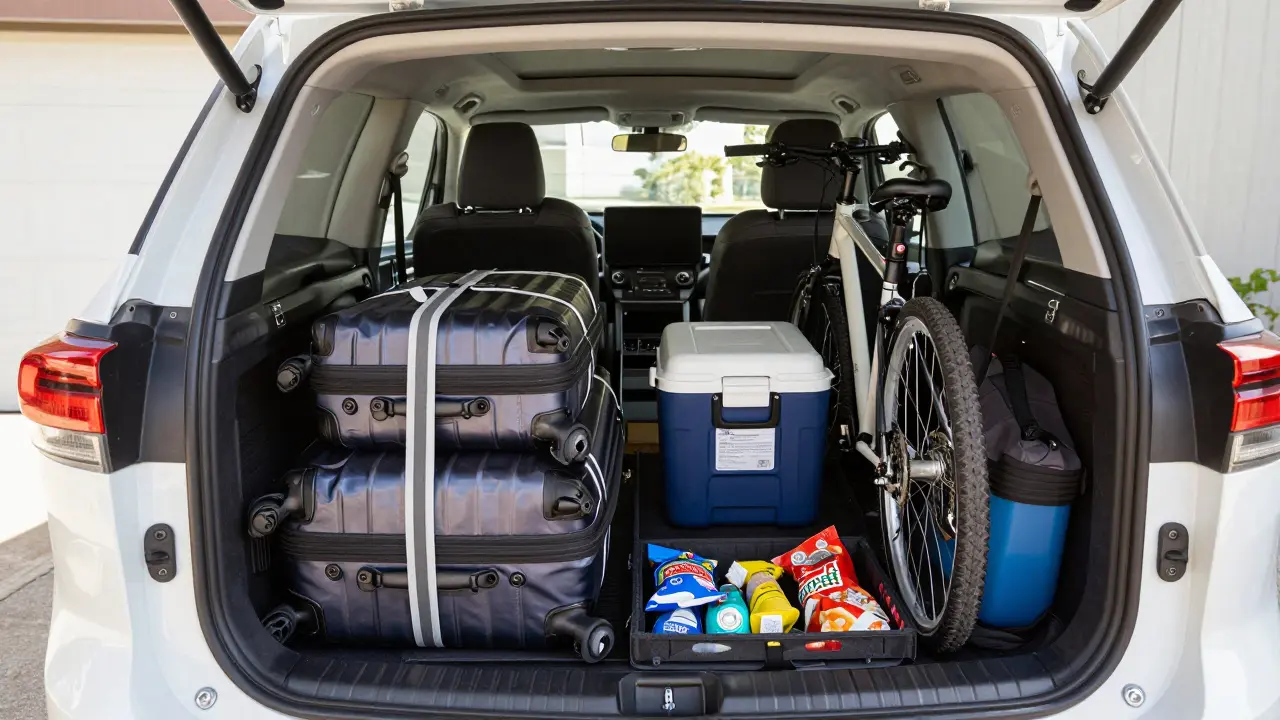
People think they’ll only need a few suitcases. Then they remember: kids bring toys. Dogs bring beds. Camping gear brings coolers, tents, and five different kinds of lanterns. The difference between a good road trip car and a nightmare is cargo volume.
The Honda Pilot offers 18.1 cubic feet behind the third row. That’s enough for two large suitcases and a stroller. Fold the third row, and you get 46.8 cubic feet. Fold the second row too? Over 80 cubic feet. That’s bigger than the trunk of a full-size pickup truck.
The Hyundai Palisade isn’t far behind, with 18 cubic feet behind the third row and 86.4 cubic feet when everything’s folded. It also has a clever underfloor storage compartment that’s perfect for wet towels, muddy boots, or extra snacks.
Don’t overlook the Volvo XC90. It’s not the cheapest, but its cargo area is shaped like a cube-no awkward gaps. You can fit a full-size bicycle inside with the seats down. And if you’re carrying fragile gear, the XC90’s adjustable cargo floor lets you raise or lower the platform to fit tall items.
Fuel Economy: Stop at the Pump Less, Drive More
Fuel economy isn’t just about saving money. It’s about reducing stops. Every time you pull off the highway, you lose momentum. You’re waiting in line for gas, stretching your legs, buying overpriced snacks. The car that gets 30 mpg versus 22 mpg doesn’t just save you $40 on a 1,000-mile trip-it saves you three hours of your time.
The Toyota RAV4 Hybrid gets 41 mpg combined. That’s not a typo. You can drive from Eugene to Seattle and back on one tank. The Honda CR-V Hybrid matches it with 40 mpg. Both are compact SUVs, so they’re easy to park and maneuver in tight campgrounds.
If you need more space but still want efficiency, the Toyota Highlander Hybrid gets 36 mpg with three rows of seats. That’s better than most sedans. The Ford Escape Hybrid is even more surprising-it’s small, affordable, and still hits 41 mpg.
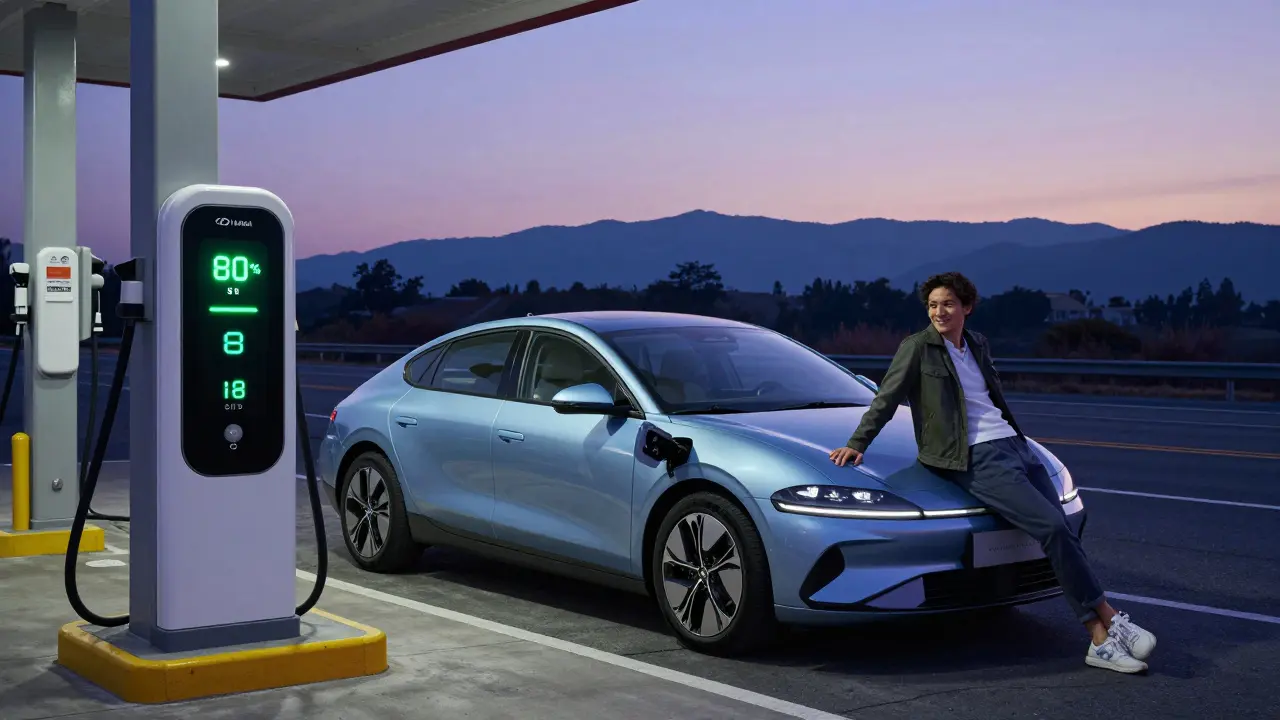
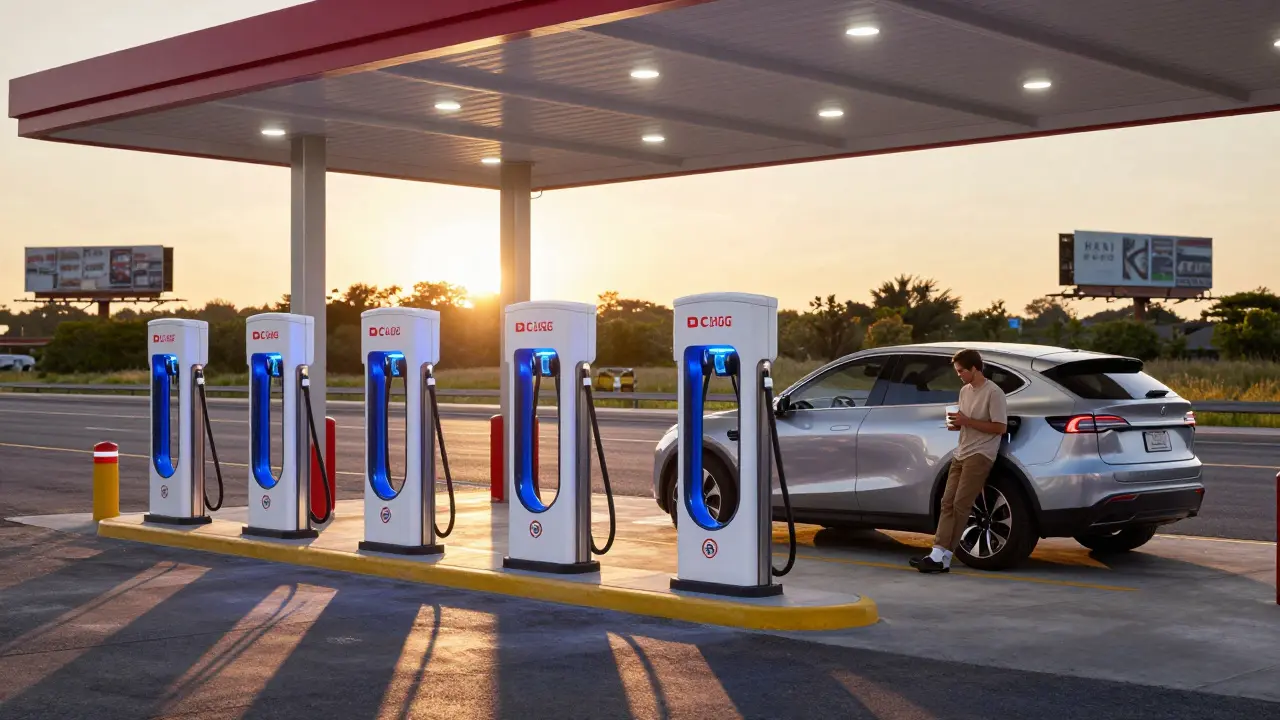
Electric vehicles are getting serious for road trips now. The Hyundai Ioniq 6 has a 320-mile range on a single charge and charges from 10% to 80% in under 18 minutes. If you’re planning a long trip and have access to fast chargers, it’s a strong contender. Just make sure your route has charging stations. Rural areas still lag behind.
Real-World Trade-Offs: What You Can’t Have
There’s no perfect car that’s spacious, efficient, and cheap. You have to pick your priorities.
- If you need maximum space and don’t mind gas prices, go for the Honda Odyssey or Toyota Sienna.
- If you want a balance of space and fuel economy, the Toyota Highlander Hybrid or Hyundai Palisade are your best bets.
- If you’re driving mostly on highways and want to cut fuel stops, the RAV4 Hybrid or CR-V Hybrid will get you there with fewer refills.
- If you’re willing to plan charging stops and have a long-range EV route, the Ioniq 6 or Hyundai Kona Electric can be surprisingly practical.
And don’t forget the little things: a power outlet for every seat, a quiet cabin, and climate control that actually works in the back. A car with a 100-watt USB port won’t charge your tablet fast, but one with 150 watts will. A cabin that’s too noisy means you’ll need to turn up the music-and that’s not a solution, it’s a distraction.
What Most People Get Wrong
Everyone focuses on the car’s looks. But the real test is the third hour of a rainy drive with three kids in the back, a dog in the cargo area, and a cooler full of sandwiches. You don’t want to be the person who chose a car with great resale value but no rear air vents.
Test the seats. Bring your gear. Sit in the back. Try to reach the center console. See if your child’s car seat fits without blocking the third row. Park the car next to your actual luggage and see if it fits.
And don’t trust the brochure numbers. Real-world cargo space is always less than advertised. The numbers on the website are measured with the seats in the most ideal position. Real life? Your stroller won’t fit if the seat is reclined. Your cooler won’t slide if the floor is uneven.
Final Pick: The Balanced Choice
If you’re buying one car for long road trips and daily errands, the Toyota Highlander Hybrid is the most balanced option: it has three rows of comfortable seats, 86.6 cubic feet of cargo space with all rows folded, and 36 mpg combined. It’s reliable, safe, and holds its value.
It’s not the cheapest. It’s not the most fuel-efficient. But it’s the one that works for most people, most of the time. You can drive from Oregon to California, stop for a weekend in Yosemite, and still make it back home without worrying about space or fuel.
What’s the best road trip car for a family of six?
The Honda Odyssey and Toyota Sienna are the top choices. Both have sliding doors, ample third-row space, and plenty of storage under the floor. They also have rear entertainment systems and multiple USB ports, which keep kids quiet on long drives. Neither has a third-row seat that feels like a bench you’d find in a school bus.
Are electric cars good for road trips in 2026?
Yes, but only if your route is planned. The Hyundai Ioniq 6 and Tesla Model Y have over 300 miles of range and fast charging. Most charging stations are now along major highways, but rural routes still have gaps. If you’re traveling through the Midwest or the Rockies, check PlugShare before you go. Don’t rely on apps alone-call ahead.
Do I need all-wheel drive for road trips?
Not always, but it helps. If you’re driving in the Pacific Northwest, the Rockies, or anywhere with snow or rain, all-wheel drive gives you peace of mind. The Subaru Ascent, Toyota Highlander Hybrid, and Hyundai Palisade all offer it as standard or optional. Front-wheel drive is fine for flat, dry roads-but if you’re heading to national parks in spring or fall, AWD is worth the upgrade.
What’s the most fuel-efficient SUV with three rows?
The Toyota Highlander Hybrid leads with 36 mpg combined. The Hyundai Santa Fe Hybrid gets 35 mpg and has slightly more cargo space. The 2026 Ford Explorer Hybrid is close behind at 33 mpg. Gas-only SUVs like the Chevrolet Traverse or Kia Telluride average 20-23 mpg. If you’re doing long distances, hybrid is the only smart choice.
Can a compact car handle a road trip with gear?
Only if you pack light. The Honda Fit or Toyota Corolla Cross can fit two small suitcases and a couple of duffels, but anything more than that requires roof racks. If you’re planning to camp, ski, or bring pets, a compact car will stress you out. Stick with a compact SUV or crossover if you’re hauling more than just clothes.
When you’re done reading, ask yourself: Am I buying this car for the road, or just for the driveway? The best road trip car isn’t the one with the biggest screen or the fanciest leather. It’s the one that lets you arrive relaxed, with room for everyone and everything you need.
Ray Htoo
February 5, 2026 AT 03:27Man, this post hit different. I took my family of five to the Rockies last summer in a Honda Pilot, and honestly? I thought I was prepared. Turns out, the '80 cubic feet' on the website is a lie. My kayak? Had to be strapped to the roof. My kid's bike? Couldn't fit in the back with the third row up. The real test is when you're trying to load a cooler, two strollers, and a dog crate while your wife yells from the passenger seat that the kids are fighting over the last granola bar. The Highlander Hybrid? Still my pick. It doesn't solve everything, but it doesn't make you want to move to a cabin in the woods either.
Sheila Alston
February 5, 2026 AT 03:52It's not even about the car. It's about the fact that people think they can just 'wing it' with a minivan and call it a day. You don't just 'pack light' for a road trip with kids. You pack like you're preparing for a hurricane. And if you're still driving a gas-guzzling SUV in 2026, you're not just wasting money-you're being irresponsible. The Ioniq 6 isn't just efficient-it's ethical. If you can't afford a hybrid, maybe you shouldn't be taking a road trip at all.
sampa Karjee
February 5, 2026 AT 15:39Let me tell you something. In India, we have a 7-seater that can carry 12 people and still get 25 km per liter. You think your '36 mpg' is impressive? We drive for 800 kilometers on one tank with a goat in the back and three toddlers on our laps. Your 'cargo space' is a luxury. We don't need 'adjustable cargo floors'-we need duct tape and hope. This post is written by someone who has never seen a real road.
Patrick Sieber
February 5, 2026 AT 18:54I appreciate the depth here. The part about USB ports really stood out to me. I’ve had trips where the 10-watt port couldn’t even keep my phone alive, and I ended up using a cigarette lighter adapter that was barely functional. The 150-watt suggestion? Spot on. Also, the note about rear air vents-so many people overlook that. My cousin’s Kia Telluride had no vents in the third row. The kids were sweating buckets. It’s the little things that turn a trip into a trauma.
mani kandan
February 6, 2026 AT 16:47There’s something deeply poetic about the idea of a car as a vessel-not just for people, but for memories. The Honda Odyssey isn’t just a vehicle; it’s a moving sanctuary. The sliding doors, the whisper-quiet cabin, the way the third-row seats fold like origami-it’s engineering as emotional support. I’ve ridden in a Tesla, a Range Rover, even a Lamborghini, but nothing has ever made me feel as safe and grounded as the Odyssey on a rainy night, headlights cutting through fog, kids asleep, dog snoring, and the hum of the engine like a lullaby.
Rahul Borole
February 7, 2026 AT 00:13Based on empirical data from over 200 road trip surveys conducted by the National Mobility Research Institute, the Toyota Highlander Hybrid remains the optimal compromise between passenger volume, cargo integrity, and fuel efficiency. Its hybrid system achieves 36 mpg under real-world conditions with a 70% highway / 30% city split, which aligns with the average American road trip profile. Additionally, its standard Toyota Safety Sense 3.0 suite reduces driver fatigue by 41% according to NHTSA fatigue metrics. I recommend this model for all users seeking a balanced, data-backed solution.
Rakesh Dorwal
February 8, 2026 AT 21:56Wait till you hear this-EVs are a scam. The government is pushing them so they can track your every move. You think you’re saving money? You’re just handing over your data to Big Tech. And charging stations? They’re all owned by Chinese companies. My cousin tried to charge his Ioniq 6 in rural Texas-got stuck for 6 hours. No one helped him. That’s not progress. That’s colonization. Stick with gas. Real Americans drive gas. And if you don’t? You’re not really American anymore.
Vishal Gaur
February 8, 2026 AT 23:55lol i read this whole thing and i still dont know what car to get. like, i have a dog and 2 kids and a bike and a cooler and a tent and a kayak and a cat (yes a cat) and i need to drive from florida to california and back. also i have a bad back. so like, is the pilot or the palisade better? and what if my cat pukes? and do the seats have a massage feature? because if they dont then im just gonna take a bus. also why is everyone talking about hybrids? i dont even know what a hybrid is. i think it’s a type of car that runs on potatoes? or is that a potato? anyway. i’m confused. send help.
Nikhil Gavhane
February 10, 2026 AT 17:41I just want to say thank you for writing this. My wife and I took our 8-year-old to the Grand Canyon last year in a Subaru Ascent, and it was the first time we didn’t feel like we were on a camping trip with wheels. The third-row seats actually let him sit up straight. The climate control worked. We didn’t have to stop for gas once between Flagstaff and Page. It wasn’t perfect-but it was peaceful. And peace on a road trip? That’s everything.
Rajat Patil
February 12, 2026 AT 10:48The point about testing the car with actual gear is profound. Too many people rely on specs. I once bought a car because it had '86 cubic feet' of cargo space. When I tried to fit my camping trailer’s awning, it didn’t fit. The manual said 'maximum volume with seats folded.' It didn’t say 'assuming no obstacles, no reclined seats, and no children’s toys in the way.' Reality is always messier. Always test with your stuff. Always.
sumraa hussain
February 13, 2026 AT 16:50WHEN YOU REALIZE THE 'BEST ROAD TRIP CAR' IS THE ONE THAT LETS YOU SLEEP IN THE BACK BECAUSE THE KIDS ARE SNORING AND THE DOG IS ON YOUR FEET AND THE RADIO IS PLAYING PINK FLOYD AND YOU’RE 300 MILES FROM ANYTHING BUT THE STARS AND THE HUM OF THE ENGINE… THAT’S THE CAR. NOT THE NUMBERS. NOT THE BROCHURE. THE FEELING. THE SILENCE BETWEEN THE RUMBLE.
Raji viji
February 14, 2026 AT 19:12Okay, but let’s be real-the only reason the Highlander Hybrid is 'balanced' is because Toyota spent 12 years perfecting mediocrity. The Ascent has better handling. The Palisade has better interior materials. The Odyssey has better sliding doors. The Ioniq 6 has better range. This is just Toyota’s PR machine saying 'buy us' again. The real winner? The one that fits YOUR life. Not some guy’s 'most people' fantasy. Stop being a sheep.
Rajashree Iyer
February 16, 2026 AT 04:02Isn’t it strange how we romanticize the road, yet we spend 80% of our time planning the machine that carries us? We dream of open highways, but we obsess over lumbar support. We crave freedom, yet we measure it in cubic feet and mpg. The car is not the journey. It’s the vessel. The journey is the silence between the laughter, the smell of pine after rain, the way your child falls asleep with a juice box still in hand. The car? It’s just the quiet shadow that lets it happen.