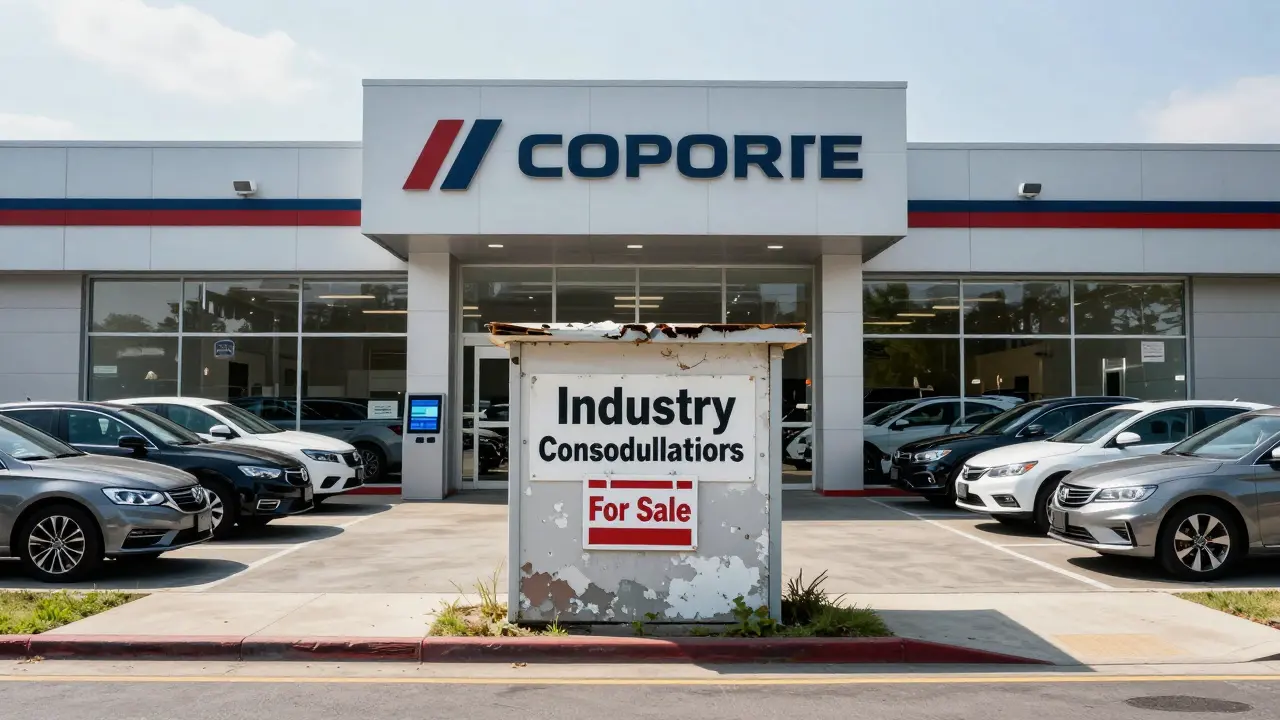
For years, independent car dealerships ran the show. A family-owned Toyota lot here, a local Ford dealer there-each with its own personality, its own service team, its own way of doing business. But that’s changing fast. Today, you’re more likely to walk into a dealership that’s part of a much bigger operation. A single company owns 20, 30, even 50 dealerships across a state. This isn’t just a trend. It’s a full-scale transformation of how cars are sold in America.
What Is Dealer Consolidation?
Dealer consolidation means one company buys up multiple independent dealerships and runs them as a single network. These aren’t just random purchases. They’re strategic moves by large automotive groups like Lithia Motors, Penske Automotive, or Group 1 Automotive. These companies don’t just own dealerships-they manage inventory, set pricing, hire staff, and even handle marketing under one roof.
It’s not magic. It’s math. Buying in bulk gives these groups better deals from manufacturers. They can negotiate lower wholesale prices for vehicles, get better financing terms from banks, and reduce overhead by combining admin teams, service centers, and parts warehouses. One group might own five Honda dealerships in Oregon. Instead of five separate HR departments, they have one. Instead of five separate service bays, they share a single parts depot. That’s how they cut costs and raise profits.
Why Are Group Acquisitions Happening Now?
The shift didn’t happen overnight. It’s been building for over a decade. But three big forces pushed it into high gear.
First, margins on new cars have shrunk. Manufacturers now make more money from service and financing than from selling the car itself. That means dealerships need to sell more service contracts, extended warranties, and loans just to stay profitable. Independent dealers often lack the volume to make these programs work. Big groups? They sell thousands of cars a month. That gives them the leverage to push those add-ons hard-and get paid for it.
Second, digital retailing changed everything. Customers don’t want to haggle anymore. They want to browse online, get a price, and pick up the car the next day. Big groups invested millions in websites, online appraisal tools, and virtual walkarounds. Small dealers? They couldn’t keep up. Many just sold out.
Third, succession planning became a crisis. Many dealership owners are nearing retirement. Their kids didn’t want to take over. No one else had the capital to buy in. So the only buyers left? Big corporations with deep pockets. In 2024 alone, over 120 independent dealerships in the U.S. were bought by national groups. That’s up 40% from 2020.
How Group Networks Operate
Think of these networks like fast-food chains. McDonald’s doesn’t run every location. But they set the rules: how the food is made, how employees are trained, what the menu looks like. Same thing with automotive groups.
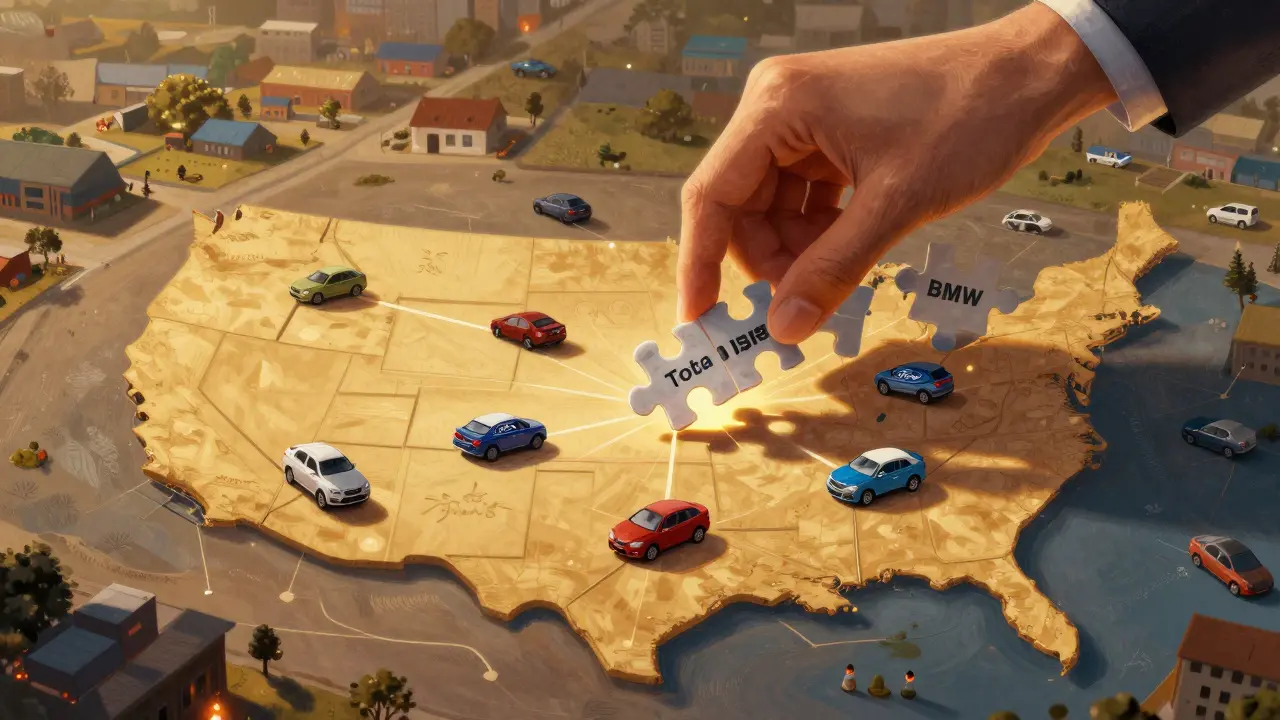
Take Lithia Motors. They own over 200 dealerships across 27 states. Each one carries different brands-Toyota, BMW, Ford, Rivian. But behind the scenes, everything is standardized. Inventory is tracked in one system. Customer data is shared across locations. Service appointments can be booked at any Lithia shop, even if you bought the car elsewhere in their network.
They also use data to predict demand. If a certain model is selling fast in Seattle, they’ll shift inventory from a slower-moving lot in Boise. They don’t guess. They use analytics. That’s not something a small dealer with one lot can do.
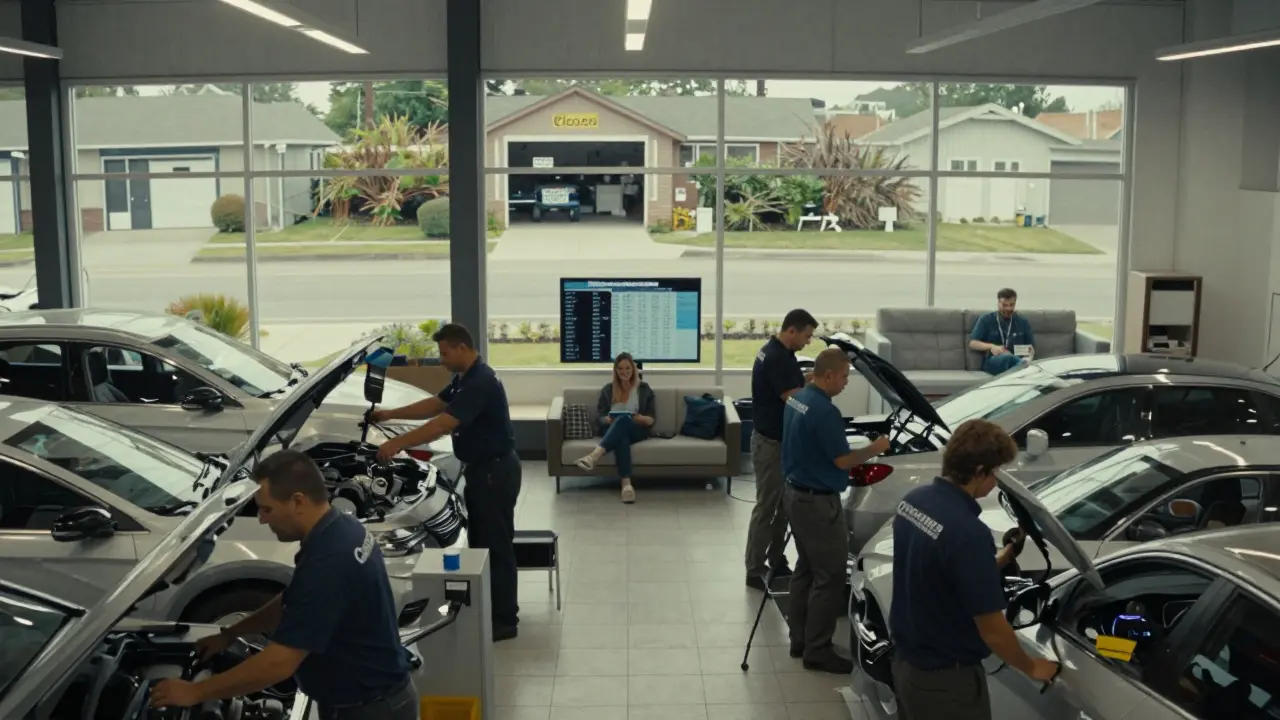
And then there’s service. Big groups have their own service centers with certified technicians, factory-trained staff, and access to real-time diagnostic tools. They even offer loaner cars and shuttle services. Independent shops? Many still rely on one mechanic and a waiting room with a TV that only gets three channels.
The Impact on Customers
Is this good for buyers? It depends.
On the plus side, you get more consistency. If you move from Portland to Eugene, you can still bring your car to a dealer that knows your history. You won’t have to re-explain your maintenance schedule. Online pricing is transparent. No more “I’ll have to check with the manager.” You see the price upfront. And if you need service, you can book it online, get a text when it’s ready, and pay with your phone.
But there’s a downside. Choice is shrinking. In some towns, the only dealership left is owned by a big group. That means less competition. Prices might not drop even if inventory is high. And if you’re trying to negotiate? You’re not talking to a local owner who wants to keep your business. You’re talking to a sales manager who’s paid based on monthly quotas.
Service quality can vary too. Some groups invest heavily in training. Others cut corners to save money. You might get a great experience at one location and a frustrating one at another-even if they’re under the same brand.
What Happens to Small Dealers?
Most are gone. Or on their way out.
Some sold because they were tired. Others sold because they couldn’t afford the tech upgrades. A single digital inventory system can cost $50,000 a year. That’s not a budget item for a two-person shop. It’s a deal-breaker.
A few independent dealers are trying to fight back. Some focus on niche brands-like classic cars or imports that big groups ignore. Others double down on customer service, offering free coffee, same-day oil changes, and handwritten thank-you notes. But even those are rare.
One dealer in Bend, Oregon, stayed independent by becoming a specialist in electric vehicle conversions. He doesn’t sell new Teslas. He turns old gas cars into EVs. That’s a tiny market. But it’s profitable. And it’s not something a national group would bother with.
The Future: More Consolidation, Less Choice
The trend isn’t slowing down. In 2025, analysts predict that over 60% of new car sales in the U.S. will come from the top 20 dealership groups. That’s up from 42% in 2020.
Manufacturers are encouraging it. Ford, GM, and Toyota now give better incentives to dealers who are part of large networks. They want predictable sales numbers. They want data. They want consistency. Independent dealers don’t offer that.
What’s next? Even bigger groups. More mergers. Maybe even one company owning half the dealerships in the country. And as that happens, the car-buying experience will become more efficient-but also more impersonal.
For buyers, the best advice is simple: shop around. Even if there’s only one dealership in town, check their online reviews. Look at service ratings on third-party sites. Don’t assume big means better. And if you’re in the market for a used car? Don’t just go to the group’s main lot. Check independent sellers on Facebook Marketplace or CarGurus. You might find a better deal-and a better experience.
Why are large automotive groups buying so many dealerships?
Large groups buy dealerships to gain economies of scale. They reduce overhead by combining administrative, marketing, and service operations. They also get better financing and inventory pricing from manufacturers due to higher volume. This lets them increase profit margins, especially on service and financing add-ons, which now make up a larger share of revenue than new-car sales.
Are customers losing out because of dealer consolidation?
It’s mixed. Customers benefit from consistent pricing, online tools, and nationwide service networks. But they lose bargaining power and local choice. In some areas, consolidation leaves only one dealership, reducing competition and potentially leading to higher prices. Service quality can also vary between locations under the same group.
Can independent dealers still survive today?
Yes-but only if they find a niche. Some focus on classic cars, EV conversions, or luxury imports that big groups ignore. Others win loyalty through hyper-local service: same-day oil changes, handwritten notes, or free shuttle rides. But these are exceptions. Most small dealers can’t afford the tech, training, or inventory systems needed to compete.
How do big dealership groups manage inventory across locations?
They use centralized inventory management systems that track vehicle demand in real time. If a model is selling fast in one city, they shift stock from slower-moving locations. They also use data analytics to predict regional trends-like how many SUVs will be needed in winter or how many EVs will sell after a tax credit update. This level of coordination is impossible for a single-location dealer.
What role do manufacturers play in dealer consolidation?
Manufacturers actively support consolidation. They offer better incentives, faster vehicle allocations, and access to exclusive marketing funds to large groups. They prefer predictable sales volumes and standardized customer experiences. Independent dealers often lack the data, staffing, or systems to meet those expectations, making them less attractive partners.