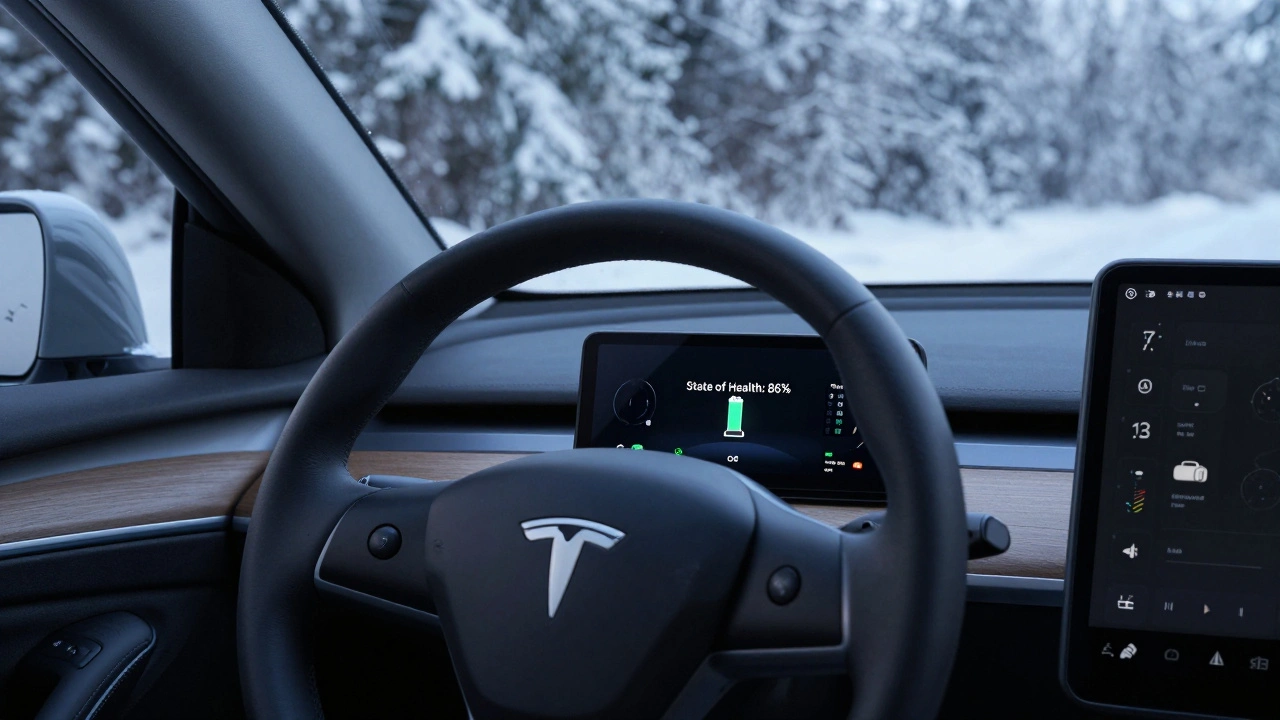
When you buy an electric vehicle, the battery isn’t just a component-it’s the heart of the whole system. But most drivers don’t really understand what’s going on inside that big pack under the floor. What does EV battery capacity actually mean? Why does your range drop in winter? And why does your 2022 Tesla seem to lose a few miles every year? Let’s cut through the marketing and talk about what really matters: capacity, range, and degradation-three things that decide how long your EV will last and how far it can take you.
What Is EV Battery Capacity?
Capacity is measured in kilowatt-hours (kWh). Think of it like a gas tank, but instead of gallons, you’re filling it with electricity. A Nissan Leaf might have a 40 kWh battery. A Ford F-150 Lightning has a 98 kWh battery. That number tells you how much energy the battery can store.
But here’s the catch: that number isn’t what you actually drive on. The EPA adjusts it for real-world conditions-cold weather, highway speeds, climate control use, and even how you drive. So a car with a 75 kWh battery might only show 240 miles of EPA-rated range. That’s normal. It’s not lying. It’s just being honest about real life.
Higher capacity doesn’t always mean better. A 100 kWh battery in a small car like a Mini Electric would be overkill and heavier, hurting efficiency. The best EVs match battery size to the vehicle’s purpose. A city commuter doesn’t need 90 kWh. A long-haul truck does.
How Range Works (And Why It Changes)
Range is the distance your EV can go on a full charge. But it’s not fixed. It changes with temperature, speed, terrain, and even tire pressure.
Cold weather is the biggest range killer. At 20°F, you can lose 20-40% of your range. Why? Cold batteries don’t move ions as easily, so they can’t deliver power as efficiently. Plus, you’re using more energy to heat the cabin-something gas cars don’t need to do because they waste heat from the engine. EVs have to create all their heat from scratch, and that draws power directly from the battery.
Highway driving at 75+ mph also cuts range. Aerodynamic drag increases exponentially with speed. Going from 65 mph to 75 mph can cost you 10-15% more energy. That’s why your EV’s estimated range drops when you turn on cruise control at 80 mph.
And don’t forget accessories. Heated seats? Fine. Heated steering wheel? Not a big deal. But turning on the cabin heater, defroster, and seat warmers all at once in winter? That’s like running a small space heater inside your car. It adds up fast.
What Is Battery Degradation?
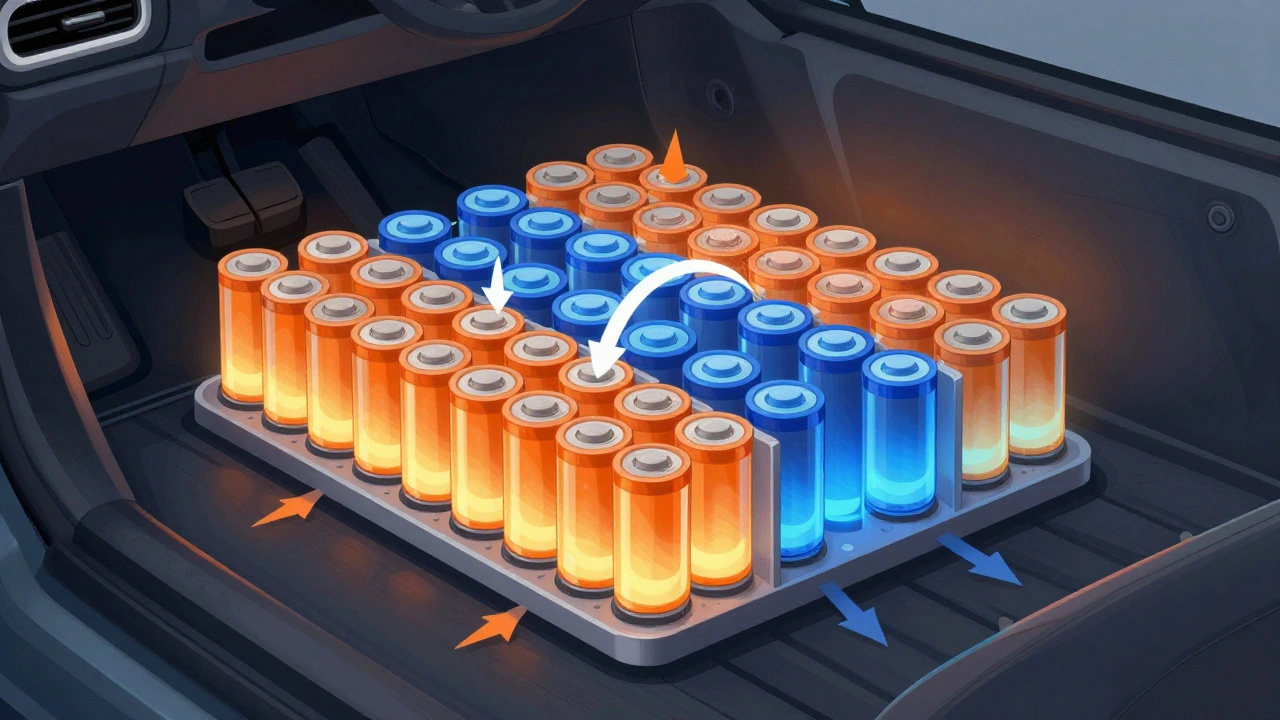
Degradation is the slow loss of battery capacity over time. It’s natural. All lithium-ion batteries do it. But not all EVs degrade the same way.
Most EV batteries lose about 1-2% of their capacity per year under normal use. That means a car with a 250-mile range when new might drop to 230-240 miles after five years. That’s not a dealbreaker. It’s expected.
But some drivers see worse. Why? Three big reasons:
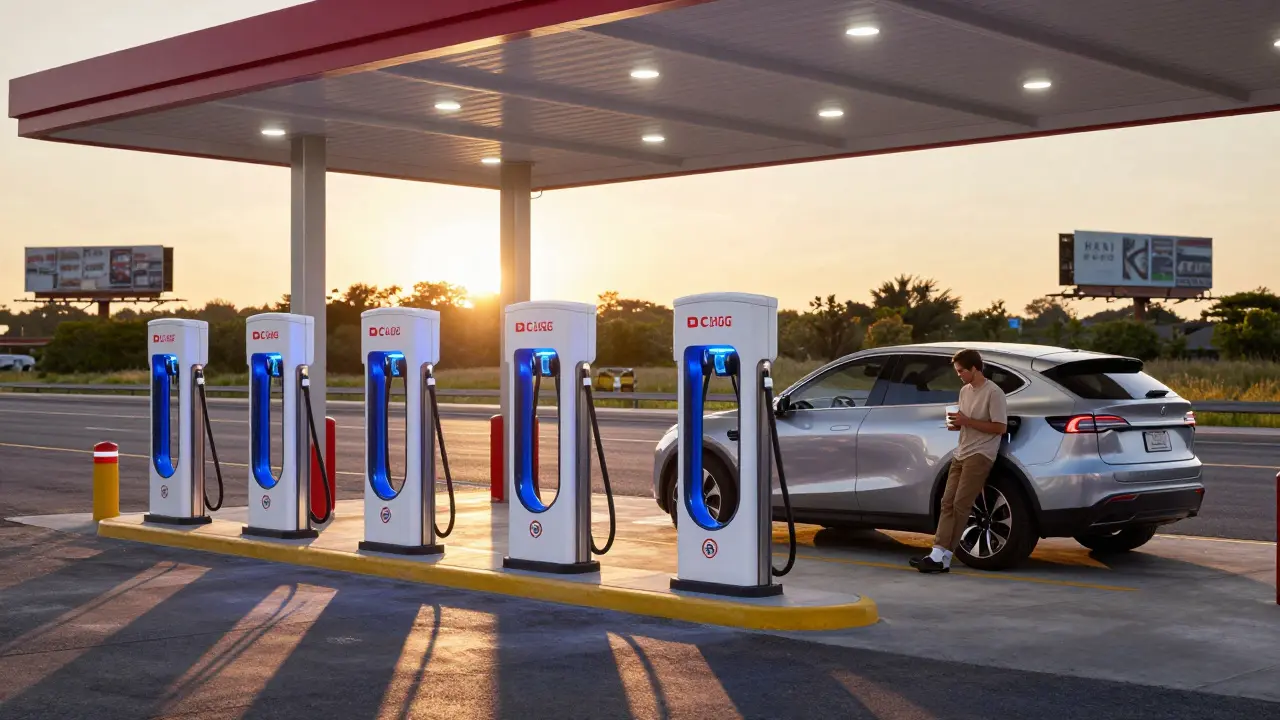
- Fast charging too often-Using DC fast chargers daily, especially in hot weather, speeds up wear. It’s fine once in a while, but daily use? That’s like running your phone on 100% charge all the time.
- Always charging to 100%-Lithium-ion batteries last longest when kept between 20% and 80%. Many EVs let you set a max charge limit. Use it. If you don’t need the full range for your daily drive, charge to 80%.
- Leaving the battery at 100% for days-If you plug in your EV and forget it for a week, the battery stays under high stress. That’s worse than driving it hard.
Studies from the Idaho National Laboratory tracked over 1,000 EVs. They found that drivers who charged to 80% and avoided fast charging daily lost only 0.8% per year. Those who charged to 100% every time and used fast chargers daily lost 2.5% per year. That’s a huge difference over five years.
How to Check Your Battery Health
Most EVs show battery health in the dashboard. It’s usually called “State of Health” or “SOH.” A brand-new battery is 100%. After 100,000 miles, 90-95% is normal. Below 80% is when manufacturers often start offering warranty replacements.
Here’s how to check it yourself:
- Charge the battery to 100% (if your car allows it).
- Drive until the battery is around 10-20%.
- Look at the estimated range shown on the screen.
- Divide that number by the original EPA range listed in your owner’s manual.
Example: Your 2023 Hyundai Ioniq 6 had a 361-mile EPA range. Now, at full charge, it shows 310 miles. 310 ÷ 361 = 0.86. That’s 86% state of health. That’s still great.
Some apps like TeslaFi or PlugShare can pull this data automatically. But you don’t need them. Just do the math once a year.
What Happens When the Battery Degrades Too Much?
Most EV manufacturers guarantee the battery for 8 years or 100,000 miles-whichever comes first-with a minimum of 70% capacity. If your battery drops below that, they’ll replace it.
But here’s the real question: Do you need a replacement?
If your range dropped from 250 to 180 miles, you might need to rethink your daily commute. But if you only drive 30 miles a day, 180 miles is still plenty. Many people keep driving for years with degraded batteries. You don’t need 100% to be useful.
Replacement costs are falling. In 2020, a battery pack replacement could cost $15,000. Today, it’s closer to $7,000-$10,000 for most models. And third-party rebuilds are popping up-companies that take old packs, replace dead cells, and sell them for 40% less than OEM.
Some EVs, like the Chevrolet Bolt, had early battery issues. But most modern EVs are built to last. The Nissan Leaf from 2013? Many still have over 80% capacity today. The Tesla Model S from 2015? Still hitting 90%+ in well-maintained examples.
How to Maximize Your EV Battery Life
You can’t stop degradation-but you can slow it down. Here’s what works:
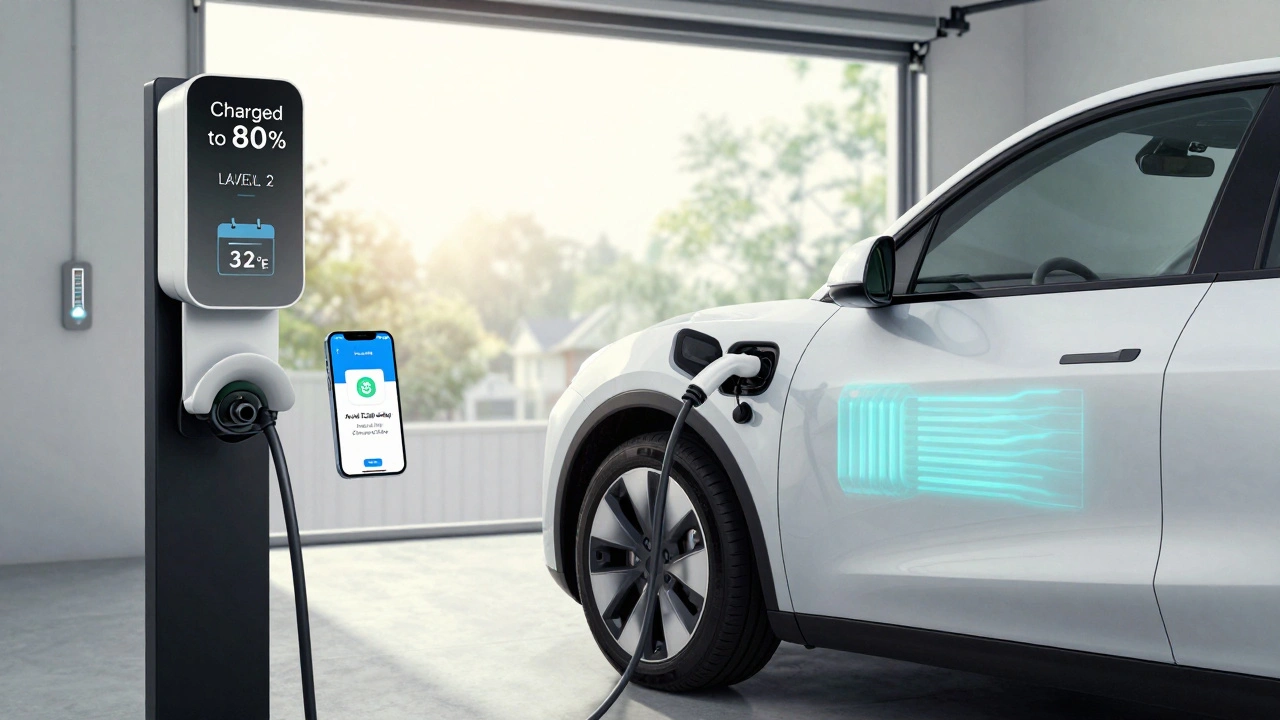
- Charge to 80% for daily use-Only go to 100% when you need the full range for a trip.
- Avoid fast charging daily-Use Level 2 (240V) chargers at home or work. Save DC fast charging for road trips.
- Don’t let the battery sit at 0% or 100%-If you’re storing your EV for a week, keep it at 50%.
- Use preconditioning-Heat or cool the cabin while plugged in, so the battery doesn’t have to work hard during driving.
- Keep it cool-Park in the shade or garage. Heat is the enemy of lithium-ion batteries.
These aren’t just tips. They’re based on real data from fleet operators, universities, and battery labs. The people who get the most miles out of their EVs aren’t the ones who charge to 100% every night. They’re the ones who treat the battery like a tool, not a toy.
Is Battery Degradation a Dealbreaker?
No. Not if you know what you’re getting into.
EVs aren’t perfect. But they’re getting better every year. The average EV owner drives 12,000 miles a year. Even with 2% annual degradation, a 250-mile EV will still have over 200 miles of range after 10 years. That’s enough for 95% of daily trips in the U.S.
And if you’re worried about resale value? A well-maintained EV with 85%+ battery health holds its value better than most gas cars. Buyers are learning to check SOH before buying used EVs. They’re not scared of degradation-they’re just checking the facts.
The real risk isn’t the battery dying. It’s assuming it will last forever without care. Treat your EV battery like a smartphone: don’t overcharge it, don’t let it get too hot, and don’t run it down to zero every day. Do that, and you’ll get 10-15 years out of it. That’s longer than most gas cars last.
How much range do I lose per year with an EV battery?
Most EVs lose 1-2% of their range per year under normal use. That’s about 5-10 miles for a 250-mile EV. Drivers who avoid fast charging and keep charge levels between 20-80% often see less than 1% per year.
Does cold weather permanently damage EV batteries?
Cold weather doesn’t permanently damage batteries-it just makes them less efficient temporarily. Range drops in winter, but it comes back when it warms up. What does cause permanent damage is repeatedly charging a frozen battery. Always let your EV warm up before fast charging in freezing temps.
Can I replace just one cell in my EV battery?
No. EV batteries are made of hundreds of cells grouped into modules. You can’t swap one cell like a AA battery. But some companies now offer module-level replacements-replacing a whole section of 8-12 cells instead of the whole pack. This cuts cost by 30-50% compared to a full replacement.
Is it better to charge overnight or during the day?
It doesn’t matter for battery life-what matters is how much you charge and whether you use fast charging. Charging overnight is fine if you set a max limit of 80%. Charging during the day while you’re at work is also fine. The key is avoiding 100% and fast charging too often.
Do EV batteries last longer than gas car engines?
Yes, in most cases. Gas engines often need major repairs or rebuilds after 150,000-200,000 miles. EV batteries are designed to last 200,000-300,000 miles with proper care. Many Tesla and Nissan Leaf owners have driven past 300,000 miles with the original battery still at 80%+ health.


Rubina Jadhav
December 5, 2025 AT 22:54Love this breakdown. I’ve had my Leaf since 2020 and it still goes 180 miles on a full charge. No worries, just charge to 80% and call it good.
Raji viji
December 6, 2025 AT 22:03OMG you people are so naive. EVs are just a corporate scam to make you pay for battery replacements every 5 years. Tesla’s ‘over-the-air updates’? More like ‘we’re slowly throttling your range while you sleep.’ They’re monetizing your anxiety. 🤡
Aryan Jain
December 8, 2025 AT 19:49They don’t want you to know the truth - lithium-ion batteries are secretly controlled by a shadowy cabal of Chinese mineral cartels and Silicon Valley AI. Your ‘degradation’? It’s not natural. It’s programmed. They want you to buy a new car every 4 years. Wake up. 🌍⚡
Nalini Venugopal
December 9, 2025 AT 16:00Just a quick note - ‘kWh’ should be written with a space before the unit, like ‘75 kWh’, not ‘75kWh’. Small thing, but it matters for clarity. Also, ‘20-40%’ should be ‘20–40%’ with an en dash. 😊
Pramod Usdadiya
December 11, 2025 AT 13:12good info man. i didnt know about the 80% rule. i always charge to 100 cause i think its better for the battery? lol. thanks for clearing that up. i’ll try it now. 🙏
Aditya Singh Bisht
December 12, 2025 AT 18:09You got this! Every little habit counts - charging smart, avoiding heat, not going full throttle every day. You’re not just saving your battery, you’re saving money, the planet, and your future self from range anxiety. Keep going! 💪🌱
Agni Saucedo Medel
December 13, 2025 AT 10:17This is so helpful!! 🙌 I used to charge to 100 every night… now I set it to 80 and I feel like a battery wizard. Also, preconditioning is magic - my car is warm before I even step out. 🥰
ANAND BHUSHAN
December 14, 2025 AT 14:19Been driving my Model 3 for 6 years. Battery health is at 92%. I charge at home, never use fast chargers, and park in the garage. Simple. Works. No drama.
Jen Deschambeault
December 15, 2025 AT 11:58Thank you for sharing this. I’ve been hesitant about EVs because of battery fears, but this made me feel a lot more confident. I’m seriously considering my next car.
Kayla Ellsworth
December 15, 2025 AT 19:18Wow. So let me get this straight - you’re telling me the solution to climate change is… buying a more expensive car that needs a $7,000 battery replacement every 8 years? Brilliant. I’m sure the oil companies are weeping into their SUV keys.
Soham Dhruv
December 17, 2025 AT 02:52really helpful stuff. i never knew about module replacements being a thing. my buddy’s bolt had a bad cell and they replaced just the module for like 3k. way better than 10k. also park in shade if you can. heat kills batteries faster than anything
Bob Buthune
December 17, 2025 AT 05:45I’ve been through this. I bought my EV thinking it was the future. Then my battery dropped to 84% after 3 years. I cried. I called Tesla. They said ‘it’s normal.’ Normal? Normal is when your car suddenly loses 20 miles of range in winter and you’re stuck at a charging station at 2 a.m. with your kid screaming in the back because the heater is on low. They don’t tell you this stuff. They sell you a dream. Then they sell you the repair bill. And the worst part? You feel guilty for being upset. Like you’re not green enough. But I’m not angry at the planet. I’m angry at the marketing. 🌧️
Jane San Miguel
December 18, 2025 AT 12:37While your data is broadly accurate, you’ve omitted the critical distinction between NMC and LFP chemistries. LFP batteries, now standard in many entry-level EVs, degrade at half the rate of NMC - and are far less sensitive to temperature. Your advice assumes a homogenous battery ecosystem, which is misleading. Also, ‘80%’ is not universally optimal; some manufacturers recommend 90% for LFP. Please update your sources.