Buying a used car can feel like a treasure hunt-until you realize you’ve just bought a time bomb. Flood-damaged cars are one of the most dangerous hidden problems in the used car market. They don’t always show up on paper, and many sellers don’t even know they’re selling one. But the signs are there if you know where to look. And if you don’t, you could end up with a car that starts rusting from the inside out, smells like mildew, or dies without warning six months after you drive it off the lot.
What Makes a Car Flood-Damaged?
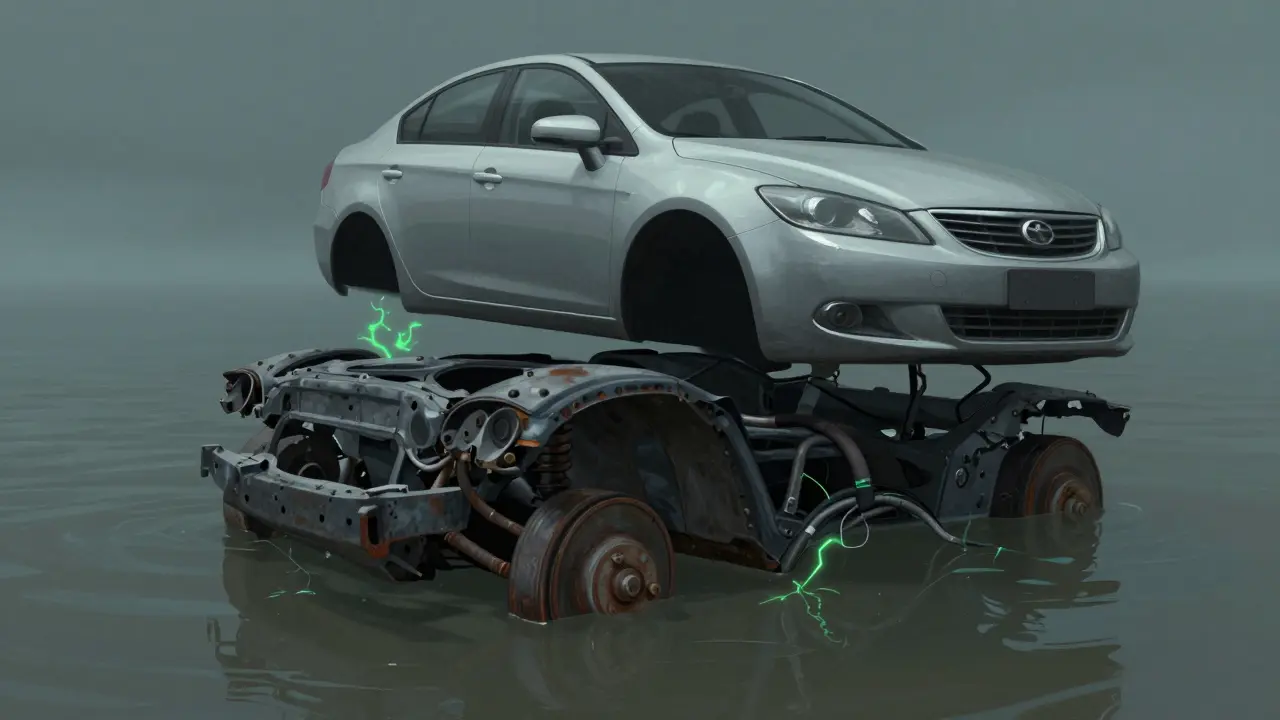
A flood-damaged car isn’t just one that got caught in a puddle. It’s a vehicle that’s been submerged in water deep enough to reach the floorboards, seats, or worse-the engine and electrical systems. Even a few inches of water can ruin wiring, corrode control modules, and ruin the upholstery. Water doesn’t just disappear after the flood recedes. It lingers in carpets, under seats, and inside door panels. Then, over time, it causes mold, rust, and electrical shorts that show up months or even years later.
Insurance companies declare these cars as salvage title vehicles after major flood events. But not all flood-damaged cars get labeled that way. Some get cleaned up by shady dealers, sold through private sellers, or shipped from states with lax reporting rules. That’s why you can’t rely on paperwork alone.
Red Flags in the Title and Documentation
Always check the vehicle title before you even step near the car. A clean title doesn’t mean the car is clean. Look for these terms:
- Salvage - The car was declared a total loss by an insurer.
- Flood - Directly states water damage.
- Rebuilt - The car was once salvage and repaired. Could mean anything from minor fixes to full flood restoration.
- Recovered - Often used for cars pulled from flood zones.
If the title says anything but clean, walk away unless you’re prepared for major repairs. Even then, proceed with extreme caution.
Also check the vehicle history report. Services like Carfax or AutoCheck list flood damage if it was reported to insurers or state agencies. But here’s the catch: not all floods get reported. If the owner didn’t file a claim, or if the car was sold across state lines without disclosure, the report might be blank. That’s why you need to inspect the car yourself.
Physical Inspection: Where Water Hides
Water leaves traces. You just need to know where to look.
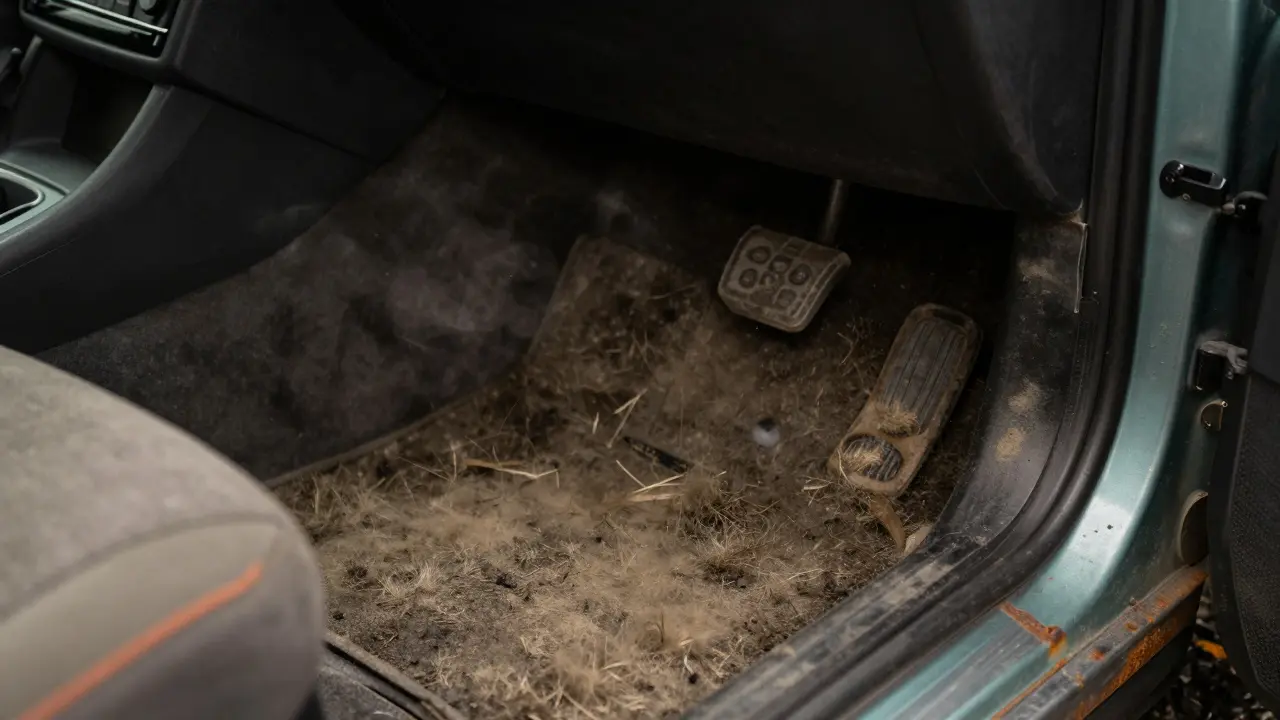
Under the carpet - Pull back the floor mats and lift the carpet in the driver’s and passenger’s footwells. Look for mud, sand, or a musty smell. Water leaves behind gritty residue you can’t wash out. If the carpet feels stiff or smells like wet socks, that’s a red flag.
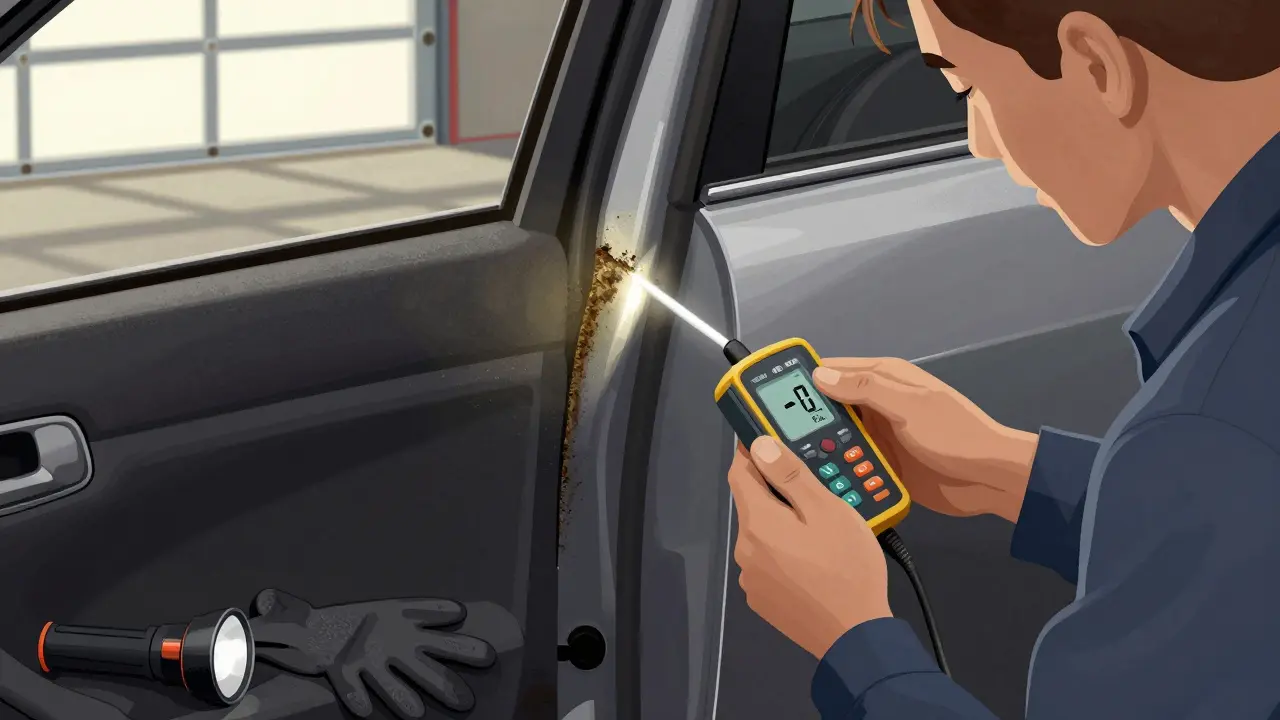
Door panels and seams - Open the doors and check the rubber seals. Water damage often leaves a dirty line along the inside edge of the door frame-like a tide mark. Run your finger along the seam. If it’s gritty or discolored, water was there.
Under the hood - Look at the engine bay. Clean, shiny bolts? That’s a bad sign. Flood-damaged cars often have rust on bolts and screws that should be bright metal. Check the air filter housing. If it’s damp or has mold, the car was submerged enough for water to get into the intake.
Electrical systems - Turn on the headlights, radio, power windows, and climate control. If any of them flicker, act up, or don’t work at all, water likely damaged the wiring. Corroded connectors look like green or white crusty buildup. Check the fuse box under the hood and inside the cabin. If the fuses are rusted or the plastic is warped, walk away.
Seats and upholstery - Lift the seats and look underneath. Water leaves stains on the metal frame. Smell the fabric. A sour, damp odor that won’t go away means mold is growing inside. Even if the seats look new, they could be replacements hiding damage.
Check the Oil and Fluids
Water doesn’t mix with oil. If you see milky, frothy oil on the dipstick, water has leaked into the engine. That’s a death sentence for most engines. Same goes for transmission fluid-if it looks cloudy or has a pink tint, water got in. Brake fluid should be clear. If it’s murky, the brake system has been compromised.
Check the coolant reservoir. If it looks rusty or has oily streaks, the head gasket might be blown from overheating after water exposure. Water can also mix with coolant and cause corrosion inside the radiator and hoses.
Test Drive Red Flags
A test drive can reveal things a visual inspection can’t. Start the car cold. Does it crank slowly? That could mean water damaged the starter or battery connections. Listen for strange noises-hissing, clicking, or grinding from the engine bay.
Take it on a quiet road. Test the brakes. If they feel spongy or pull to one side, water may have contaminated the brake lines. Check the steering. If it feels loose or inconsistent, water may have damaged the power steering pump or rack.
Drive over a bump. If you hear a loud clunk or squeak from the suspension, rusted control arms or bushings could be failing. Flood water eats away at metal fasteners and suspension components over time.
Why You Should Never Trust a “Cleaned-Up” Flood Car
Some sellers use pressure washers, ozone machines, and new carpets to hide flood damage. They’ll even replace the entire interior. But here’s what they can’t fix:
- Corroded wiring harnesses hidden behind dashboards
- Rusted brake lines inside the frame
- Water-damaged airbag sensors that won’t deploy
- Mold growing in the HVAC system
These aren’t cosmetic issues. They’re safety hazards. A faulty airbag sensor could mean the airbag doesn’t deploy in a crash. Rusted brake lines can snap without warning. Mold can cause serious respiratory problems for you and your family.
Even if the car runs fine now, the damage is permanent. Flood-damaged cars have a lifespan of 1-3 years after being cleaned up. After that, the electrical and mechanical systems start failing one by one.
What to Do If You Suspect Flood Damage
If you see even one of these signs, don’t negotiate. Don’t ask for a discount. Walk away.
Ask for a pre-purchase inspection from a mechanic who specializes in flood-damaged vehicles. Most general shops won’t spot the subtle signs. Look for shops that work with insurance companies-they’ve seen hundreds of these cars.
Use a moisture meter. These cost under $50 and can detect hidden moisture in carpets, seats, and door panels. If the reading is above 20%, the car has been flooded.
Check the vehicle’s VIN on the National Insurance Crime Bureau (NICB) website. They track vehicles reported as flood-damaged, even if they weren’t insured. It’s free and takes less than a minute.
Final Advice: When in Doubt, Walk Away
Flood-damaged cars are cheap. That’s the trap. They look like a steal-$5,000 for a car that should cost $15,000. But here’s the real math: repair costs, safety risks, and resale value drop by 60-80%. You’re not saving money. You’re gambling with your safety.
There are thousands of good used cars out there. You don’t need to take a risk on one that’s been underwater. If the title looks sketchy, the smell is off, or the mechanic says no, walk away. You’ll thank yourself next year when your friend’s $4,000 car is in the shop for the third time-and yours is still running fine.
Can a flood-damaged car be safely repaired?
Technically, yes-but it’s rarely worth it. Even professional repairs can’t fully restore electrical systems, rusted frames, or mold-infested HVAC units. Most mechanics won’t warranty flood-damaged cars because the failures are unpredictable. The cost of repairs often exceeds the car’s value.
Do all flood cars have salvage titles?
No. Many flood-damaged cars are never reported to insurers or state agencies. Sellers can avoid disclosure by selling privately or across state lines. That’s why you must inspect the car yourself, even if the title says "clean."
How can I tell if a car was flooded in a hurricane?
Check the vehicle history report for major flood events in the car’s registered states. Hurricanes often cause widespread flooding in coastal areas like Florida, Texas, and Louisiana. If the car was registered in one of those states during a major storm, assume it was at risk. Look for signs of saltwater damage-white crust on metal parts, rust on undercarriage, and a strong briny smell.
Is it legal to sell a flood-damaged car without disclosing it?
In most U.S. states, it’s illegal to hide flood damage from buyers. But enforcement is weak, and private sellers often get away with it. Dealers are required to disclose salvage or flood titles, but many use loopholes. Always verify with a vehicle history report and physical inspection.
Can a car recover from minor water exposure?
Minor exposure-like a car sitting in a heavy rainstorm with water on the floor-can be fixed if dried out immediately. But if water reached the seats or electrical components, even briefly, it’s not minor. Water can travel through wiring and cause damage weeks later. When in doubt, treat any water exposure as serious.

Amit Umarani
January 5, 2026 AT 08:25Just bought a used Civic last month. Checked the title, ran Carfax, smelled the carpets - nothing. Two weeks later, the AC started blowing out a mildew stink. Turns out the floor mats were lifted and replaced, but the undercarriage was full of salt crust. Lesson learned: never trust a "clean" interior.
Now I carry a moisture meter in my glovebox.
Noel Dhiraj
January 5, 2026 AT 22:39Big respect for writing this out so clearly. I used to think flood cars were just a myth until my cousin bought one in Texas and it died three months later. The whole electrical system went crazy - windows rolled down by themselves, radio turned on at night. No one warned him. This post should be mandatory reading for anyone shopping used.
vidhi patel
January 6, 2026 AT 22:30It is imperative to note that the term "salvage" is not synonymous with "flood-damaged." Many vehicles labeled as salvage have suffered collision damage, not water exposure. Conversely, many flood-damaged vehicles are fraudulently relabeled as "rebuilt" or even "clean" through interstate loopholes. This is not merely negligence - it is systemic fraud enabled by regulatory apathy. Consumers must be vigilant, but the onus should not rest solely on them.
Priti Yadav
January 7, 2026 AT 19:08Wait wait wait - did you know the government lets dealers ship flood cars from Florida to Nebraska and call them "pre-owned"? I read a story where a guy bought a "2018 Toyota Camry" that was actually a Hurricane Ian wreck. The dealer wiped the VIN with a magnet. Yeah, a magnet. Like in the movies. And no one got prosecuted. I'm not even kidding. They're selling haunted cars and calling it capitalism.
Ajit Kumar
January 8, 2026 AT 05:36It is, in fact, a well-documented fact that water infiltration into automotive electrical systems leads to galvanic corrosion, particularly in aluminum wiring and copper terminals, which accelerates failure over time. The phenomenon is not merely anecdotal; it is quantifiable through impedance testing of harnesses. Furthermore, the presence of mold spores in HVAC ducts, particularly in vehicles exposed to saltwater, has been linked to chronic respiratory conditions in longitudinal studies conducted by the CDC. Therefore, to assert that a flood-damaged vehicle can be "repaired" is not only inaccurate - it is dangerously misleading. The structural integrity of the vehicle’s frame, once compromised by prolonged submersion, cannot be restored to original factory specifications, regardless of cosmetic refurbishment. Any suggestion otherwise constitutes a gross misrepresentation of engineering reality.
Diwakar Pandey
January 9, 2026 AT 05:28Had a friend buy a "clean title" Ford Focus for $6k. Ran fine for six months. Then one rainy day, the dashboard lights started flashing like a disco. Turned out the ECU was fried. Mechanic said the wiring harness under the driver’s seat had green corrosion. He’d never seen anything like it. We all thought it was just bad luck. Turns out, the car was from Louisiana. No one checked the VIN on NICB. I’ve been checking every used car I see since. It’s not paranoia. It’s just… common sense now.
Geet Ramchandani
January 9, 2026 AT 15:19Of course you’re telling people to walk away. But let’s be real - most people can’t afford a $15k car. They’re buying these flood cars because they have no choice. You think they don’t know the risks? They do. They just don’t have the luxury of being safe. So you write this long essay about how to spot the damage, then tell them to walk away? That’s not advice. That’s privilege wrapped in a checklist. The real problem isn’t the cars. It’s the economy that forces people to gamble with their lives for transportation.
Pooja Kalra
January 10, 2026 AT 00:17There is a quiet tragedy in the used car market - the illusion of choice. We believe we are selecting a vehicle, when in truth we are selecting a future of silent decay. The flood-damaged car is not merely a mechanical failure; it is a metaphor for modern consumption. We buy cheap because we are told to, and we ignore the rot because to see it would mean admitting our vulnerability. The smell of mildew is not just in the carpet - it is in our collective denial.
Sumit SM
January 10, 2026 AT 13:25Okay, so I’ve been doing this for years - I always check the fuse box, the door seals, and the oil dipstick - but here’s the thing nobody talks about: the spare tire well. Water pools there. Always. If the spare is dirty, or the tray has rust lines, or the jack is sticky with grime - that’s the tell. I found a car last year with a "clean" title, perfect interior, but the spare tire well had sand stuck in the grooves. Turned out it was from Hurricane Harvey. Sold it to a guy who didn’t believe me. Two months later, his transmission died. He texted me: "You were right. I’m sorry." I didn’t reply. But I smiled.
Also, check the trunk liner. If it’s glued down and smells weird - run.
Jen Deschambeault
January 11, 2026 AT 13:14My mom bought a used minivan after her old one died. Said it was "perfect." I checked it myself - mold smell under the second row, rust on the brake lines. She cried when I told her. We got a refund, but it took three weeks. I’m so glad I did it. If you’re even a little unsure - don’t buy it. Your family’s safety is worth more than a few thousand dollars.
Kayla Ellsworth
January 11, 2026 AT 16:48Wow. So if I buy a car that’s been underwater, I’m basically signing up for a slow-motion car crash and a mold-induced asthma attack. And the government lets this happen. Cool. So what’s next? Selling poisoned milk with a "clean" label? At least with flood cars, you get a free haunted house experience. Bonus: the radio plays static on its own. Very spooky.
Soham Dhruv
January 13, 2026 AT 01:49just wanted to say thanks for this. i bought a car last year and skipped the inspection cause i was in a rush. turned out the floor mats were new but the carpet underneath was spongy. i took it to a mechanic and he said "oh wow, this one’s been under water". i almost cried. i’m gonna keep this page bookmarked. if you’re reading this and thinking "it’s just a little water" - trust me, it’s not. walk away. you’ll thank yourself later.