When you're looking at a used car, the tires might seem like just another part of the vehicle. But they’re one of the most critical safety features you’re not paying attention to. A car with worn tires can hydroplane on wet roads, take longer to stop, and even blow out without warning. You don’t need a mechanic’s degree to check tire condition-you just need a few simple tools and a clear eye. Here’s how to really see what’s going on under those wheels.
Why Tire Condition Matters More Than You Think
Tires are the only part of the car that touches the road. That means every brake, turn, and acceleration happens through four patches of rubber, each about the size of your hand. If those patches are thin, cracked, or uneven, your car’s performance goes downhill fast. A study by the National Highway Traffic Safety Administration found that tire-related crashes cause over 700 deaths and 19,000 injuries every year in the U.S. Most of these happen because drivers didn’t notice the tires were failing.
Used cars often come with tires that have been driven hard, underinflated, or ignored. Sellers might not mention it, or worse-they might think it’s fine because "the tread still looks okay." But looks can be deceiving. You need hard numbers, not guesses.
What to Look For: The Three Big Signs of Trouble
Before you even get out a measuring tool, do a quick visual scan of all four tires. Look for these red flags:
- Uneven wear-one side of the tire is smoother than the other. This usually means alignment or suspension problems.
- Cracks or bulges-especially along the sidewall. Rubber gets brittle over time, even if the tread looks good. Cracks mean the tire is aging and could fail suddenly.
- Foreign objects-nails, screws, or glass stuck in the tread. Don’t assume they’re harmless. Even a small puncture can lead to a slow leak or blowout later.
These signs aren’t just about tread-they’re about structural integrity. A tire with good tread but a cracked sidewall is just as dangerous as one with worn tread.
How to Measure Tread Depth Accurately
The legal minimum tread depth in most U.S. states is 2/32 of an inch. But that’s the bare minimum-not a safe one. Experts recommend replacing tires at 4/32 inch, especially if you drive in rain or snow. Here’s how to check it yourself:
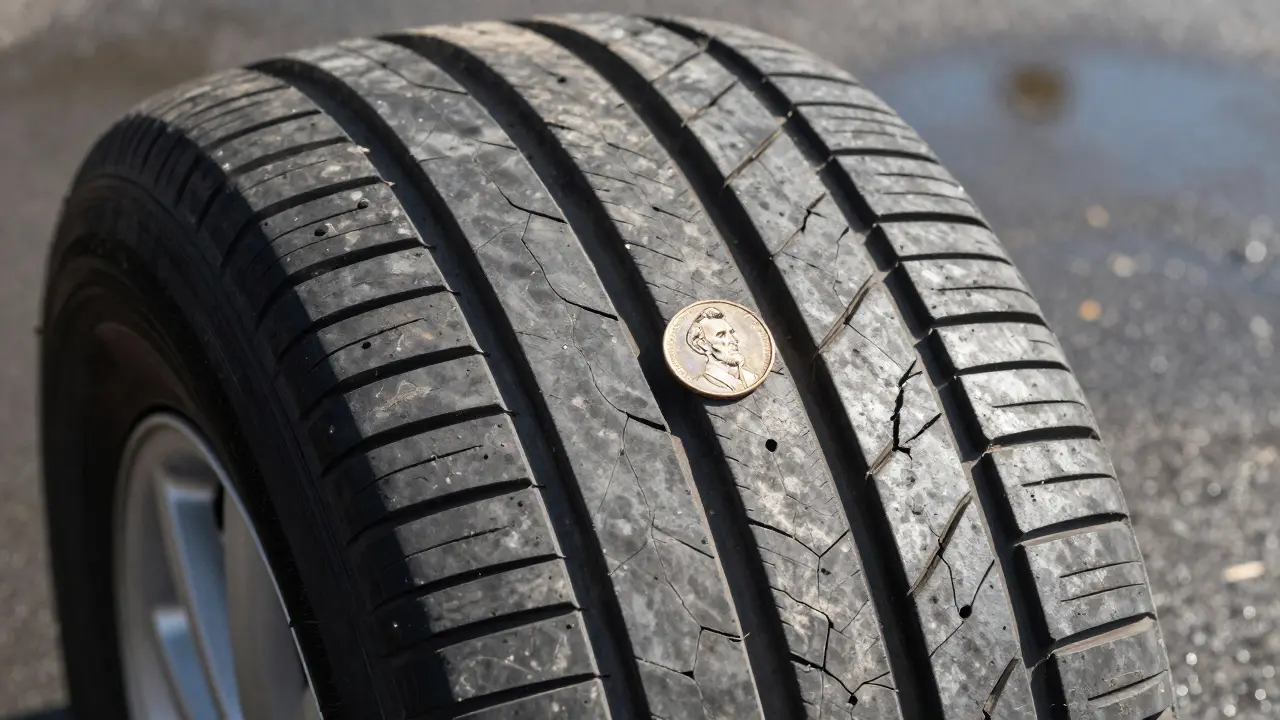
- Grab a penny. It’s the easiest tool you already have.
- Insert the penny into the tread groove with Lincoln’s head facing down.
- Look at the top of his head. If you can see all of Lincoln’s head, your tread is below 2/32 inch. Time to replace.
- If part of his head is covered, you’re above 2/32-but still risky. Aim for at least 4/32.
Do this in at least three spots across each tire: the outside edge, the center, and the inside edge. Tread wear isn’t always even. If one area is worn down more than others, that’s a clue to bigger problems like improper inflation or misalignment.
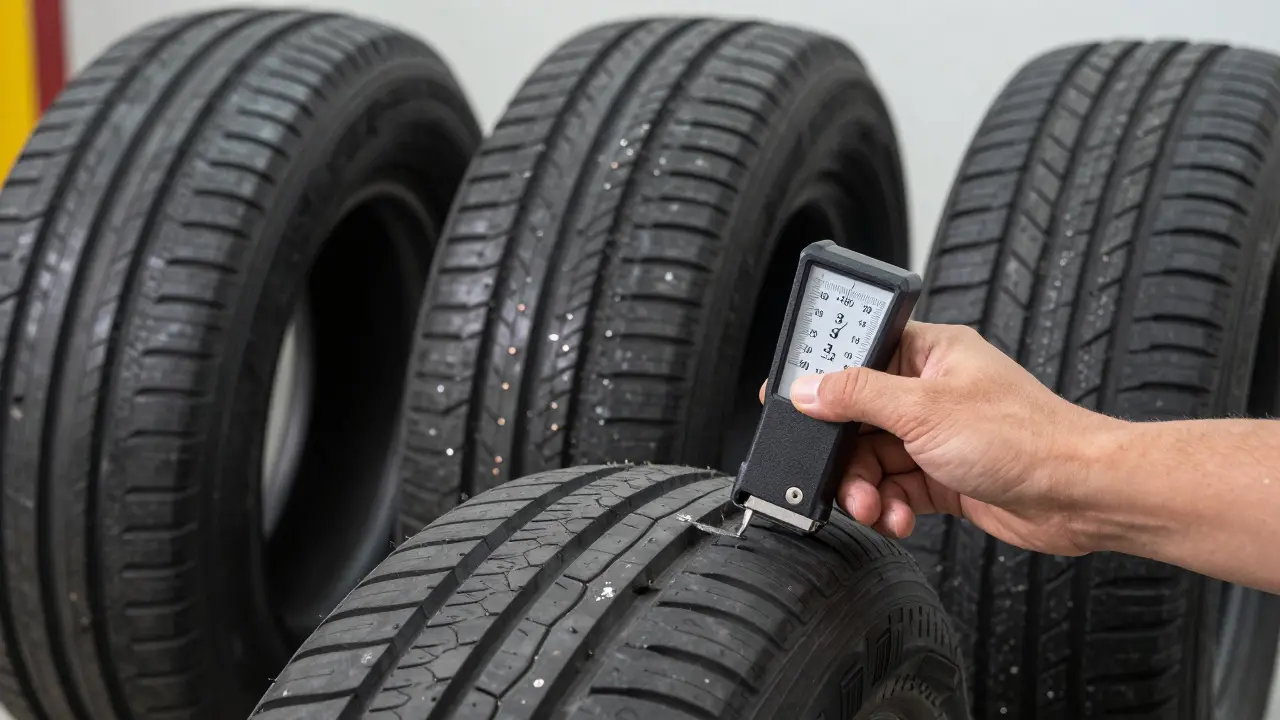
For a more precise reading, use a tread depth gauge. They cost less than $10 at auto parts stores. Place the gauge into the groove and press the base flat against the tread. The reading will show you the exact depth in 32nds of an inch. Record each measurement. You’ll want to compare front and rear tires too.
Check the Wear Indicators
Every tire has built-in wear bars-tiny raised strips of rubber between the tread grooves. When the tread wears down to the same level as these bars, you’re at 2/32 inch. They’re easy to spot once you know what to look for. If you can’t see them, you’re probably safe. If they’re flush with the tread, replace the tire immediately.
Some tires also have colored dots or numbers molded into the tread. These aren’t just for show-they’re manufacturer indicators for when tread life drops below 4/32. Check the tire’s sidewall for the brand name and model. A quick web search will tell you if your tire has these markers.
Age Matters More Than You Realize
Tires don’t just wear out from driving-they age from sitting. Rubber degrades over time, even if the car hasn’t been driven much. Most tire manufacturers recommend replacing tires after six years, regardless of tread depth. Some say ten years is the max, but that’s pushing it.
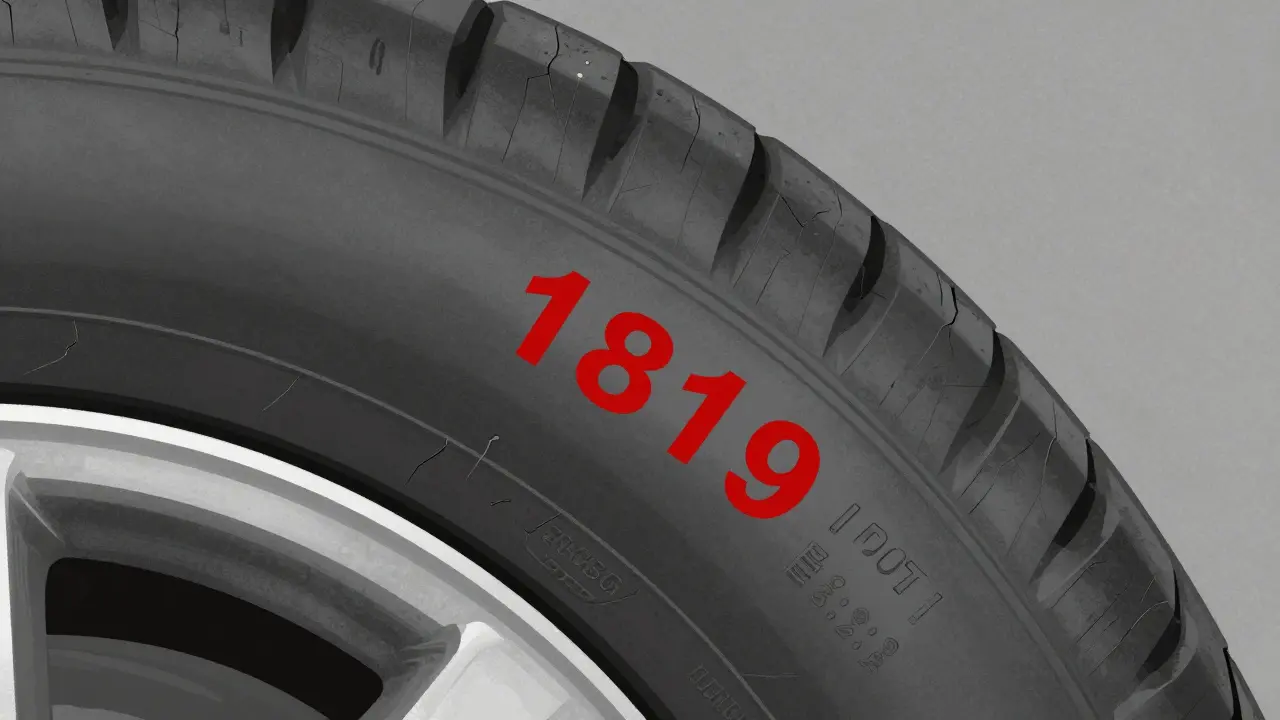
Find the DOT code on the sidewall. It’s a string of letters and numbers that ends with four digits. The last two digits are the year it was made. The first two are the week. For example: DOT XXXX 1523 means the tire was made in the 15th week of 2023. If it’s older than 2020, you’re already in the danger zone. A tire from 2018 with 8/32 tread might look fine-but it’s a ticking time bomb.
What’s Normal Wear? What’s a Warning?
Not all wear is bad. A little more wear on the outside edges of front tires? That’s normal. Front tires handle steering and most of the braking. A little more wear in the center? That usually means the tires were overinflated. Uneven wear on one side? That’s a sign of alignment issues or worn suspension parts.
If you notice one tire wearing much faster than the others, don’t just replace that one. Replace at least two tires on the same axle. Mixing old and new tires can cause handling problems, especially in wet conditions. Some car manuals even say you should replace all four at once.
What to Do If Tires Are Bad
If the tires are worn, old, or damaged, you have two choices:
- Walk away-if the seller won’t replace them or lower the price, it’s not worth the risk. A new set of decent tires costs $600-$1,000 depending on size and type. That’s better than paying for a crash.
- Negotiate-ask the seller to replace the tires before you buy. Or, if they won’t, ask for a $500-$800 discount to cover replacement costs. Most sellers will agree if you’re serious about buying.
Don’t let anyone talk you into "just driving it for a few months." A tire that’s close to failing doesn’t give you warning. It just goes.
Final Checklist Before You Sign Anything
Before you commit to a used car, run through this quick checklist:
- Check tread depth on all four tires using a penny or gauge.
- Look for cracks, bulges, or embedded objects.
- Find the DOT code and calculate the tire age.
- Compare wear between front and rear tires.
- Ask for service records-did they rotate the tires? Inflate them properly?
- If in doubt, take the car to a trusted shop for a $25 tire inspection.
If even one tire fails any of these checks, walk away-or make the seller fix it. Tires are cheap. Safety isn’t.