If your car has a safety issue, the manufacturer will send out a recall. But here’s the problem: vehicle recall alerts don’t always reach you. Mail gets lost. Emails get filtered. Phone calls go unanswered. By the time you find out, your car might already be unsafe to drive.
That’s why registering for recall alerts isn’t optional-it’s essential. Whether you drive a 2018 sedan or a 2024 SUV, you need to know when your vehicle has a defect that could cause a fire, brake failure, or airbag malfunction. The good news? Setting up alerts takes less than five minutes, and it’s free. Here’s exactly how to do it.
Step 1: Find Your Vehicle Identification Number (VIN)
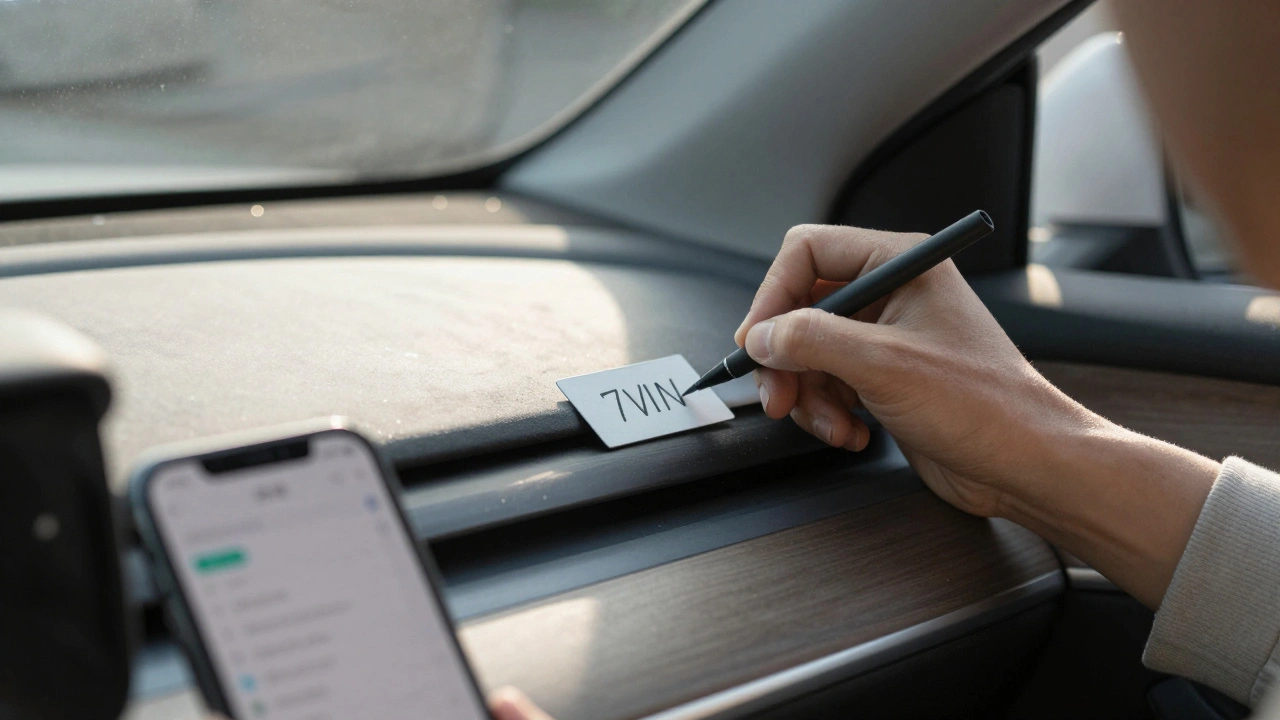
You can’t register for recall alerts without your VIN. It’s a 17-character code unique to your car. You’ll find it in three places:
- On the driver’s side dashboard, visible through the windshield
- Inside the driver’s door jamb (look for a small metal plate)
- On your vehicle registration or insurance card
Write it down or save it in your phone. You’ll need it every time you check for recalls or sign up for alerts. Don’t guess. Don’t type it from memory. Copy it exactly as it appears. One wrong character means you won’t get alerts for your actual vehicle.
Step 2: Go to the NHTSA Recall Website
The National Highway Traffic Safety Administration (NHTSA) is the U.S. government agency that tracks all vehicle recalls. Their website is the most reliable source. Go to nhtsa.gov/recalls. No login. No signup. Just search.
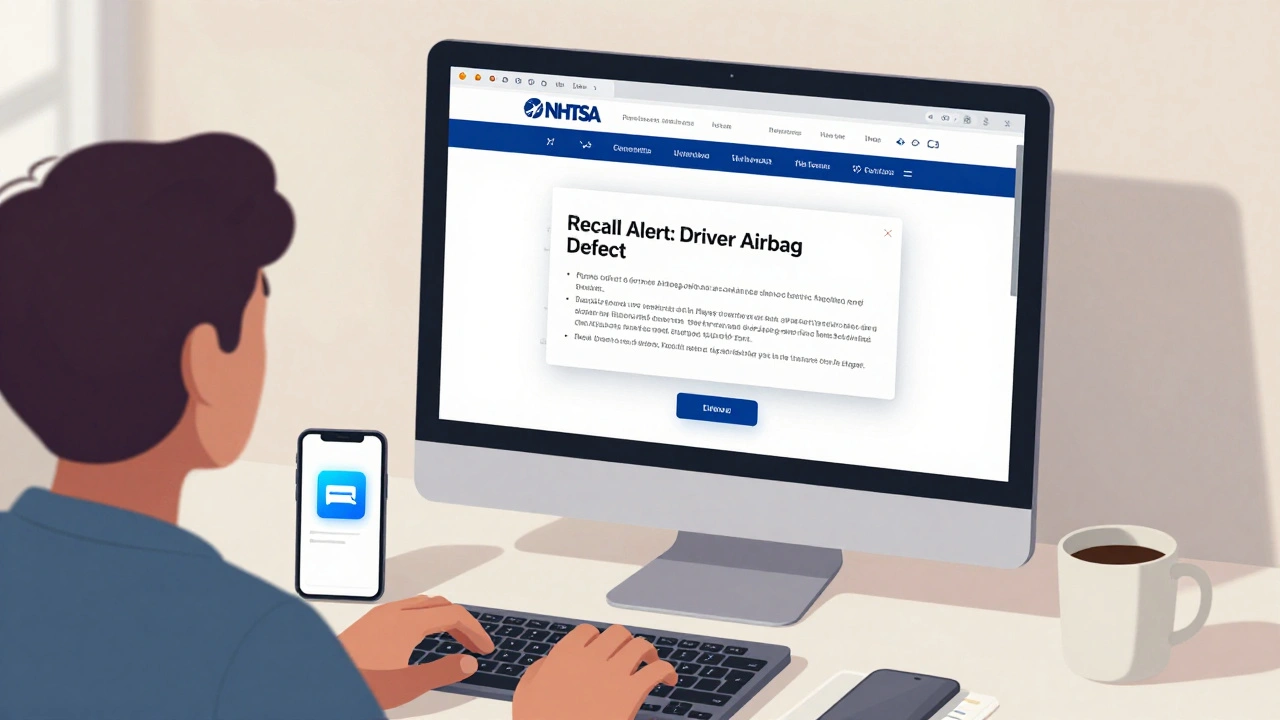
On the homepage, you’ll see a box labeled “Check for Recalls.” Enter your VIN there. Click “Search.” Within seconds, you’ll see if your vehicle has any open recalls. If there are none, great. But that doesn’t mean you’re done.
Now, scroll down and click “Sign Up for Recall Alerts.” This is where you start getting automatic notifications. You don’t have to wait for a letter. You don’t have to remember to check manually. You’ll get an email or text when a new recall is issued for your exact make, model, and year.
Step 3: Create Your NHTSA Account
To sign up for alerts, you need a free account. Click “Create Account” on the recall alerts page. You’ll need:
- Your email address
- A password (at least 8 characters, with a number and symbol)
- Your VIN (you’ll enter it again)
- Your vehicle’s make, model, and year (auto-filled from your VIN)
Use a real email address-something you check regularly. Don’t use a work email if you might leave that job. Don’t use an old Gmail account you rarely open. This is safety communication. If you miss the alert, you miss the fix.
After you submit, check your inbox. NHTSA will send a confirmation email. Click the link inside to verify your account. If you don’t see it, check your spam folder. Some email providers flag government alerts as suspicious.
Step 4: Choose How You Want to Be Notified
Once your account is verified, log in to your NHTSA dashboard. Under “Notification Preferences,” you can pick how you want to be told about recalls:
- Email (recommended)
- Text message (SMS)
- Both
Text messages arrive faster. Emails include more details-like what part is faulty and how to schedule the repair. If you’re the type who checks your phone every 10 minutes, go with text. If you prefer reading things on your computer, use email. Best practice? Pick both.
Also, make sure your phone number and email are up to date. If you switch carriers or change emails, update your profile. NHTSA doesn’t remind you to do this. If your info is outdated, you won’t get alerts-even if you signed up years ago.
Step 5: Register with Your Car Maker Too
NHTSA is the government source. But your car company knows your vehicle better. They send out recall notices too-and sometimes earlier than NHTSA. Even if you’re signed up with NHTSA, register directly with your manufacturer.
Go to your car brand’s official website. Look for “Owner Resources,” “Recall Registration,” or “Vehicle Services.” You’ll need your VIN again. Most brands let you sign up in under two minutes.
Here are the direct links for top brands (as of 2025):
- Toyota: toyota.com/recall
- Honda: owners.honda.com/recalls
- Ford: owner.ford.com/recalls
- Chevrolet: my.chevrolet.com/recalls
- Hyundai: hyundaiusa.com/recalls
- Tesla: tesla.com/support/recalls
Don’t skip this. Some recalls are brand-specific and won’t show up on NHTSA until days later. If you’re registered with both, you get the earliest possible warning.
Step 6: Check Your Recalls Every Six Months
Even with alerts, things change. A recall might be updated. A new one might be issued for a part you didn’t know was risky. Don’t assume you’re safe just because you signed up.
Set a calendar reminder: every June and December, go back to NHTSA’s recall checker and enter your VIN. If you’ve bought a used car, do this right after you take ownership. Used vehicles often have open recalls that the previous owner never fixed.
Fixing a recall is free. The manufacturer pays for parts and labor. No deductible. No hidden fees. If a dealer tries to charge you, walk out and call the automaker’s customer service line. They’ll make it right.
What Happens When You Get an Alert?
When you get a recall notice, don’t panic. It doesn’t mean your car is broken right now. It means a part could fail under certain conditions-like extreme cold, high speeds, or repeated use.
The alert will tell you:
- What part is affected (e.g., “driver-side airbag inflator”)
- Why it’s dangerous (e.g., “could rupture and shoot metal shards”)
- How to get it fixed (e.g., “schedule appointment at any authorized dealer”)
- How long you have (usually no deadline, but fix it ASAP)
Call your local dealership. Tell them your VIN and that you received a recall notice. They’ll check their system, confirm the repair, and schedule you. Most repairs take less than an hour. Many dealers offer free loaner cars while you wait.
Common Mistakes People Make
Most people who don’t get recall alerts make the same errors:
- They think “my car is old, so it’s not affected”-but recalls have no expiration date. A 2010 car can still be recalled in 2025.
- They rely on the dealership to notify them-dealers don’t track owners who didn’t buy new.
- They sign up but use a fake email-then wonder why they never got a message.
- They buy a used car and never check for recalls-leaving dangerous defects in place.
- They ignore a recall because “it’s just a warning”-until the part fails.
Don’t be one of them. A single recall fix could save your life-or your child’s.
Why This Matters More Than You Think
In 2024, over 5 million vehicles were recalled in the U.S. alone. Nearly 1 in 5 had safety defects that could cause crashes. The most common issues? Faulty airbags, brake line corrosion, battery fires in electric vehicles, and steering system failures.
Remember the Takata airbag recall? It affected 70 million vehicles worldwide. Over 20 people died because they never got the fix. That’s why registration isn’t just smart-it’s survival.
There’s no cost. No hassle. No waiting. Just five minutes now to protect yourself and everyone you ride with.
Do I need to pay to register for vehicle recall alerts?
No. Registering for recall alerts through NHTSA or your car manufacturer is completely free. Any website or service asking for money to sign you up is a scam. Only use official government or brand websites.
What if I don’t know my VIN?
Your VIN is on your registration, insurance card, or driver’s side dashboard. If you can’t find it, call your state’s DMV-they can look it up using your name and license number. You can also ask a dealership or mechanic to scan your car’s computer for it.
I bought a used car. Do I still need to register?
Yes. Recalls follow the vehicle, not the owner. Even if the previous owner never fixed a recall, the defect is still there. Register your VIN with NHTSA and the manufacturer as soon as you take ownership.
How often do recalls happen?
On average, over 20 million vehicles are recalled each year in the U.S. New recalls are issued almost every week. Even reliable brands like Toyota and Honda have recalls-sometimes for software glitches, sometimes for mechanical flaws. It’s normal.
Can I get a recall alert for a motorcycle or truck?
Yes. NHTSA tracks recalls for all motor vehicles: cars, trucks, motorcycles, RVs, and even trailers. Just enter the VIN on their website. If it’s a motor vehicle with an engine and wheels, it’s covered.
What if the dealer says they don’t have the parts?
Manufacturers are required to supply parts within a reasonable time. If your dealer says they’re out of stock, ask for a loaner car and call the manufacturer’s customer service line directly. They’ll escalate your case and usually send you a temporary fix or compensation.
Registering for recall alerts is the easiest safety upgrade you’ll ever make. It doesn’t cost a dime. It doesn’t require tools. It doesn’t take more time than checking your phone. But it could mean the difference between driving home safely-and not making it at all.
Ryan Toporowski
December 4, 2025 AT 02:57Just signed up for NHTSA alerts after reading this-best 3 minutes of my life. 🚗💨 Got a 2019 Camry and had TWO open recalls I didn’t even know about. One was the airbag thing. Yikes. Thanks for the nudge, man. Now I’m registering with Toyota too. Safety first, folks.
Samuel Bennett
December 4, 2025 AT 14:33Let me guess-NHTSA is secretly collecting your VIN to build a federal surveillance database. Next they’ll track your GPS, your fuel usage, and whether you drive with your windows down. And you just handed it to them for free. Classic. 🤡
Rob D
December 5, 2025 AT 02:56You call that a five-minute fix? Nah. This is America. We don’t just ‘register’-we wage war on bureaucratic incompetence. NHTSA’s site? Slower than a 2007 dial-up connection. Toyota’s portal? Asks for your birth certificate and a notarized letter from your priest. Meanwhile, my 2018 F-150’s brake line’s corroding like a rusted chain-link fence in Detroit. And you want me to ‘check every six months’? Bro. I check when the damn thing starts screeching like a banshee. That’s called American ingenuity.
And don’t get me started on ‘free repairs.’ Dealerships charge you $85 for ‘diagnostic fees’ even when it’s a recall. Then they ‘accidentally’ lose your paperwork. I’ve had three recalls. Two of them? I had to call the CEO’s personal line. Yes, I did. Yes, they fixed it. No, I won’t apologize.
Register? Yes. Trust? Not even a little. You want safety? Keep your VIN locked in a vault and your foot off the gas until you’re sure it won’t explode.
Franklin Hooper
December 5, 2025 AT 22:18While the intent of this post is commendable, the structure lacks syntactic precision. The use of ‘it’s’ where ‘its’ is required is both grammatically and semantically incorrect. Additionally, the phrase ‘don’t guess. Don’t type it from memory.’ is a run-on. A period should follow ‘guess’ and ‘memory.’
Furthermore, the assertion that ‘registering takes less than five minutes’ is empirically dubious. My experience with NHTSA’s portal required three attempts, two password resets, and a 17-minute wait for the confirmation email-likely due to server overload from mass registrations following the Takata scandal.
Still, the underlying message remains valid. The VIN is critical. The manufacturer portals are underutilized. The consequences of inaction are catastrophic. I merely offer this as a corrective footnote.
Jess Ciro
December 6, 2025 AT 06:00They’re not doing this for your safety. They want your data. Your driving habits. Your location. Your VIN. They’re building a profile. Then they’ll sell it to insurance companies who’ll raise your rates because you drove through a puddle in 2021. And don’t think Tesla isn’t listening. That ‘recall alert’? It’s a backdoor to your car’s camera. They’re watching you. Always.
My uncle got a recall notice. He went to the dealer. They ‘fixed’ his airbag. Two weeks later his car was totaled. The mechanic admitted it was ‘a cover-up.’ No one talks about this. But I do.
saravana kumar
December 7, 2025 AT 17:28Why do Americans make everything so complicated? In India, we just wait for the dealer to call. If they don’t, we assume no problem. Also, why register with NHTSA? The government here doesn’t even fix potholes properly. Why trust them with your car? And why bother with text alerts? My phone dies every day. I just check once a year when I get my tax form. Simple. Efficient. No stress.
Tamil selvan
December 9, 2025 AT 01:36I appreciate the clarity and thoroughness of this guide. As someone who has helped elderly relatives navigate vehicle safety systems, I can attest that this level of detail is invaluable. Many seniors, especially those who own older models, are unaware that recalls never expire-even for vehicles manufactured before 2000. The step-by-step instructions, particularly regarding the VIN verification and dual registration with manufacturers, are not only practical but potentially life-saving. I have printed this guide and distributed copies to three family members. Thank you for taking the time to ensure such critical information is accessible and actionable.
Mark Brantner
December 9, 2025 AT 23:32Wait-so I just type in my VIN and now I’m basically friends with the government? 😎 I did it. Got a text. Got an email. Got a notification that my 2020 Corolla has a ‘potential fuel pump issue.’ Cool. I’m gonna take it to the dealership tomorrow. They owe me a coffee and a loaner car. Also, I typoed ‘VIN’ as ‘VIM’ on the form. I think it still worked? Fingers crossed. 🤞
Kate Tran
December 11, 2025 AT 23:03Just registered. My 2017 Civic had a recall I didn’t know about. Thanks for this. I’ll actually remember now. 😊