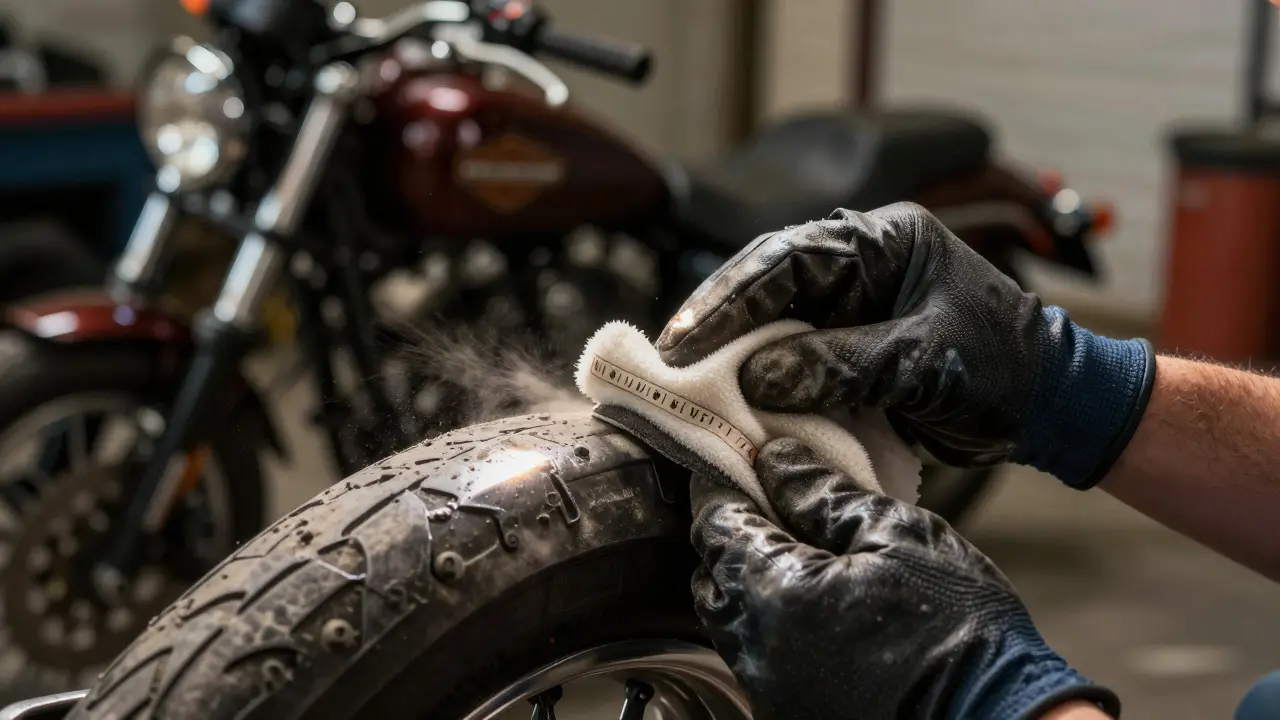
Buying a used motorcycle can feel like walking into a dark room blindfolded. You see the shiny paint, the clean tires, the smooth idle - but what’s hiding under the hood? A rebuilt engine from a crash? A salvage title? Odometer rollback? Without checking the motorcycle VIN, you’re gambling with your money and your safety.
Why a VIN Check Isn’t Optional - It’s Your Lifeline
Every motorcycle made since 1981 has a 17-digit Vehicle Identification Number. It’s not just a random string of letters and numbers. It’s the bike’s fingerprint. That VIN links to every repair, accident, title change, and recall in its life. Skip the VIN check, and you might end up with a bike that’s been totaled twice, stripped for parts, or worse - stolen.Here’s the truth: sellers don’t always tell the whole story. A clean-looking bike could have a hidden frame crack. A low-mileage odometer might be a lie. A clean title might be a fraud. A 2020 Harley-Davidson Sportster with 8,000 miles sounds great - until you run the VIN and find out it was declared a total loss after a crash in 2022, then rebuilt and resold without disclosure.
That’s not rare. In 2024, the National Insurance Crime Bureau reported over 12,000 stolen motorcycles in the U.S. alone. Many of those were later resold with fake paperwork. A VIN check can flag those bikes before you hand over cash.
Where to Find the VIN on a Motorcycle
You’d think it’s obvious, but many buyers miss it. The VIN is usually stamped in one of three places:- On the steering neck, just behind the front fork - you’ll need to turn the handlebars to see it
- On the frame near the engine, often on the left side under the seat or near the down tube
- On a metal plate riveted to the frame, sometimes under the fuel tank or on the rear swingarm
Don’t trust the seller’s word. Go look for it yourself. Compare what’s on the title, the registration, and the bike. If they don’t match, walk away. Even a single digit difference means trouble.
How to Run a Motorcycle VIN Check - Step by Step
You don’t need a degree in mechanics to run a VIN check. Here’s how to do it right:- Write down the full 17-digit VIN exactly as it appears on the bike. No typos.
- Go to the National Highway Traffic Safety Administration’s free VIN lookup tool at nhtsa.gov/vin. It gives you recall history, safety notices, and manufacturer alerts.
- Use a paid service like Carfax, AutoCheck, or BikeVinCheck. These pull service records, accident reports, and title history from DMVs and insurance companies. Most cost $10-$25.
- Check the state DMV website. Many states let you look up title status and lien information for a small fee - often under $5.
- Call the manufacturer’s customer service line with the VIN. They can tell you if the bike was ever part of a recall or had a factory repair.
Don’t stop at one source. NHTSA won’t tell you if the bike was in a fender bender. Carfax might miss a repair done at a small shop that never reported it. Cross-reference everything.
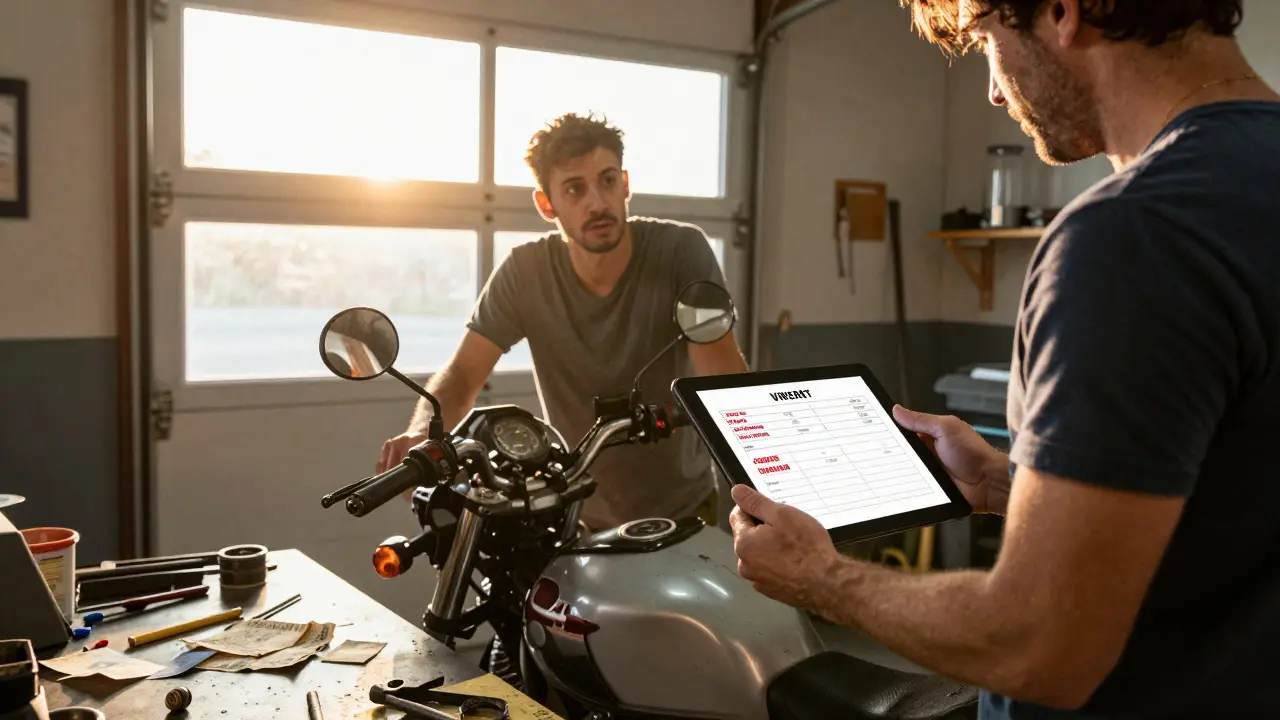
What Service Records Tell You - And What They Don’t
Service records are your window into how the bike was treated. A full history of oil changes, brake jobs, and chain replacements? That’s a good sign. No records? That’s a red flag.But here’s the catch: service records aren’t foolproof. Many riders - especially those who ride casually - do their own maintenance. They might’ve changed the oil every 3,000 miles but never kept a receipt. That doesn’t mean the bike was neglected.
Look for patterns:
- Are there gaps of more than two years between services? That’s a warning.
- Do the records show major repairs - like a rebuilt engine or replaced frame? That’s a dealbreaker unless you know the repair was done right.
- Are there multiple repairs to the same part? A clutch replaced twice in five years? That could mean poor riding habits or a bad batch of parts.
Ask the seller for copies of receipts or digital service logs. If they say, “I just took it to the shop - I don’t have anything,” push harder. A well-maintained bike comes with proof.
Red Flags in Title History
The title tells you who owned the bike and whether it’s clean. But titles can be manipulated. Watch for these warning signs:- Salvage title - The bike was declared a total loss by an insurer. Usually after a crash or flood. Even if it’s been rebuilt, structural damage can linger.
- Rebuilt title - The bike was salvaged, then repaired and re-registered. Not always bad, but it’s harder to insure and resell.
- Branded title - Words like “flood,” “fire,” or “hail” on the title. These bikes often have hidden electrical or rust damage.
- Multiple owners in a short time - Three owners in two years? That’s unusual for a well-loved bike. Could mean problems.
- Out-of-state title - Especially from states with lax inspection rules. A bike that’s been in Florida might have saltwater corrosion, even if it looks fine.
Always ask: “Was this bike ever in an accident?” Then check the VIN. Don’t take their answer at face value.
How to Spot a Stolen Motorcycle
Thieves don’t just steal bikes - they clone VINs. They steal a legal bike, copy its VIN, then graft it onto a stolen one. The result? Two bikes with the same number. One’s legal. One’s stolen. And you could end up with the stolen one.Here’s how to catch it:
- Compare the VIN on the title to the VIN stamped on the frame. If they don’t match exactly - down to the letter - it’s fake.
- Check if the VIN matches the manufacturer’s database. Call the dealer or use the manufacturer’s VIN decoder.
- Look for signs of tampering: scratches around the VIN plate, mismatched rivets, or a VIN that looks freshly stamped.
- Ask for the original registration. If the seller doesn’t have it, be suspicious.
If you’re still unsure, take the bike to a mechanic who specializes in motorcycles. They can spot altered frames, mismatched serial numbers on engine blocks, or signs of VIN cloning.
What to Do If You Find a Problem
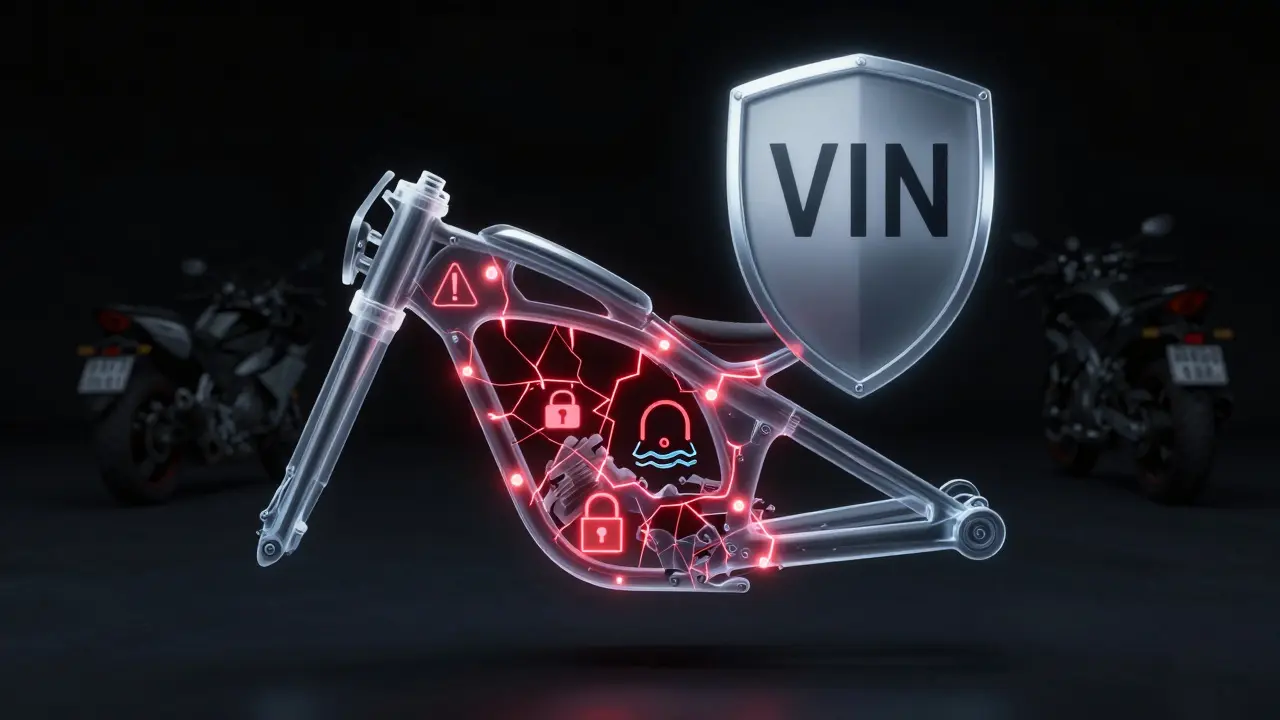
You run the VIN. The title says “salvage.” The service records show a cracked frame repaired with epoxy. The seller says, “It’s fine now.”Don’t buy it.
Walk away. Even if the price looks amazing. A rebuilt bike might ride okay today - but the frame could fail at 70 mph. Insurance won’t cover it. Resale value? Zero.
If the bike has a clean title but no service records, negotiate a pre-purchase inspection. Pay a mechanic $75-$150 to check the engine, suspension, and frame. It’s cheaper than buying a lemon.
And if the seller refuses a VIN check? That’s the biggest red flag of all. Legitimate sellers welcome verification. If they push back, they’re hiding something.
Pro Tips for Buying Used Motorcycles
- Always test ride the bike. Listen for knocking, rattling, or unusual noises. Check the clutch, brakes, and throttle response.
- Bring a friend who knows bikes. Two eyes are better than one.
- Use a bill of sale. Even if it’s a private sale. Write down the VIN, mileage, date, and both parties’ info.
- Don’t pay cash unless you’ve verified everything. Use a secure payment method like PayPal Goods & Services or a bank wire with a receipt.
- Check the NHTSA recall database every year. Even after you buy. Some recalls show up years later.
There’s no magic formula to avoid a bad used bike. But there is one rule: if you can’t verify its history, don’t buy it. A $500 savings isn’t worth a $3,000 mistake.
Can I check a motorcycle VIN for free?
Yes, you can check basic VIN info for free through the NHTSA website. It will tell you about recalls, safety notices, and manufacturer alerts. But it won’t show accident history, service records, or title status. For that, you need a paid service like Carfax or BikeVinCheck, which cost $10-$25. Those reports pull data from DMVs, insurance claims, and repair shops.
What if the VIN doesn’t match the title?
If the VIN on the bike doesn’t match the VIN on the title, do not buy it. This is a major red flag - it could mean the bike was stolen, cloned, or illegally modified. Contact your local DMV immediately. In most states, this is a criminal offense. Even if the seller claims it’s a mistake, walk away. No legitimate owner would risk selling a bike with mismatched VINs.
Do all service records show up in a VIN report?
No. Only repairs done at shops that report to the database will appear. Dealerships and big chains like Jiffy Lube or independent shops that use repair software like Mitchell1 usually report. But many private owners and small local mechanics don’t. So a lack of records doesn’t always mean neglect - but it does mean you need to dig deeper. Ask for receipts, photos of maintenance, or ask to see the bike’s service logbook.
Can a salvage title motorcycle be insured?
Yes, but it’s harder and more expensive. Most insurers will cover rebuilt salvage bikes, but they’ll charge higher premiums and may limit coverage. Some won’t offer full liability or comprehensive. You’ll also need a state inspection certificate proving the bike is roadworthy. Always call your insurer before buying - don’t assume you can get coverage after the fact.
How do I know if a motorcycle has been in a flood?
Flood damage isn’t always obvious. Look for rust on bolts under the seat, mud or silt in the airbox, water stains on the frame, or a musty smell in the seat or fairings. Check the VIN report - if it says “flood” or “water damage,” avoid it. Even if it runs fine now, water destroys electronics and corrodes metal over time. A flood-damaged bike can fail unexpectedly - and it’s rarely worth fixing.
Next Steps: What to Do After Your VIN Check
Once you’ve verified the VIN and service history, here’s what to do next:- Get a pre-purchase inspection by a trusted mechanic - even if the bike looks perfect.
- Verify the seller’s ID matches the title owner. Scammers often use fake names.
- Use a secure payment method. Avoid cash. Use PayPal Goods & Services or a bank transfer with a receipt.
- Get a signed bill of sale with the VIN, mileage, and date.
- Register the bike with your state DMV within 30 days. Don’t delay - unregistered bikes can be towed or fined.
A used motorcycle can be a great ride - if you know its past. Don’t fall for the shiny surface. Dig into the history. A few minutes with a VIN checker can save you thousands - and maybe your life.

Jen Becker
February 3, 2026 AT 01:05This post made me sweat. I bought a bike last year without checking the VIN. Turned out it was stolen. Police took it. I lost $4k. Don’t be me.
Ryan Toporowski
February 3, 2026 AT 01:28Great breakdown! 👏 Seriously, everyone buying used should read this. I always do a VIN check now - even for $5 bikes. Better safe than sorry! 🏍️❤️
Samuel Bennett
February 4, 2026 AT 22:31Carfax is garbage for motorcycles. They don’t even track half the shops. And NHTSA? That’s just recalls - not accidents. You need BikeVinCheck, and even then, half the data’s missing. This whole system is rigged.
Also, why does everyone assume the seller is lying? Maybe they just don’t have receipts. I’ve changed my own oil for 12 years. Should I be assumed guilty?
Rob D
February 5, 2026 AT 20:37You guys are all pussies. Real riders don’t check VINs. We ride, we fix, we survive. If you need a $25 report to feel safe, you shouldn’t be on two wheels.
And don’t even get me started on the DMV. They’re all corrupt. I’ve seen titles changed with a Sharpie and a handshake. The only real check? Kick the tires, smell the oil, and trust your gut.
Also - if your bike’s from Florida, it’s already dead. Saltwater eats everything. Walk away. Period.
Franklin Hooper
February 6, 2026 AT 00:22The grammar in this post is inconsistent. Paragraphs are inconsistently closed. The heading hierarchy is improperly nested. The use of italic for emphasis is redundant when bold is available.
Also, "VIN" should be capitalized consistently. It is an acronym, not a word.
And the claim that "a few minutes with a VIN checker can save you thousands" is statistically unsupported. The sample size of reported fraud is minuscule compared to total transactions. You are fearmongering.
Jess Ciro
February 6, 2026 AT 13:50They’re hiding the real truth. VIN checks are controlled by the auto-industrial complex. The government doesn’t want you to know how easy it is to fake a title.
I know a guy who works at a DMV. He says 70% of rebuilt titles are backdoored through shell companies. And Carfax? Owned by a Chinese conglomerate now. They delete records on demand.
Don’t trust any digital record. Go to the junkyard. Find the original frame number. If it’s not visible, the bike’s a ghost.
And if you’re buying a Harley? Skip it. They’re all stolen. Every single one.
saravana kumar
February 8, 2026 AT 10:32This is very detailed. But in India, we do not have such systems. No VIN database. No service records. We buy based on trust, smell, sound, and price. If it runs, we ride.
Why spend money on reports when you can ask the mechanic next door? He knows the bike’s history better than any website.
Also, most used bikes here are 10 years old. No one kept receipts. So your advice is irrelevant to us.
Tamil selvan
February 8, 2026 AT 23:09I appreciate the thoroughness of this guide - it reflects a deep understanding of the risks involved in purchasing pre-owned motorcycles.
However, I would like to gently suggest that the tone, while informative, may unintentionally instill excessive anxiety in novice buyers.
It is important to balance caution with confidence. Many riders, especially in regions with limited infrastructure, rely on personal networks and hands-on inspection - which, when done diligently, can be just as reliable as digital reports.
Ultimately, the goal is not to paralyze decision-making, but to empower it - with knowledge, not fear.