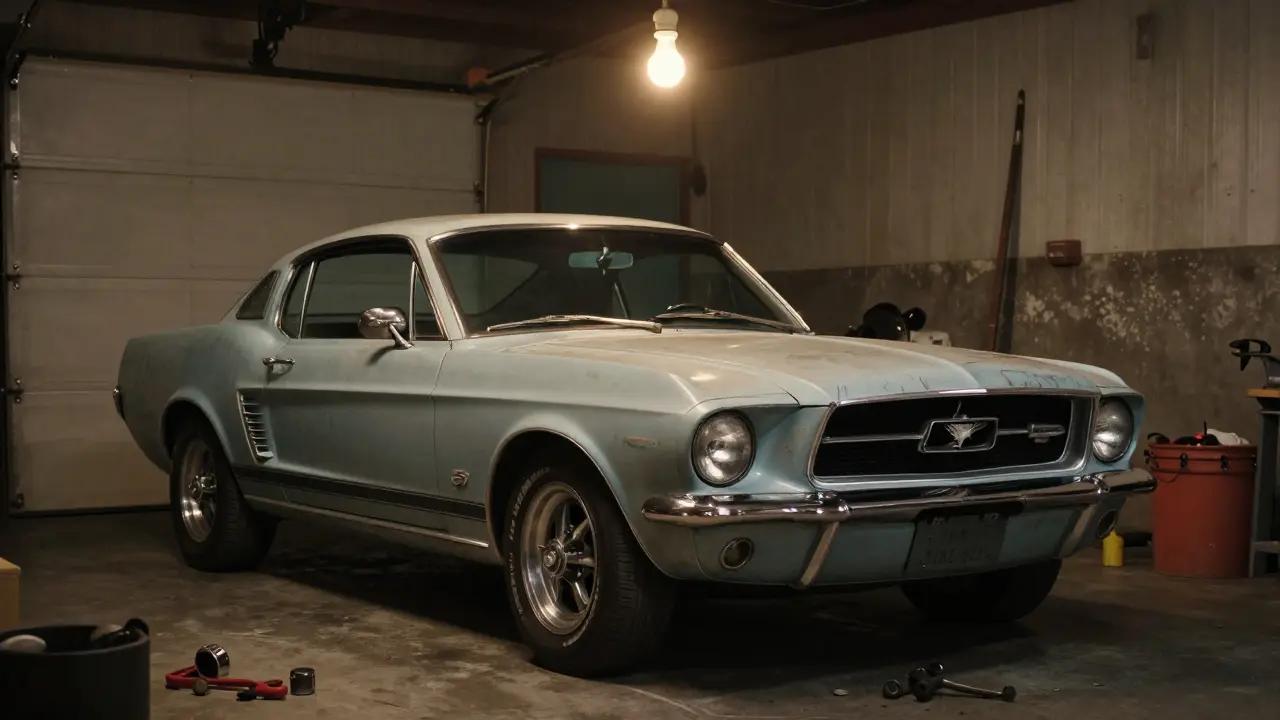
You bought a classic car. Maybe it’s a 1967 Mustang with faded paint and a ticking engine. Or a 1972 BMW 2002 with a cracked dashboard and a transmission that grinds in second gear. Now you’re staring at it in your garage, wondering: do you restore it to factory specs, or turn it into a restomod?
There’s no right answer. But there’s a right choice for you - if you know what you’re really asking.
What Does Originality Even Mean?
Originality isn’t just about keeping the car as it rolled off the assembly line. It’s about preserving history. A fully original 1969 Chevrolet Camaro SS with its numbers-matching 396 V8, factory paint, and untouched interior? That’s a time capsule. These cars are rare. According to the Classic Car Club of America, fewer than 12% of muscle cars from the 1960s still have their original engines, transmissions, and body panels. And collectors pay premiums for them - sometimes 40% more than restomods.
But originality has a cost. That original paint? It’s probably flaking. The original suspension? It’s stiff as a board. The original radio? It doesn’t even turn on. And if you drive it, you risk rust, damage, or worse - losing the very thing that makes it valuable.
Restoring to original specs means sourcing factory-correct parts. That could mean hunting down NOS (New Old Stock) trim pieces, finding a paint code match from a 60-year-old formula, or rebuilding a carburetor with parts that haven’t been made since 1971. It’s expensive. It’s time-consuming. And it often means giving up modern comfort and safety.
What Is a Restomod, Really?
A restomod takes a classic shell and upgrades it with modern parts. Think: fuel injection instead of carburetors, disc brakes from a 2000s Camaro, air conditioning, power steering, a modern stereo, and even LED headlights. Some restomods even swap in LS V8 engines, six-speed transmissions, or independent rear suspensions.
Restomods aren’t new. The trend took off in the late 1990s, but exploded after 2010 as parts became more accessible and builders got better. Today, companies like Classic Recreations and RestoMod Garage specialize in turning old Chevys and Fords into daily drivers that handle like new cars.
Here’s the catch: a restomod isn’t a restoration. It’s a transformation. And that changes the car’s value - and its soul.
Why People Choose Originality
People who choose originality aren’t just nostalgic. They’re historians.
- They want to preserve the car as it was when it mattered - when it won races, when it was driven by its original owner, when it defined an era.
- They care about concours judging. At events like the Pebble Beach Concours d’Elegance, cars are scored down to the type of screw used on the dashboard.
- They believe original cars are investments. A numbers-matching 1971 Hemi Cuda sold for $2.7 million in 2024. Its value isn’t in performance - it’s in authenticity.
But originality also means accepting limitations. You won’t drive it in the rain. You won’t take it on a road trip. You’ll park it in a climate-controlled garage and clean it with a microfiber cloth. For some, that’s the point. For others, it’s a prison.
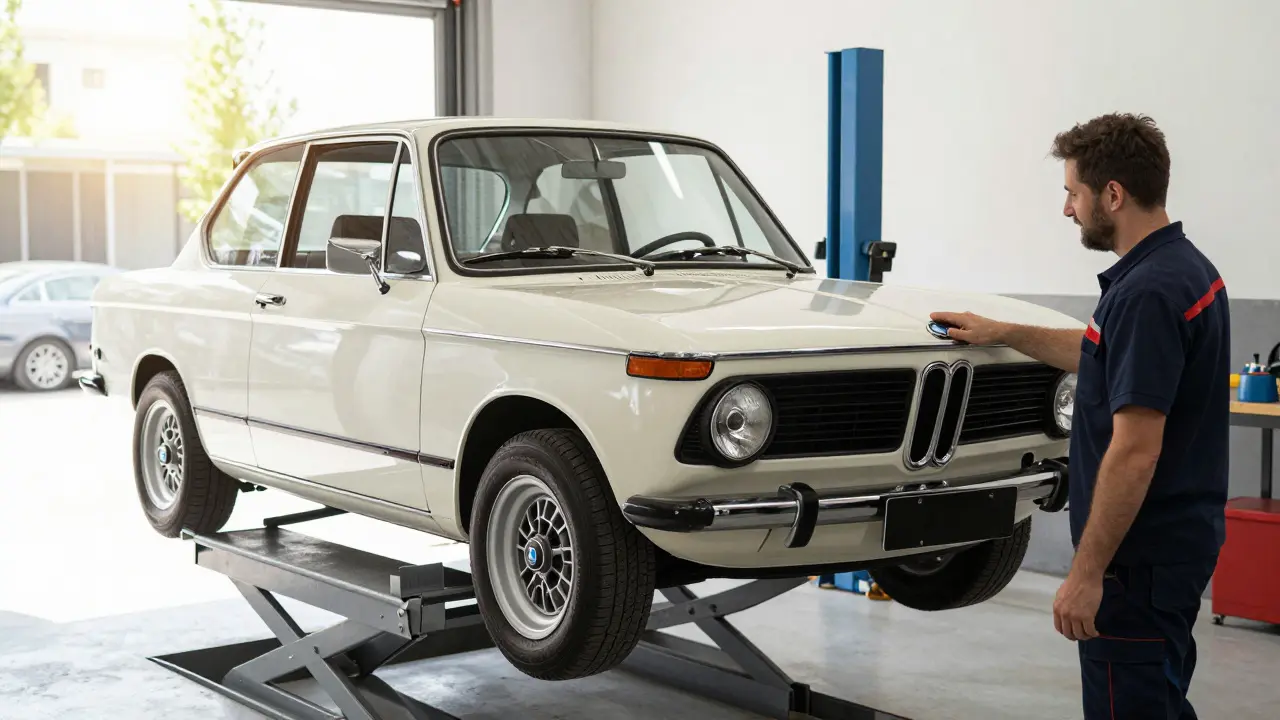
Why People Choose Restomod
Restomodders don’t want to live in the past. They want to drive it.
- They want cruise control on a 1968 Corvette, not a 20-minute drive that leaves them exhausted.
- They want to hear their kids laugh in the back seat while the AC keeps them cool.
- They want to pass a modern sports car at a red light - not because it’s faster, but because they can.
Restomods are practical. A 1974 Datsun 240Z with a 5.3L LS V8, modern suspension, and a six-speed manual can do 0-60 in 4.2 seconds. That’s faster than a new Mustang GT. And it still looks like a 1970s icon.
There’s also a growing market for restomods. Companies like Bring a Trailer report that restomods now make up 38% of all classic car sales - up from 17% in 2018. Buyers aren’t just collectors. They’re enthusiasts who want to use their cars.
The Hidden Trade-Offs
Originality doesn’t just cost money. It costs freedom. You’re tied to the past. You can’t upgrade. You can’t fix what’s broken - you can only replace it with the exact same thing.
Restomodding doesn’t just cost money. It costs legacy. A restomod might drive better, but it won’t win a concours. Insurance companies may not recognize it as a “classic.” Some clubs won’t let it in. And if you ever want to sell it, you’ll need to prove the upgrades were done right - or risk losing value.
There’s also a gray area: what counts as a restomod? If you swap the carburetor for a fuel injection system but keep everything else stock, is it still original? If you replace the seats with modern leather but keep the original dash? There’s no rulebook. It’s up to you.
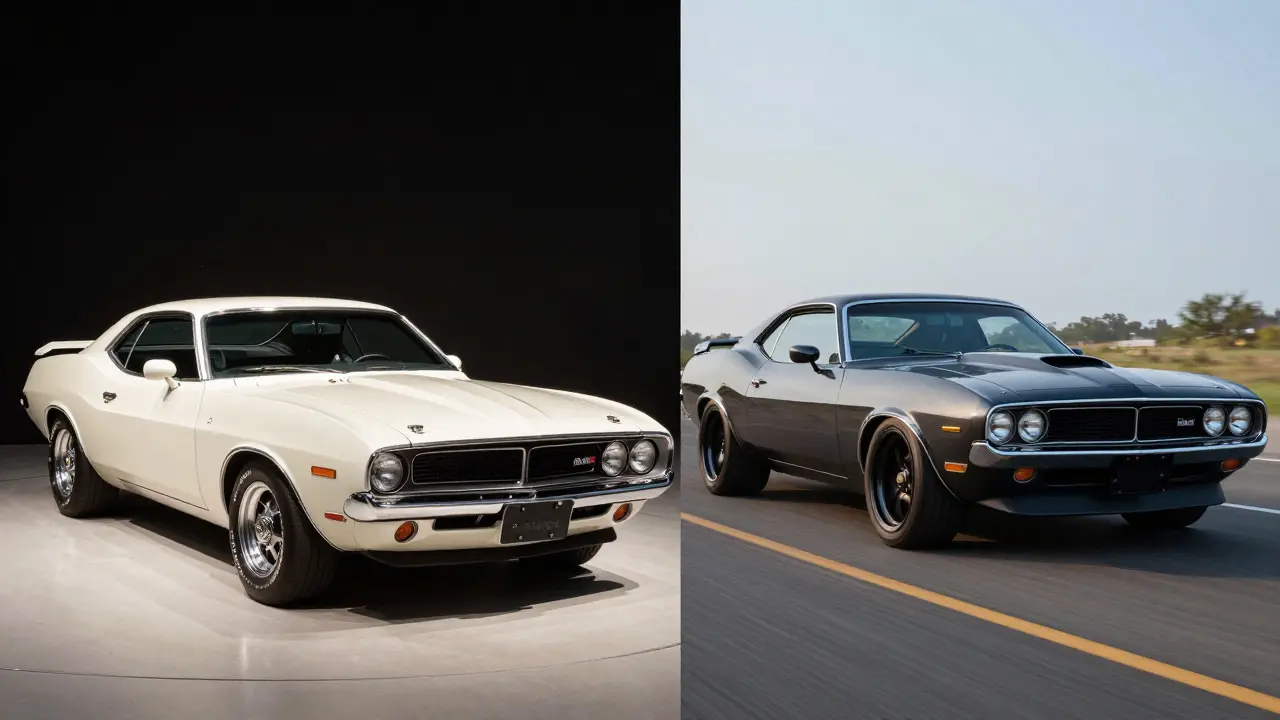
How to Decide: Three Questions
Here’s how to cut through the noise:
- Are you preserving history - or creating a new one? If you want to honor the car’s past, go original. If you want to make it your own, go restomod.
- Will you drive it - or just admire it? If you plan to use it weekly, restomod. If you’ll keep it in a bubble, originality makes sense.
- What’s your budget for the long haul? Original restoration can cost $80,000-$150,000. A solid restomod starts at $60,000 but can easily hit $200,000 if you go all-in. Neither is cheap. But restomods often have lower ongoing costs - better fuel economy, fewer mechanical surprises.
There’s no shame in either path. But there’s a big difference between owning a museum piece and owning a car you love to drive.
Real-World Examples
Take the 1970 Pontiac GTO. A fully original, numbers-matching example with its 400ci V8 and factory paint? It’s worth $85,000 today. A restomod with a 6.2L LS3, modern suspension, and a 10-speed automatic? It’s worth $110,000 - and sells faster. Why? Because it’s not just a car. It’s a driver’s car.
On the other hand, a 1967 Shelby GT500 with its original 427ci engine and factory documentation? It sold for $1.9 million in 2025. The restomod version? $750,000. The original has a story. The restomod has performance. One is history. The other is evolution.
Final Thought: It’s Not About the Car
It’s about what the car means to you.
If you’re the kind of person who gets emotional seeing a 1970s dashboard with original dials, then originality is your path. If you’re the kind who grins when you hear a modern V8 roar to life under a classic hood, then restomod is calling.
There’s no wrong choice. Just the one that fits who you are - not who you think you should be.
Can I still get insurance for a restomod?
Yes, but not all insurers treat restomods the same. Companies like Hagerty and Grundy specialize in classic and modified vehicles. They’ll cover restomods if you document the upgrades - especially engine swaps, brake systems, and safety modifications. Standard auto insurers often won’t cover them unless they’re classified as “modified classics.” Always get a written appraisal and keep receipts.
Does restomodding decrease a car’s value?
It depends. For concours collectors, yes - a restomod is worth less than an original. But for everyday drivers and performance enthusiasts, a well-executed restomod can be worth more. A 1973 Datsun 240Z with factory parts might sell for $45,000. The same car with a modern engine, suspension, and brakes? $90,000. Value isn’t about purity - it’s about demand.
What’s the most common mistake in restomodding?
Overdoing it. Too many people add every modern feature - touchscreen, backup camera, electric seats - and lose the car’s soul. A good restomod enhances, doesn’t overwhelm. Stick to upgrades that improve safety and drivability: brakes, suspension, steering, and engine efficiency. Leave the gadgets for the Tesla.
Is it possible to restore a car and later convert it to a restomod?
Technically, yes - but it’s risky. Once you replace original parts, you can’t go back. Many collectors consider this irreversible damage. If you’re unsure, start with a non-original car - one that’s already been modified. That way, you can build your dream without losing historical value.
Are restomods legal for street use?
Yes, in all 50 states - as long as they meet emissions and safety standards. Most states allow restomods under “modified vehicle” rules, but requirements vary. California has strict emissions rules; states like Texas and Florida are more lenient. Always check with your DMV before starting. Many restomod builders work with certified shops that handle compliance.