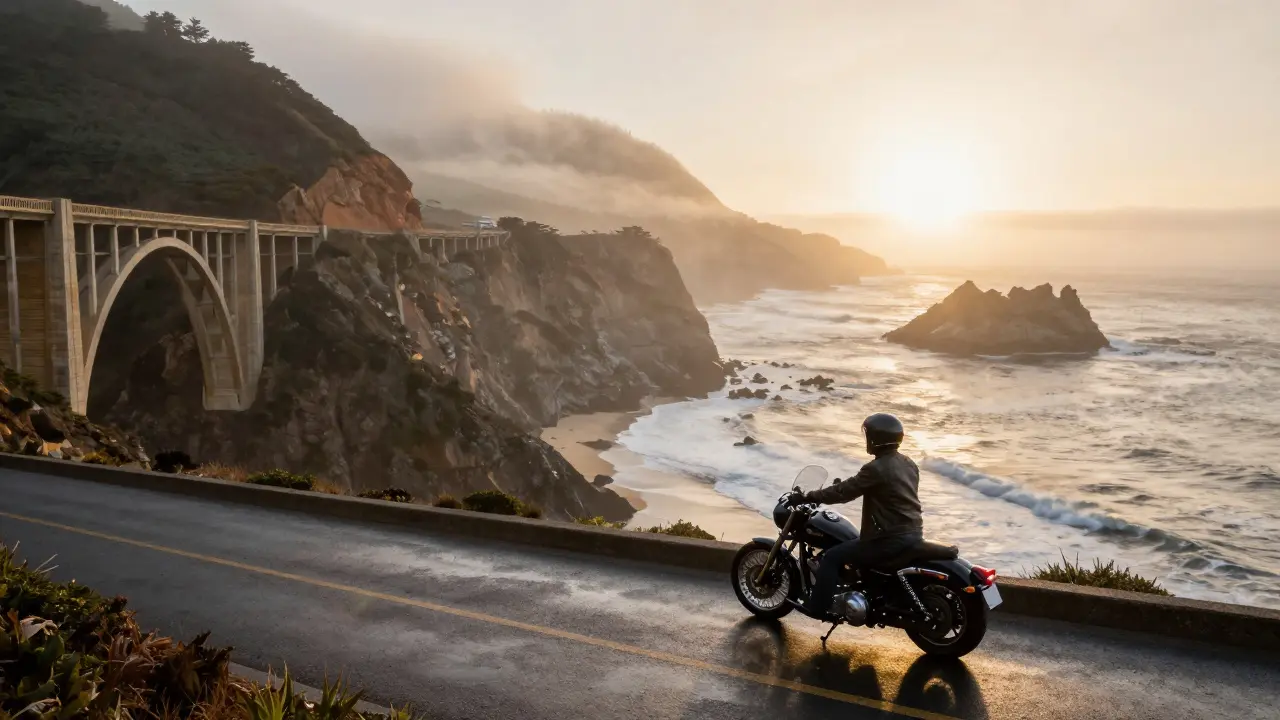
There’s a reason riders from Alaska to Argentina dream about the Pacific Coast Highway. It’s not just a road - it’s a ribbon of asphalt that hugs the edge of the continent, where cliffs drop into the Pacific, redwoods tower over your helmet, and the smell of salt mixes with engine oil. Riding it isn’t about speed. It’s about the pause. The turn that makes you slow down. The overlook you didn’t plan for but can’t skip.
Why the PCH Is Different From Any Other Ride
Most highway rides feel like getting from A to B. The PCH doesn’t care where you’re going. It only cares that you’re here. You’ll pass through towns where the main street is a single stoplight and the café serves coffee in mugs that have been chipped for 30 years. You’ll ride past beaches where surfers wait for waves you’ll never see up close - but you’ll feel them in the wind.
Unlike the interstate, the PCH doesn’t let you zone out. There are no endless stretches of flat concrete. Every curve has a story. The hairpin at Bixby Bridge? Built in 1932. The stretch between Big Sur and Carmel? Where Clint Eastwood filmed scenes that made the coast legendary. You’re not just riding a road. You’re riding through history, geology, and culture - all at 45 miles per hour.
Best Scenic Stops Along the Route
You can’t ride the full 655 miles of Highway 1 in one day. And you shouldn’t. Here are the stops that make the ride unforgettable:
- Bixby Creek Bridge - Just south of Big Sur. This is the postcard shot. Park at the pullout on the north side. Take your time. The arch rises 260 feet above the canyon. If you’re lucky, you’ll catch the fog rolling in off the ocean - it turns the bridge into a ghostly silhouette.
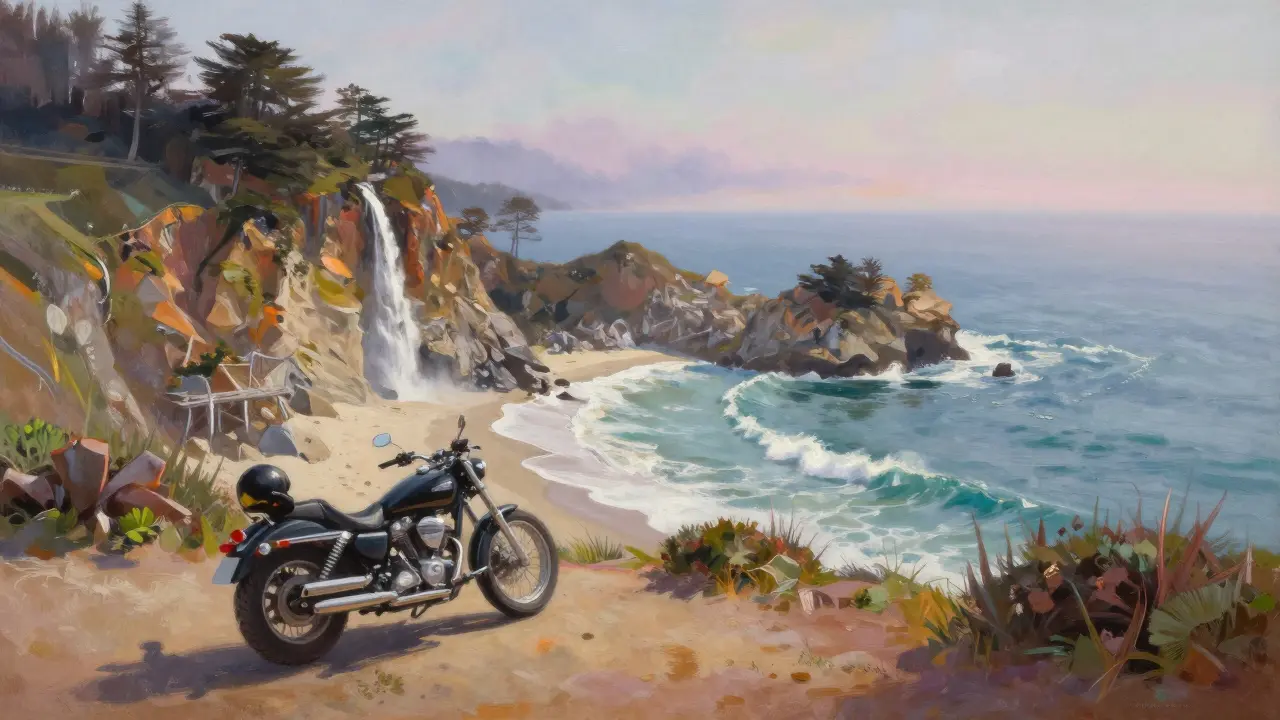
- McWay Falls - In Julia Pfeiffer Burns State Park. A 80-foot waterfall that drops straight onto a beach. No hiking required. Just pull over at the overlook. The view is free. The photo op? Priceless.
- Carmel-by-the-Sea - Think fairy-tale cottages, white sand, and art galleries tucked into alleyways. Grab a burger at The Dog House. Sit outside. Watch the sunset turn the ocean gold.
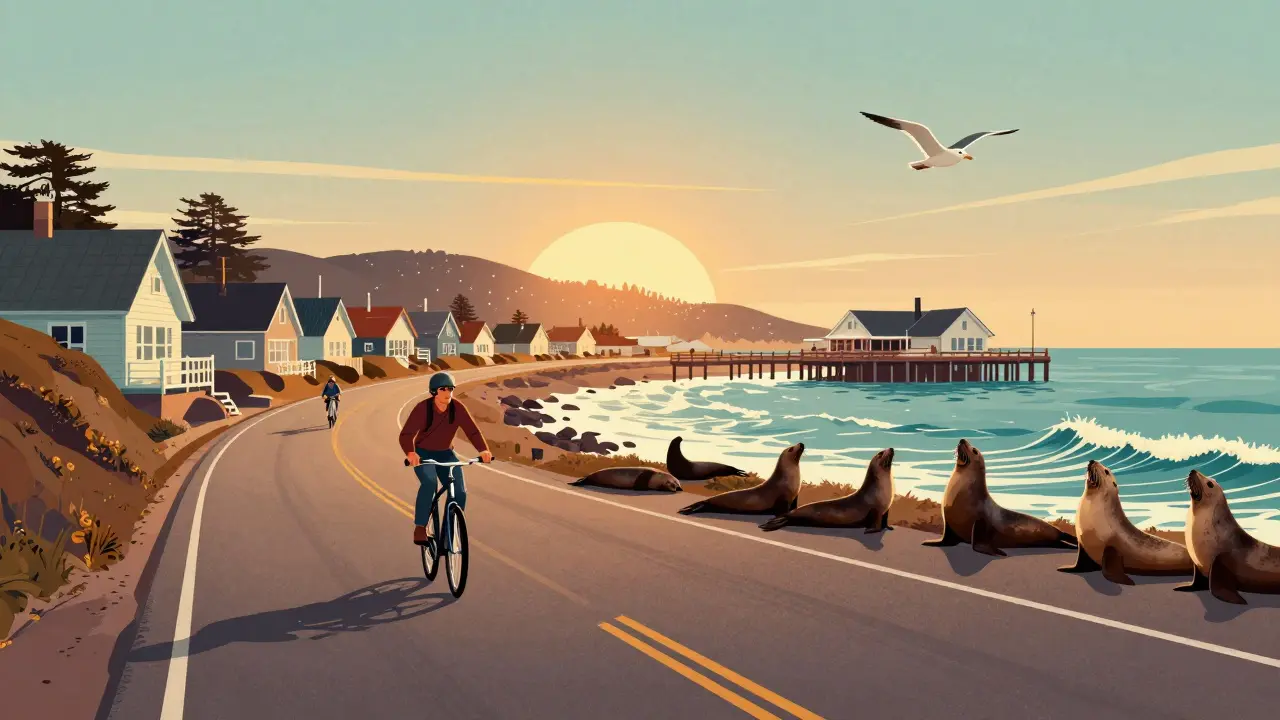
- Santa Barbara’s Stearns Wharf - The oldest working wharf on the West Coast. Ride down to the end. Watch sea lions bark from the pilings. Buy a fish taco from the stand that’s been there since 1987.
- Malibu Pier - Less crowded than the beaches, more real than the Instagram feeds. Park near the fishing boats. Walk the pier. The smell of seaweed and grilled shrimp is the scent of Southern California.
Riding Conditions You Can’t Ignore
The PCH isn’t dangerous - but it’s not forgiving. You need to know what you’re up against.
- Weather changes fast. One minute it’s sunny in Santa Monica. Ten miles up, fog rolls in. Keep a light rain jacket in your tank bag. Even in summer, coastal mornings can be 55°F.
- Curves are tight and blind. Many corners have no guardrails. Watch for the white lines on the pavement - they’re your warning. If you see a sharp bend with a sign that says "Slow," it’s not a suggestion. It’s a rule.
- Traffic isn’t always predictable. Tour buses, RVs, and distracted drivers are common. Don’t assume someone will yield. Ride like they won’t. Stay to the left side of your lane when approaching blind curves. Give yourself room to react.
- Gas stations are sparse. Between Big Sur and San Simeon, you’ll go 50 miles without one. Fill up in Monterey or San Luis Obispo. Don’t wait until your tank hits a quarter. You’ll regret it.
What to Pack - Beyond the Basics
You’ve got your helmet, gloves, and jacket. Now think about what makes the ride better:
- Waterproof phone case. You’ll want to take photos. Rain or spray from the ocean will ruin your phone if you’re not ready.
- Portable charger. GPS apps eat battery. Download offline maps of the entire route before you leave. Google Maps works, but Roadtrippers has better stops marked.
- Lightweight rain gear. A packable rain suit fits in a small saddlebag. You won’t need it every day - but when you do, you’ll be glad.
- Snacks that don’t melt. Trail mix, beef jerky, energy bars. Skip the chocolate. It’ll turn into a sticky mess by noon.
- Small notebook and pen. You’ll see places you want to remember. Write down the name of the café with the best coffee. The name of the guy who fixed your chain in Santa Barbara. Those details stick longer than photos.
When to Ride - Timing Matters
Spring and fall are the sweet spots. May and June bring the clearest skies and the least fog. October and November? Cooler temps, fewer tourists, and the ocean looks like liquid steel.
Avoid July and August if you can. That’s when the fog rolls in thick and stays all day. It’s not that you can’t ride - it’s that you’ll spend half your time squinting through a fogged-up visor. You’ll miss the views.
Weekdays are better than weekends. Saturday mornings on the PCH feel like rush hour in L.A. Sunday afternoons? Same thing. Ride Tuesday through Thursday if you want to feel like you’ve got the road to yourself.
What to Skip - The Tourist Traps
Not every spot with a sign is worth stopping for.
- Malibu’s Zuma Beach parking lot. Overcrowded. Overpriced. You’ll pay $20 just to park. Skip it. Ride to El Matador Beach instead - it’s quieter, wilder, and just as beautiful.
- The "Instagram" selfie spots. Those plastic signs that say "I ❤️ PCH"? They’re everywhere. They’re not part of the ride. They’re distractions. Take your own photo. Don’t pose for a sign.
- Big Sur’s overpriced restaurants. The ones with views? They charge $32 for a burger. Eat at the gas station café in Gorda. It’s not fancy. But the coffee is strong, the pie is warm, and the owner remembers your name.
Final Thought - Ride Like You Mean It
The PCH doesn’t reward speed. It rewards presence. You’ll see more if you ride slower. You’ll feel more if you stop more. Let yourself get lost on a side road. Take the detour to Point Lobos. Stay an extra night in Cambria. Let the rhythm of the coast change your pace.
This isn’t just a motorcycle trip. It’s a reset. The sound of the engine fades. The wind takes over. The ocean speaks louder than any GPS. You’ll remember this ride not by the miles you covered - but by the moments you stopped breathing just to watch the light change on the water.
Is the Pacific Coast Highway open year-round?
Most of Highway 1 stays open, but sections near Big Sur can close after heavy rain or landslides. Check Caltrans’ real-time road conditions before you leave. The stretch between Carmel and San Simeon is the most vulnerable. Have a backup route ready - US-101 runs inland and connects the same towns.
What kind of motorcycle is best for the PCH?
A touring bike like the Honda Gold Wing or BMW R 1250 RT handles long distances and luggage well. But many riders do it on cruisers like the Harley-Davidson Road King or even sport-touring bikes like the Yamaha FJR1300. Even a mid-size adventure bike like the KTM 790 Adventure works if you’re light on gear. Avoid heavy touring rigs if you plan to take side roads - they’re harder to maneuver on narrow curves.
Do I need a passport to ride the PCH?
No. The entire Pacific Coast Highway is within California. You don’t cross any international borders. Just make sure you have your driver’s license, motorcycle endorsement, and proof of insurance. Those are the only legal requirements.
Are there motorcycle-specific rest areas on the PCH?
There aren’t any official motorcycle-only rest stops. But many scenic overlooks double as perfect pull-offs. Look for signs that say "Scenic View" or "Parking for Viewpoint." These spots often have flat ground, space to park safely, and no cars blocking the view. Avoid stopping on the shoulder - it’s dangerous and illegal in many areas.
How long does it take to ride the full PCH?
You can ride from Los Angeles to San Francisco in 6-7 hours without stops. But if you want to see the views, eat good food, and take photos, plan for 3-4 days. Most riders spend two nights on the road - one near Big Sur, one in Carmel or Santa Barbara. Rushing it defeats the whole point.
What Comes After the PCH?
Once you’ve ridden the coast, you’ll start looking for the next road that makes your heart beat a little faster. Maybe it’s the Blue Ridge Parkway in North Carolina. Or the Pacific Coast Highway’s lesser-known cousin - Highway 101 through Oregon. Or the twisty backroads of the San Juan Mountains in Colorado.
But the PCH? It’s the one that stays with you. Not because it’s the longest. Not because it’s the most dangerous. But because it asks you to slow down. To look up. To breathe. And to remember why you got on a motorcycle in the first place.
Akhil Bellam
February 1, 2026 AT 12:04Let’s be real - if you’re riding the PCH and you don’t stop at Bixby Bridge at golden hour while wearing leather gloves and a vintage helmet, you didn’t ride at all. You just drove a motorcycle in circles while listening to Spotify playlists curated by your cousin who thinks ‘adventure’ means a Walmart parking lot. The fog? The salt? The way the light hits the arch like it’s been painted by God’s own brush? That’s not scenery - that’s a spiritual experience. And if you’re posting a selfie with one of those plastic ‘I ❤️ PCH’ signs? You’re not a rider. You’re a tourist with wheels.
Amber Swartz
February 3, 2026 AT 01:51Okay but have you ever cried on the PCH? I mean, really cried? Not because of the wind or the engine noise - but because you suddenly realized you’ve been running from yourself for seven years and the ocean doesn’t care? I did. At McWay Falls. With a half-eaten burrito in my lap and my gloves still on. I didn’t post it. I didn’t tell anyone. But I’ll never forget how the water just… fell. Like it knew. Like it was waiting. And now? I drive a Prius. Because nothing else feels real enough anymore.
Robert Byrne
February 3, 2026 AT 11:23Correction: The PCH doesn’t have ‘scenic overlooks’ - it has sacred ground. And you don’t ‘park’ at Bixby Bridge - you kneel. You don’t ‘take photos’ - you document reverence. Also, the author is 100% right about the gas stations - I ran out of fuel between Gorda and Andrew Molera in 2019. Walked 3.2 miles. Got a free coffee and a ride from a guy named Earl who said, ‘Son, if you’re gonna ride the coast, you better learn how to suffer with style.’ He was right. Also, ‘trail mix’? No. It’s dried mango, raw almonds, and a single dark chocolate square wrapped in foil. Anything less is a betrayal of the ride.
michael T
February 4, 2026 AT 23:22Ugh. I rode the PCH last year and literally everyone was just… staring. Like, I’m on a bike. I’m not a zoo exhibit. I stopped at Malibu Pier and this girl asked if I ‘wanted a selfie with the view’ - like I was a prop. And the food? Everything costs $30. Even the gas station had $8 coffee. I’m not rich. I’m just a guy with a GS 1250. And now I’m depressed. Also, why does everyone think they’re a poet when they ride? Just ride. Don’t write essays. I just wanted to feel the wind. Not be preached at by a guy in a leather vest who thinks fog is ‘a metaphor for life.’
Christina Kooiman
February 6, 2026 AT 08:51First of all, you say ‘you’ll feel them in the wind’ - but ‘them’ refers to what? The waves? You can’t feel waves in the wind - you can feel the spray, or the salt, or the direction of the breeze - but not the waves themselves. That’s not poetic, that’s grammatically incorrect. And you say ‘the smell of salt mixes with engine oil’ - salt doesn’t have a smell, it’s sodium chloride, it’s odorless. You mean the smell of the ocean, which is a complex mix of dimethyl sulfide and other organic compounds - but you didn’t say that. And ‘chipped mugs for 30 years’? That’s not a detail - that’s a cliché. Also, you misspelled ‘saw’ as ‘sees’ in one sentence. I’m not mad. I’m just disappointed. And also, why is the wharf ‘the oldest working wharf on the West Coast’? What about San Diego? What about Astoria? You didn’t even check your facts. This whole thing feels like a BuzzFeed list written by someone who’s never actually been there.
Stephanie Serblowski
February 7, 2026 AT 13:10Okay but have y’all noticed how the PCH is basically the spiritual cousin of the Camino de Santiago? Like - it’s not about the miles, it’s about the internal GPS resetting? I mean, I rode it on my KTM 790 with a dog named Biscuit in the sidecar and we cried at Big Sur because the clouds looked like dragons. And then we ate fish tacos from this guy named Manny who said, ‘You’re not lost - you’re just in the right place at the wrong time.’ And I’ve never felt more seen. 🌊🏍️✨ Also, if you’re not using Roadtrippers, you’re doing it wrong. Google Maps is for people who think ‘adventure’ is a Spotify playlist.
Renea Maxima
February 9, 2026 AT 13:00What if the PCH isn’t real? What if it’s just a collective hallucination created by 80s motorcycle ads and too much coffee? What if the ‘fog’ is just a projection of our collective loneliness? And the ‘rustic café’? What if it’s just a Walmart with a sign that says ‘Gorda’s Best Pie’? What if the whole thing is a metaphor for capitalism selling transcendence as a commodity? I rode it. I didn’t stop. I kept going. Because maybe the only true stop is the one you never take.
Jeremy Chick
February 9, 2026 AT 15:15Y’all are overthinking this. I rode it on a 2003 Honda Shadow. No GPS. No notebook. No fancy snacks. Just a six-pack of cheap beer and a pair of gloves. Stopped where I felt like it. Ate a burrito from a truck that smelled like diesel. Took one picture - blurry, of a seagull mid-flight. Didn’t cry. Didn’t write poetry. Didn’t post it. Just rode. And yeah - I felt it. Not because of the view. Because I didn’t care about the view. I just wanted to be on the road. That’s all. The rest is noise.