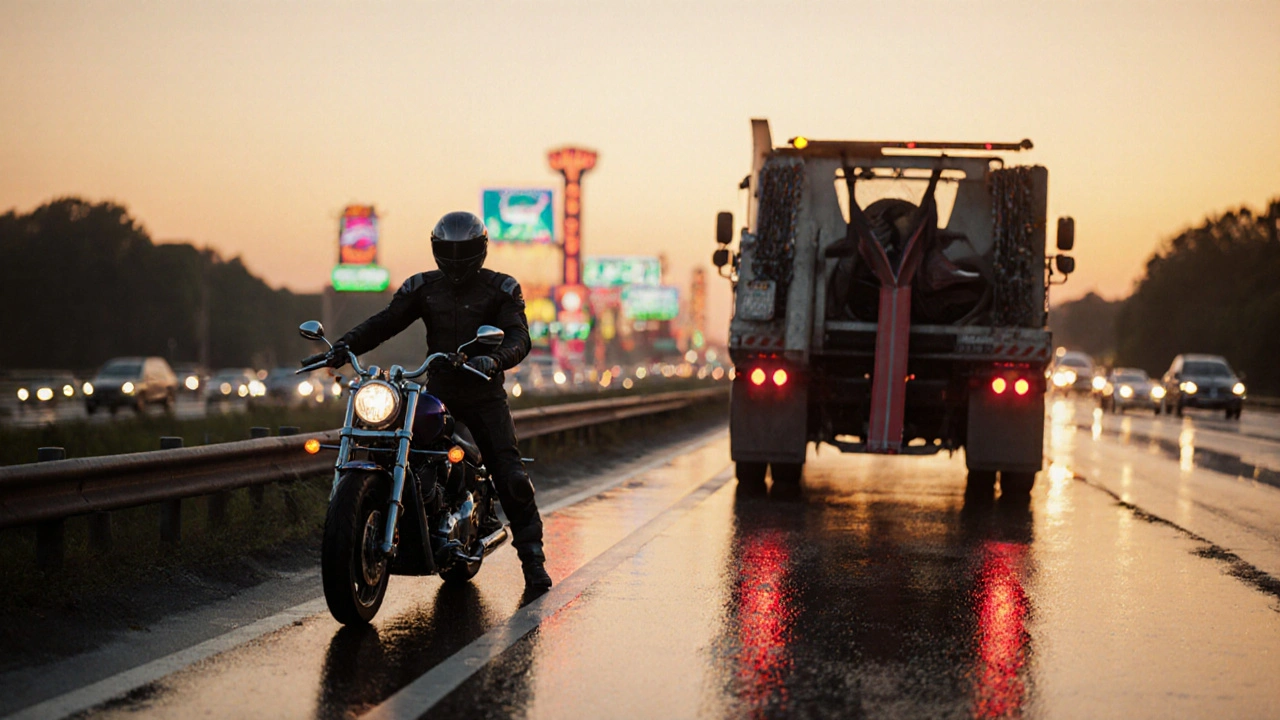
Breaking down on a motorcycle isn’t like breaking down in a car. You’re exposed. The wind bites. The traffic doesn’t stop. And if you’re far from home with a flat tire, empty tank, or seized engine, you’re not just stuck-you’re vulnerable. Roadside assistance for motorcycles isn’t a luxury; it’s a necessity. But not all services are built the same. Towing a bike isn’t the same as towing a sedan. A flat tire on a sportbike needs different tools than one on a cruiser. And fuel delivery? It’s trickier than you think.
Why Motorcycle Roadside Assistance Is Different
Most car roadside programs don’t cover motorcycles-or they charge extra. Even when they do, the response team might not have the right equipment. A standard tow truck can’t lift a 500-pound bike onto a flatbed without a specialized ramp and straps. If the driver doesn’t know how to secure a motorcycle, you risk damage to the frame, fairings, or wheels. And if your bike’s in a ditch or on a gravel shoulder, a four-wheel drive truck with winch capability is the only safe option.
Motorcycle-specific roadside services have trained crews who know how to handle bikes. They carry soft straps, wheel chocks, and lift kits designed for low-ground-clearance machines. They don’t just drag your bike onto a truck-they treat it like the precision machine it is.
Towing a Motorcycle: What You Really Need
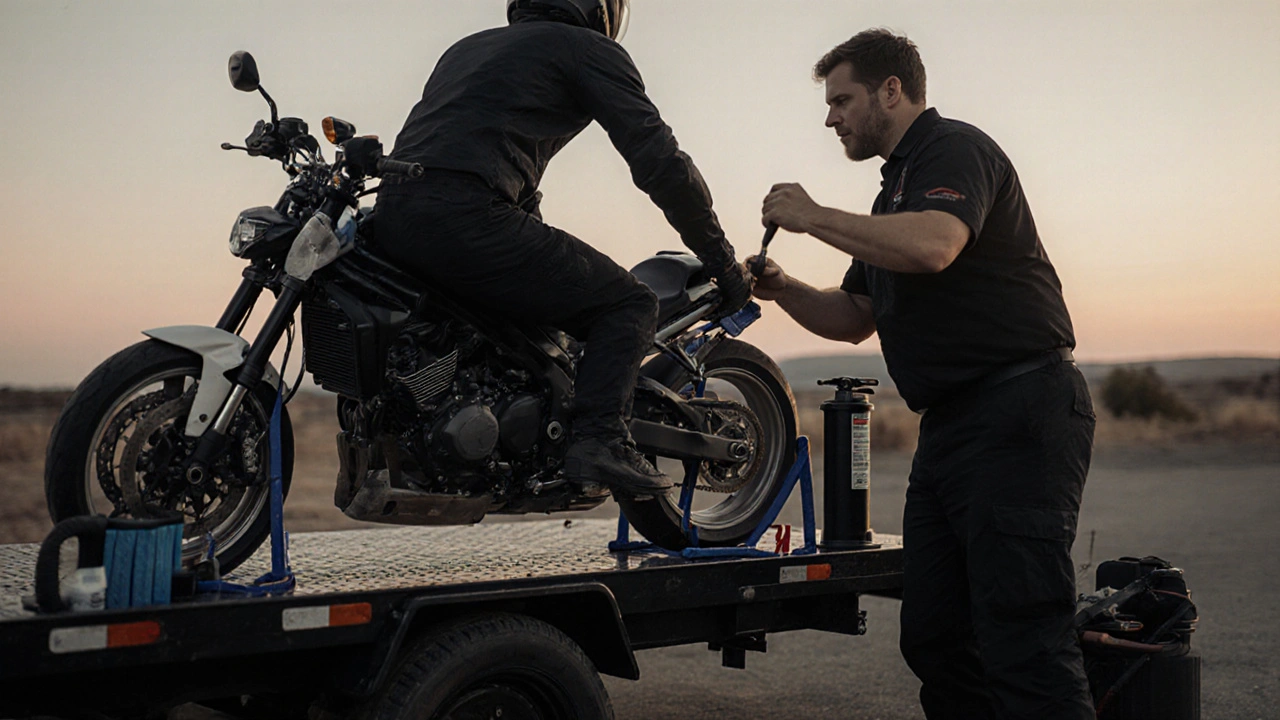
If your engine dies and you can’t push it, towing is your only option. But not every tow truck is built for bikes. Here’s what you need to look for:
- Flatbed towing only-no hook-and-chain methods. That can bend your exhaust, scratch your frame, or snap your swingarm.
- Motorcycle-specific ramps-low-angle ramps reduce the risk of tipping during loading.
- Soft straps, not ratchet straps-ratchets can crush fairings or fuel tanks. Soft webbing with padded hooks is safer.
- Wheel chocks-these prevent the bike from rolling during transit.
Some services offer “on-site recovery” where they bring a trailer to your location and load the bike without moving it. That’s ideal if you’re on a busy highway or narrow road. If your insurance includes towing, check the limit-some only cover 10 miles. Others go up to 100 miles. Know your coverage before you need it.
Flat Tires on Motorcycles: More Common Than You Think
Motorcycle tires wear faster than car tires. And when they go flat, you’re not just inconvenienced-you’re in danger. A sudden flat at 60 mph can mean a crash. Most riders don’t carry spare tires. And even if you do, changing a motorcycle tire on the side of the road is hard. You need jack stands, torque wrenches, and tire irons. And if it’s raining? Forget it.
That’s where roadside assistance with tire service comes in. Some plans offer on-the-spot tire repair using sealant plugs. It’s not a permanent fix, but it gets you to the next shop. Others carry spare tires for common models-like the Honda CB500, Yamaha R6, or Harley Sportster. If your bike uses a rare tire size, they’ll tow you to the nearest dealer.
Pro tip: Know your tire size and brand. Write it down and keep it in your glovebox. If you’re calling for help, being able to say “I have a Michelin Pilot Road 4, 120/70-17 front” speeds things up.
Fuel Delivery: Why It’s Not as Simple as It Sounds
Running out of gas on a motorcycle is embarrassing-but it happens. Especially on long rides where you forget to check the fuel light. But here’s the catch: you can’t just pour gas from a jerry can into a fuel-injected bike. Modern bikes have sealed fuel systems. Pouring fuel directly into the tank can damage the fuel pump or trigger error codes.
Good motorcycle roadside services use fuel transfer pumps designed for bikes. They don’t use plastic funnels or buckets. They use clean, sealed containers and fuel lines that connect directly to the filler neck. Some even carry different octane levels-premium for high-compression engines, regular for cruisers.
And yes, some services require you to be within 5 miles of a gas station. Others will deliver fuel anywhere, as long as you’re not in a restricted zone like a tunnel or bridge. Always ask: “Do you carry fuel compatible with fuel-injected bikes?” If they say “Sure, we just bring a can,” walk away.
What to Look for in a Motorcycle Roadside Plan
Not all plans are created equal. Here’s what to check before signing up:
- 24/7 availability-breakdowns don’t wait for business hours.
- Motorcycle-specific response-do they have trained riders or technicians on call?
- Towing distance limit-is it 10 miles, 50, or unlimited?
- Flat tire coverage-do they repair or replace? Do they carry common sizes?
- Fuel delivery-do they use proper fuel transfer equipment?
- Additional perks-some include battery jump-starts, lockout service, or even a free hotel night if you’re stranded overnight.
Compare plans from AAA Motorcycle, Better World Club, and state-specific motorcycle associations. Some insurance companies like Progressive and Geico offer add-ons for under $50 a year. Others bundle it with your policy. Don’t assume your car plan covers your bike. Always ask.
What to Do When You Break Down
If you’re stranded, stay calm. Here’s the step-by-step:
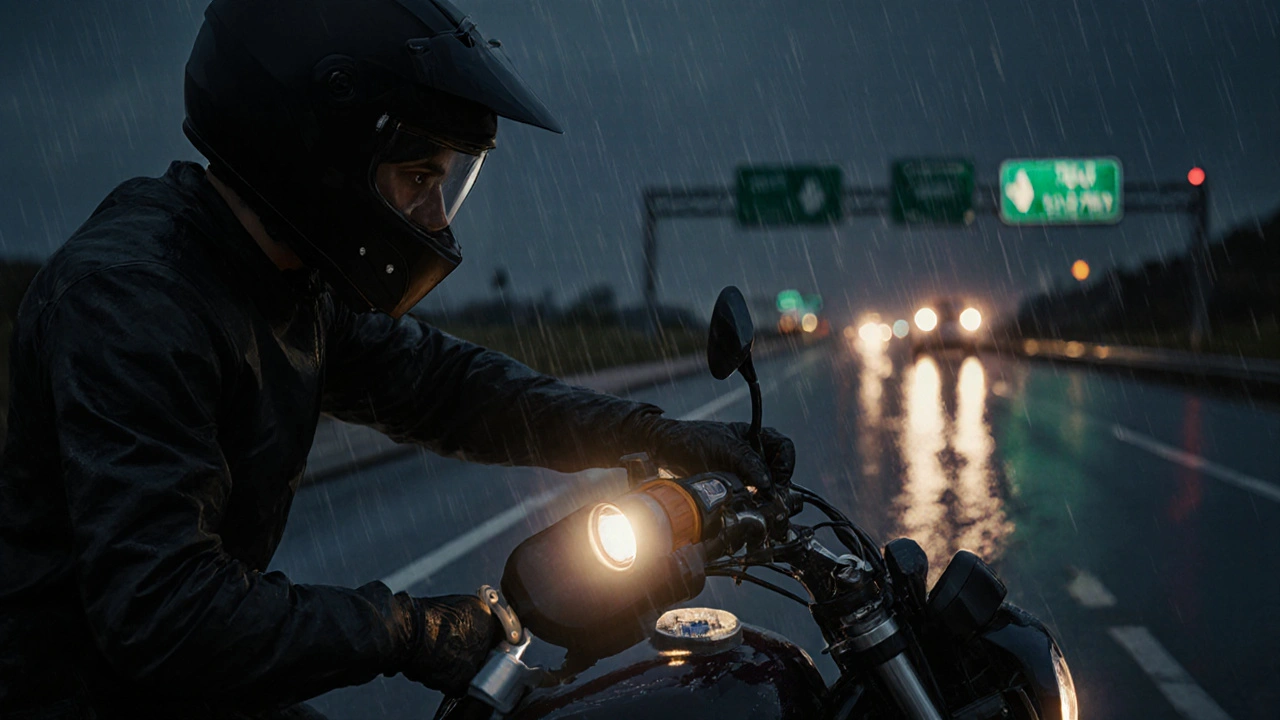
- Move to safety-if you can, coast to the shoulder. If you can’t, turn on your hazard lights and get off the bike.
- Put on your helmet and reflective gear. Visibility saves lives.
- Call your roadside service. Have your membership number ready.
- Describe your bike: make, model, color, and exact problem (flat tire, no fuel, won’t start).
- Stay with your bike. Don’t try to fix it yourself unless you’re trained.
- Take photos of the location and the bike’s condition. It helps with claims.
Don’t wait until you’re stuck to figure this out. Test your plan. Call them and ask, “What happens if I run out of gas on Highway 101 at midnight?” Their answer tells you everything.
How to Prepare Before You Ride
Prevention beats rescue. Here’s what smart riders do:
- Carry a portable tire inflator and sealant-like the Slime 20005. It won’t fix a puncture in the sidewall, but it’ll get you to a shop.
- Keep a small fuel canister (1 quart) in your saddlebag. It’s legal in most states and can buy you 20 miles.
- Download a motorcycle-specific app like GasBike or Fuelio. They show nearby gas stations with real-time fuel prices.
- Check your tire pressure every week. Underinflated tires wear faster and overheat.
- Know your bike’s fuel range. Most sportbikes get 120-150 miles per tank. Cruisers go farther. Don’t push it.
And if you ride in remote areas? Tell someone your route. Text your ETA. If you don’t check in, they’ll know something’s wrong.
Is Roadside Assistance Worth It?
For most riders, yes. A single tow can cost $150-$300. A flat tire repair? $50-$100. Fuel delivery? $25-$75. Add a battery jump and lockout service, and you’re already over $200. Annual plans cost $50-$120. That’s less than a tank of gas.
But value isn’t just money. It’s peace of mind. It’s knowing that if your engine quits on a dark mountain road, someone who knows how to handle your bike is on the way. It’s not about being paranoid. It’s about being prepared.
Don’t wait for a breakdown to learn the hard way. Get covered. Know your plan. Ride with confidence.
Can I use my car’s roadside assistance for my motorcycle?
Usually not. Most car roadside plans either exclude motorcycles entirely or charge extra fees. Even if they cover bikes, they often don’t have the right equipment or trained staff. Always confirm with your provider before assuming coverage.
Do motorcycle roadside services fix flat tires on the spot?
Some do, using tire sealant plugs for small punctures in the tread. This is a temporary fix to get you to a shop. They won’t replace the tire on the side of the road unless they carry the exact size. Most will tow you to the nearest dealer or repair shop instead.
How fast do motorcycle roadside services respond?
Response times vary. In urban areas, you can expect 30-60 minutes. In rural or mountainous regions, it may take 2-4 hours. Plans with guaranteed response times (like 45 minutes) usually cost more. Always ask about average wait times before signing up.
Can roadside assistance jump-start a dead motorcycle battery?
Yes, most motorcycle-specific plans include battery jump-starts. But car jump starters can damage a bike’s sensitive electronics. Make sure the service uses a low-amperage, motorcycle-compatible jump box. Never let someone use jumper cables from a car unless they know how to do it safely.
What if I’m stranded far from home with no coverage?
Call local towing companies and ask if they handle motorcycles. Some independent operators specialize in bikes. If you’re in a remote area, contact your state’s motorcycle association-they often have emergency networks. As a last resort, use ride-share apps like Uber or Lyft to get to the nearest gas station or repair shop. Don’t try to push your bike for miles-it’s dangerous and can cause more damage.
Rae Blackburn
November 30, 2025 AT 19:42LeVar Trotter
December 2, 2025 AT 02:41Tyler Durden
December 2, 2025 AT 05:30Aafreen Khan
December 2, 2025 AT 11:45Pamela Watson
December 2, 2025 AT 19:22michael T
December 3, 2025 AT 07:05Christina Kooiman
December 3, 2025 AT 21:00Stephanie Serblowski
December 5, 2025 AT 11:10Renea Maxima
December 7, 2025 AT 05:55Jeremy Chick
December 8, 2025 AT 23:54Sagar Malik
December 10, 2025 AT 19:29Seraphina Nero
December 11, 2025 AT 12:58Megan Ellaby
December 12, 2025 AT 23:25Rahul U.
December 13, 2025 AT 06:40