Air-Fuel Ratio: What It Is and How It Affects Your Engine's Performance
When you think about what makes your car run, you probably imagine the engine roaring to life—but what’s really happening under the hood is a precise chemical dance between air-fuel ratio, the proportion of air to gasoline entering the engine’s combustion chamber. Also known as lambda value, it’s the single most important factor in how efficiently your engine turns fuel into power. Get it wrong, and you’re not just wasting gas—you’re risking engine damage, increased emissions, or even a breakdown.
The ideal air-fuel ratio for most gasoline engines is 14.7:1, meaning 14.7 parts air to 1 part fuel. This is called the stoichiometric ratio, and it’s the sweet spot where fuel burns completely, minimizing pollutants and maximizing efficiency. But your car doesn’t always run at this ratio. Under hard acceleration, the system leans out to richen the mix—adding more fuel to cool the engine and prevent knocking. At cruising speed, it goes leaner to save fuel. Modern cars handle this automatically with sensors and the engine control unit, but if you’ve modified your engine, tuned your exhaust, or are troubleshooting a check engine light, understanding this balance becomes critical.
This isn’t just for mechanics. If you’ve ever wondered why your hybrid gets better mileage when you coast, or why your truck runs rough after a fuel system cleaning, it’s often tied to the air-fuel ratio, the balance between oxygen and hydrocarbons in the combustion chamber. Even something as simple as a dirty air filter or a failing oxygen sensor can throw off this balance, leading to poor fuel economy or rough idling. The same principle applies to performance tuning—whether you’re chasing more horsepower or trying to extend your oil change intervals, the combustion efficiency, how completely the fuel burns in the cylinder depends on getting the air and fuel just right.
You’ll find real-world examples of this in posts about hybrid driving tips, where coasting reduces fuel injection, or in discussions about engine tuning, where adjusting fuel pressure changes the ratio for more power. Even emissions-related recalls and maintenance records tie back to this—because if your car’s air-fuel mix is off, it’ll fail smog tests and trigger warning lights. This collection of posts doesn’t just explain what the air-fuel ratio is—it shows you how it connects to everything from fuel savings to engine longevity, and how small adjustments can make a big difference.
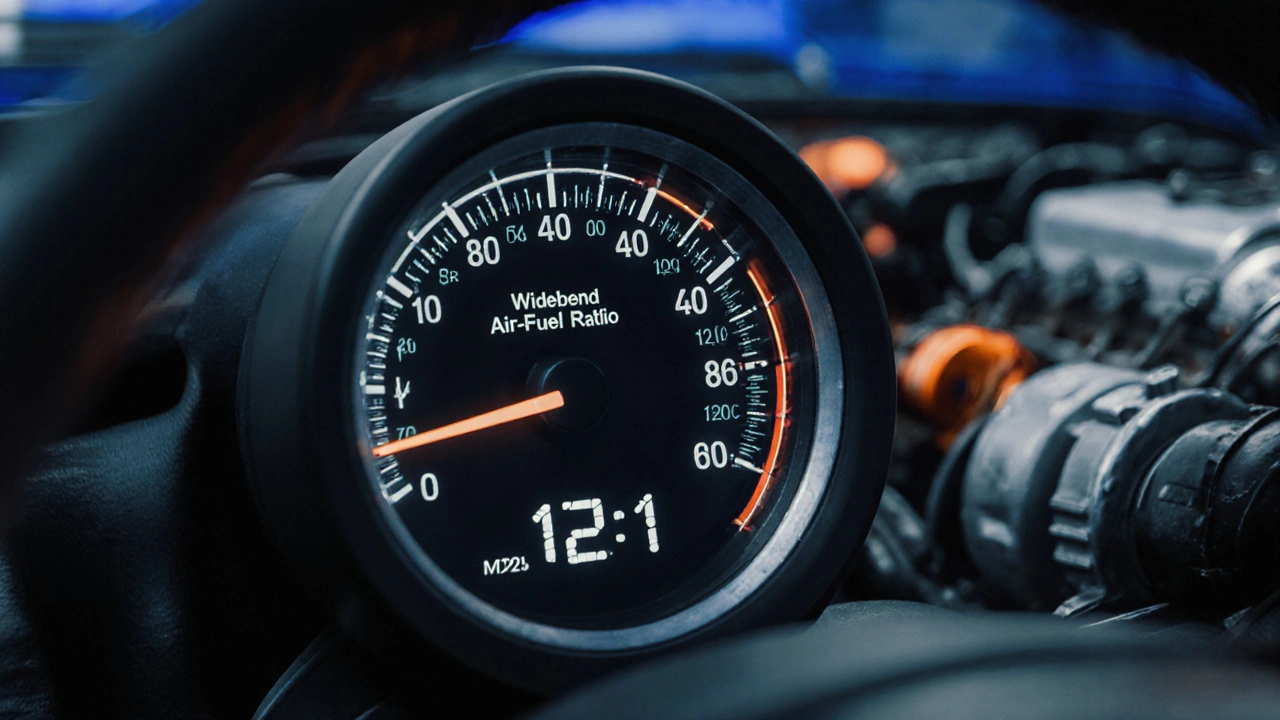
Air-Fuel Ratio Optimization for Performance and Efficiency in Engine Tuning
- 9 Comments
- Nov, 24 2025
Learn how to optimize air-fuel ratio for better engine performance and fuel efficiency. Understand lean vs rich mixtures, tuning tools, real-world examples, and common mistakes to avoid.