RV Wastewater Solutions: Keep Your Rig Clean and Code-Compliant
When you're living on the road, RV wastewater solutions, the systems and practices used to manage sewage and greywater in recreational vehicles. Also known as RV waste management, they're not optional—they're what keep your rig habitable and your campsite welcome. Forget the myth that you can just dump it anywhere. Every state and campground has rules, and ignoring them means fines, stink, and ruined trips.
At the heart of any good RV wastewater solution, the combination of tanks, hoses, valves, and habits that handle human waste and sink water. Also known as RV sewage system, it's built around two main parts: the black water tank, the holding tank for toilet waste and the gray water tank, the tank for sink, shower, and dishwasher runoff. These aren't the same. Black water is hazardous, needs special handling, and often requires a dedicated dump station. Gray water is less dangerous but still regulated—many parks now require you to dump it separately or not at all.
Most people think the tank is the problem. It's not. The problem is what happens after you flush. If you use the wrong chemicals, skip rinsing, or wait too long to dump, you get clogs, odors, and slime that sticks to the tank walls. That’s why smart RVers use enzyme-based treatments, not bleach. They flush with water after every use. They track tank levels with digital sensors, not guesswork. And they never, ever dump gray water on the ground unless the park allows it.
There’s also the hardware side. A broken valve, a cracked hose, or a stuck sensor can turn a simple dump into a 3-hour disaster. That’s why many RV owners carry spare parts: a backup dump hose, a seal kit, a tank flush wand. Some even install automatic tank flush systems that clean the tank while you drive. It’s not fancy—it’s practical.
And don’t forget the human factor. Dumping at a station isn’t just about hooking up a hose. It’s about knowing the sequence: black first, then gray, then rinse. It’s about wearing gloves, cleaning the hose end, and storing it properly. It’s about not rushing because one spill can ruin your day—and your reputation at the campground.
What you’ll find below are real, tested methods from people who’ve been there. No fluff. No marketing hype. Just how to avoid the stink, the mess, and the fines. Whether you’re new to full-time RVing or just tired of your tank smelling like a sewer, these posts give you the exact steps to get it right. From choosing the right chemicals to installing a tank monitor, you’ll find what actually works—not what the ads promise.
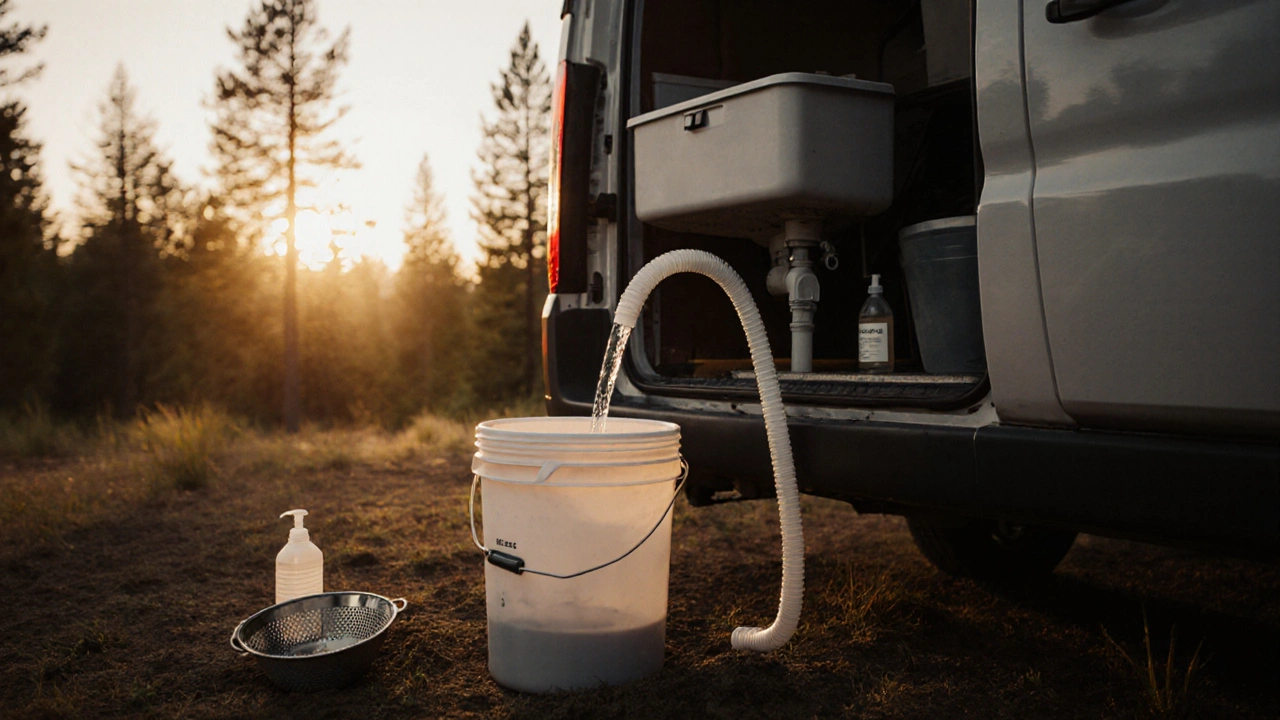
Grey Water and Black Water Solutions for Vans: Practical Systems for Van Life
- 8 Comments
- Nov, 27 2025
Learn practical, legal, and odor-free ways to handle grey and black water in your van. Skip bulky tanks and learn what van lifers actually use to live off-grid without sewage headaches.