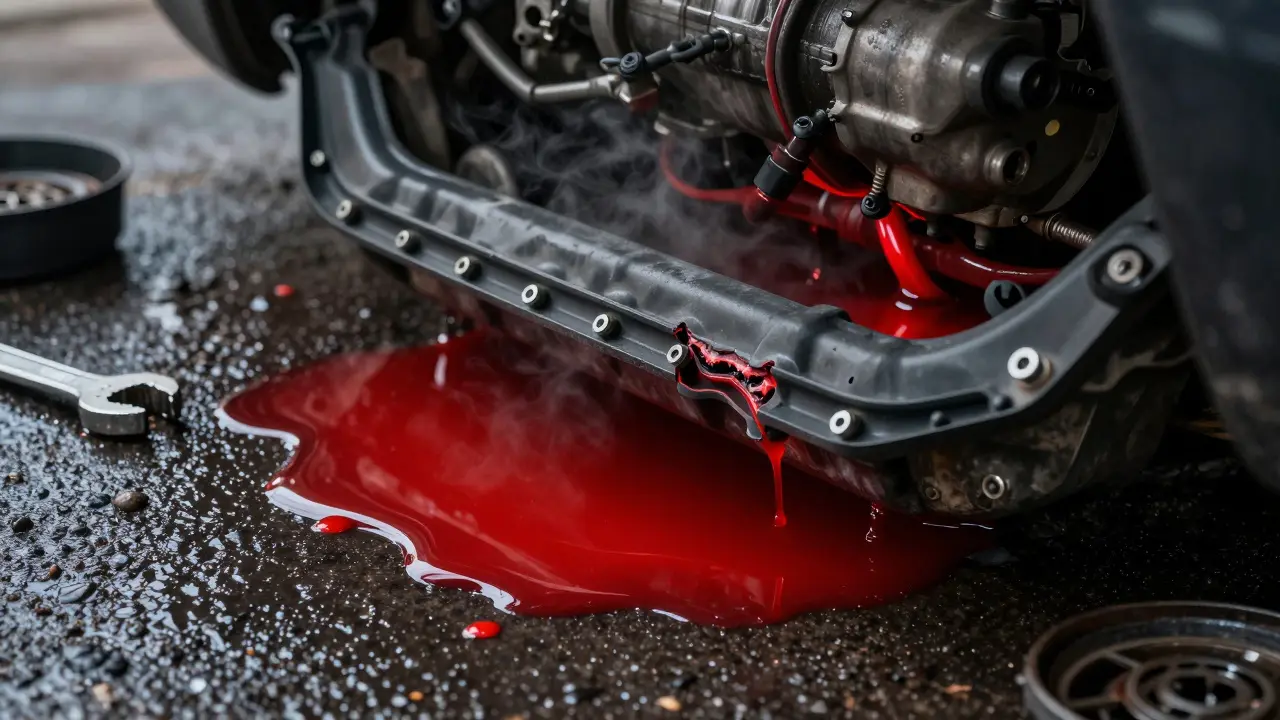
If your car is leaving a red or brown puddle under it, and you’re not sure what’s dripping, it could be transmission fluid. Unlike engine oil, which is usually dark brown or black, transmission fluid is bright red when it’s new - and turns darker as it ages. A leak isn’t just messy. Left unchecked, it can kill your transmission faster than you think. Most leaks come from three places: the pan gasket, input/output shaft seals, or the cooler lines. Knowing which one is leaking saves you time, money, and a tow bill.
Why Transmission Fluid Matters
Your transmission doesn’t just shift gears - it runs on fluid pressure. That fluid cools, lubricates, and transmits power. Without enough of it, the clutch packs burn up, the bands slip, and the valves stick. Modern transmissions run hot, sometimes over 200°F. The fluid does heavy lifting. A small leak might seem harmless, but losing even a quart over a few weeks can lead to catastrophic failure. Most manufacturers say to check fluid levels every 30,000 miles. If you’re seeing leaks, check it every week until you fix it.
Pan Gasket Leaks - The Most Common Culprit
The transmission pan sits on the bottom of the unit and holds most of the fluid. It’s sealed with a gasket - usually rubber, cork, or a composite material. Over time, heat and vibration crack or shrink that gasket. You’ll see fluid seeping from the edges of the pan, often near the bolts. It’s not always a big drip. Sometimes it’s just a slow stain that builds up over months.
Fixing this isn’t hard, but it’s messy. You have to drop the pan. That means draining the fluid, removing the bolts, scraping off the old gasket, cleaning the sealing surface, and installing a new one. Many people try to just tighten the bolts. Don’t. Over-tightening warps the pan. Under-tightening leaves gaps. Torque specs matter - usually 10-15 lb-ft for most cars. Always replace the gasket. Reusing it is a gamble. And don’t forget to replace the transmission filter while you’re in there. It’s cheap insurance.
Seal Leaks - Input, Output, and Torque Converter
Seals are rubber rings that keep fluid inside where it belongs. There are three main ones:
- Input shaft seal - at the front of the transmission, where the engine connects. A leak here often drips onto the engine or bellhousing.
- Output shaft seal - at the back, where the driveshaft connects. This one leaks onto the ground under the rear of the car.
- Torque converter seal - inside the front of the transmission. This leak is trickier. Fluid may not drip right away. Instead, it gets pushed out by pressure and burns on hot parts, leaving a smell or smoke.
Replacing seals usually means pulling the transmission. That’s a big job. If you’re not experienced, get a pro. A mechanic might charge $600-$1,200 just for labor on this. But if you wait too long, you’re looking at a $3,000 rebuild. The cost of waiting is way higher.
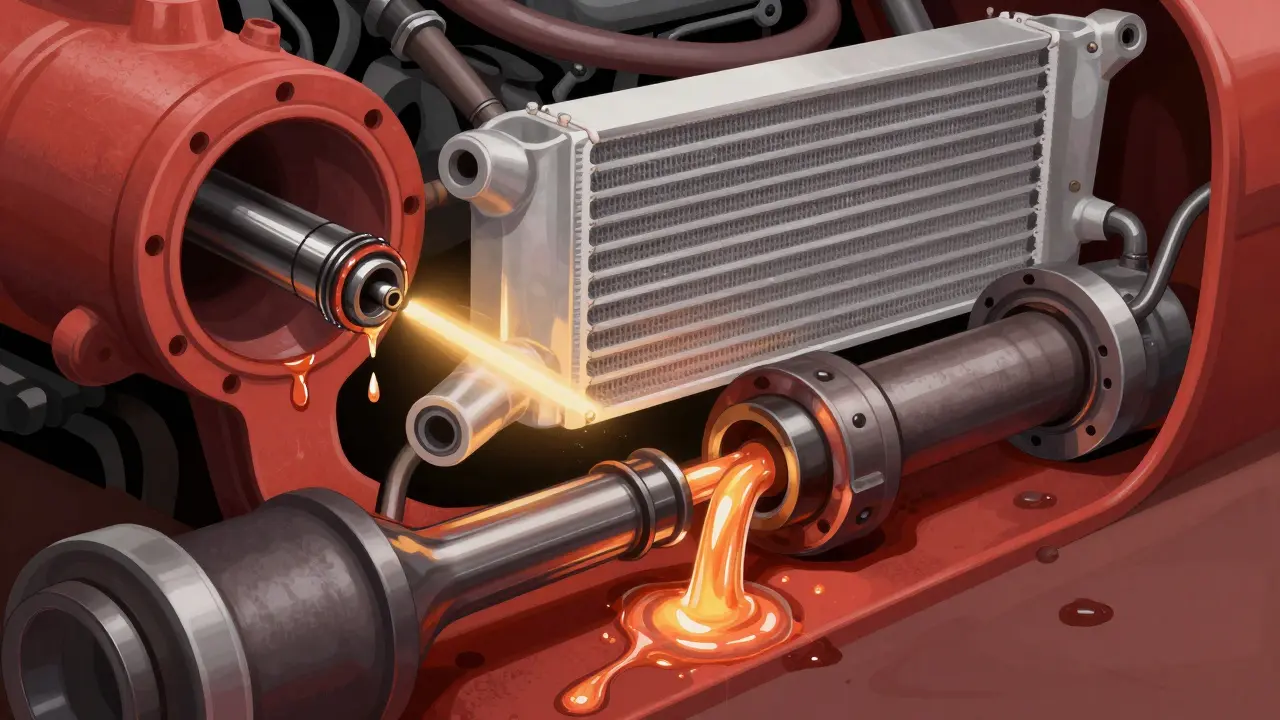
Cooler Lines - The Silent Killer
Transmission fluid flows through metal or rubber hoses to the radiator or a separate cooler. These are called cooler lines. They’re often overlooked because they’re not part of the transmission itself. But they’re under pressure - sometimes over 100 psi. When they corrode, crack, or get pinched, they spray fluid.
Look for wet spots along the lines, especially near fittings. Rust on metal lines? That’s a warning. Rubber lines get brittle with age. In cold climates like Detroit, they crack in winter. You might not notice until you smell burning fluid or see a trail of red on your driveway. Replacing a cooler line is usually cheaper than a seal job. You can buy a replacement line for under $50. Install it yourself if you’re comfortable with basic tools. Just make sure to flush the system afterward. Old fluid mixed with debris from a ruptured line can clog valves.
How to Find the Leak
Here’s how to track it down:
- Wash the bottom of the transmission and surrounding parts with engine cleaner. Let it dry.
- Start the car and let it idle in park. Let it warm up for 10 minutes.
- Look for fresh fluid dripping or seeping. Use a flashlight. Look under the car, not just on the ground.
- Check the pan edges, seal areas (front and back), and the cooler lines from the transmission to the radiator.
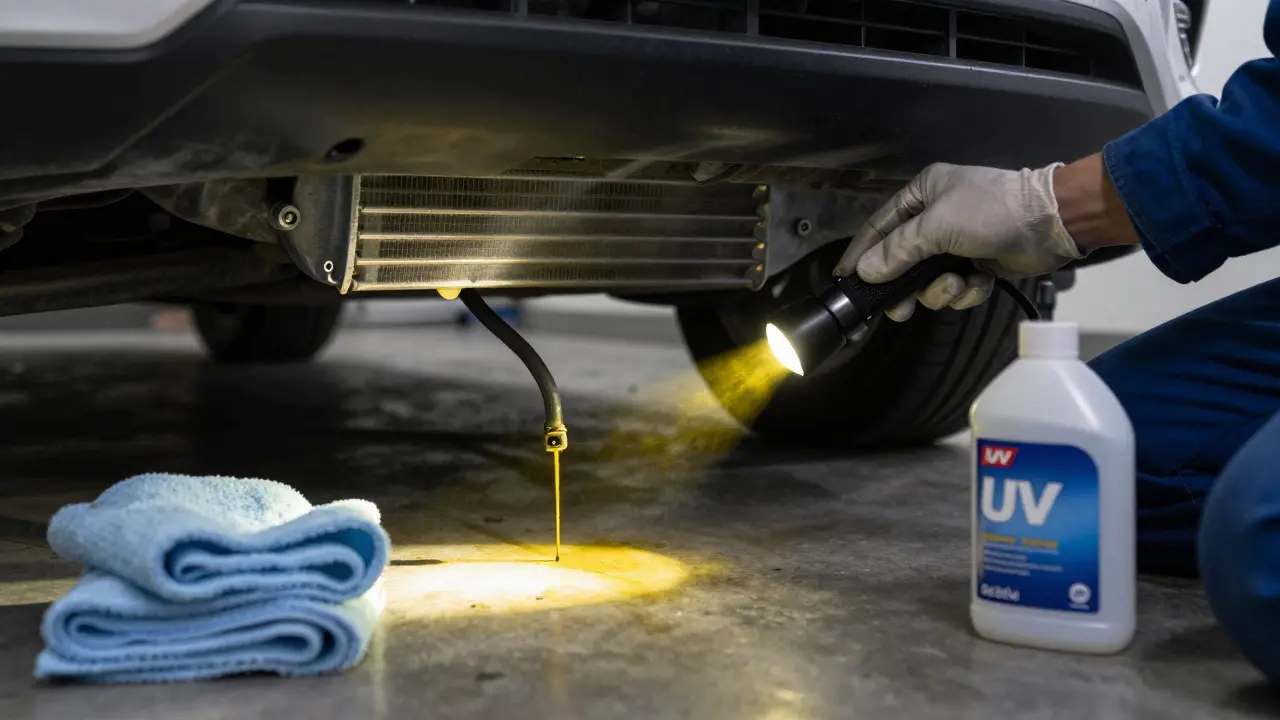
- Use dye. Add UV transmission fluid dye ($15-$20) to the fluid. Run the car for 15 minutes. Shine a UV light on the area. The leak glows bright yellow.
Most leaks are visible within 24 hours. Don’t wait days. The longer you wait, the more fluid you lose - and the more damage you risk.
What Happens If You Ignore It
Low fluid = overheating = slipping gears = grinding = total failure. You might notice:
- Delayed shifting - the car hesitates before changing gears.
- Burning smell - like hot metal or burnt toast.
- Check engine light - often triggered by transmission sensors.
- Slipping or surging - the RPMs jump but the car doesn’t accelerate.
Once the transmission starts slipping, it’s too late to just top off the fluid. The damage is done. Rebuilding a transmission costs $2,500-$4,000. Fixing a pan gasket? $200-$400. Replacing a cooler line? $150-$300. That’s why catching it early matters.
Prevention Tips
- Check fluid monthly. Use the dipstick. Don’t guess. Look for color and smell. If it’s dark, smells burnt, or has metal flakes, it’s time for a flush.
- Use the right fluid. Don’t mix types. Your owner’s manual says what to use - ATF+4, Dexron VI, CVT fluid. Get it right.
- Replace cooler lines every 8-10 years. Even if they look fine. Rubber degrades. Metal rusts.
- Install a transmission cooler if you tow or drive hard. It cuts operating temps by 30%.
- Don’t drive with low fluid. If the level is below the mark, don’t drive more than a few miles. Get it fixed.
When to DIY and When to Call a Pro
Here’s the rule:
- DIY if: You’re comfortable lifting the car, using jack stands, and draining fluid. Pan gasket and cooler line leaks are doable with basic tools.
- Call a pro if: The leak is from a seal or torque converter. Or if the transmission is already slipping. You don’t want to make it worse.
Most shops offer free leak inspections. It’s worth it if you’re unsure. A $50 diagnostic saves you from a $3,000 mistake.
Final Thought
Transmission fluid leaks don’t fix themselves. They get worse. And they don’t care if you’re busy, broke, or just hoping it’ll go away. A small leak today is a dead transmission tomorrow. Catch it early. Fix it right. Your wallet - and your car - will thank you.
Can I drive my car with a transmission fluid leak?
You can drive a short distance if the fluid level is still above the minimum mark. But don’t drive more than a few miles. Every mile you drive with low fluid increases the risk of overheating and internal damage. If the leak is steady, get it towed. It’s cheaper than rebuilding a transmission.
How much does it cost to fix a transmission fluid leak?
It depends on the source. A pan gasket leak: $200-$400. Cooler line replacement: $150-$300. Input or output shaft seal: $600-$1,200. Torque converter seal: $1,500-$2,500. The price jumps because of labor - pulling the transmission takes hours.
Can I use stop-leak products to fix a transmission leak?
Stop-leak additives are not recommended. They can clog valves, filters, and solenoids. They might temporarily slow a leak, but they don’t fix the root cause. Worse, they can mask a problem until it’s too late. Replacing the gasket or seal is the only real fix.
How often should I replace transmission cooler lines?
Replace rubber cooler lines every 8-10 years, even if they look fine. Metal lines can last longer but should be inspected for rust, especially in snowy areas. If you see cracking, bulging, or wet spots, replace them immediately.
What happens if I use the wrong transmission fluid?
Using the wrong fluid can cause shifting problems, overheating, or internal damage. Each transmission is designed for specific viscosity and friction characteristics. Mixing fluids or using aftermarket substitutes can break down seals, cause clutch slippage, or trigger error codes. Always follow the manufacturer’s recommendation.



Mongezi Mkhwanazi
February 20, 2026 AT 22:40Let me be perfectly clear: transmission fluid leaks are not a "mild inconvenience"-they are a slow-motion catastrophe waiting to happen, and anyone who thinks otherwise is either delusional or has never paid for a rebuild. The pan gasket? A classic failure point. I’ve seen it a hundred times: people tighten the bolts like they’re closing a jar lid, then wonder why it’s still dripping. Torque specs exist for a reason. And don’t even get me started on "just topping it off"-that’s like pouring water into a sinking boat and calling it a solution. The fluid isn’t just lubricant-it’s hydraulic pressure, cooling medium, and clutch engagement fluid all in one. One quart low? That’s 200°F overheating. Two quarts? You’re flirting with a $4,000 funeral for your transmission. And yes-I’ve replaced pans, seals, and lines. I know what I’m talking about. Don’t be the guy who "didn’t have time" until the car refused to move on the highway.
Mark Nitka
February 21, 2026 AT 21:14I get where you're coming from, but let’s not scare people into panic mode. I’ve fixed two pan gaskets myself with $20 in parts and a weekend. The key isn’t to treat every drip like Armageddon-it’s to stay observant. If you see a spot the size of a quarter after parking overnight, check the fluid. If it’s low, get it looked at. If it’s just a faint stain? Clean it, monitor it, and move on. Not every leak needs a $1,200 mechanic bill. Also-cooler lines are way more common than people think. I had a 2012 Camry with a slow leak from a cracked rubber line. $45 part, 45 minutes, done. No transmission removal. No drama. Knowledge beats fear.
Kelley Nelson
February 22, 2026 AT 16:53While I appreciate the technical thoroughness of this exposition, I must express my profound unease with the casual tone adopted throughout. The phrase "kill your transmission faster than you think" is not merely hyperbolic-it is alarmist and emotionally manipulative. Furthermore, the suggestion that one might "try to just tighten the bolts" implies a level of amateur negligence that, in my view, reflects poorly on the broader automotive literacy of the populace. One does not simply "scrape off the old gasket" as if it were a sticker from a window. Precision, cleanliness, and adherence to OEM specifications are not optional-they are the very foundation of mechanical integrity. I would urge the author to revise this piece with greater deference to professional standards.
Aryan Gupta
February 24, 2026 AT 07:48Wait-so you're telling me that transmission fluid leaks are caused by "heat and vibration"? That’s what they want you to believe. But here’s the truth: the real culprit is the government’s secret plan to force people into dealership service centers. I’ve done deep research. The pan gasket doesn’t just "wear out"-it’s engineered to fail after 75,000 miles. Coincidence? I think not. And don’t even get me started on the "UV dye" trick. That’s a scam to sell more bottles. Real mechanics use magnetic sensors to detect metal shavings from internal wear-then they bill you for a rebuild. The cooler lines? They’re designed to corrode faster in cold climates because the manufacturers know people in Michigan will pay to replace them twice a decade. I’ve seen the documents. This isn’t maintenance-it’s a racket. And don’t tell me I’m paranoid. I’ve got receipts.
Fredda Freyer
February 25, 2026 AT 20:55One thing this post doesn’t emphasize enough is the emotional weight of transmission failure. It’s not just a mechanical issue-it’s a loss of autonomy. For many, especially single parents, elderly drivers, or those in rural areas, the car isn’t a luxury-it’s lifeline. A leak isn’t a "repair job." It’s a crisis that ripples into jobs, childcare, medical appointments. I’ve sat with people who cried because they couldn’t afford the fix, and they had to take three buses to work. So yes-check your fluid. Yes-replace the gasket. But also: if you see someone struggling with this, don’t just offer advice. Offer to help. A $20 bottle of dye, a hand with the jack, a ride to the auto parts store-that matters more than torque specs. Mechanics fix cars. Humans fix lives.
Gareth Hobbs
February 26, 2026 AT 23:08Oh for Christ’s sake, another Yank telling us how to fix our cars. You lot think you invented transmissions, don’t you? "Torque specs matter"-yeah, right, like you’ve ever seen a British Ford Cortina with a rusted pan. We’ve been driving for 50 years with leaky seals and duct tape. You think a $50 cooler line is gonna save you? Ha! My mate’s 1998 Mondeo had a leak for 8 years. He just topped it up every fortnight. Still drives fine. And don’t even mention that "UV dye" nonsense-it’s a Yankee gimmick. We fix things properly here: with a spanner, a pint of bitter, and a shrug. If it ain’t dripping on the road, it ain’t broken. And if you’re spending £800 on a seal? You’ve been had.
Zelda Breach
February 27, 2026 AT 09:59Let’s be brutally honest: if you’re asking how to fix a transmission leak, you’ve already lost. The fact that you’re reading this instead of taking it to a professional means you’re either cheap, lazy, or both. And now you’re going to "scrape the old gasket" with a plastic scraper? You’re going to "reuse the bolts"? You’re going to "just drive a few miles"? Congratulations. You’ve just signed your transmission’s death warrant. And then you’ll come back here crying about how "it just happened." No. It didn’t. You did. And now you’re going to pay $3,500 for a rebuild because you thought you were being clever. I’m not judging. I’m just reporting the inevitable outcome of your incompetence.
Alan Crierie
February 28, 2026 AT 22:42Thank you for this incredibly thoughtful breakdown. 🙏 I especially appreciate how you highlighted the emotional toll of transmission failure-it’s not just about money, it’s about dignity and independence. I’ve helped two friends through this exact situation, and what helped most wasn’t the torque specs or the UV dye-it was having someone sit with them while they called the shop, asked the right questions, and didn’t feel stupid for not knowing. I’ve always said: car repair is a team sport. No one should be alone in this. If you’re reading this and feeling overwhelmed? You’re not failing. You’re learning. And you’ve got people here who care. 💙
Nicholas Zeitler
March 2, 2026 AT 11:05YES. YES. YES. I’ve been there. I’ve had the red puddle. I’ve panicked. I’ve Googled at 2 a.m. This guide? It’s the one I wish I’d found. I did the pan gasket myself. Took me 4 hours. Spilled fluid everywhere. Got grease on my dog. But I saved $700. And now I know how to check the fluid. I check it every time I fill up. I use the dipstick. I smell it. I look for grit. I replaced my cooler lines last year-$38 online. Installed in 30 minutes. You don’t need to be a mechanic. You just need to care. And if you’re reading this and thinking "I’ll do it later"-don’t. Do it today. Your future self will hug you. Seriously. I still thank my past self.
Teja kumar Baliga
March 3, 2026 AT 04:51Love this! In India, we call this "transmission ka paani leak"-and everyone ignores it till the car stops. But you’re right: catch it early. My uncle fixed his Maruti’s pan gasket for ₹2,000. No shop. Just a local mechanic with a scraper and a new gasket. He didn’t even remove the transmission. Simple. Smart. And yes-check fluid every month. It’s like brushing your teeth. Small habit. Big difference. Keep it up! 🙌