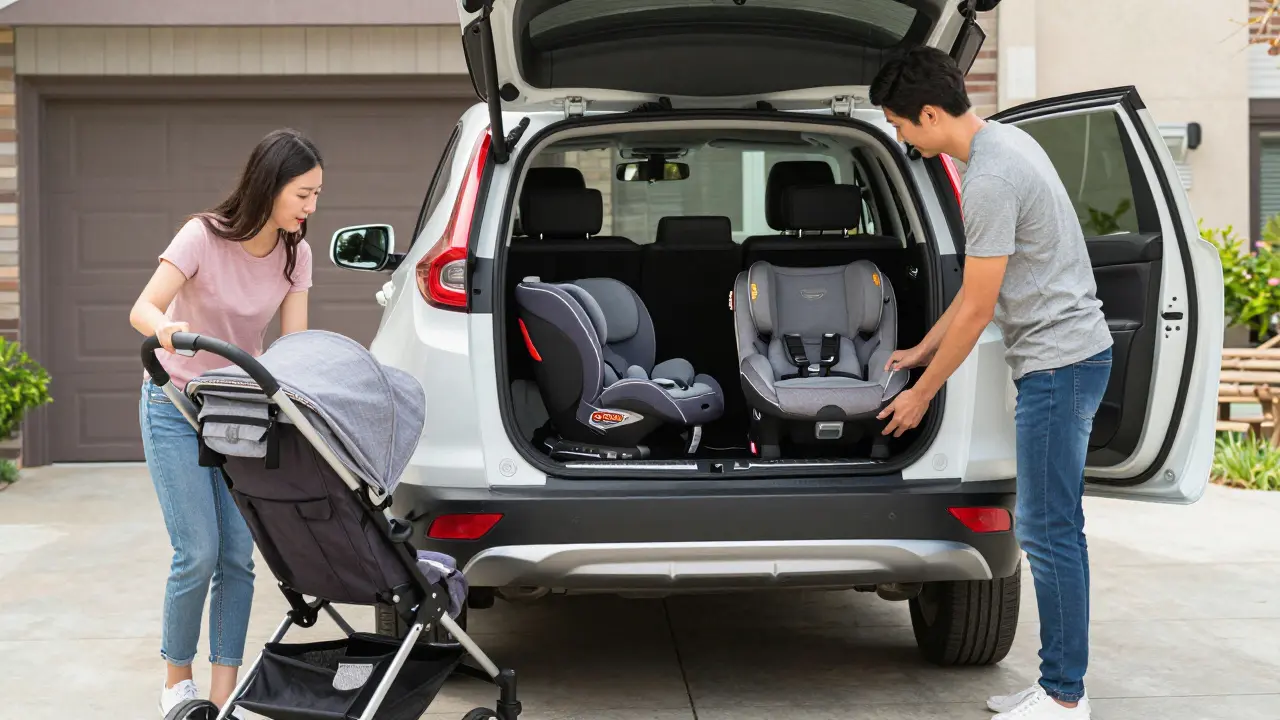
When you’re shopping for a new vehicle, size matters more than you think. It’s not just about how it looks on the lot or how many stars it got in a crash test. The real question is: will it fit your life? Will your kids’ car seats fit without wrestling the seatbelt? Can you fit a full-size bike in the back? Will that weekend camping trip leave you cramped in the backseat? These aren’t minor concerns-they’re daily realities that shape your driving experience.
What Vehicle Dimensions Actually Mean
Vehicle size isn’t one number. It’s a mix of length, width, height, wheelbase, and cargo volume. Manufacturers list these in specs, but most people don’t know what they mean in real life. Let’s break it down.
Length is the distance from the front bumper to the back. A compact car might be 175 inches long. A full-size pickup? Over 230 inches. That affects parking, turning radius, and how easily you can navigate tight city streets.
Width includes mirrors. A narrow car like the Honda Fit is about 69 inches wide. A Chevrolet Tahoe? Nearly 80 inches. That’s the difference between squeezing into a garage and needing a two-car spot.
Wheelbase is the distance between the front and rear axles. Longer wheelbases usually mean smoother rides and more legroom. A Toyota Camry with a 111-inch wheelbase feels more spacious than a Hyundai Accent with 103 inches.
Cargo volume is measured in cubic feet. But here’s the catch: manufacturers measure it with the seats up. If you’re hauling gear, you need to know what happens when you fold those seats down. A Honda CR-V has 39.2 cubic feet behind the rear seats-but 75.8 when folded. That’s enough for two full-size suitcases and a stroller, no problem.
Compact Cars: Small but Smart
Compact cars like the Toyota Corolla, Honda Civic, or Hyundai Elantra are under 180 inches long and weigh under 3,000 pounds. They’re great for city driving, easy to park, and get great gas mileage. But don’t mistake small for cramped.
Modern compacts have clever packaging. The front seats sit farther back, the dashboard is sloped, and the roofline is higher than older models. That gives you more headroom than you’d expect. Legroom? Around 40 inches in the back-enough for adults under 6 feet. But if you’re over 6’2”, you’ll notice the lack of knee room on long trips.
Cargo space? 13 to 15 cubic feet behind the rear seats. That’s enough for a couple of grocery bags or a small duffel. Fold the seats, and you get up to 40 cubic feet. Still not ideal for a kayak or a large pet carrier.
Sedans: The Sweet Spot
Midsize sedans like the Toyota Camry, Honda Accord, or Kia K5 are where many families land. They’re 190-195 inches long, with wheelbases around 110-112 inches. That extra length makes a real difference.
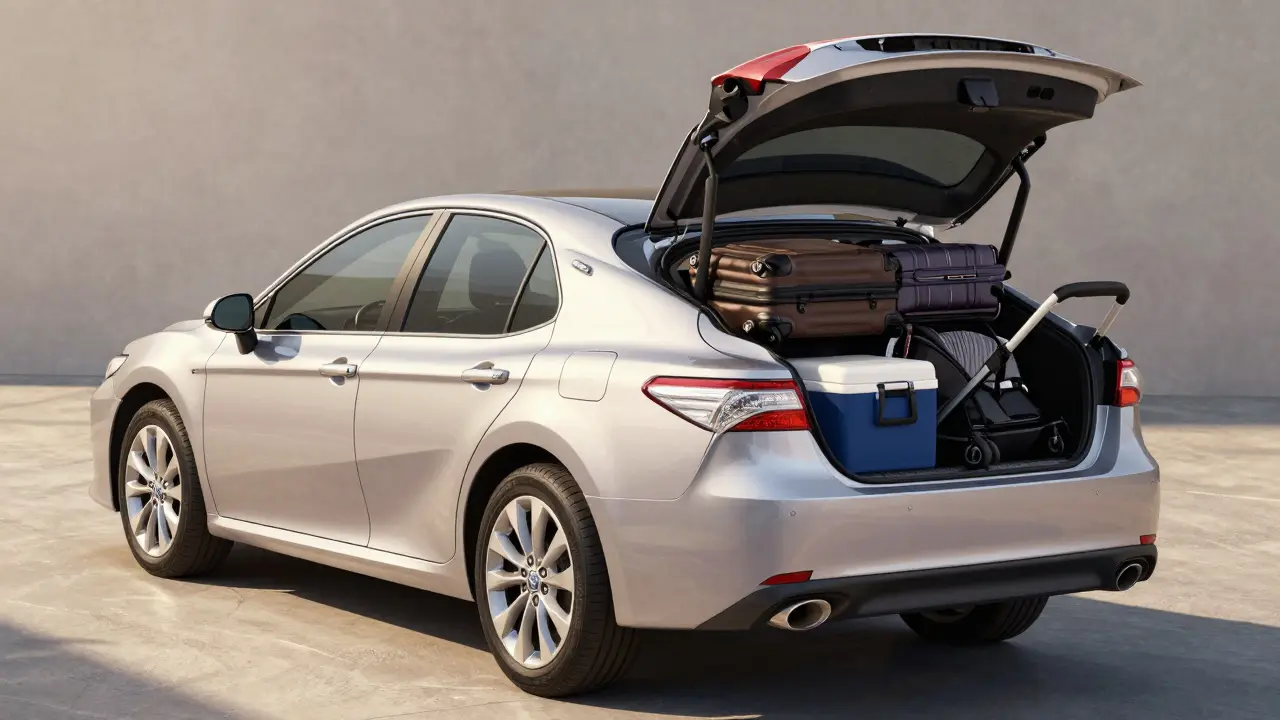
Backseat legroom? 38-40 inches. That’s comfortable for three adults on a road trip. Headroom? Over 38 inches. No need to hunch. Cargo space? 16-17 cubic feet behind the seats, 45-50 with the seats down. You can fit two large suitcases, a stroller, and a cooler in the trunk without folding anything.
These cars also have wider doors and better access to the back. That’s huge if you’re loading car seats or helping elderly passengers. The trunk opening is also wider than in compacts-easier to load bulky items.
SUVs: Space That Scales
SUVs come in three flavors: compact, midsize, and full-size. Each serves a different need.
Compact SUVs like the Honda CR-V, Toyota RAV4, or Ford Escape are around 180-185 inches long. They’re taller than sedans, so you get more headroom and a higher seating position. Cargo space? 35-40 cubic feet behind the seats. Fold them down, and you get 70-80 cubic feet. That’s enough for a 4-person tent, sleeping bags, and a cooler. These are the most popular choice for urban families who want more space than a sedan but don’t need a truck.
Midsize SUVs like the Hyundai Santa Fe, Kia Telluride, or Ford Edge are 190-195 inches long. They’re longer than sedans but have the same footprint. The real upgrade? Third-row seats. Most can seat seven. But here’s the truth: the third row is fine for kids or short trips. Adults over 5’8” will find it tight. Legroom? Less than 30 inches. Headroom? Around 36 inches. Still, it’s a solid option if you need occasional extra seating.
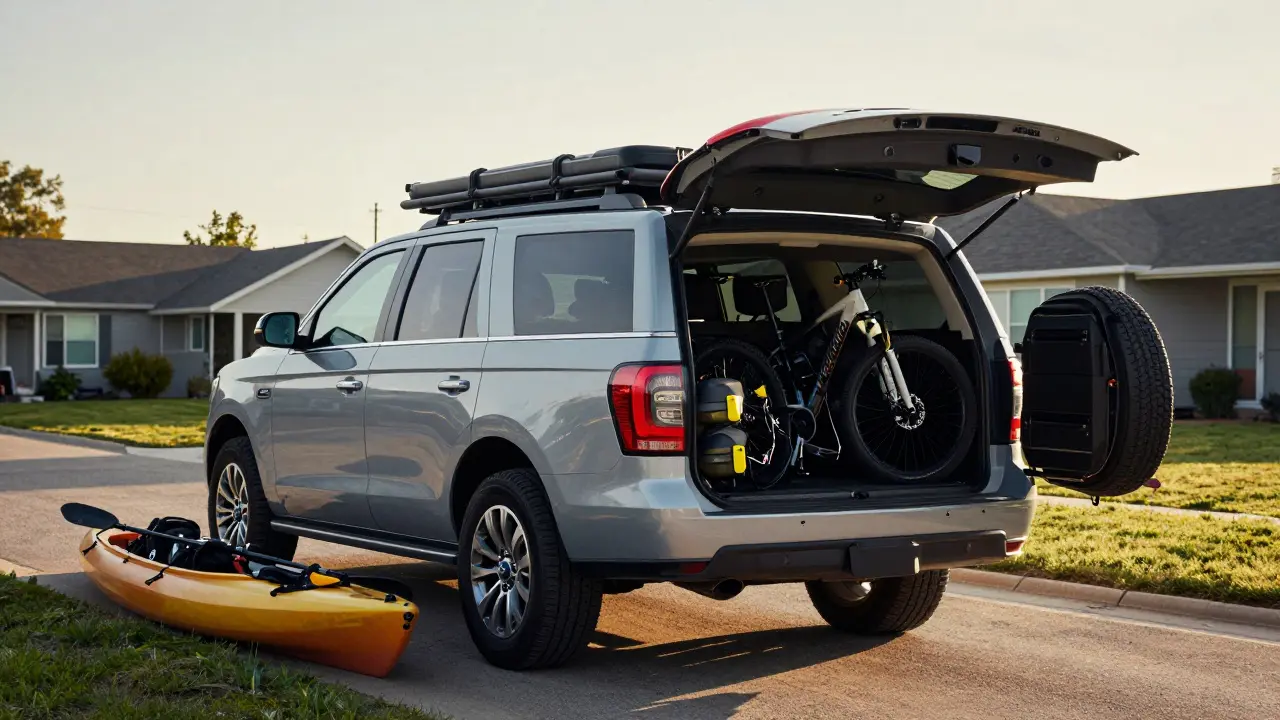
Full-size SUVs like the Chevrolet Tahoe, Ford Expedition, or Nissan Armada are over 200 inches long. They’re big. And they’re roomy. Third-row legroom? 35+ inches. Headroom? Over 38 inches. That’s sedan-level comfort in the back. Cargo space? 20-25 cubic feet behind the third row. Fold both rear rows? 120+ cubic feet. You can fit two full-size bikes, a kayak, and a week’s worth of camping gear. These are workhorses. Towing? Up to 9,000 pounds. But they’re heavy on gas and hard to park.
Pickup Trucks: Utility Meets Size
Pickups aren’t just for hauling. They’re family vehicles too. But size varies wildly.
Compact trucks like the Ford Maverick or Hyundai Santa Cruz are under 190 inches. They’re car-like in handling. Bed length? 5 feet. That’s enough for two bikes or a few bags of mulch. Crew cabs have decent backseat space-better than most SUVs. But cargo volume? Only 4-5 cubic feet in the bed unless you have a box liner.
Midsize trucks like the Toyota Tacoma or Chevrolet Colorado are 210-220 inches long. Bed length? 5-6 feet. Crew cabs have 37 inches of rear legroom. You can fit adults back there for a few hours. Cargo? 20-25 cubic feet with the tailgate down. Good for weekend trips.
Full-size trucks like the Ford F-150, Ram 1500, or Chevrolet Silverado are 230-250 inches long. Crew cabs? 40+ inches of rear legroom. That’s better than most SUVs. Bed length? 6.5 to 8 feet. You can fit a full-size mattress, a motorcycle, or two kayaks side by side. But these trucks are wide-over 80 inches with mirrors. Parking in tight lots? Not fun.
What You Can’t Measure: Real-World Space
Numbers don’t tell the whole story. You can have the same cubic feet in two different cars and one feels spacious, the other claustrophobic. Why? Design.
Door opening width matters. A narrow door makes it hard to get a child seat in. Seat shape matters. Flat seats let you lay down gear. Roof height? A low roofline makes tall people feel trapped. Window size? Big windows make the cabin feel bigger.
And then there’s the trunk. A 16-cubic-foot trunk might look small, but if the opening is wide and the shape is square, you can fit more than you think. A 20-cubic-foot trunk with a narrow opening and a sloped floor? You’ll waste space.
Try this: bring your gear to the dealership. Take your stroller, your dog’s crate, your golf clubs. Load them in. See how they fit. Don’t trust the brochure. Test it yourself.
Choosing the Right Size for Your Life
Here’s a simple way to decide:
- If you live in the city, commute daily, and rarely haul gear → compact car or sedan.
- If you have kids, need car seats, and go on weekend trips → compact or midsize SUV.
- If you need to haul gear, tow, or carry 6-7 people → full-size SUV or truck.
- If you need occasional cargo space but want good fuel economy → compact truck.
Don’t overbuy. A full-size SUV might feel powerful, but if you’re not using the third row or towing, you’re paying for space you don’t need. And you’re spending more on gas, insurance, and parking.
Underbuying is worse. A car that’s too small means constant frustration. You’ll be rearranging bags, leaving things behind, or making extra trips. That adds up over time.
Final Tip: Measure Your Life
Before you buy, ask yourself:
- What’s the biggest thing I carry regularly? (Bikes? Pet? Golf clubs?)
- How many people ride with me most days?
- Do I park in a garage? On the street? In tight lots?
- Do I ever need to fit a stroller and a car seat side by side?
Write down your answers. Then go to the lot and test the vehicles. Sit in the back. Load your gear. Try to open the doors with a child seat installed. See how the trunk opens. Drive it. Does it feel like it fits your life-or like you’re forcing your life into a box that’s too small?
Size isn’t about prestige. It’s about practicality. The right vehicle doesn’t look flashy. It just works.
Nathaniel Petrovick
February 15, 2026 AT 09:53I never thought about wheelbase until I rented a car with a short one and felt like I was in a go-kart on the highway. The longer wheelbase on my Camry makes highway driving feel so much smoother, like the car just glides. I used to think it was just the suspension, but nope - it’s all about that distance between the axles. Realized this after a 6-hour road trip with my dog in the back - no more backseat wobble.
Also, cargo volume numbers are misleading. My CR-V says 39 cubic feet, but I can fit my kayak, two coolers, and a pile of camping gear with the seats up. Turns out the shape matters more than the number. The square-ish trunk helps.
Stop trusting brochures. Go to the lot with your stuff. I did that with my stroller and my dog’s crate - turned out the Hyundai Tucson had a wider trunk opening than the Honda. Who knew?
Honey Jonson
February 15, 2026 AT 17:51soooo i just bought a tacoma because i thought i needed a truck and now i regret it like hard
gas is insane and parking is a nightmare and i barely use the bed
the backseat is comfy tho lol
maybe next time ill just get a raven or whatever its called
Sally McElroy
February 16, 2026 AT 09:51There is no such thing as “compact SUV” when you’re talking about vehicles that weigh over 4,000 pounds and are nearly 190 inches long. That’s not compact - that’s a deceptive marketing term designed to make people feel like they’re being practical when they’re actually buying a gas-guzzling, city-destroying behemoth wrapped in plastic trim.
And don’t get me started on “crew cab” trucks being “better than SUVs.” They’re not. They’re just bigger. And louder. And more expensive. And more dangerous to pedestrians. And more polluting. And more wasteful.
If you’re not hauling construction materials or towing a boat, you don’t need a truck. Period. The fact that people think a 6.5-foot bed is “practical” for a family of four is a symptom of a broken culture.
Stop pretending size equals utility. It equals ego.
Destiny Brumbaugh
February 16, 2026 AT 17:33Yall are overthinking this. America was built on trucks and SUVs. If you can’t fit your life in a full-size truck, you’re not trying hard enough. I’ve got my two kids, my dog, my fishing gear, my ATV, and my toolbox in the back of my Silverado - all at once. And I still get 20 mpg on the highway.
Stop listening to the city folks who think a Prius is a real car. Real Americans drive big. And if you can’t handle it, maybe you should move to a city with no driveways and no garages.
Also - the CR-V? That’s a minivan with a fake rugged look. Get real.
Sara Escanciano
February 18, 2026 AT 06:17My husband bought a Honda Accord because he said it was “perfect for our needs.”
It’s not.
We have two kids under five. One of them is 45 pounds. The car seat doesn’t fit properly in the back because the seatbelt buckle is too far back. We had to buy a different seat. Again.
And the trunk? We tried to fit a stroller, a diaper bag, a cooler, and a dog crate. We had to leave the cooler in the front seat.
So now we’re trading it in for a Kia Telluride.
Don’t let anyone tell you a sedan is “enough.” It’s not. Not if you’re a real family.
Aimee Quenneville
February 18, 2026 AT 23:58Wow. A whole essay on car dimensions and not one mention of how the front passenger seat is always the cursed seat because someone always leaves their gym bag there.
Also - I tested my stroller in three different SUVs. Two of them had the same cargo numbers. One felt like a shoebox. The other? Like a cathedral. Turns out, the shape of the rear window matters more than cubic feet.
Also - why does every car company assume I’m carrying groceries and not a 20-pound dog that panics if the window is closed?
Just saying. Next time, test with your actual life. Not your ideal life.
Cynthia Lamont
February 20, 2026 AT 06:14YOU PEOPLE ARE ALL WRONG. The only thing that matters is the width of the door opening. Not the cargo space. Not the wheelbase. Not the length. The DOOR OPENING.
I have a 3-year-old with a disability. She uses a wheelchair. The Hyundai Santa Fe has a 34-inch door opening. The Toyota Highlander? 31 inches. That’s not a difference. That’s a life-or-death gap.
And no one talks about this. No one. The brochures don’t list it. The salespeople don’t know it. The reviews don’t mention it.
So if you’re buying a car for someone who needs accessibility - go to the dealership. Bring your chair. Measure the damn door. Don’t trust numbers. Trust your hands.
Kirk Doherty
February 21, 2026 AT 05:10My dad used to say: “A car should fit your life like a glove. Not like a suit you borrowed.”
He bought a 1998 Honda Civic. Drove it for 22 years. Never needed anything else.
Just saying.
Dmitriy Fedoseff
February 23, 2026 AT 02:03In Canada, we don’t have the luxury of pretending size equals freedom. We have winters that last nine months. Snow drifts that bury cars. Ice that turns driveways into glaciers.
A compact SUV isn’t about “space.” It’s about clearance. About traction. About being able to get out of your driveway without calling a tow truck.
That’s why the RAV4 sells like bread here. Not because it’s “roomy.” But because it doesn’t get stuck.
Also - the height matters. A higher ride means you can see over snowbanks. You can see the road. You can see the kids crossing. That’s not luxury. That’s survival.
Meghan O'Connor
February 24, 2026 AT 22:34It’s funny how everyone talks about “cargo space” like it’s some sacred metric. Meanwhile, the trunk is 90% unusable because the floor is sloped, the lip is too high, and the shape is a trapezoid.
Also - the term “full-size SUV” is a lie. A 200-inch-long vehicle is not “full-size.” It’s a trailer with wheels.
And why does no one mention the fact that every car company uses the same 16-inch wheelbase for their “compact” models? It’s like they’re all copying the same template from 2012.
Stop pretending innovation exists. It doesn’t.