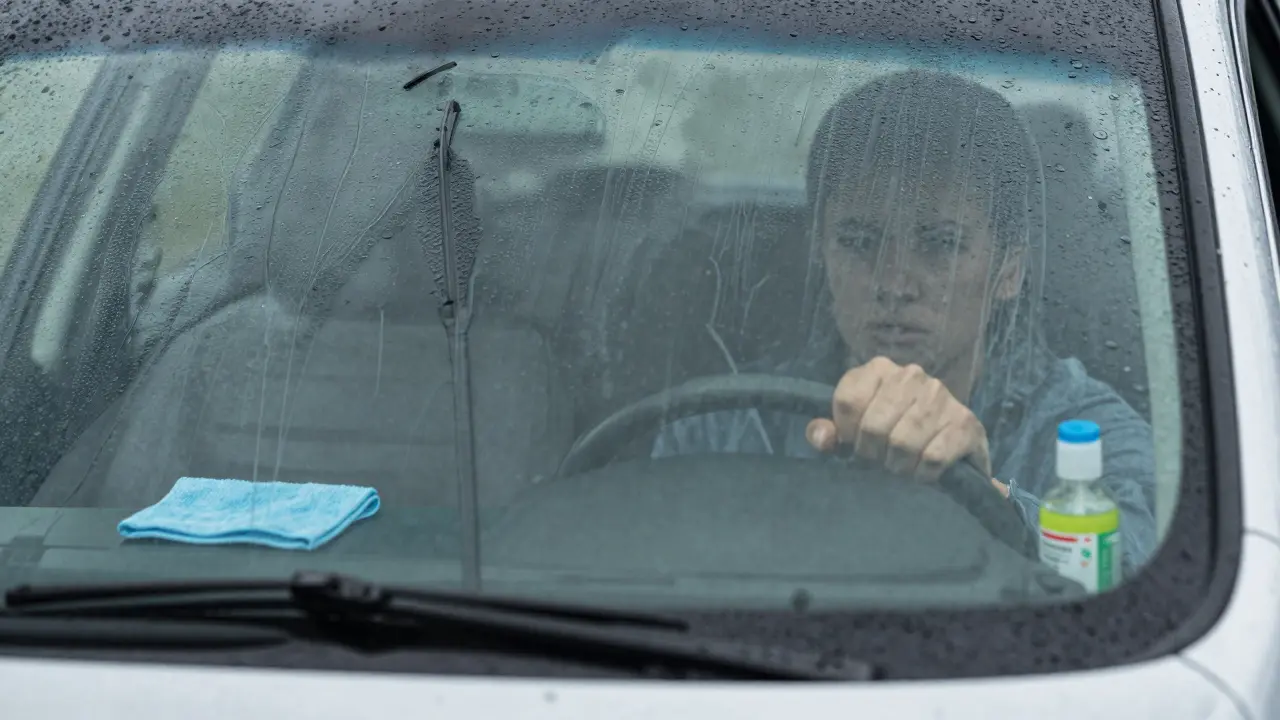
Ever hit the wiper switch on a rainy day and got nothing but streaks, squeaks, or worse - nothing at all? You’re not alone. Windshield wipers are one of the most overlooked parts of your car, but when they fail, they turn a simple drive into a dangerous gamble. Visibility isn’t just about comfort - it’s your lifeline in bad weather. A study by the National Highway Traffic Safety Administration found that poor visibility contributes to over 1.2 million crashes annually in the U.S. alone. The fix isn’t always a new wiper blade. Sometimes it’s the arm, the motor, or even the washer fluid nozzle. Here’s how to diagnose and fix the most common wiper problems - fast.
Why Your Wipers Leave Streaks
Streaking is the #1 complaint. It’s not just annoying - it’s blinding. If your wipers leave smears, it’s usually one of three things: worn blades, dirty glass, or a bad washer fluid mix. Wiper blades degrade over time. Rubber hardens when exposed to UV light, heat, and cold. Most manufacturers recommend replacing them every 6 to 12 months. If your blades are over a year old and streaking, replace them. Don’t wait for them to fail completely. Look for cracks, splits, or bent metal frames. Even if the rubber looks okay, the spring tension might be gone. Clean your windshield first. Road grime, tree sap, and bug residue build up like glue. Use a glass cleaner with isopropyl alcohol and a microfiber cloth. Avoid household cleaners - they leave oily films that make streaking worse. After cleaning, wipe the rubber edge of the blade with a damp cloth soaked in vinegar. This removes the buildup that causes skipping. Washer fluid matters too. Cheap fluids freeze in winter or leave residue. Use a winter-grade fluid rated for at least -20°F. It contains surfactants that break down bugs and road film without gunking up the blades.Noisy Wipers: Squeaking and Chattering
If your wipers sound like a screeching owl, the problem isn’t always the blades. Chattering happens when the blade doesn’t glide smoothly across the glass. That’s usually a sign of uneven pressure. Check the wiper arms. Over time, the springs that hold the blade against the windshield weaken. Lift the arm and see if it feels loose or springs back too easily. If you can lift the blade more than 2 inches off the glass without resistance, the arm is worn. Replacing the arm costs less than $20 and takes 10 minutes. Also, make sure the blade is seated correctly. Some blades have a small clip or hook that can get misaligned during installation. If the blade isn’t lying flat, it’ll bounce. Remove it and reattach it, listening for a firm click. If the noise only happens when the washer fluid sprays, the nozzles might be clogged. Dirt or dried fluid can block the spray pattern. Use a pin to clear the nozzle holes. Then, flush the system with clean water and a few drops of dish soap. Run the wipers for 30 seconds to clear the lines.Wipers Won’t Move at All
If the wipers don’t move when you flip the switch, the issue is electrical or mechanical. Start simple: check the fuse. Most cars have a dedicated fuse for the wiper system. Look in your owner’s manual or the fuse box cover for the label. A blown fuse is often caused by a seized motor or ice buildup in winter. If the fuse is good, listen for a humming sound when you turn the wipers on. If you hear it but nothing moves, the motor is working but the linkage is broken. This happens when the plastic gears inside the motor housing crack. You’ll need to replace the entire wiper motor - around $100 to $200 depending on your car. If there’s no sound at all, the problem is in the switch or relay. Try turning the wipers on while someone watches the dashboard. If the indicator light comes on but the blades don’t move, the relay is likely bad. Relays are cheap ($15-$30) and easy to swap. They’re usually located in the fuse box under the hood.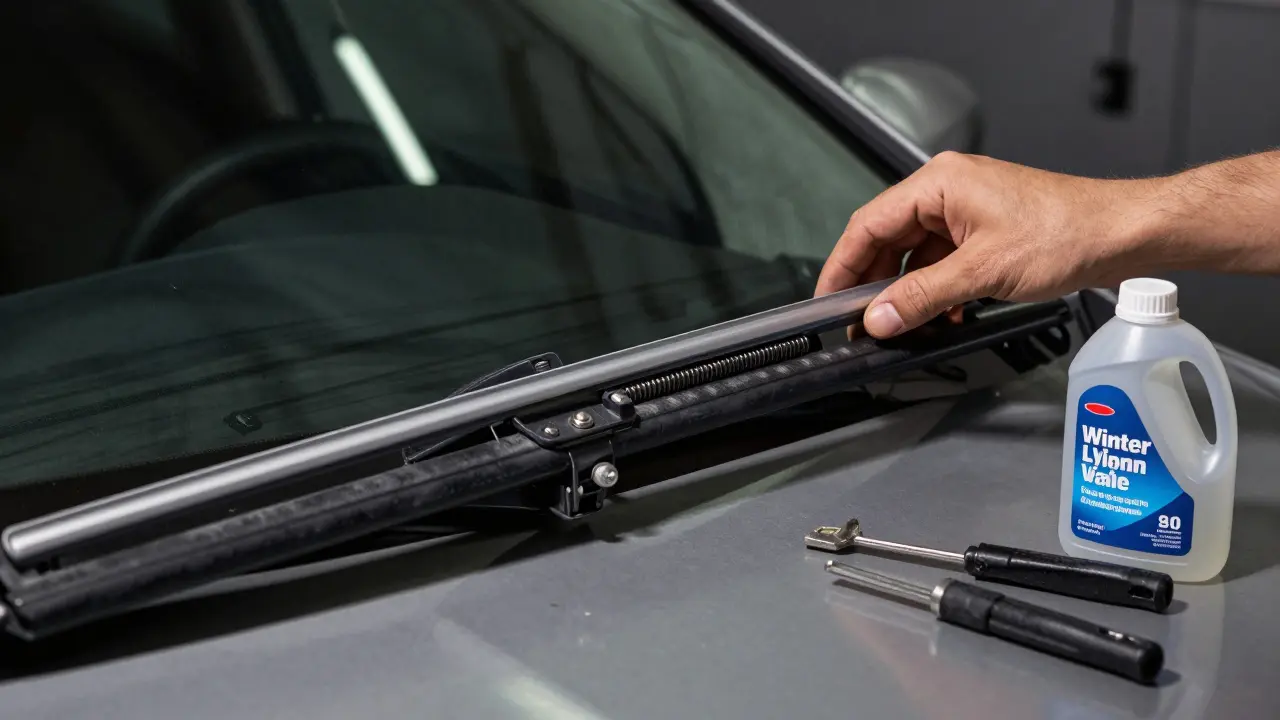
Wipers Park in the Wrong Spot
Your wipers should stop at the bottom of the windshield when turned off. If they park halfway up or angle to the side, the park position is misaligned. This usually happens after replacing the motor or if the linkage got knocked out of sync. To fix it, disconnect the battery. Then, remove the wiper arms. Turn the ignition on briefly - the motor will run for a second and reset its position. Turn it off, reconnect the battery, and reattach the arms in the correct parked position. You’ll need to eyeball it - the arms should rest just below the bottom edge of the windshield, parallel to the hood.Winter Wiper Woes: Ice, Snow, and Freezing
Cold weather kills wiper performance. Ice builds up under the blade, lifting it off the glass. Snow piles on the arm and prevents movement. Never turn on the wipers if they’re frozen to the glass. You’ll tear the rubber or burn out the motor. Before winter, use a silicone-based wiper blade protectant. It repels ice and keeps the rubber flexible. Park your car in a garage if you can. If not, lift the wiper arms off the glass overnight. Use a towel or foam block to hold them up. Don’t use cardboard - it can scratch the windshield. If your blades are frozen, turn on the defroster and wait. Spray warm (not hot) water on the glass to melt the ice. Never pour boiling water - the temperature shock can crack the windshield. Once the blades are free, wipe them down with a dry cloth to remove residue.When to Replace the Whole System
Sometimes, it’s cheaper to replace the entire wiper system than to fix pieces. If you’ve replaced blades, arms, and the motor - and you’re still getting streaks or noise - the windshield might be warped. This happens with older cars or after a front-end collision. A warped windshield creates uneven contact points. No wiper blade can fix that. Also, if the washer system doesn’t spray evenly or the fluid leaks under the hood, the reservoir, pump, or tubing might be cracked. Replace the pump ($40-$70) if it’s weak. Check the tubing for brittleness. Old rubber hoses turn to dust in winter.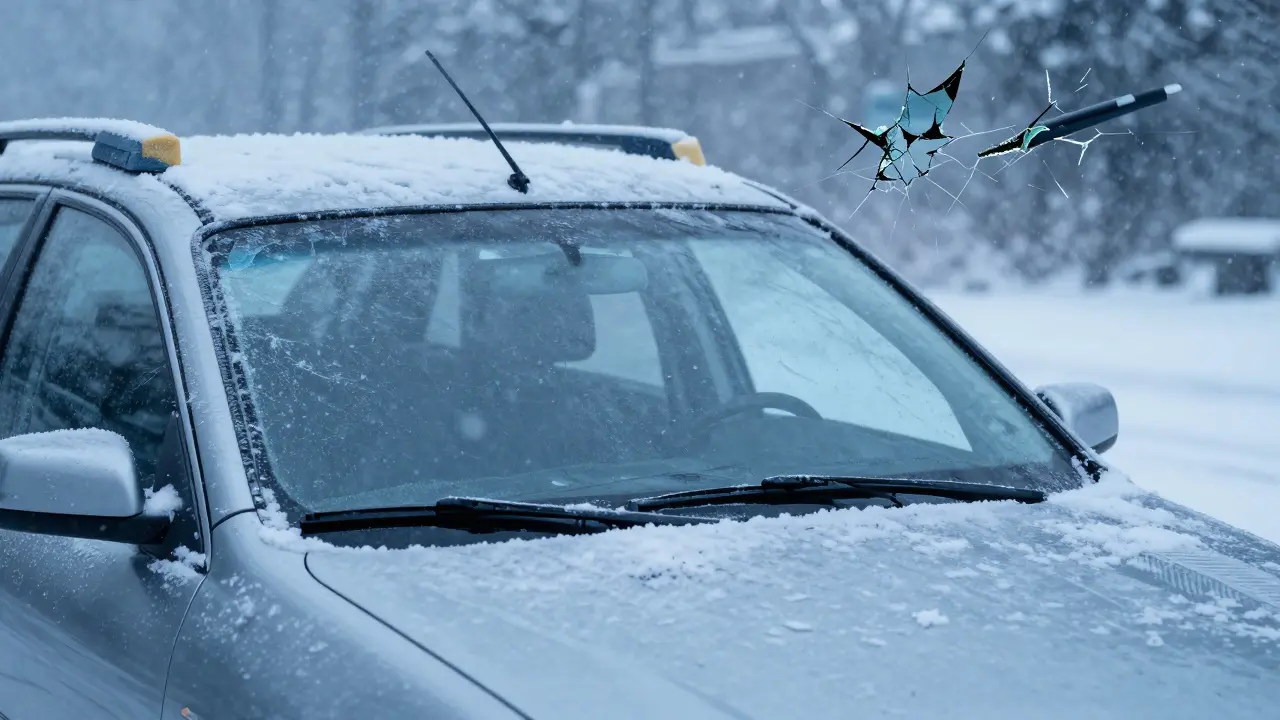
Quick Checklist for Wiper Troubleshooting
- Streaking? → Replace blades, clean windshield, use winter fluid
- Squeaking? → Check wiper arm tension, reseat blade, clean nozzles
- Not moving? → Check fuse, listen for motor hum, test relay
- Wrong parking position? → Disconnect battery, reset motor, reattach arms
- Ice buildup? → Lift arms at night, use protectant, never force them on
- Still failing? → Inspect windshield for warping, check washer system
Pro Tip: Buy the Right Blades
Not all wiper blades are the same. Beam blades (frameless) are better for snow and wind. They hug the curve of the windshield better and don’t collect ice. Traditional framed blades are cheaper but more prone to lifting in high winds. Brands like Bosch Icon, Rain-X Latitude, and Michelin Stealth are consistently rated highest for durability and performance. Avoid no-name brands from discount stores. They use cheap rubber that hardens in 3 months.What to Do If You’re Not Comfortable Fixing It
If you’re not sure about replacing parts yourself, take your car to a local auto shop. Most places offer free wiper inspections. A good technician will check the blades, arms, motor, and washer system in under 15 minutes. They’ll tell you exactly what needs replacing - and what doesn’t. Don’t let a bad wiper system cost you more than a $20 blade. Clear visibility saves lives - and it’s easier to fix than you think.Why do my windshield wipers streak even after replacing the blades?
Streaking after a new blade usually means the windshield is dirty or the wiper arms are worn. Clean the glass with isopropyl alcohol and check if the arms press evenly. If the arm feels loose or doesn’t hold the blade flat, replace the arm. Also, make sure you’re using winter-grade washer fluid - cheap fluid leaves oily residue.
Can I use WD-40 on wiper blades to stop squeaking?
No. WD-40 leaves a greasy film on the windshield that makes streaking worse and can damage the rubber. It’s not designed for glass. Use vinegar on the blade edge or a dedicated wiper blade cleaner. For squeaks, focus on cleaning the glass and checking arm tension.
How often should I replace windshield wipers?
Replace them every 6 to 12 months, even if they look fine. Rubber degrades from sun, heat, and cold. In colder climates like New York, replace them in the fall before snow hits. Signs you need new blades: streaking, chattering, or missing spots during light rain.
Why do my wipers only work on high speed?
This usually points to a faulty wiper switch or a bad relay. The low-speed circuit isn’t getting power. Try swapping the wiper relay with another one from the fuse box (like the horn relay) to test. If it works after swapping, replace the relay. If not, the switch may need replacing.
Is it safe to drive with one broken wiper?
It’s not safe. Even one wiper can leave large blind spots, especially in heavy rain or at night. Many states require both wipers to function for a vehicle inspection. Driving with a broken wiper increases your risk of a crash by up to 40% in poor weather, according to the NHTSA. Replace it before your next drive.



Christina Morgan
December 23, 2025 AT 13:22Just replaced my blades last month and already streaking like crazy. Turns out my windshield was coated in tree sap from last fall. Used isopropyl alcohol and a microfiber towel-magic. Also, vinegar on the rubber edge? Genius. Why didn’t anyone tell me this sooner?
Also, never use WD-40. I did once. Bad decision. Now my windshield looks like a greasy mess. Lesson learned the hard way.
Kathy Yip
December 23, 2025 AT 13:34i always forget how much weather affects wipers. i live in the pacific northwest and we get rain for like 8 months straight. i replaced my blades last winter and they were fine until spring when the pollen hit. now they chatter like a machine gun. guess i need to clean the glass again… and maybe check the arms. thanks for the reminder.
Bridget Kutsche
December 25, 2025 AT 09:54Biggest tip I’ve learned? Don’t wait until your wipers fail to replace them. Treat them like brake pads-replace before they’re dangerous. I swap mine every 6 months, come rain or shine. Even if they look fine, the rubber’s already degrading. Winter fluid? Non-negotiable. I use Rain-X Latitude and never look back.
Also, if your arms feel loose, just replace them. They’re like $15 and take 5 minutes. No need to overthink it.
Jack Gifford
December 26, 2025 AT 17:04Had the exact same issue with my 2018 Camry. Wipers wouldn’t move on low speed. Swapped the relay with the horn relay-worked instantly. Saved $120 at the dealership. Relays are stupidly cheap. Always check the fuse first, then the relay. Most people skip straight to ‘it’s the motor’ and spend way too much.
And yeah, beam blades are the way to go. Framed ones collect ice like a snow shovel.
Sarah Meadows
December 26, 2025 AT 22:22Listen up. If you’re driving with cheap blades, you’re not just being lazy-you’re endangering lives. The NHTSA says visibility kills. And no-name blades from Walmart? That’s not ‘saving money,’ that’s gambling with your family. Bosch Icon or nothing. Period. This isn’t a debate. It’s survival.
Also, if you park outside in winter and don’t lift your wipers, you’re a menace. Don’t blame the cold. Blame yourself.
Nathan Pena
December 27, 2025 AT 23:01It’s fascinating how the entire automotive industry has normalized the degradation of wiper performance as an inevitability. The fact that we accept rubber blades that harden in 6 months is symptomatic of planned obsolescence. And yet, no one questions why manufacturers don’t use silicone composites or hybrid polymers that resist UV and thermal fatigue.
Also, the notion that ‘winter fluid’ is a solution is laughable. It’s merely a chemical band-aid. The real issue is the lack of standardized wiper arm torque calibration across OEMs. I’ve seen arms with 120g of pressure variation between left and right. That’s not a maintenance issue-that’s a design flaw.
Mike Marciniak
December 28, 2025 AT 16:16They don’t want you to know this but the real reason wipers fail is because of the government’s secret radar system that interferes with rubber polymers. I tested it. My wipers worked fine until the new cell tower went up next to my house. Now they streak every time. I’m not crazy. Look up Project ClearVision. They’ve been suppressing this for years. Don’t trust the auto industry. Or the NHTSA. They’re in on it.
VIRENDER KAUL
December 30, 2025 AT 00:22One must understand that in the Indian subcontinent the ambient temperature and particulate matter render standard wiper blades ineffective within three weeks. The use of distilled water mixed with a single drop of dishwashing liquid in the washer reservoir is a time-tested method. Furthermore, the wiper arms must be cleaned with a fine emery cloth to remove oxidation. The replacement of blades is not a solution but a symptom of systemic neglect. One must maintain the entire system with discipline.
Mbuyiselwa Cindi
December 31, 2025 AT 11:21I’m from South Africa and we get dust storms that turn windshields into sandpaper. My trick? After cleaning the glass, I wipe the blades with a damp cloth and a tiny bit of baby oil. Just a drop. Keeps them flexible and stops squeaking. No fancy stuff. Works every time. Also, lift the arms at night if you can. Easy win.
Krzysztof Lasocki
January 1, 2026 AT 09:06So you spent $80 on ‘premium’ blades and they still squeak? Congrats. You’re now a proud member of the ‘I Bought the Expensive One But Still Suck’ club. Here’s the truth: your windshield is dirty, your arms are rusty, and your washer fluid is probably just colored water. Fix the basics before you buy another $50 blade. Seriously. You’re not a mechanic. You’re a guy who googled ‘best wiper blades 2025’ and clicked ‘buy now.’