EV Battery Health: How to Maximize Range and Longevity
When you buy an EV battery health, the condition of an electric vehicle’s power storage system that directly impacts driving range, performance, and lifespan. Also known as battery state of health, it’s not just a number on a screen—it’s the difference between a car that still feels powerful after five years and one that struggles to make it to the next charger. Unlike gas cars, where engine wear is gradual and often invisible, an EV’s battery degrades quietly. You might not notice it until one day, your 250-mile range drops to 200, then 170. That’s not normal wear and tear—it’s preventable.
Several things affect EV battery health. Battery degradation, the gradual loss of capacity over time due to charge cycles, heat, and charging habits happens faster if you regularly charge to 100% or let the battery drop below 20%. Fast charging helps when you’re in a hurry, but doing it every day adds stress. Heat is the real killer—parking in direct sun for hours or driving hard in hot weather speeds up aging. And while cold weather temporarily shrinks your range, it doesn’t permanently damage the battery if you avoid charging in freezing temps.
Good battery maintenance, a set of simple daily practices that slow down capacity loss and preserve performance doesn’t require special tools. Just avoid full charges unless you need the max range. Keep your battery between 20% and 80% most of the time. Use scheduled charging to finish overnight when the grid is cooler. If your car lets you set a max charge limit, turn it on. And if you’re storing your EV for weeks, leave it at 50%—not empty, not full.
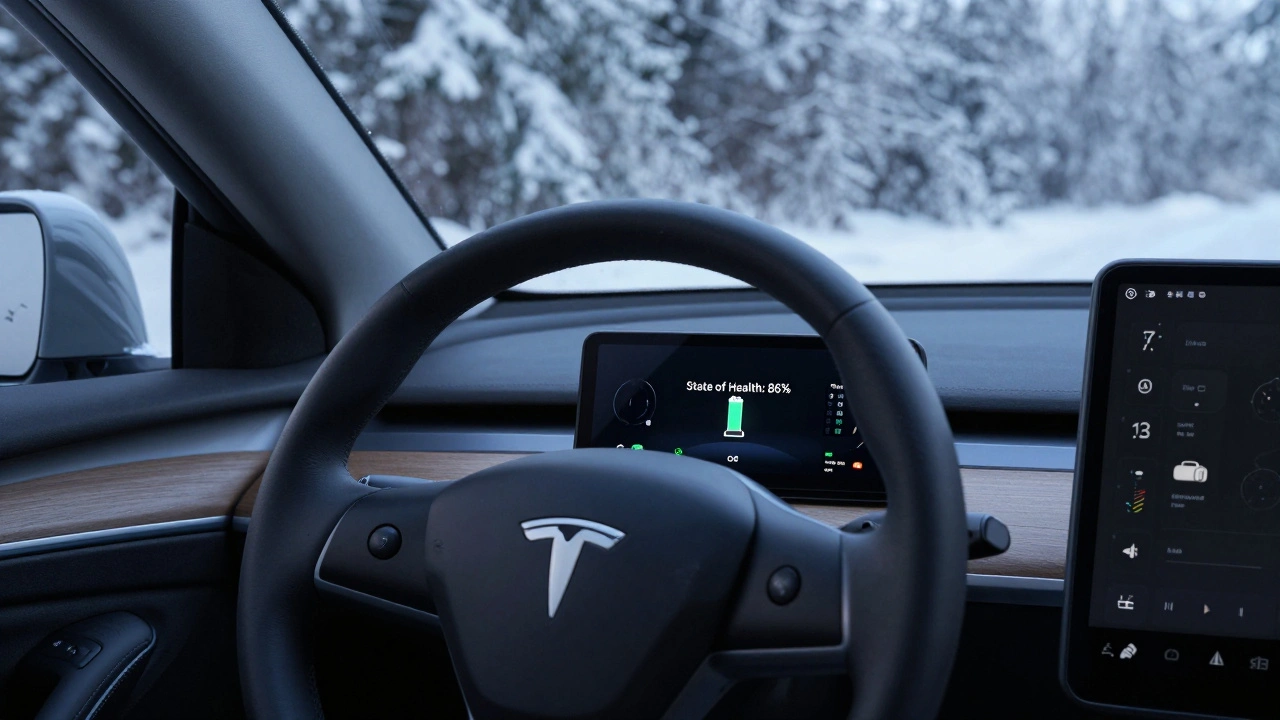
Some drivers think their battery is failing when the range estimate jumps around. That’s normal. Range displays are predictions based on recent driving, temperature, and load—not a direct measure of battery capacity. To really check EV battery health, look for the official state-of-health percentage in your car’s diagnostic menu. Most manufacturers show this after 10,000 miles or so. If it’s below 90% after three years, it’s worth asking the dealer. Most warranties cover 70% minimum for 8 years or 100,000 miles.
What you’ll find below are real-world guides from drivers who’ve learned the hard way. Some share how they stretched their battery life past 150,000 miles. Others show how they avoided costly replacements by changing just one habit. There’s no magic trick—just clear, proven steps that keep your EV running strong, year after year. Whether you’re new to electric or you’ve been driving one since 2018, these posts give you the facts you need to protect your biggest investment after the car itself.
EV Battery Explained: Capacity, Range, and Degradation
- 13 Comments
- Dec, 4 2025
Understand how EV battery capacity, range, and degradation really work-what affects them, how to measure them, and how to make your battery last longer without overpaying or overcharging.